Galway History: Medieval Walls, Merchant Houses and Churches
Galway's medieval story survives in wall fragments, merchant houses and a 1320 church. See where the city's past is explained and what to look for.
On this page
Galway history is best read as a trail of fragments rather than a single monument. The medieval town grew at the mouth of the River Corrib, on a site that became one of the western seaboard's important trading posts, and the modern city still holds pieces of that story in plain sight. A focused walk, backed by museum interpretation, makes those pieces legible.
Start with context from the museums in Galway, then move outdoors to the surviving fabric itself. The city museum's Medieval Galway exhibition supplies the dates and the social detail, while walls, carved stonework and church aisles do the visible work. Keep record and legend apart along the way, because Galway's most famous stories tend to blur the two.
Where Medieval Galway Begins: The City Museum's Account
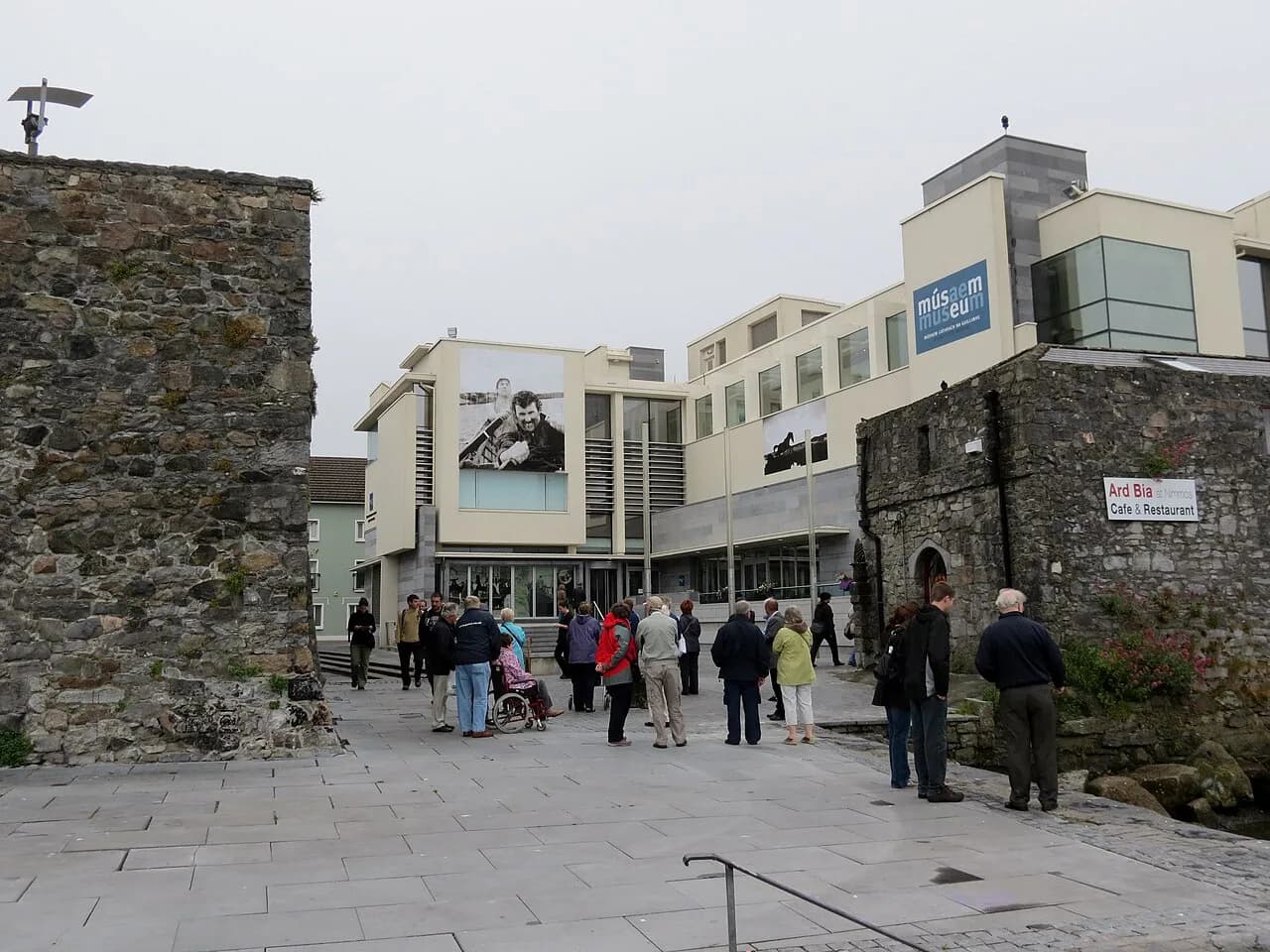
Galway City Museum frames the medieval town through archaeology and institutional interpretation rather than raw archives. Its Medieval Galway exhibition describes a settlement at the Corrib's mouth and records that excavations revealed the de Burgo castle, first built in 1232, and the Red Earl's Hall, constructed in the late 1200s or early 1300s. Treat this as the museum's synthesis of the evidence, which is exactly what a first-time visitor needs.
The museum's collections page sets out the wider collecting scope, which runs from prehistoric Galway through medieval and post-medieval material to the world wars, the 1916 Rising and the writer Pádraic Ó Conaire. It also notes the museum's designated status under the 1997 National Cultural Institutions Act, meaning it can hold archaeological objects for the State. The page defines what the museum collects; it does not confirm what is hanging on the walls on any given day.
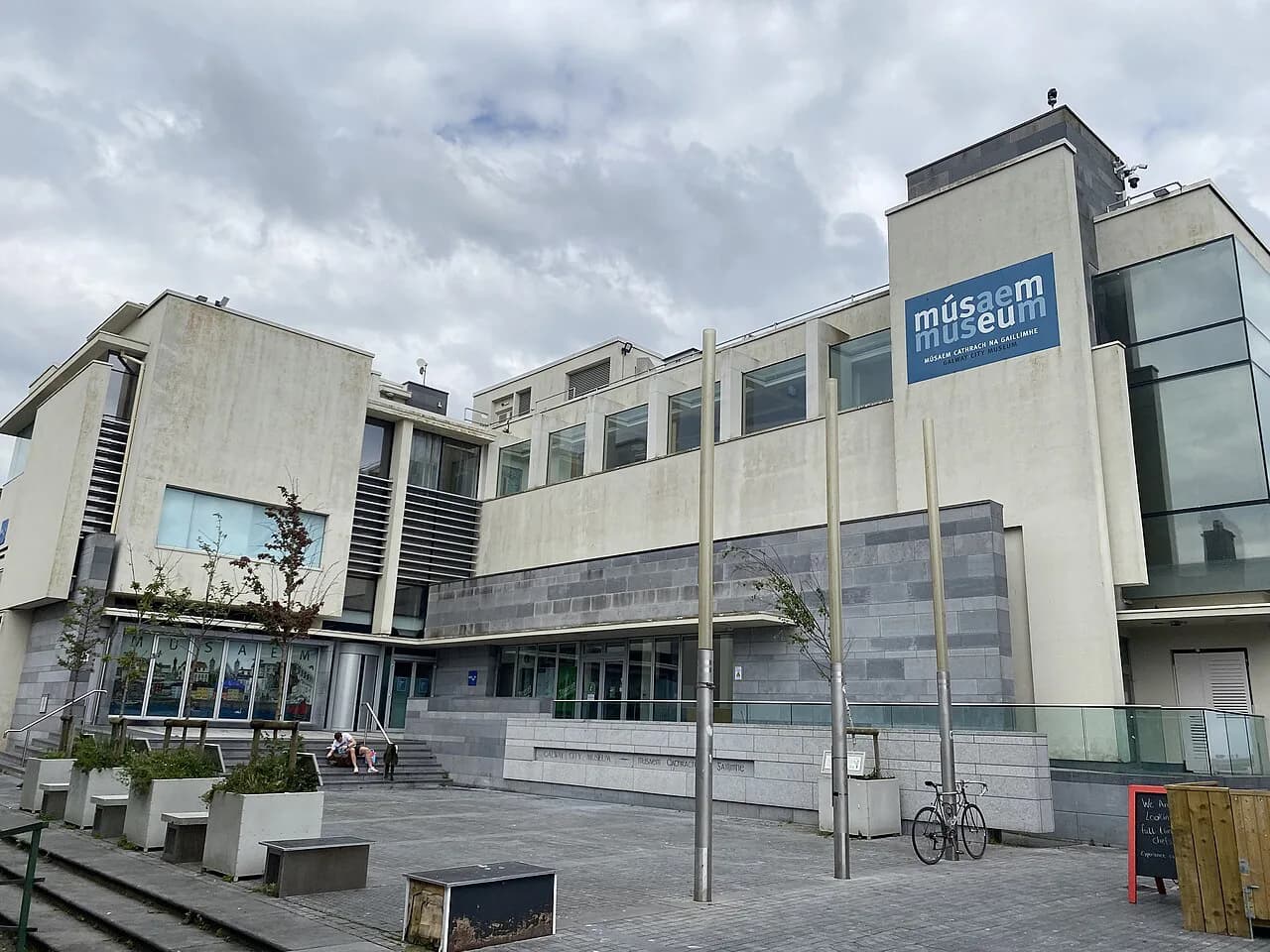
Practicalities are straightforward. The museum sits at Spanish Parade and is free with no booking required and a suggested five-euro donation. It opens Tuesday to Saturday from 10am to 5pm, plus Sunday afternoons from Easter to mid-September, and galleries close at 4:45pm; the Sunday window is seasonal, so weekend planners should check the date before building a trip around it.
The Walled Town: Gates, Tolls and What Remains
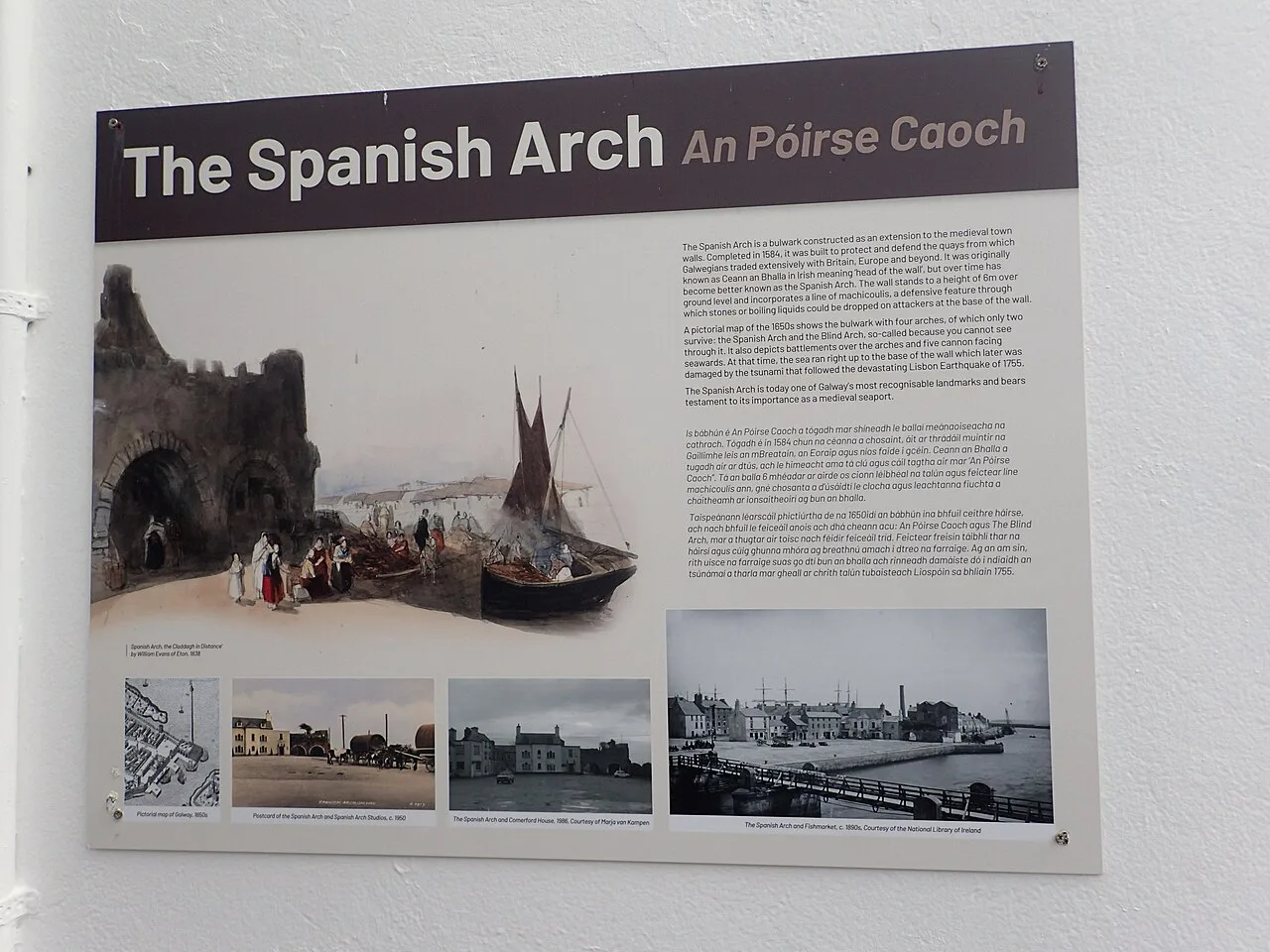
Construction on Galway's town walls began before 1272, and most of the town was enclosed by the early 1400s within an area of about eleven hectares. Stone came from local sources, and the gates did more than defend: they controlled access and collected tolls, with a curfew bell rung at night before the gates were locked. The museum's page states that some of the last surviving stretches can be seen today beside the Spanish Arch and in the Eyre Square Shopping Centre, where the fabric is partly reconstructed. If you want to follow the same wall-and-gate story elsewhere, Dublin history offers a comparable trail of medieval fabric.
That provenance matters for how you read the surviving pieces. A fragment beside the Spanish Arch is evidence of the wall circuit, but the arch itself is not presented by the museum as medieval fabric, so resist the common assumption that it is a medieval gateway. The Eyre Square Shopping Centre section is frankly labelled as partly reconstructed, which is a useful reminder that heritage displays often combine original stone with modern rebuilding.
For the broader street pattern, a walking tour of the centre helps connect the wall line to the modern layout. The wall enclosed a compact town of burgage plots, larger stone houses on main streets and smaller dwellings in lanes, and the street plan still echoes that arrangement. Walking the circuit with the museum's gate and toll detail in mind turns scattered stone into a system of control and revenue.
The Tribes of Galway and Their Town Houses
From the fifteenth to the seventeenth centuries, fourteen merchant families effectively ran Galway and became known as the Tribes of Galway, a label the museum says was reputedly coined by Cromwellian forces. Most were of English or Welsh descent from the original settler population, though the Kirwans and Darcys were of Gaelic origin, and the families gradually adopted Gaelic customs while trading with the hinterland, Europe and later the Americas.
Charters shaped who governed. A royal charter issued by Richard II in 1396 instructed that a sovereign be elected annually, opening the way for merchant families to dominate administration, and the 1484 Charter of Incorporation granted by Richard III let citizens elect their own mayor and corporation. The first mayor under that system, Pierce Lynch FitzJohn, was elected on 1 August 1485. These are constitutional turning points rather than decorative dates, because they explain why merchant money built churches, halls and town houses.
Two fortified town houses survive, according to the museum: Blake's Castle, built in the 1400s, and Lynch's Castle, built around 1500. Both should be understood as buildings in a working city rather than as museum pieces, and the museum does not present either as a freely explorable medieval interior. Their value to a visitor is in the stonework, the siting and what the merchant town looked like when wealth was expressed through defensible facades.
Lynch's Castle Close Up
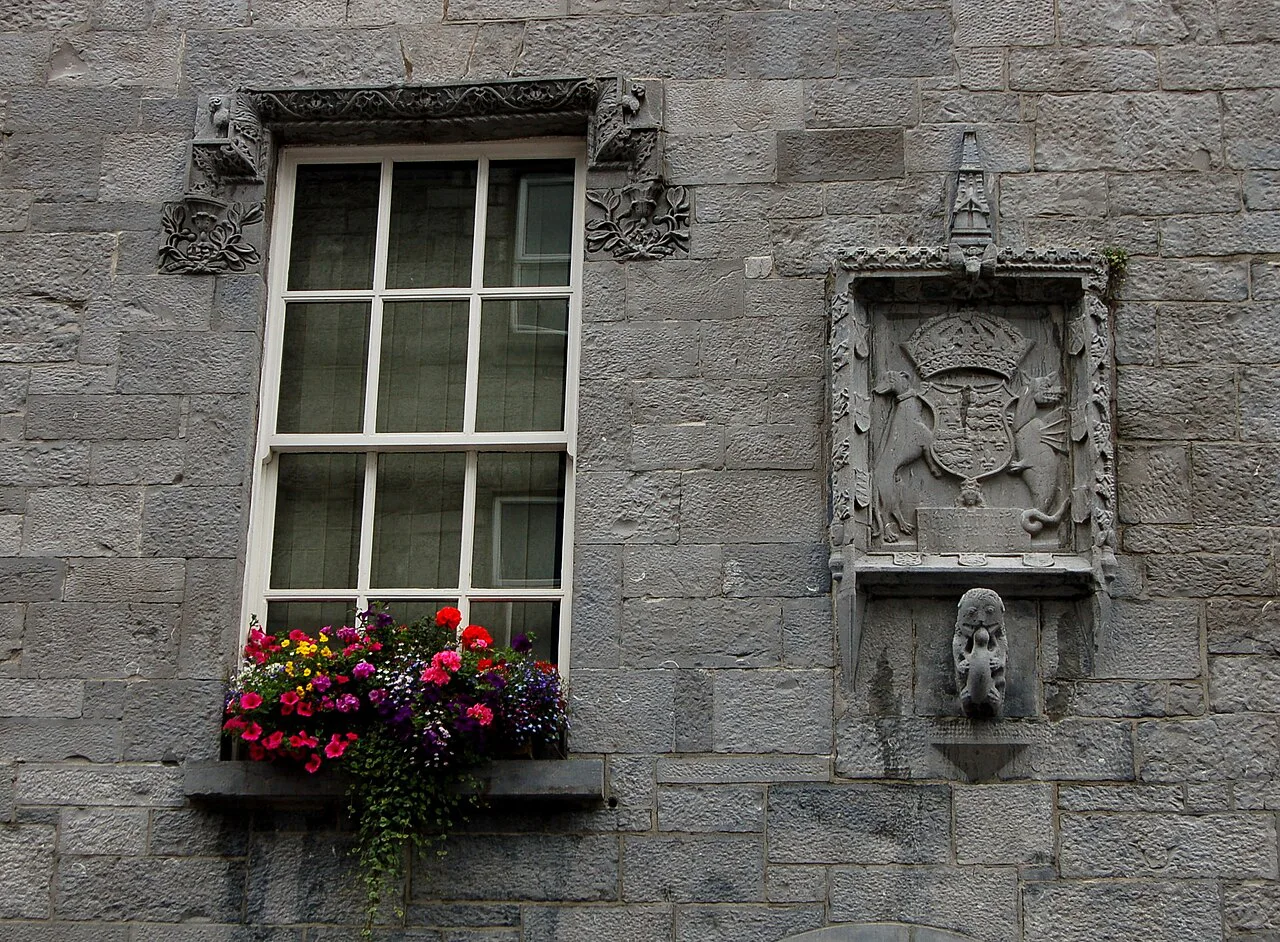
Lynch's Castle stands at the junction of Shop Street and Upper Abbeygate Street, and it rewards a slow look rather than a quick photograph. According to Discover Ireland, the national tourism authority, the sixteenth-century castle was heavily altered in 1966 when it was converted into a bank. The exterior retains some of the few remaining Irish gargoyles along with the arms of Henry VII, the Lynch family and the Fitzgeralds of Kildare, and the window stonework is of good quality.
Because it is a converted commercial building, visitors should treat the carved exterior and the ground-floor historical material as the principal interest; the tourism authority notes a display on the castle's history at ground level. There is no basis for promising access to upper floors or a museum-style interior, so plan your time around the facade and the street context. The building is a case study in how Galway's medieval fabric has been absorbed into later commercial life rather than preserved behind glass.
Nearby, Discover Ireland records that a doorway and first-floor window from one of the city's fine sixteenth- or seventeenth-century houses, belonging to the Browne family of Lower Abbeygate Street, has been re-erected in isolation on the north side of Eyre Square. It is an odd but instructive sight: a rescued fragment without its building. Pair it with the Eyre Square stretch of wall to see how the city displays its old fabric in pieces.
St Nicholas' Collegiate Church
Worship on the St Nicholas' site predates the present building, which was completed in 1320, and the museum records that the town took control of the church in 1484 after the Archbishop of Tuam released his jurisdiction, re-establishing it as a collegiate church whose clergy the citizens elected. The church's own site picks up the story with its modern college of singers, described as a reimagining of the original college established there in 1486. Read together, the two sources show a parish church turned civic institution.
Visiting options are published by the church, which lists opening times across the week and notes that last entry is thirty minutes before closing. It also advertises guided tours, a self-guided story tour and a bell-ringing experience, but availability of those experiences should be confirmed with the church rather than assumed from a listing. Anyone planning a visit around a specific tour should check ahead, since the published schedule can shift.
The merchant families and craft guilds patronised St Nicholas', which is why the church belongs in a merchant-town itinerary rather than a separate ecclesiastical one. If museums are your main interest, the museums in Galway roundup places this building alongside other city options. Otherwise, treat it as the indoor centrepiece between the museum and the street monuments.
Town Life, Faith and the Museum's Social Detail
The museum's account of daily life is where the medieval town becomes concrete. Burgage plots combined a street-facing house with outbuildings and a garden behind, there were more than two hundred burgesses by the late 1320s, and by the early 1500s perhaps two thousand people lived inside the walls or close by. Corporation by-laws regulated dress, socialising and refuse, and fines followed those who let rubbish accumulate outside their doors.
Fire and disease shaped building decisions. Outbreaks in 1412 and 1473 probably pushed construction towards stone, and a by-law barred thatched houses within fourteen feet of the walls for fear of fire. Plague arrived regularly, sometimes with trading ships, and leprosy was endemic until the late 1500s. These details are more useful to a visitor than any list of dates, because they explain the density, the stone and the vulnerability of a port town.
Religious foundations punctuated the town: the Franciscans in 1296, the Carmelites in 1332, the Dominicans in 1488 and the Augustinians in 1508, with the first recorded hospital or poorhouse on what is now Shop Street in 1505. The monasteries also cared for the sick. None of this should be read as a promise that these houses survive in visitable form; the museum's value is in showing what the streets once held.
Record and Legend: How to Read Galway's Stories
The origin of the name Galway, from the Irish Gaillimh, is uncertain, and the museum offers competing explanations. One theory derives it from the river, once called the Gaillimh, from words meaning stony river; another is local legend that the town is named for Gaillimh, daughter of the mythical King Breasal, who drowned in the river. Presenting both is the honest approach, and visitors should treat the second as legend rather than history.
The most famous story, the hanging of a mayor's son, is explicitly labelled by the museum as local folk tradition. It recounts that in 1493 the chief magistrate, Mayor James Lynch Fitz Stephen, is reputed to have hanged his own son from a window after a murder conviction. It is a good story and a genuine piece of local culture, but it should not be repeated as documented fact.
The same caution applies to the reputed inscription above the West Gate, which the museum gives as a tradition rather than a surviving text: a plea for deliverance from the O'Flahertys. Treat both stories as evidence of how Galway remembers its past, which is itself historically interesting. Guides who present them as settled fact are smoothing over exactly the uncertainty that makes local history worth reading carefully.
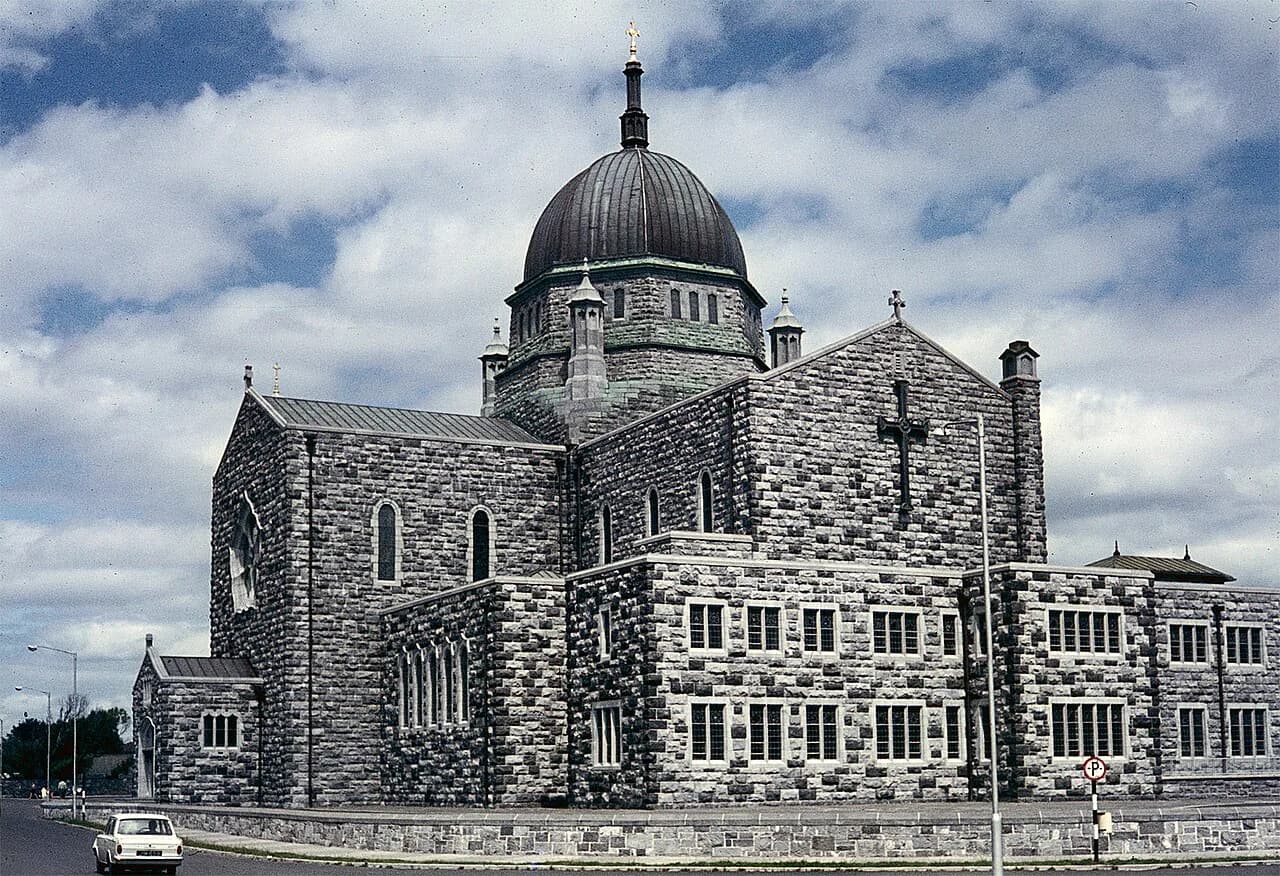
Galway Cathedral: A Modern Landmark, Not Medieval Fabric
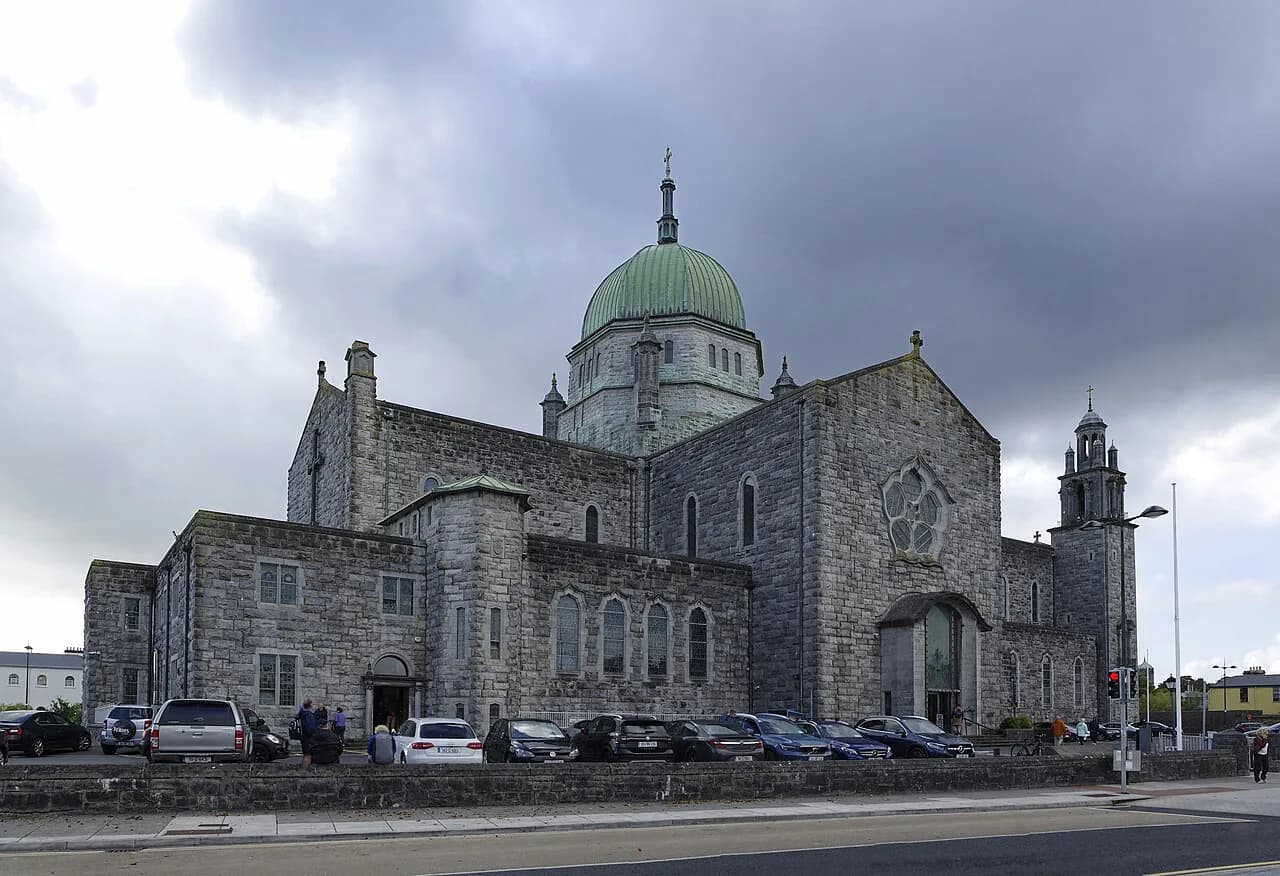
Galway Cathedral is often folded into historical walks by accident, so it is worth saying plainly that it is a modern building, not part of the medieval town. Its own visitor page places it on the west bank of the River Corrib, a little north and west of the city centre, near the Salmon Weir Bridge. Visit it for what it is, and look to the museum, the church and the street monuments for the medieval story.
The cathedral publishes its own arrangements: no admission charge, with a suggested donation, and opening hours it describes as approximate, usually from 08:00 until 20:00, with possible earlier closing on certain days. Visitors are asked not to walk around during services and not to enter during Mass unless they wish to participate, in which case they are welcome. A wheelchair ramp is available at the main entrance in the east transept, and a hearing loop operates throughout.
Parking in the cathedral grounds is pay-per-hour and camper vans are not permitted, a restriction posted at the entrance. If you are combining the cathedral with the older sites, check its published times on the day rather than relying on the approximate window. For the building's architectural context, the Galway architecture guide is a better companion than any medieval narrative.
Putting the Thread Together
A sensible order is museum first, then the streets: the Medieval Galway exhibition supplies the framework, and the wall fragment by the Spanish Arch, the Lynch's Castle facade on Shop Street and St Nicholas' give it physical form. Allow time to read the museum's panels properly, because the social detail about by-laws, fire and trade is what turns a list of dates into a town.
The trade-off is between depth and coverage. Lynch's Castle is a commercial building whose interest is chiefly external, so it takes minutes rather than an hour, while St Nicholas' rewards a slower visit if tours are running. The wider Galway Attractions: 9 Visitor Guides collection helps if you want to weigh these stops against other city sights before committing a half-day.
Finally, keep the categories straight: documented history from the museum and the church, legend clearly labelled, and modern buildings described as modern. That discipline makes a short heritage walk in Galway more rewarding than a longer one built on tall tales. Check each operator's own published times before setting out, since access arrangements are theirs to change.
Plan Your Visit
Galway's medieval history is not concentrated in one ticket gate but spread across a museum, a church, a stretch of wall and a carved merchant facade. The city museum provides the interpretation and the dates; the streets provide the stone. Together they give a coherent, honest picture of a walled trading town.
Before you go, confirm opening times directly with Galway City Museum and St Nicholas', since both publish their own schedules and the museum's Sunday afternoon opening is seasonal. Remember that Lynch's Castle is a converted building viewed largely from outside, and that the cathedral is a modern structure with its own visitor rules.
Explore more Galway guides
Frequently Asked Questions
Where can I see medieval Galway history in the city today?
The clearest starting point is Galway City Museum, whose Medieval Galway exhibition explains the town's origins, the 1232 de Burgo castle and the walled settlement. Outdoors, surviving stretches of town wall can be seen beside the Spanish Arch and in the Eyre Square Shopping Centre, where the fabric is partly reconstructed. St Nicholas' Collegiate Church and the exterior of Lynch's Castle on Shop Street add visible medieval fabric.
Is Lynch's Castle open to visit inside?
Lynch's Castle is a sixteenth-century building that was heavily altered in 1966 when it became a bank, so it is not a museum you walk through. The interest lies in the carved exterior, including gargoyles and coats of arms, and in the historical material displayed at ground level. Plan on a short stop rather than a full visit.
How much of Galway's town walls survive?
Construction began before 1272 and most of the town was enclosed by the early 1400s within roughly eleven hectares. Only fragments remain, and the museum points visitors to the stretch beside the Spanish Arch and a partly reconstructed section in the Eyre Square Shopping Centre. The Spanish Arch itself is not presented as surviving medieval fabric.
Was St Nicholas' Church founded in 1320?
The present church was completed in 1320, but the site had been a place of worship before that. In 1484 the town took control of the church and re-established it as a collegiate church with clergy elected by the citizens. Its own website publishes current opening times and the tours it offers.
Did the Mayor of Galway really hang his own son?
The story of Mayor James Lynch Fitz Stephen hanging his son in 1493 is recorded by Galway City Museum as local folk tradition, not established fact. It is worth hearing as a piece of the city's storytelling heritage, but it should not be repeated as documented history. The same caution applies to the reputed West Gate inscription about the O'Flahertys.
Is Galway Cathedral a medieval building?
No. Galway Cathedral is a modern building on the west bank of the River Corrib, north and west of the city centre, and it should not be confused with the medieval town. It publishes its own visitor arrangements, including an approximate daily opening window and a request that visitors not walk around during services.
Sources
You might also like
Continue reading
More guides you'll find useful