Galway Architecture: Medieval Walls, Merchant Houses and Later Landmarks
Galway's architecture layers medieval walls, merchant town houses, a collegiate church and a modern cathedral into one compact, readable city.
On this page
Galway's built heritage is not a single monument but a medieval walled town overlaid by centuries of later building. The city grew at the mouth of the River Corrib where it meets Galway Bay, and that location made it one of the western seaboard's most important trading posts in the medieval period. The most useful way to read the architecture is to separate original medieval fabric from later alterations, since several old-looking buildings have been reshaped.
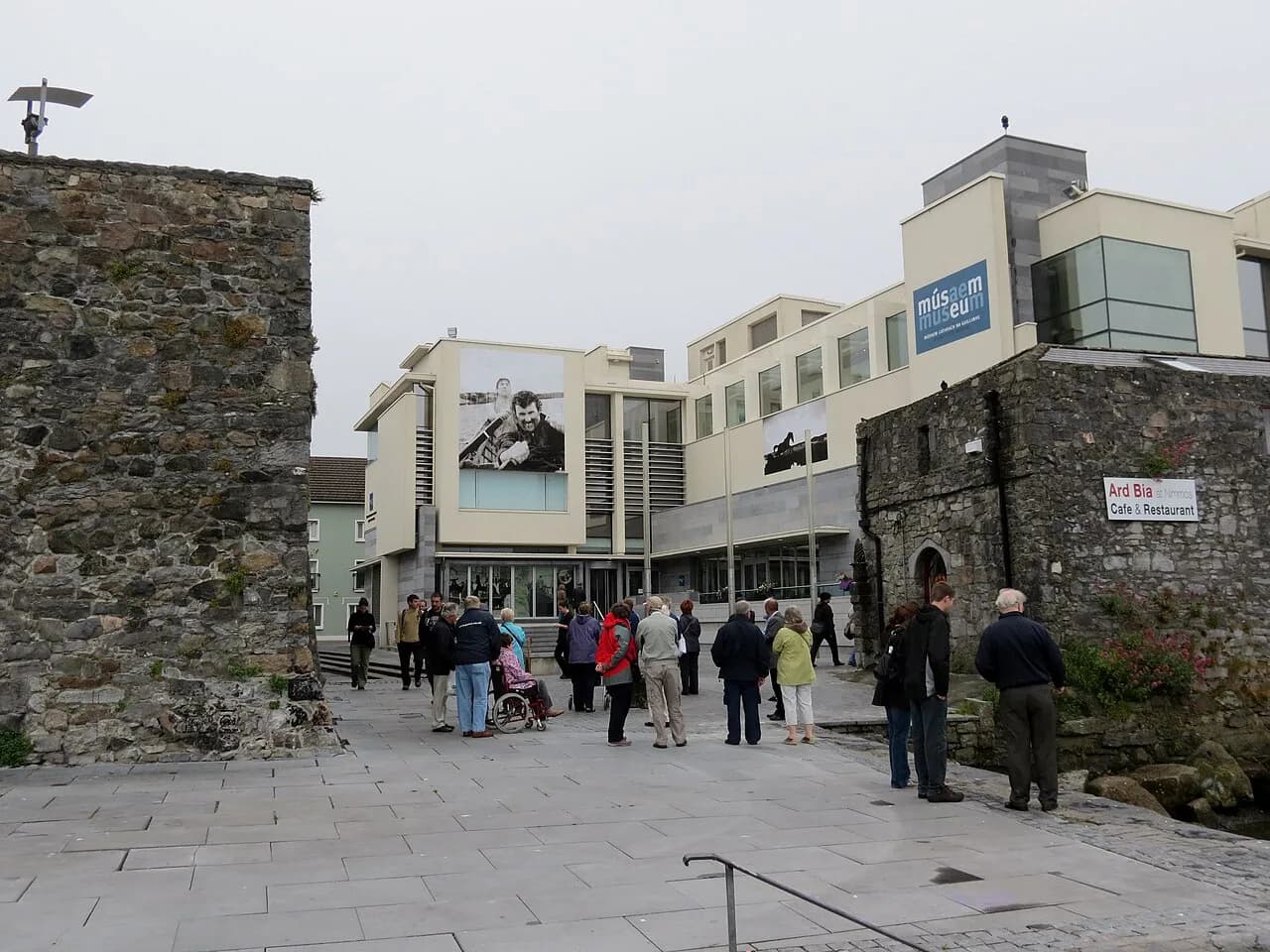
A good place to start is the city museum's interpretation of medieval Galway, which sets out the walled town, its castle, its merchant families and its religious foundations. From there, the surviving stretches of wall, the fortified town houses and the churches make more sense as fragments of one system rather than isolated sights. For broader context before you walk, the city's museums in Galway cover the same ground in more depth.
What Survives of the Walled Town
Galway's walls were begun before 1272, and most of the town was enclosed by the early 1400s. They enclosed roughly eleven hectares and were built from locally sourced stone, with mural towers and gates worked into the circuit. Construction was financed through tolls and fines imposed by the town administration, which tells you the walls were as much a commercial instrument as a defensive one. Comparing this with the Cork architecture of a similar walled trading town can sharpen your eye for how commerce shaped the stonework.
Do not expect a continuous walkable circuit. The museum notes that by the close of the eighteenth century the walls and fortifications were either decaying or being demolished as the town expanded around Meyrick, later Eyre, Square and the docks. Some of the last surviving stretches can be seen beside the Spanish Arch and in the Eyre Square Shopping Centre, where the remains are partly reconstructed.
The gates matter to how the town worked. They facilitated toll collection and controlled access, and at night a curfew bell signalled citizens back inside before the gates were locked. Entry by the Gaelic Irish was restricted, and an inscription reputedly above the West Gate asked for deliverance from the O'Flahertys. Reading the surviving fragments with that function in mind is more rewarding than treating them as decorative ruins.
Merchant Town Houses and the Shift to Stone
Each settler, or burgess, received a plot of land known as a burgage plot, with a house facing the street and outbuildings and a garden behind. By the late 1320s there were more than 200 burgesses, and the larger stone houses fronted the main streets while smaller dwellings filled the lanes and alleys. That pattern still explains why Galway's central streets feel narrow and deep rather than uniform.
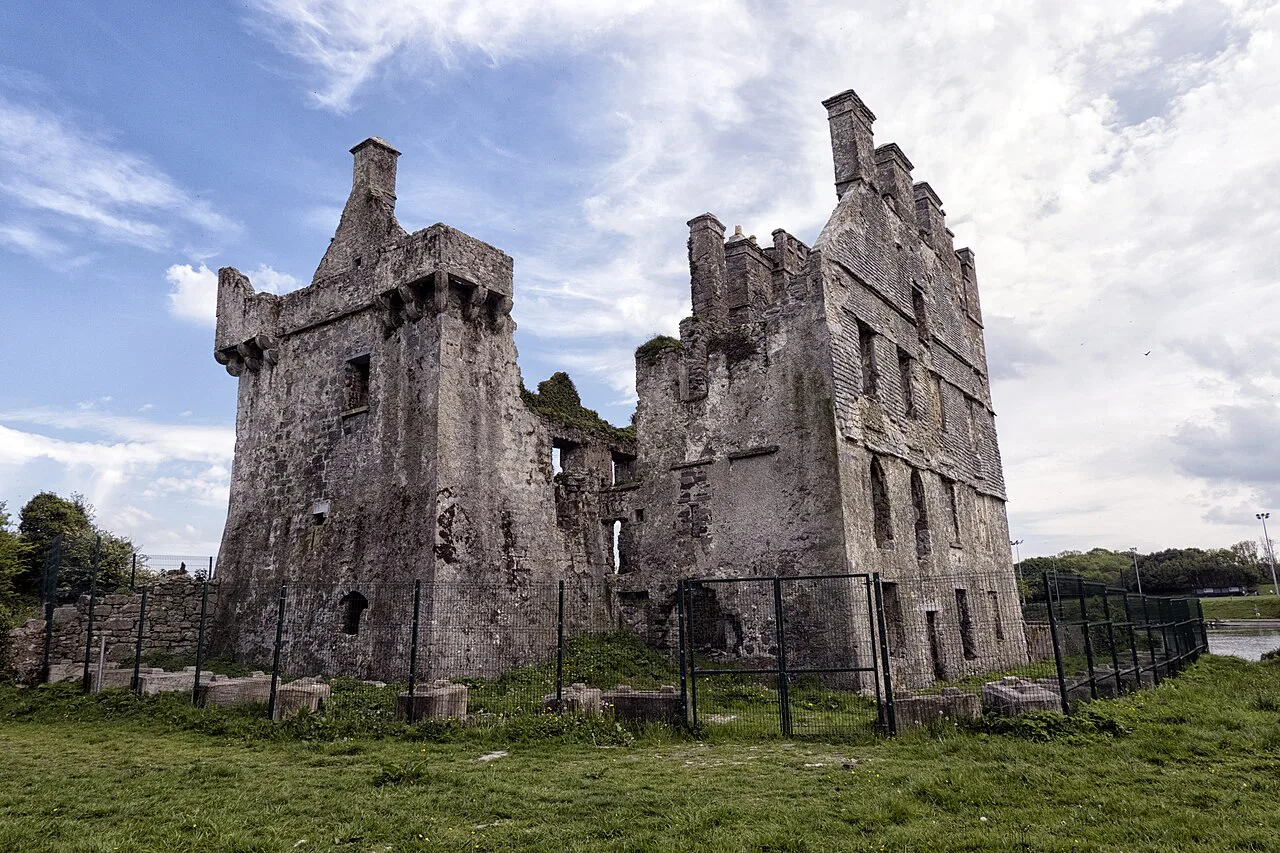
Fires in 1412 and 1473 probably pushed the town toward building mainly in stone rather than wood. The wealthy merchant families, known as the Tribes of Galway, commissioned public and religious buildings and built grand houses with elaborate furnishings. Two fortified town houses survive: Blake's Castle, built in the 1400s, and Lynch's Castle, built around 1500.
The Tribes were fourteen merchant families who effectively ran the town from the fifteenth to the seventeenth centuries. Most were of English or Welsh origin, with the Kirwans and Darcys of Gaelic origin, and they gradually adopted Gaelic manners and customs while prospering through trade with the hinterland, Europe and later the Americas. For the wider political and social story behind these buildings, see this account of Galway history.
Reading Lynch's Castle Today
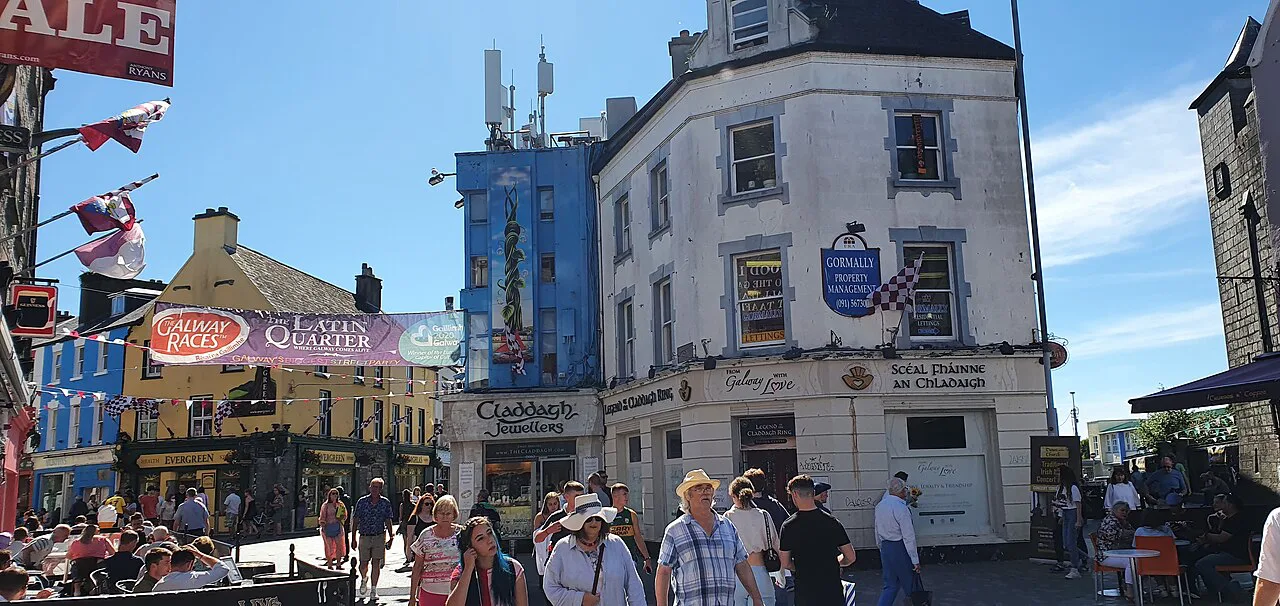
Lynch's Castle stands at the junction of Shop Street and Upper Abbeygate Street, and it is a case study in how Galway's old buildings have been reused. The museum dates it to around 1500, while a tourism listing describes it as a sixteenth-century castle heavily altered in 1966 when it was converted into a bank. Both descriptions point to the same building; the lesson is that its present appearance is partly modern.
Look up rather than in. The exterior preserves some of the few remaining Irish gargoyles, along with the arms of Henry VII, the Lynch family and the Fitzgeralds of Kildare, and the window stonework is of good quality. The tourism listing notes historical material about the building is displayed on the ground floor, but since the castle was converted into a bank, plan to read it from the street rather than assuming a museum-style interior visit.
If carved detail and old stonework are what draw you, a walking tour can help you spot these features in context.
St Nicholas' Collegiate Church
St Nicholas' is a medieval parish church that became something more. The museum records its foundation in 1320, and in 1484 the town took control of the church after the Archbishop of Tuam was persuaded to release his jurisdiction, re-establishing it as a collegiate church with clergy elected by the citizens. The church's own site says the present building was completed in 1320 and that the site has been a place of worship even longer.
That civic takeover is the architectural story as much as the devotional one: the church became a town institution, supported by merchant families and craft guilds. It remains in active use, so treat it as a working church rather than a monument. The church lists opening hours on its own site, with the last entry thirty minutes before closing, and also offers tours and a bell-tower experience on its own terms.
Other religious foundations once stood in the town, including Franciscan, Carmelite, Dominican and Augustinian houses, and monasteries provided care for the sick. Most of that fabric is gone, which makes the surviving collegiate church a useful anchor for understanding medieval Galway's religious architecture.
A Modern Contrast: Galway Cathedral
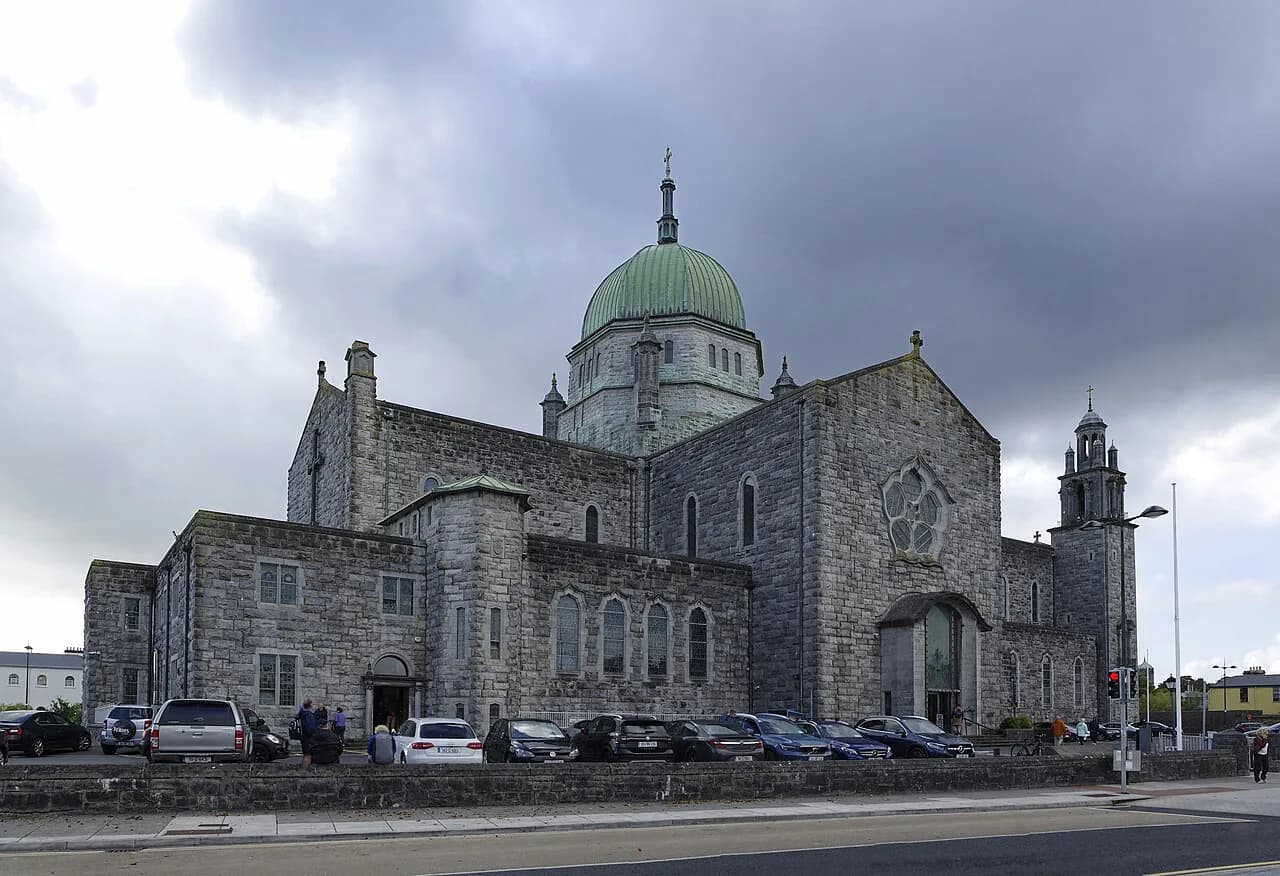
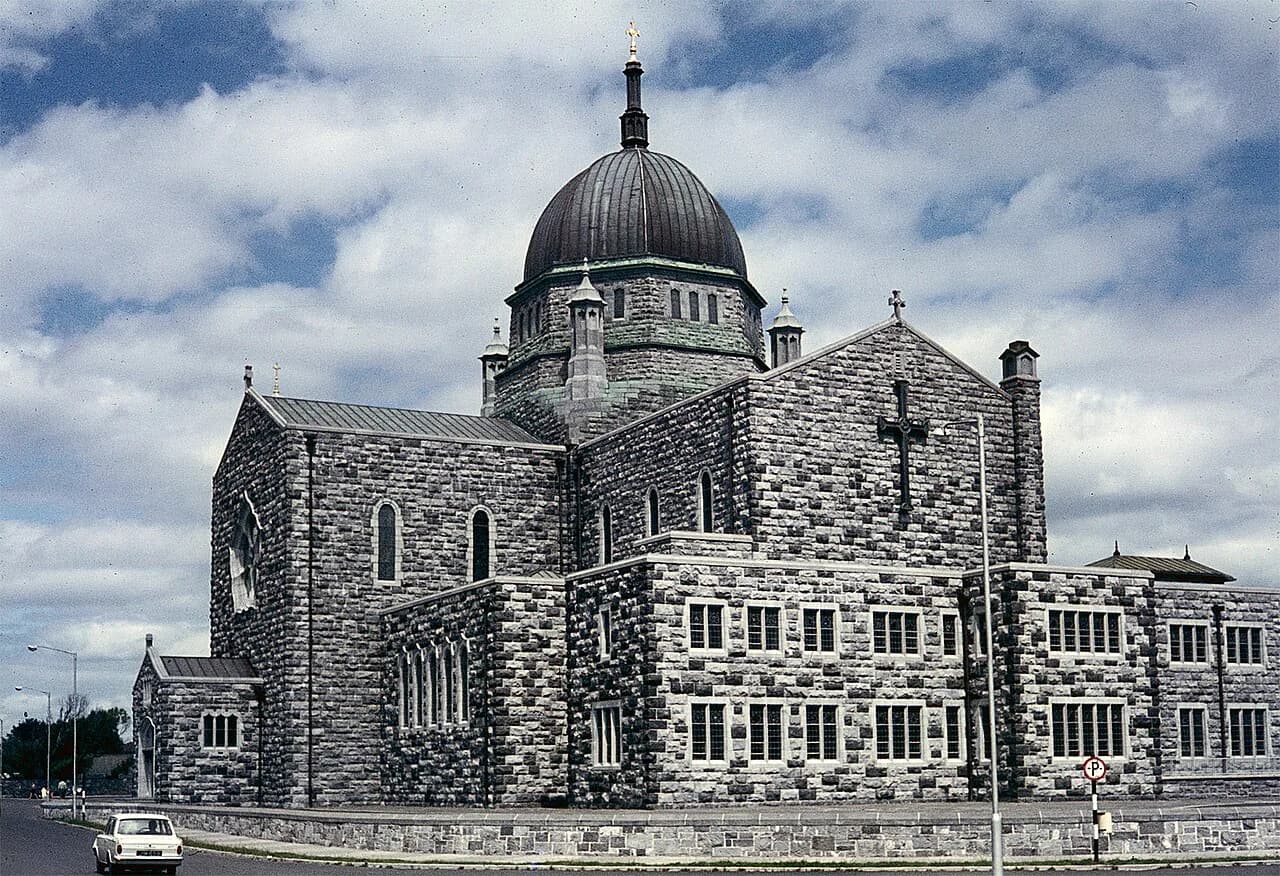
Galway Cathedral is a modern building, not medieval fabric, and it is worth visiting precisely to see the city's architectural range. It stands on the west bank of the River Corrib, a little north and west of the centre, and its own site describes it as usually open from around 08:00 until 20:00, though those times are approximate. There is no admission charge, with a suggested donation toward upkeep.
Visitors are asked not to walk around during services unless they are participating, so check the Mass schedule if you want to look properly. A ramp at the main entrance in the east transept, facing the Salmon Weir Bridge, serves wheelchair users, and a hearing loop operates throughout. Parking is pay-per-hour, and camper vans are not permitted in the cathedral car park.
The contrast is the point: within the city you can move from a walled medieval town and its merchant houses to a twentieth-century cathedral on the west bank of the River Corrib. That range is why it makes sense to cover the city's architecture on foot, and why joining a walking tour can keep the chronology straight.
Where to Start Your Architectural Walk
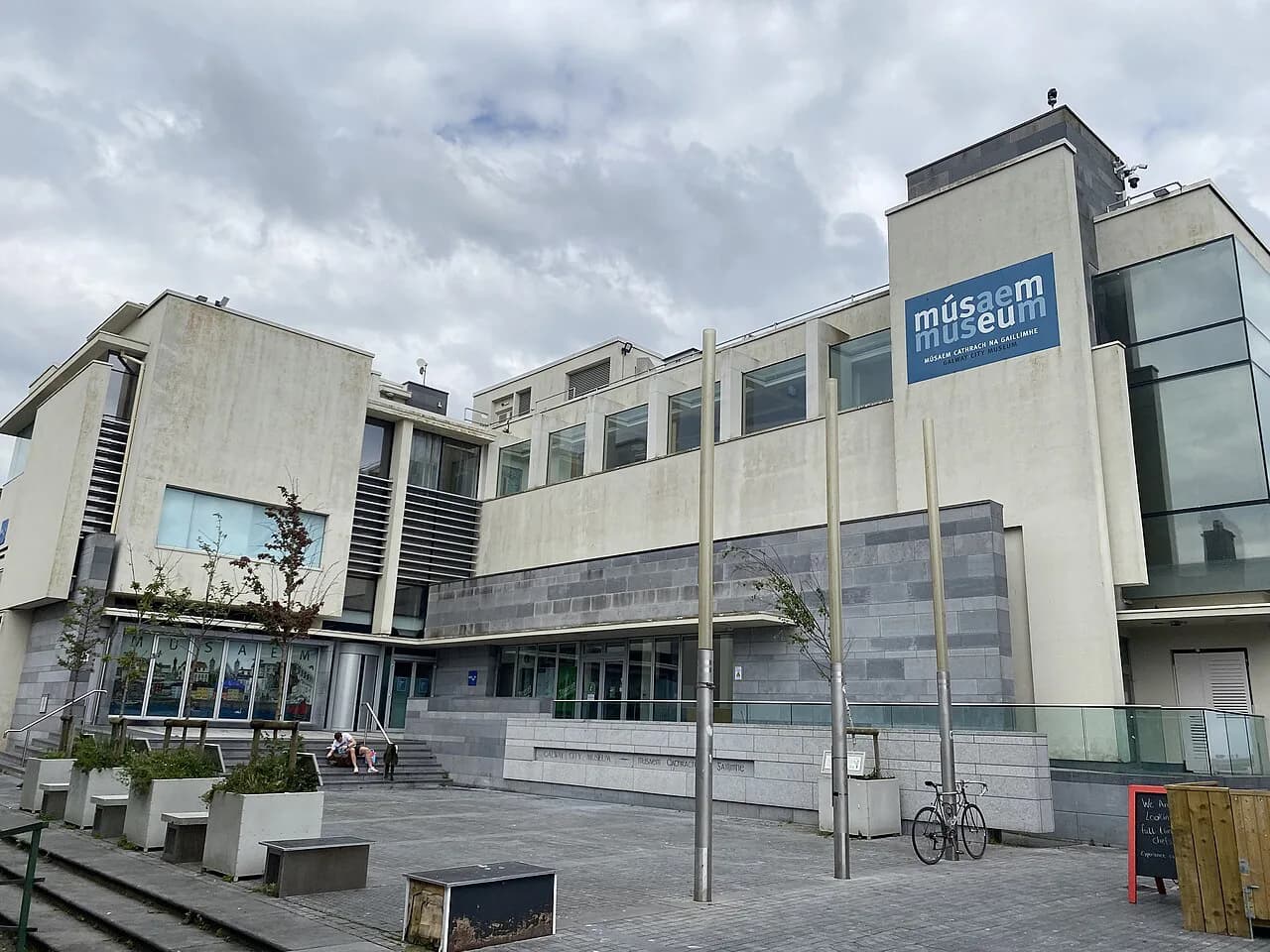
Galway City Museum at Spanish Parade is the logical first stop because it provides the walled-town interpretation before you see the fragments. It is currently free with a suggested donation, no booking is required, and galleries close at 16:45. Opening is Tuesday to Saturday 10:00 to 17:00, with Sundays 12:00 to 17:00 from Easter to mid-September, and it is closed Christmas Day, St Stephen's Day, St Patrick's Day and Good Friday.
From there, work the buildings in sequence: wall fragments near the Spanish Arch, then Lynch's Castle on Shop Street, then St Nicholas' if it is open. Galway's other art galleries can round out the day if you want contemporary work as a contrast to the historic fabric. Check each site's own published hours rather than assuming one timetable covers all of them.
Seeing Galway's Architecture Honestly
The honest version of Galway's architecture is a set of layers: medieval walls partly reconstructed, two merchant houses read largely from the street, a collegiate church still in active worship, and a modern cathedral on the river's west bank. Plan around what each site actually offers rather than expecting every old building to be a museum.
Two practical checks cover most of the trip: confirm current opening hours at each site, and respect the limits of access, especially where a building is in daily use or has been converted. For a fuller list of visitor sites to combine with these, browse each venue's own published details and the wider Museums in Galway City coverage.
Explore more Galway guides
Frequently Asked Questions
What medieval architecture can you still see in Galway?
The surviving town walls can be seen beside the Spanish Arch and in the Eyre Square Shopping Centre, the latter partly reconstructed. Two fortified merchant houses also survive: Blake's Castle from the 1400s and Lynch's Castle from around 1500. St Nicholas' Collegiate Church is a medieval foundation still in active use, though much altered over its long life.
Where are the surviving stretches of Galway's town walls?
The city museum identifies two locations: beside the Spanish Arch and inside the Eyre Square Shopping Centre. The shopping centre section is partly reconstructed, so read it as evidence of the wall rather than a fully intact medieval circuit. Do not expect a continuous walkable wall around the city centre.
Can you go inside Lynch's Castle?
Plan to view it from the street. The building at Shop Street and Upper Abbeygate Street was heavily altered in 1966 when it became a bank, and a tourism listing notes that historical material about the building is displayed on the ground floor. It is not presented as a museum you can tour, so admire the exterior gargoyles, heraldic arms and window stonework.
What is a burgage plot and why does it shape Galway's streets?
A burgage plot was the strip of land granted to each settler, with a house fronting the street and outbuildings and a garden behind. By the late 1320s there were more than 200 burgesses in the town. This pattern of narrow street frontages with long rear plots still influences how central Galway feels on foot.
Is Galway Cathedral medieval or modern?
It is a modern building, so do not confuse it with the medieval fabric elsewhere in the city. It stands on the west bank of the River Corrib and is usually open from roughly 08:00 to 20:00, with approximate times. Visitors are welcome but asked not to walk around during services.
Why was St Nicholas' made a collegiate church?
The museum explains that in 1484 the town took control of the church after the Archbishop of Tuam released his jurisdiction over it. It was re-established as a collegiate church, with clergy elected by the citizens. Its funding came from merchant families and craft guilds, which tied the church closely to civic life.
Where should a first-time visitor start to understand Galway's architecture?
Start at Galway City Museum at Spanish Parade, which sets out the walled town before you see the fragments. Admission is currently free with a suggested donation and no booking is needed. Check its current opening times on the museum's own site, then walk to the Spanish Arch, Lynch's Castle and St Nicholas'.
Sources
You might also like
Continue reading
More guides you'll find useful