
Galway Cathedral: A Visitor Guide to the Riverside Cathedral
Galway Cathedral is a modern Catholic cathedral standing on the west bank of the River Corrib, just north and west of Galway city centre. It is a working place of worship rather than a museum, so the visit is short, self-guided and shaped by whatever services are underway. This guide covers what the building is known for, how to behave inside, and the practical details of hours, donations, parking and access.
Where Galway Cathedral Stands
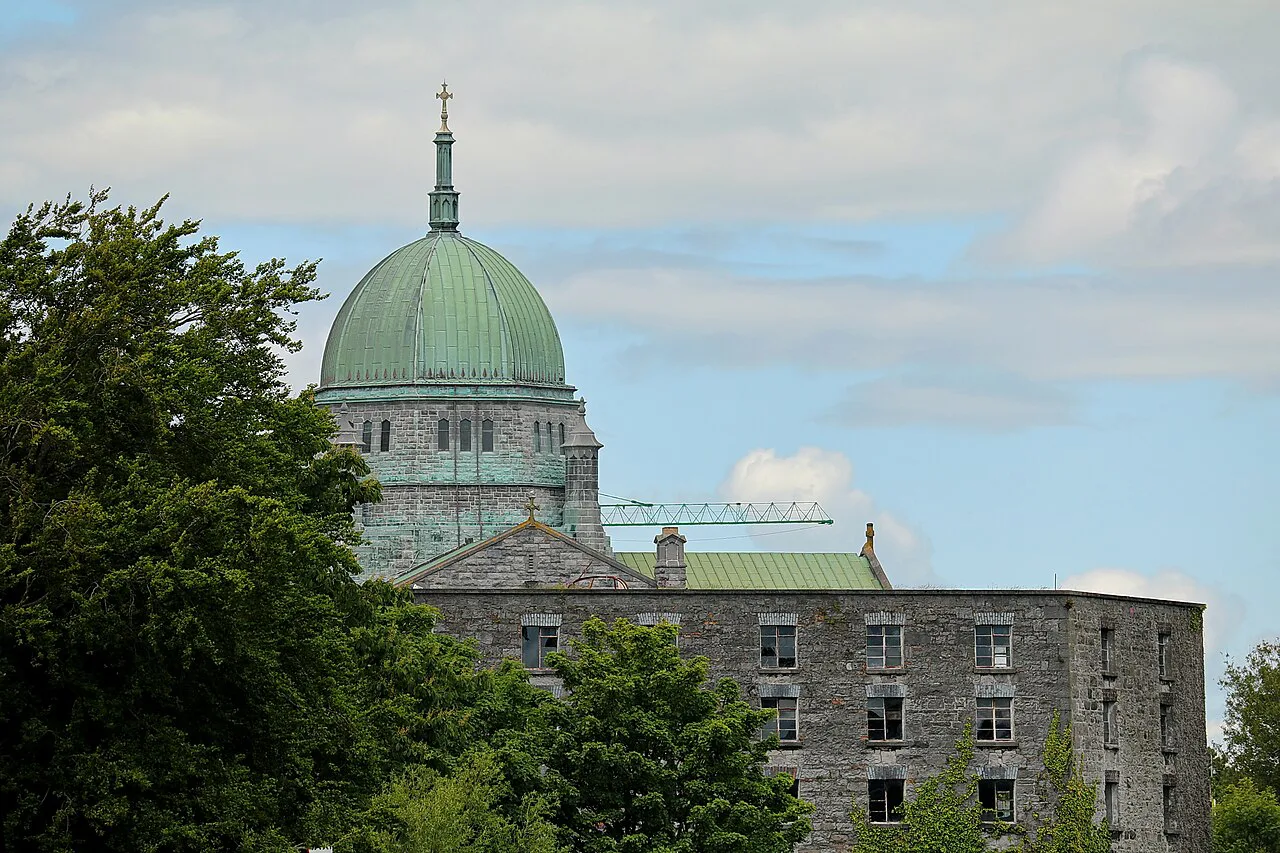
The cathedral sits on the west bank of the River Corrib, a little north and west of the city centre, according to the cathedral's own visitor information. That riverside position makes it an easy add-on to a walk along the Corrib rather than a separate excursion. The main entrance used by most visitors is in the east transept, facing the Salmon Weir Bridge, which is the landmark to aim for if you are approaching on foot.
Because the building is slightly outside the tight historic core, it feels calmer than the busy streets around Eyre Square. Allow the walk itself as part of the visit, and treat the cathedral as one stop among several in the city rather than the whole afternoon. If you are planning how the day fits together, our guide to Galway Neighborhoods maps the city into five areas to wander, which makes it easier to slot the cathedral into a wider route.
A Twentieth-Century Cathedral
Galway Cathedral was completed in 1965, which makes it a newcomer among European stone cathedrals. Independent travel coverage notes this date and points out that the architecture is modern rather than medieval, so visitors should not arrive expecting ancient vaults or a Norman nave. Knowing the date in advance helps set expectations: the interest here lies in twentieth-century design and decoration, not centuries of layered rebuilding.
The same coverage describes the interior as built around a decorated dome and Romanesque-style arches, with stonework that visitors single out alongside the mosaics. Read the Romanesque references as a stylistic choice in a modern building, not as evidence of medieval fabric. That distinction is the key to enjoying the space on its own terms.
What to Look For Inside
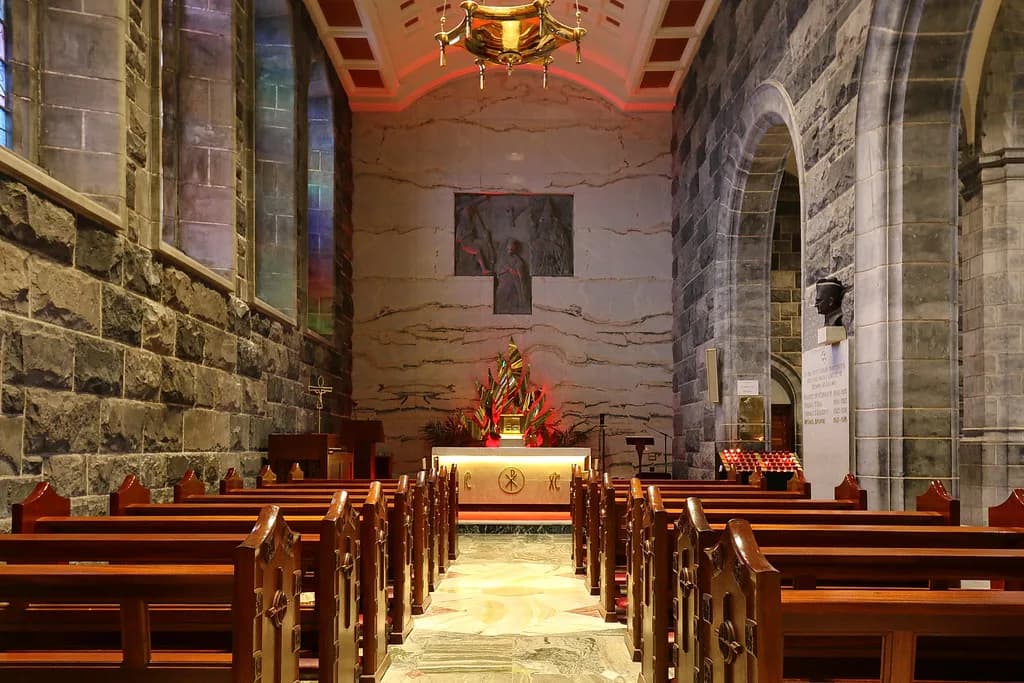
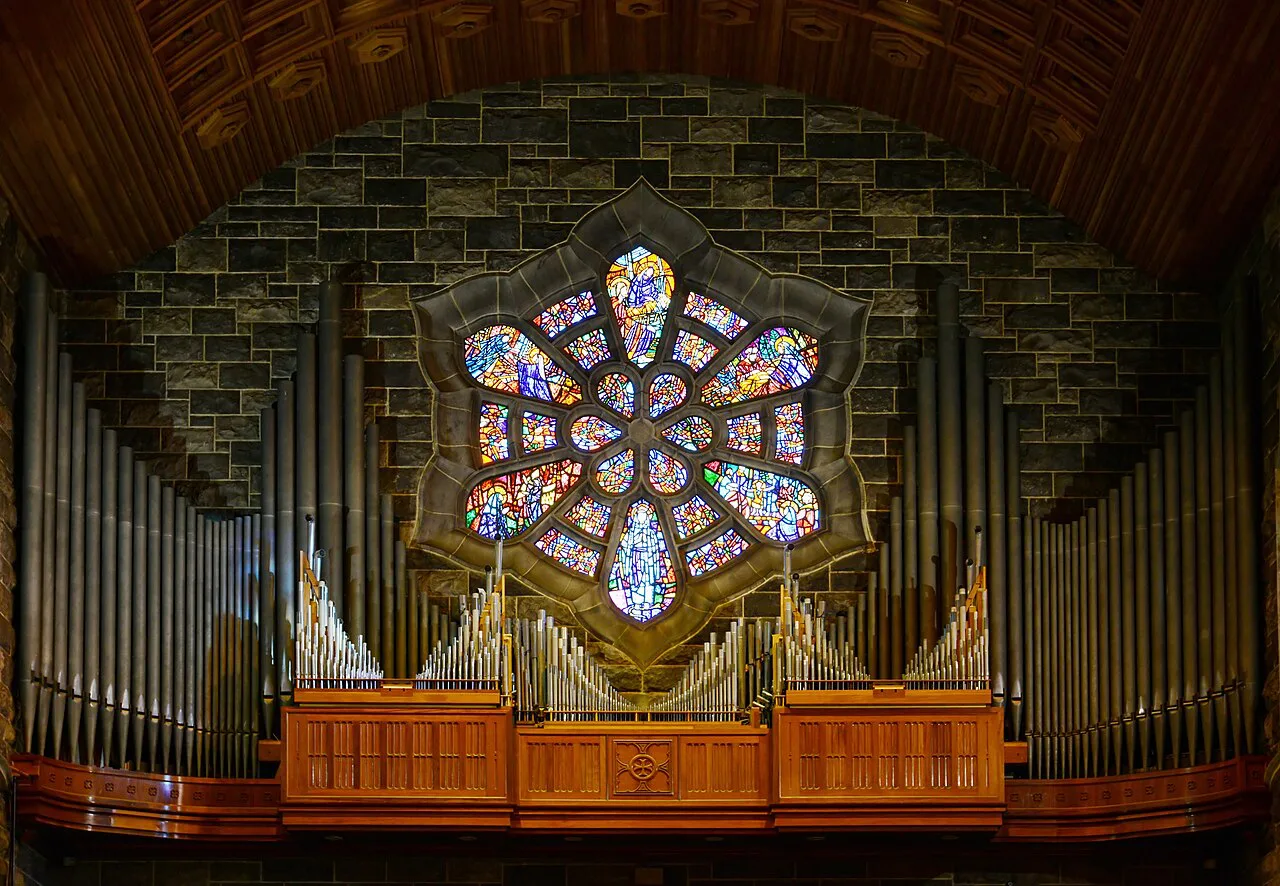
The interior's distinguishing feature is its mosaic scheme. Independent coverage notes that mosaics stand in place of the typical altars and stained-glass windows found in older cathedrals, and that one mosaic depicts John F. Kennedy. Look for the mosaics at eye level and above before turning your attention upward to the dome, which carries much of the decorative weight of the space.
A calm, self-guided look is the right approach here, with attention split between the dome, the arches and the stone surfaces. No fixed visiting time is published, so pace yourself by how long the mosaics hold your interest rather than by a set schedule. Keep voices low and movement unhurried, since this is an active church.

Visiting Around Services
The cathedral asks visitors not to walk around during services, and not to enter during Mass unless they intend to participate. If you arrive and a service is in progress, wait outside or return later rather than treating the congregation as part of the display. Groups do not need to book in advance unless they are seeking to celebrate Mass.
Visiting clergy and groups wishing to celebrate a private Mass in the Blessed Sacrament Chapel must first obtain permission from the Cathedral Office, with the chapel used at 9:30am from Monday to Saturday. For ordinary sightseeing groups, no such arrangement is needed. Timing a visit between services is the simplest way to see the interior without disturbance.

Opening Hours
The cathedral is usually open from 08:00 until 20:00, but the operator describes these times as approximate and notes that the building may close earlier on certain days, such as Christmas Day. Treat the schedule as a guide rather than a guarantee. Check the cathedral's visitor page before setting out, particularly around public holidays.
Admission and Donations
There is no admission charge, but the cathedral suggests a donation of €3 from visitors toward the ongoing upkeep of the building. Treat the figure as a suggestion rather than a ticket price, offered towards the upkeep of a working place of worship.
Arriving and Parking
Parking is available within the cathedral grounds and is open 24 hours, charged by the hour seven days a week. Galway City Council also operates a pay-per-day car park in Cathedral Square, immediately south of the cathedral. Camper vans are not permitted in the cathedral car park, and a notice at the entrance states this. For another city-centre stop with its own visitor guide, see the Galway Atlantaquaria. If you would rather spend the rest of the day exploring on foot, our Galway Neighborhoods guide breaks the city into five areas to wander.
The grounds car park suits a short stop, while the council car park across the way is the better choice if you plan to spend time in the surrounding streets on foot. Neither option should be assumed to have space at busy times, so arrive with a fallback in mind. If you continue downstream afterwards, the riverside stretch toward the Spanish Arch is a natural continuation of the walk.
Accessibility and Facilities
A wheelchair ramp is available at the main entrance in the east transept, facing the Salmon Weir Bridge, and a loop system for hearing-aid users operates throughout the cathedral. Public toilets are limited in number, so plan accordingly if you are visiting with children or a group. These arrangements are set out on the cathedral's visitor page.
Who This Visit Suits
This is a good stop for travelers interested in twentieth-century church architecture, mosaic work and modern Irish ecclesiastical design, and it rewards a calm half-hour or so rather than a rushed photo stop. It is less suited to anyone hoping for a medieval cathedral experience. Combining it with a riverside walk and one or two other city stops makes for a balanced morning, and if you want more indoor options, our guide to museums in Galway covers two nearby collections worth your time.
Plan Your Visit
Galway Cathedral is a compact riverside landmark with no admission charge and a modern interior built around mosaics, a dome and Romanesque-style arches. Go between services, carry a small donation, and check the operator's page for hours before travelling. The rewarding part is the building itself, so give the mosaics and the dome your attention rather than hurrying through.
Frequently Asked Questions
Is there an entrance fee for Galway Cathedral?
There is no admission charge, but the cathedral asks visitors for a voluntary donation toward the upkeep of the building. The operator's visitor page sets out the suggested amount and current wording, so check it before you travel.
What are the usual opening hours for Galway Cathedral?
The cathedral is usually open from 08:00 until 20:00, but the operator describes these times as approximate and notes earlier closing on certain days, such as Christmas Day. Verify the hours on the cathedral's visitor page before setting out.
Can visitors enter Galway Cathedral during Mass?
The cathedral asks that visitors not walk around during services and not enter during Mass unless they are taking part. If a service is underway when you arrive, wait or come back later; ordinary groups do not need to book in advance.
Where can you park near Galway Cathedral?
Parking is available in the cathedral grounds, open 24 hours and charged by the hour seven days a week, with no camper vans permitted. Galway City Council also runs a pay-per-day car park in Cathedral Square immediately to the south of the cathedral.
Is Galway Cathedral accessible for wheelchair users?
A wheelchair ramp is available at the main entrance in the east transept, facing the Salmon Weir Bridge. A hearing-aid loop operates throughout the cathedral, and public toilets are limited in number.
What is there to see inside Galway Cathedral?
Look for the mosaic scheme, including a mosaic of John F. Kennedy, along with the decorated dome, Romanesque-style arches and stonework. The cathedral was completed in 1965, so the interior reads as modern rather than medieval.