
Hall of the Red Earl: A Medieval Civic Hall in Galway

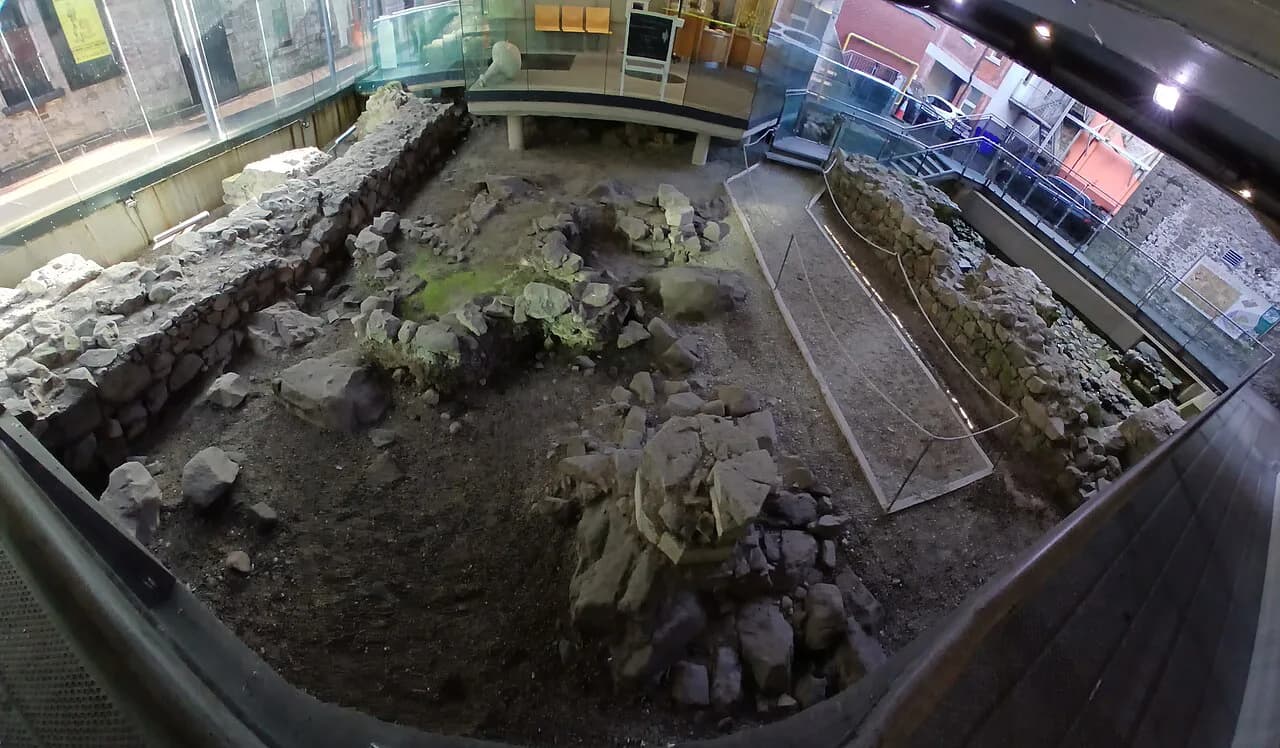
The Hall of the Red Earl is a medieval archaeological site on Druid Lane in the centre of Galway, where the footings of the city's first municipal building sit in a glassed enclosure among modern offices. Galway Civic Trust, also known as Dúchas na Gaillimhe, has presented the remains to the public since it moved into the adjacent building in 2009. This is a compact, enclosed urban excavation rather than a museum building with galleries, and knowing that shapes how you plan the stop.
Where the Hall Sits in Galway
Druid Lane runs off the central streets of Galway, so the site is reached on foot and appears suddenly as a sunken stone plan between the buildings around it. The setting is part of the experience: the hall was buried under later construction for centuries, and it now reads as a cut-away into the medieval town beneath the modern one. Browse the wider Galway Attractions: 9 Visitor Guides for the other stops that fit around it.
Because the display sits among modern buildings rather than behind a conventional museum entrance, it reads as a framed slice of the medieval town beneath the present one, though any guided interpretation or programme depends on the operator's schedule. The site sits close to Galway city centre landmarks such as the Spanish Arch and the riverside, which makes it an easy insert into a walk rather than a destination in its own right.
Galway's First Municipal Building
The hall dates from the 13th century and is linked to the Anglo-Norman de Burgo family, who were central to the founding of medieval Galway. It served as the town's first municipal building, and Galway Civic Trust describes it as the medieval equivalent of a tax office, courthouse and town hall combined. The Discover Ireland account of the Hall of the Red Earl sets out that same civic role, explaining how taxes were collected, justice dispensed and banquets held within its walls.
That combination of functions is worth holding onto while you look at the ruins, because the surviving footprint is modest and the stone alone does not tell you what happened inside. The Civic Trust's project page notes that the original structure was church-like, with large round-headed windows and opposing entrances at its south-eastern end, which helps you picture a formal civic hall rather than a private dwelling.

Why It Is Called the Hall of the Red Earl
The name honours Richard de Burgo, the Earl of Ulster, grandson of the figure associated with the town's foundation, and the hall was named for his line. For other central landmarks with their own opening arrangements, see the Galway Attractions: 9 Visitor Guides.
The family connection explains why the site matters in a city whose medieval core is easy to walk past without noticing. The hall stood at the centre of civic life for the de Burgo town, and its naming after the earl keeps that political origin visible in a lane where little else of the 13th century survives above ground.

Decline and Burial
The hall's story turns with the rise of Galway's 'Tribe' families, who gained power at the expense of the de Burgos and pushed them out of the city. The Civic Trust believes the building was abandoned towards the end of the 15th century, was reported ruinous by the middle of the 16th century, and appears in ruins on the 1651 Pictorial Map of Galway.
Over the following centuries the remains were covered over and built upon, so the hall vanished beneath the growing town. That long burial is the reason the exposed site is so shallow and framed rather than monumental: you are seeing the top of a much deeper archaeological layer that later buildings sealed in place.
Rediscovery in 1997
The remains were found in 1997 by Office of Public Works archaeologists during ground work for a proposed extension to the Revenue Commissioners offices. The site could be identified from the 1651 map, and more than 11,000 artefacts were recovered in the excavation that followed. The extension was redesigned so the hall could be preserved where it lay, which is why the building line now bends around the glass enclosure.
Understanding that sequence changes what you see. The display is not a reconstruction brought in from elsewhere but the actual excavated floor and footings left in place after a planning decision to protect them, which makes this a rare case of a modern office block accommodating a medieval monument rather than displacing it.
What You Actually See
The hall is displayed under glass panelling with a viewing gangway wrapped around it, complete with flood-lighting, interpretative panels and replicas of artefacts found on site. Galway Civic Trust's project page notes that the display explains the significance of the remains and the finds, so a visitor who reads the panels leaves with more than a view of old stone.
Set expectations accordingly: this is an exposed archaeological display rather than an indoor museum with furnished rooms, and you should not count on seating, shelter or a cafe. If you want a roof over your head instead, the museums in Galway are a short stroll away. Allow a short stop of perhaps fifteen to thirty minutes if you read the panels carefully, and longer only if you are combining it with the audio interpretation or a nearby exhibition.
Reading the Building's Shape
Look for the church-like plan the Civic Trust describes, with large round-headed windows and opposing entrances at the south-eastern end. These openings tell you how people entered and how light reached the interior of a substantial medieval hall, and they help distinguish the civic building from the smaller structures around it. The Trust's account of the hall sets out this architectural detail alongside its administrative role.
The hall's position on Druid Lane, hemmed by later buildings, is also instructive: the medieval town was dense and the hall was one formal set-piece within it rather than an isolated landmark. Pairing the footings with the surviving lanes around them gives a more honest sense of scale than the stone outline alone.
Interpretation: Audio Tour and Gallery
Galway Civic Trust publishes an audio tour of the Hall of the Red Earl, and its page on the Hall audio tour shows the history written up in several languages. The page does not state how the tour is accessed on site, so confirm the details with the Civic Trust before you rely on it for a visit.
The same building also contains the Peadar O'Dowd Art Gallery, which hosts temporary exhibitions rather than a permanent collection. During the Open Doors exhibition by Rossana Damiani, held 23–30 October 2026, the gallery ran Monday to Friday from 9.30am to 4.30pm; those hours were published for that exhibition only and should not be read as the hall's permanent opening times.
Checking Access Before You Go
Access can vary by date, and the Civic Trust posts dated notices when something changes. One example is a single-day closure on 14 October 2026 in solidarity with OPW staff taking industrial action, with the hall reopening on 15 October at 9.30am; that notice records one day only and is not a description of current access. Check the operator's latest notice before a specific trip, and allow time for the short walk to the Spanish Arch afterwards.
Public talks about the hall are separate events rather than fixtures at the site. Archaeologist and Civic Trust guide Ronan Harvey gave a talk on the hall on 22 August 2026 at the Mick Lally Theatre on Druid Lane, covering the excavations and the artefacts they produced; treat such talks as past or occasional events and check what is scheduled rather than assuming a regular tour.
Fitting It Into a Walk Through Central Galway
The hall works best as one element in a walk that takes in Galway's other central monuments on foot. Lynch's Castle, a fortified townhouse on the main shopping street, and St Nicholas' Collegiate Church are both within easy reach, and the riverside cluster including the Spanish Arch lies a short walk west.
For a broader view of the city's museums and collections, the guide to museums in Galway sets out what else is worth your time in the same area. If your interests run to twentieth-century literary history, the Nora Barnacle House is another small central stop that pairs well with a morning in the lanes.
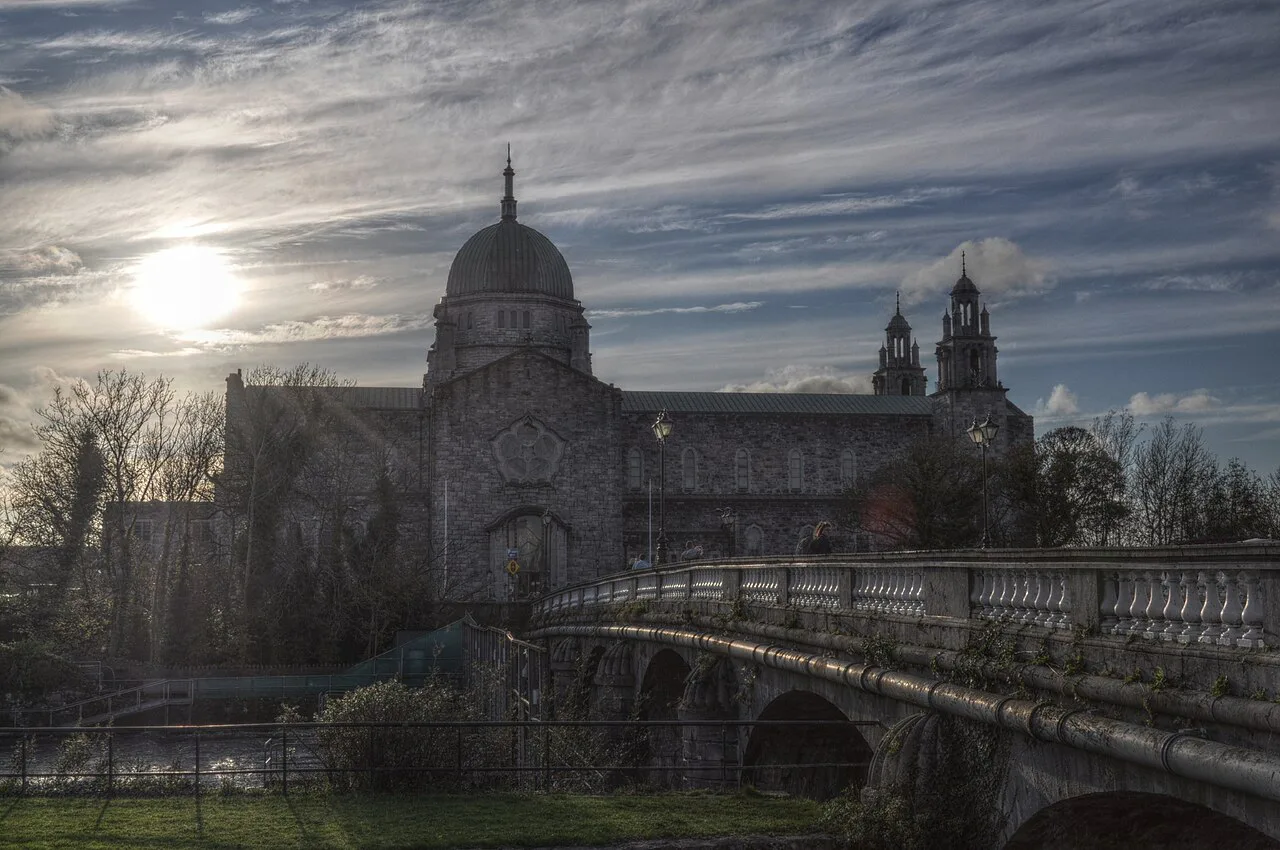
Two larger anchors sit at either end of the city centre: Eyre Square at the northern end and Galway Cathedral across the River Corrib to the west. Both are useful orientation points before or after the hall, and the area guides for the city can help you pick which quarter to walk next.
A Small Site With a Long Story
The Hall of the Red Earl rewards a short, attentive stop rather than a long visit. Read the panels, look for the round-headed openings and opposing entrances, and picture the tax office, courthouse and banqueting hall that once filled the footprint now exposed beneath the glass.
Before travelling, check Galway Civic Trust for the current position on access and any programme in the Peadar O'Dowd Art Gallery, and treat dated notices and past talks as history rather than a promise. For a family-focused alternative nearby, Galway Atlantaquaria offers a different kind of indoor stop on the city's western edge.
Explore more Galway guides
Frequently Asked Questions
Is the Hall of the Red Earl free to visit?
No admission price is published in the operator's pages consulted here, and the remains are displayed under glass beside Druid Lane with a viewing gangway around them. Check with Galway Civic Trust for any charges relating to guided interpretation or events.
How old is the Hall of the Red Earl?
Its origins are dated to the 13th century, when it served as the first municipal building of the de Burgo town. The Civic Trust believes it was abandoned towards the end of the 15th century and was reported ruinous by the middle of the 16th.
Why is it called the Hall of the Red Earl?
The name honours Richard de Burgo, Earl of Ulster, grandson of the figure linked to Galway's foundation. It reflects the hall's de Burgo origin rather than the colour of the stonework.
How was the site discovered?
Office of Public Works archaeologists uncovered the remains in 1997 during work for a proposed extension to the Revenue Commissioners offices. The extension was redesigned to keep the hall in place, and more than 11,000 artefacts were recovered.
Can you walk on the medieval floor?
No. The excavated remains are preserved in place under glass with a viewing gangway around them, so visitors look at the hall rather than walking through it. Interpretative panels and replica artefacts explain what is on view.
Is there an audio guide?
Galway Civic Trust publishes an audio tour of the hall with narration in several languages. How it is accessed on site is not set out on that page, so confirm the practical details with the Trust before you plan around it.
How long should a visit take?
Most visitors need only a short stop of roughly fifteen to thirty minutes to read the panels and study the footprint. Add time if you are attending an exhibition in the Peadar O'Dowd Art Gallery or listening to the audio interpretation.
How do I check whether it is open on my dates?
Check Galway Civic Trust's website for its latest public notices before travelling. The operator posts dated updates when access changes, and these are more reliable than any single published hours list.
Sources
- Visit Hall of the Red Earl with Discover Ireland
- Public Notice - Wednesday, 14 October 2026 - Galway Civic Trust - Dúchas Na Gaillimhe
- Open Doors - Channeling Art Exhibition, 23–30 October 2026 - Galway Civic Trust - Dúchas Na Gaillimhe
- The Hall of the Red Earl - Ronan Harvey - Saturday 22 August 2026 | 12:00 PM – 1:00 PM - Galway Civic Trust - Dúchas Na Gaillimhe
- Audio Tour for Hall of the Red Earl - Galway Civic Trust - Dúchas Na Gaillimhe
- Projects - Galway Civic Trust - Dúchas Na Gaillimhe