
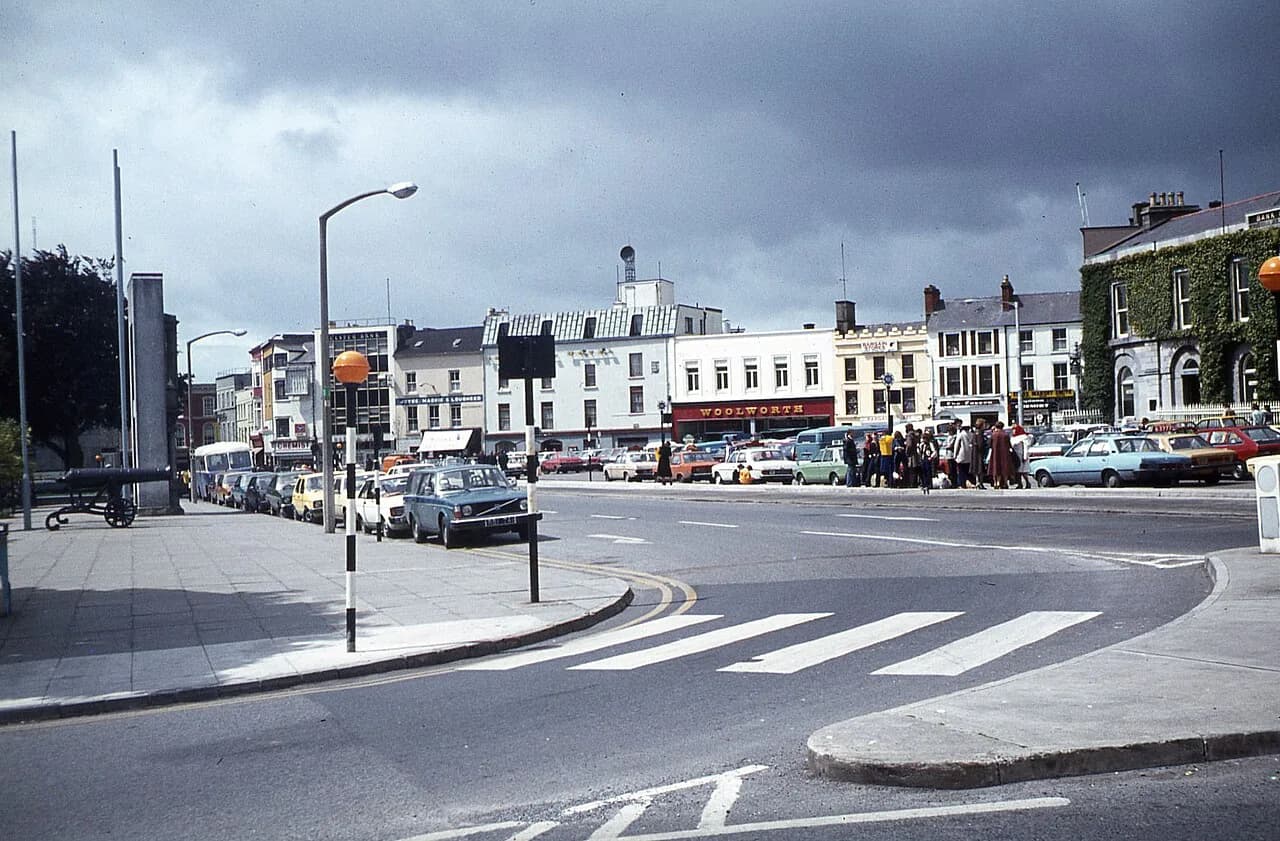
Eyre Square, Galway: Visiting the City's Central Public Square

Eyre Square answers itself in a sentence: it is Galway's central public park, known since 1965 as John F. Kennedy Memorial Park, where a medieval market green now meets a redesigned paved square. There is no ticket and no interior to see. It is an open-air space you walk through on the way into the city.
It sits in the heart of Galway city centre, adjoining the William Street and Shop Street shopping area, with the railway and bus stations directly adjacent. That makes the square the first piece of the city many arrivals cross. A visit is measured in minutes rather than half a day.
Where Eyre Square Is and Why It Matters on Arrival
The park is rectangular and bounded by streets on three sides, framed by the main traffic arteries feeding the city centre. Because it adjoins the William Street and Shop Street shopping area, it works as a threshold: cross it and you are already in the pedestrian core.
Galway railway and bus station sit beside the square, and the council report describes this as the main route for people moving between the transport hubs and the pedestrian areas of the city. If you arrive by train or coach, you do not need to plan a separate trip to see it.
The west side of the square was pedestrianised in 2006 according to the council report, which is the change that most affects how you experience it on foot. Walking in from the station side, you meet paving and park rather than a ring of moving traffic inside the square.

What You See Today: Paths, Furniture and a Play Area
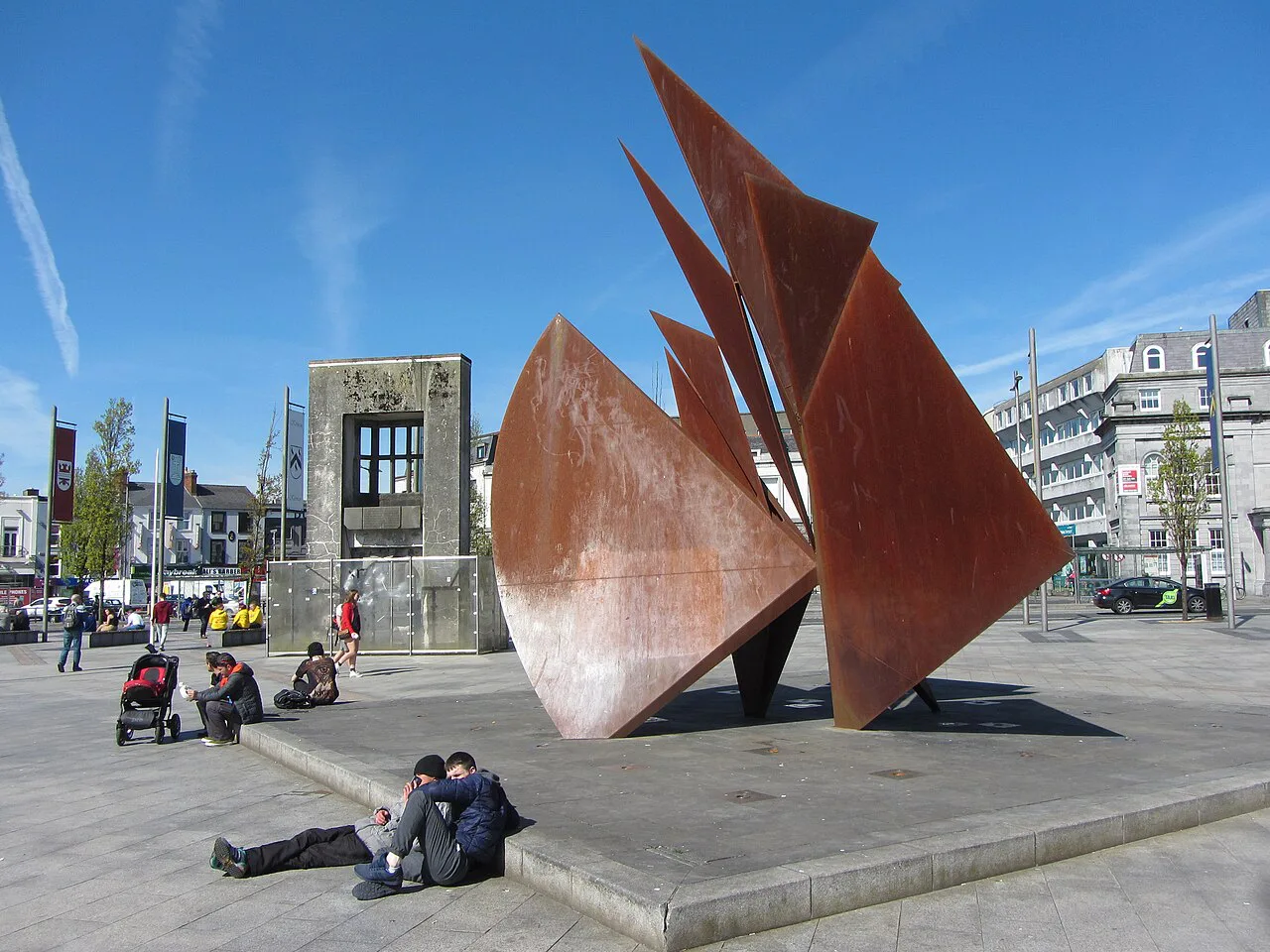
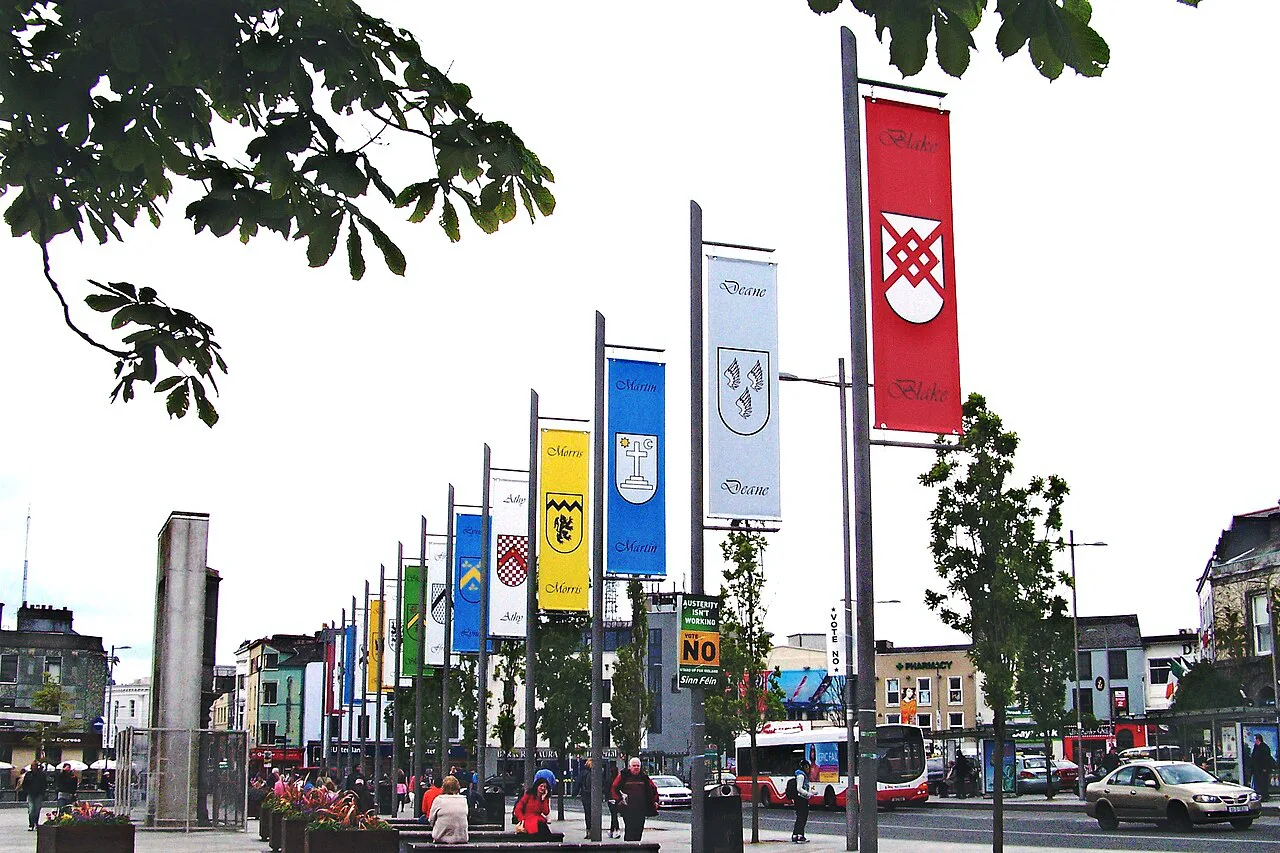
What fills the space now is the result of a redesign described by the project's designers, Mitchell + Associates. They describe a wide arcing path traversing the square, coordinated street furniture, an integrated play area and high-quality paving, with car parking removed from the edges to let the green centre be reached easily.
The design account says the redesign increased usable pedestrian space in the square by two thirds and that the previous layout, including a substantial change in level across the space, no longer maximised its potential uses. For a visitor, that reads as a square you can cut across diagonally rather than skirt around, with the park as something to enter.
Mature trees on site are a feature the council's later proposals specifically set out to retain and protect, which tells you they are treated as part of the square's character rather than incidental planting. A walk along the curving path gives a sense of the open centre and the planted edges.

From Medieval Green to Edward Eyre: How the Square Got Its Name
The square began as a medieval open space in front of the town gate, known as The Green, and markets mostly took place in its northern part. The earliest recorded effort to improve it came in 1631, when ash trees were planted and the area was enclosed with a wooden fence.
In 1710 Mayor Edward Eyre officially presented the plot of land to the city, and the square took his name. The street furniture and paving you walk on now sit over a site whose civic identity is more than three centuries old.
Renaming and Reworking: Layers the Square Still Carries
In 1801 General Meyrick erected a stone wall around the square, and the council report notes it was later known as Meyrick Square. In the middle of the nineteenth century the whole park underwent a Georgian-style redevelopment, another layer beneath the modern surface.
A full-scale reconstruction began in the 1960s, the iron railings were removed and raised around the backyard of St. Nicholas' Church, and the park reopened under a new name in 1965. The collegiate church nearby is a useful anchor for understanding how the medieval town sat around this green.
John F. Kennedy Memorial Park: The 1963 Speech and the 1965 Name
The 1965 renaming honoured US President John F. Kennedy, who had visited Galway city and made a speech in the square on 29 June 1963. That date is the reason the park carries his name in council documents.
Visitors often know one name or the other, so expect to see Eyre Square and John F. Kennedy Memorial Park used side by side. The dedication is a naming history, not a museum or exhibition, so there is nothing to buy a ticket for.
Artefacts and Trees: What the Design Accounts Protect
The design account states that the scheme provides for protecting and safeguarding the many historical and artistic artefacts in the square, whether retained in place or relocated. It does not itemise them, so treat any single object you see as part of a broader civic collection rather than a fixed set-piece.
The council's planning report reinforces the point about planting, stating that the proposals are designed so the mature trees on site are retained and protected. Together the two sources suggest the square's character lies in this balance of old objects, trees and an open, walkable surface.
What Is Only Proposed: The 2026 Tourist-Facility Plans
Galway City Council's 2026 planning and design report proposes demolishing the existing kiosk and toilet block at the northwest corner and replacing them with a multipurpose facility. The proposal includes a new tourist information office, public conveniences, a Changing Places facility and an external performance space, with landscaping and tree protection built in. These are proposals, not finished amenities, so do not plan around them.
The same report clarifies current arrangements: the official Galway City Tourist Office is located in Galway City Museum and operated by Fáilte Ireland, while a private operator runs a tourist information and ticket booth from the kiosk in the square. If you want official advice, go to the museum rather than the kiosk, and our guide to the museums in Galway covers what else is worth seeing there. That outing pairs naturally with a short wander through the surrounding streets, as our Galway Neighborhoods guide sets out.
Because planning status can change, check Galway City Council's published documents before relying on any facility in the square, and treat the kiosk booth as privately run visitor information rather than the official tourist office.
Practical Notes for Visiting the Square
The square is a public open-air park, and the sources here give no opening hours or admission prices for it. Any guided tours, events or seasonal programmes would be separate arrangements, and current details should be checked locally before you rely on them.
For the rest of the city, the William Street and Shop Street area begins immediately adjoining the park and is the natural next stretch on foot. Galway's attractions, from the cathedral to the riverside, are spread across the centre and make a sensible continuation of a walking day, and Galway Attractions: 9 Visitor Guides offers further direction. If you would rather pick an area to wander than a single sight, Galway Neighborhoods breaks the centre into walkable districts.
If you want a single neighbourhood to explore after the square, the Latin Quarter is the obvious direction; a district guide will keep you on foot rather than sending you back to the station. Use the square as orientation, then choose one direction and walk it properly. If you would rather weigh a few options first, Galway Neighborhoods: 5 Area Guides compares the areas within easy reach of the centre.
Plan Your Visit to Eyre Square
Eyre Square rewards a short, deliberate stop. Arrive from the station, read the layers from medieval green to 1710 naming to 1965 dedication, and note the arcing path and open centre that the redesign created. It is a park to cross and to sit in, not a ticketed attraction.
Before travelling, check Galway City Council's current planning documents for the status of the proposed tourist facilities, and confirm any event or tour arrangements directly. The square itself stays public and open-air, so the main thing to plan is your time in the surrounding city. For other nearby heritage stops, see guides to Lynchs Castle, Nora Barnacle House, Galway Atlantaquaria and the Hall of the Red Earl.
Explore more Galway guides
Frequently Asked Questions
Where is Eyre Square in Galway?
It is in the heart of Galway city centre, adjoining the William Street and Shop Street shopping area, with the railway and bus stations directly adjacent. That places it on the main route between the transport hubs and the pedestrian core.
Why is Eyre Square also called Kennedy Park?
The park was officially renamed John F. Kennedy Memorial Park in 1965, honouring the US President who visited Galway and spoke in the square on 29 June 1963. Both names continue to be used.
How long should I spend at Eyre Square?
It is a public park rather than an attraction with interiors, so it works best as a short stop on the way into the city, with time to walk the paths, look at the open lawns and absorb the historic layers explained on this page.
Is there a tourist office in Eyre Square?
The official Galway City Tourist Office is in Galway City Museum, operated by Fáilte Ireland. A private operator runs a tourist information and ticket booth from the kiosk in the square. A replacement tourist information office is only proposed in a council planning report.
What is there to see in Eyre Square?
Look for the wide arcing path and open central space created by the redesign, coordinated street furniture, an integrated play area, mature trees and historical and artistic artefacts the design account says are protected. There is no museum or exhibition inside the square.