Kilkenny History: How Two Medieval Towns Became One City
Kilkenny history explained through sites you can visit: the castle, St Canice's round tower, Black Abbey, the Medieval Mile Museum and Rothe House.
On this page
Kilkenny's street pattern makes more sense once you know it grew as two settlements: the Irishtown gathered around St Canice's Cathedral on one knoll, and the Anglo-Norman High town laid out between the castle and the cathedral. The River Nore curls through the city, and the small Breagagh stream once marked the boundary between the boroughs. Walking between the two poles today is the simplest way to read that history, because most of the key sites still stand in roughly the positions the medieval town assigned them.
What follows is a site-by-site account of how the city developed, with bounded access notes drawn from the operators and state heritage bodies rather than guesswork. Some of these places are climbable or walkable; others require a ticket or a guided tour. Where a page does not publish hours or prices, this guide says so instead of filling the gap.
Why Kilkenny's Medieval Past Is Legible on the Ground
Kilkenny has been the dominant town of its county since the twelfth century, and the survival of its medieval street plan is what makes the history readable rather than abstract. High Street remains essentially the same thoroughfare it was in the thirteenth century, and the long burgage plots behind it still run back toward the old town wall. That continuity is unusual among Irish cities, and it means you can trace a medieval property system simply by looking at building depths along the street.
The city's shape began with geography: the Nore meander and four slight knolls shaped where the important buildings went. As the Kilkenny Archaeological Society describes them, the knolls were occupied by St Canice's Cathedral, St Mary's Cathedral, Kilkenny Castle and St Mary's Church; the medieval St Mary's church, whose remains now house the Medieval Mile Museum, is one of those sites. When you notice that the castle and the cathedral sit at opposite ends of the old town, you are seeing a deliberate Norman planning principle rather than coincidence.
Cill Chainnigh: The Early Church Site of Canice
The city's name, Cill Chainnigh, means Canice's Church, which points to the early religious origin of the settlement. Canice died around 599, but the written lives of the saint are late compilations, and it is uncertain whether he personally founded a church at Kilkenny or whether a disciple established it later. His principal foundation was at Aghaboe, and annals used the same place name for both sites, so early references can be genuinely ambiguous.
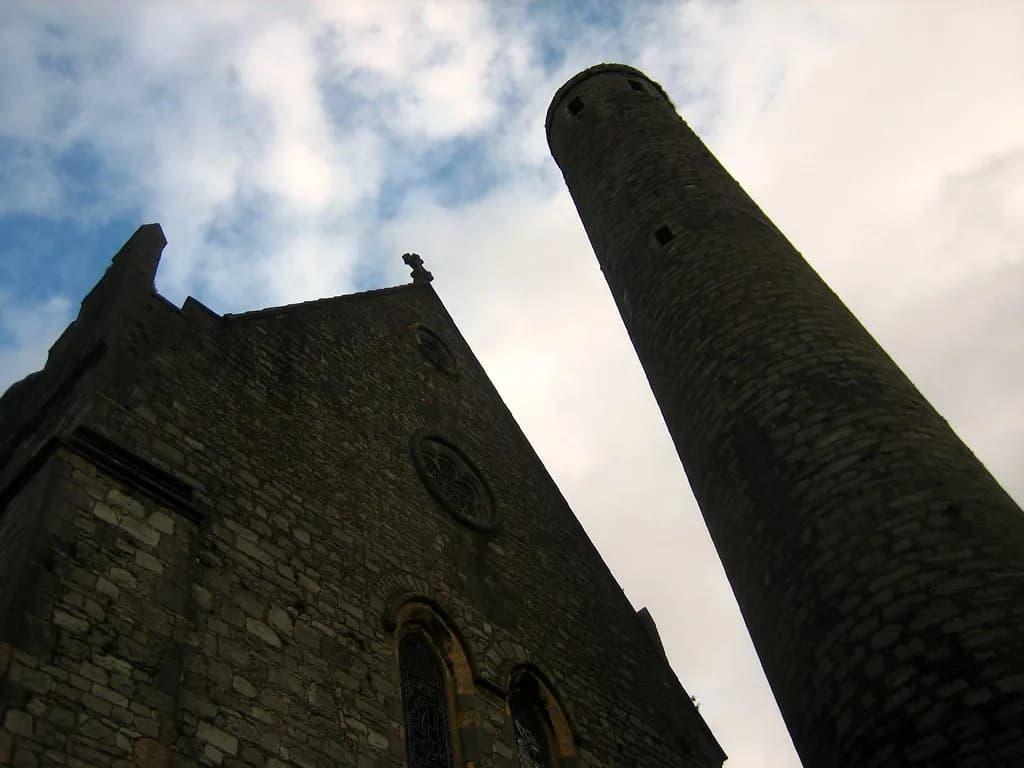
What is not in doubt is the antiquity of the site itself. A round tower stands beside the cathedral; the cathedral describes it as the oldest standing structure in the city, with a reference suggesting a mid-ninth-century date. The bishop's seat was transferred from Aghaboe to Kilkenny around 1120, which confirms that Kilkenny had become an episcopal centre well before the Normans arrived.
Two Towns, One City: Irishtown and the High Town
After the Anglo-Norman invasion, St Canice's became the centre of a separate borough called the Irishtown, which had its own corporation until the 1830s. The Normans meanwhile established a castle at Kilkenny by 1173 and laid out a borough later known as the High town or Englishtown, separated from the Irishtown by the Breagagh stream. The High town filled most of the ground between castle and cathedral, and the two settlements functioned as distinct entities for centuries.
Each town had its own defensive walls. The High town's circuit enclosed a roughly 750 by 325 metre area and was entered through seven gates, among them Castle Gate, St Patrick's Gate and Bridge Gate, while the Irishtown's smaller enclosure of about 300 by 250 metres had four gates — Water Gate, Green's Gate, Dean's Gate and Troy's Gate. Knowing this helps you interpret surviving fragments of wall and the gate names that persist in street names.
Marshall's 1207 Charter and the Burgage Plots
William Marshall, Lord of Leinster, gave Kilkenny a charter as a town in 1207, setting out the rights of its burgesses and freemen. The charter also stipulated that burgage plots be twenty feet wide, and these long narrow holdings became the backbone of the planned town. Each burgess built a house on the street frontage, with outhouses, stores, herb gardens or an orchard behind.
The lanes that characterise the medieval core grew from this arrangement, since courtyards and alleyways were needed to bring light into the deep plots. Many properties along High Street and Parliament Street still retain those long divisions stretching back toward the town wall. When you walk these two streets, look at how often a narrow entry interrupts the frontage: each one is a fossil of the medieval property layout.
Kilkenny Castle: Norman Fortress to Butler Seat
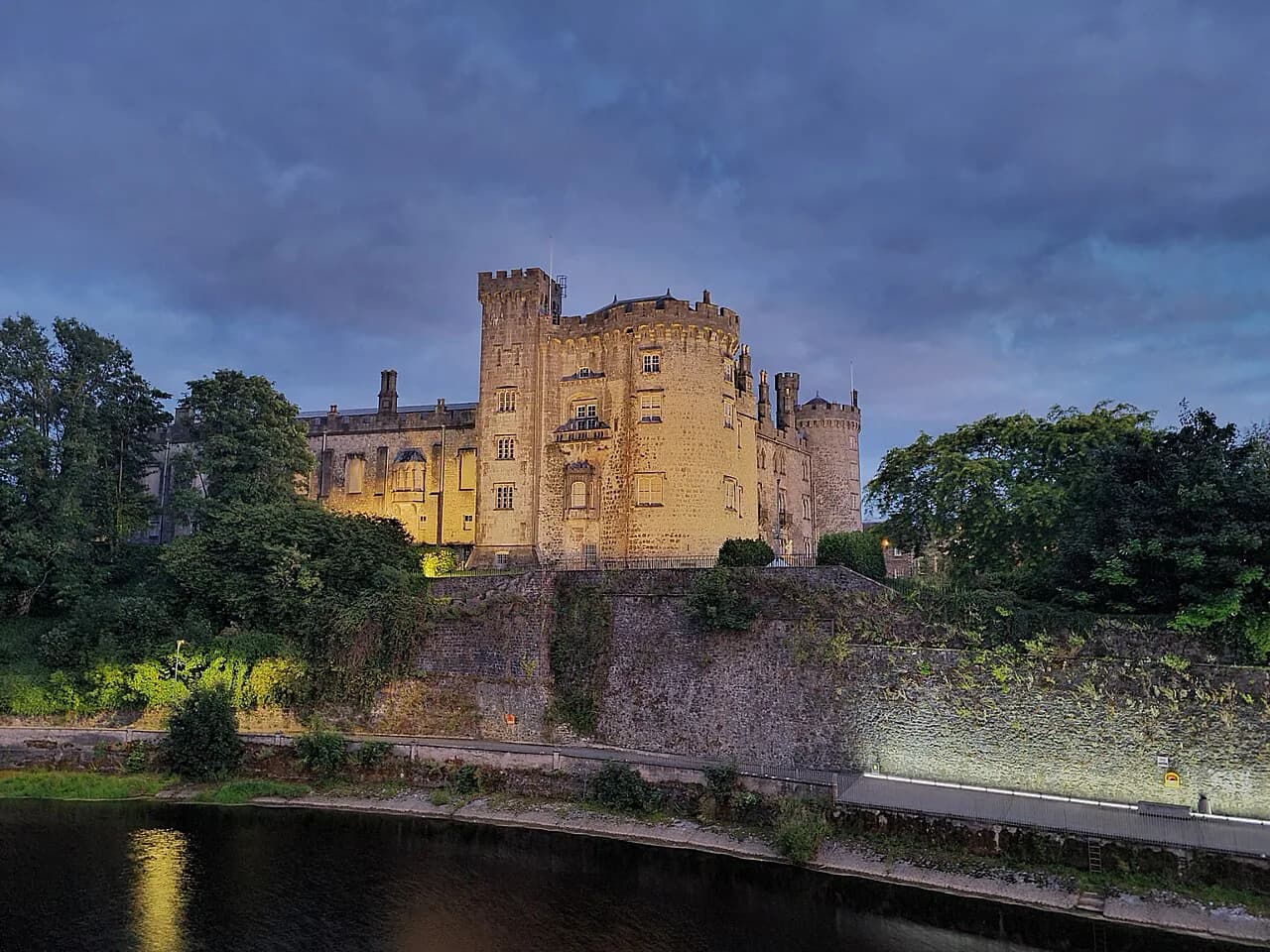
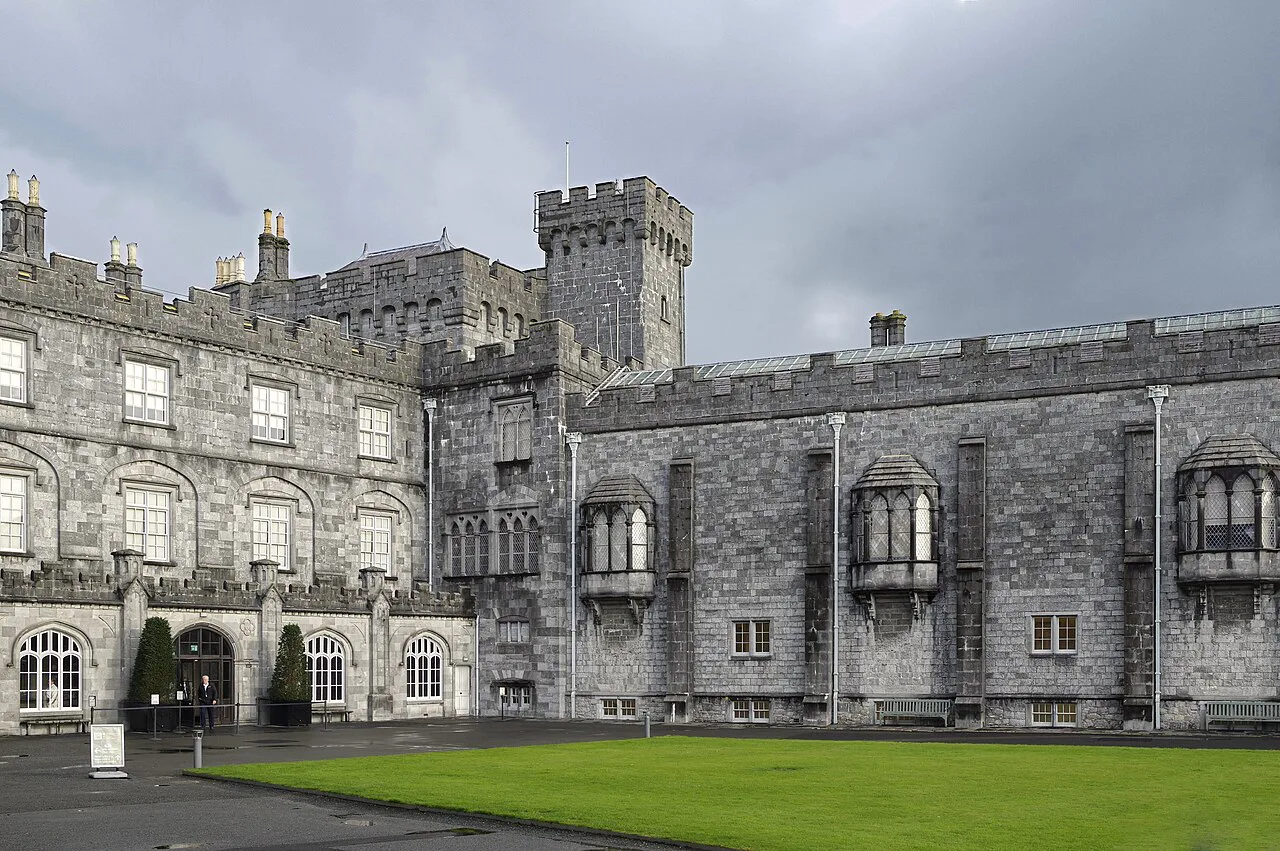
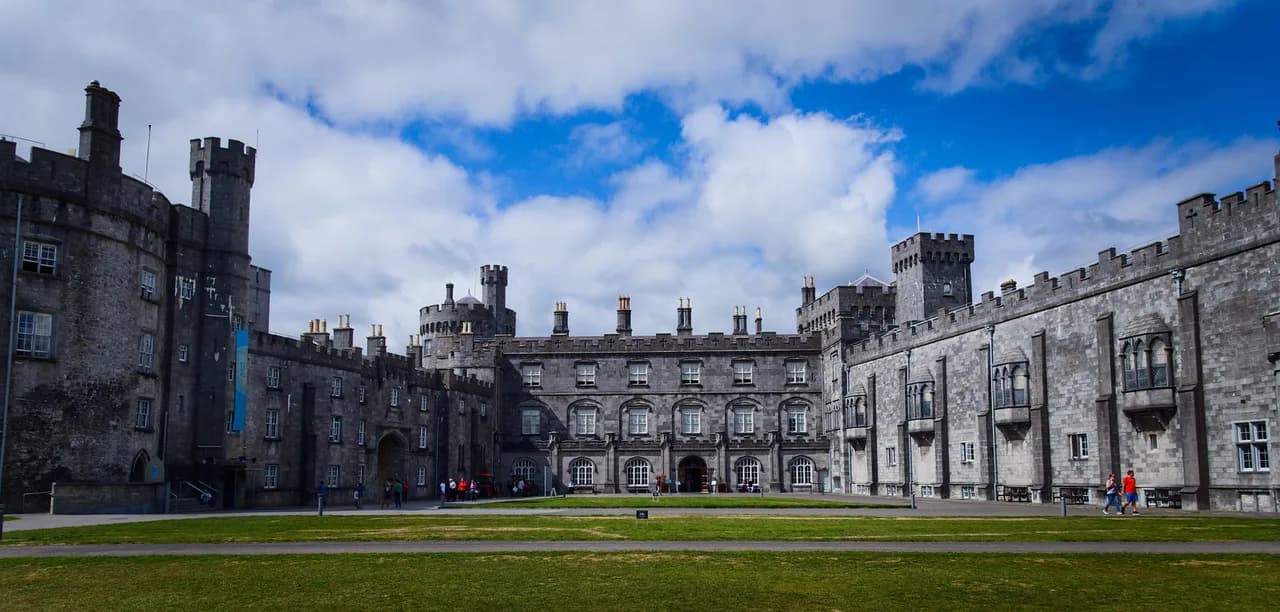
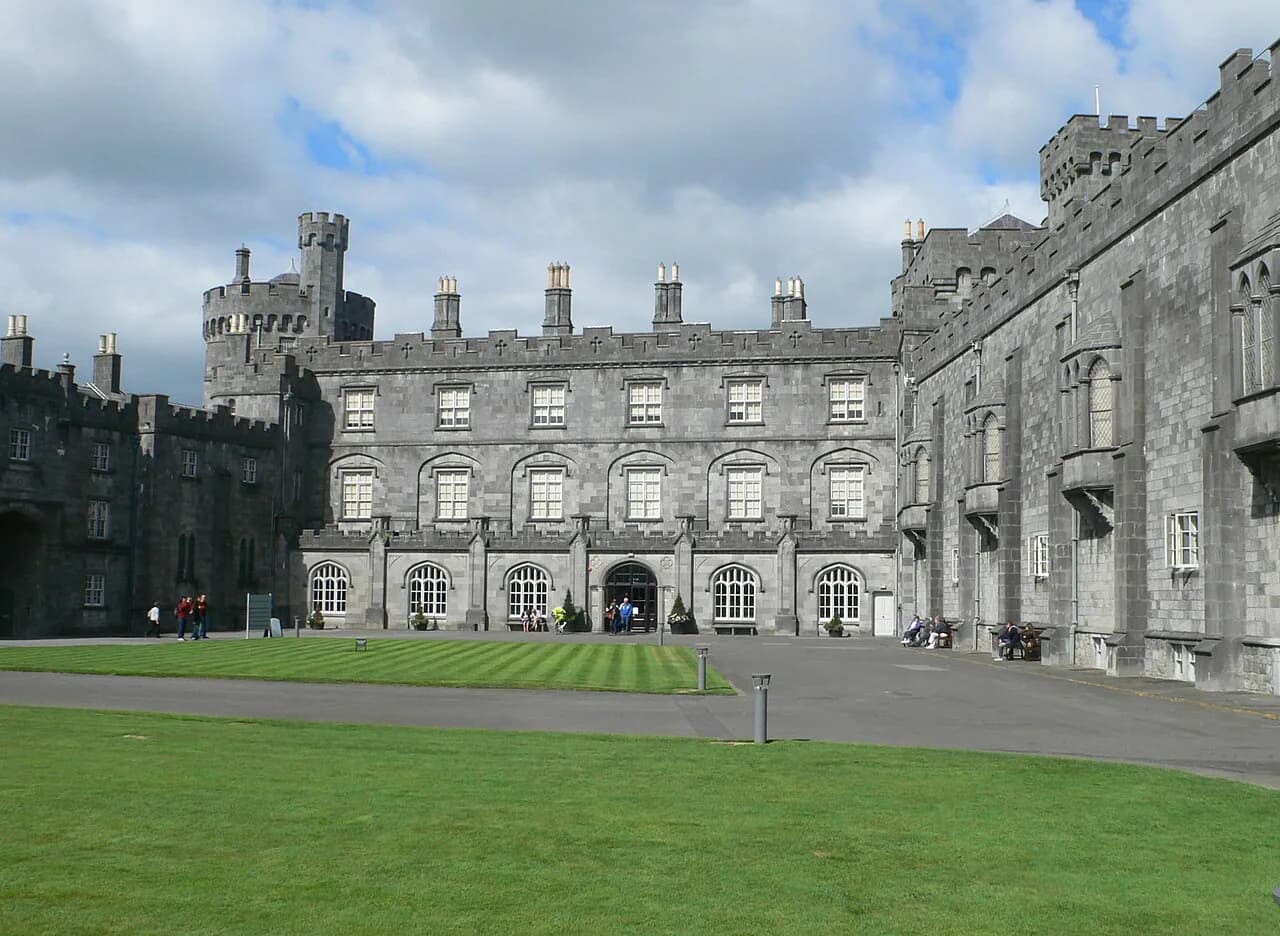
The castle began as a Norman fortress in the twelfth century and became the principal seat of the Butler family, earls, marquesses and dukes of Ormond, for almost six hundred years. The present stone structure belongs mainly to the mid-thirteenth century, and the building remained in the Butler family until the twentieth century, when it passed into public ownership. Guided tours trace how the family's fortunes rose and fell in step with the castle's.
Inside, the medieval room offers a short audiovisual account of the castle's transformation from fortress to stately home, and the Picture Gallery is among the longest rooms in Ireland. Outside, the parkland extends over fifty acres, with a rose garden, orienteering courses and paths to a pond. An archaeological dig site exposes William Marshall's medieval gatehouse and part of the thirteenth-century south wall, making the castle's earliest phase visible without a guide.
St Canice's Cathedral and the Climbable Round Tower
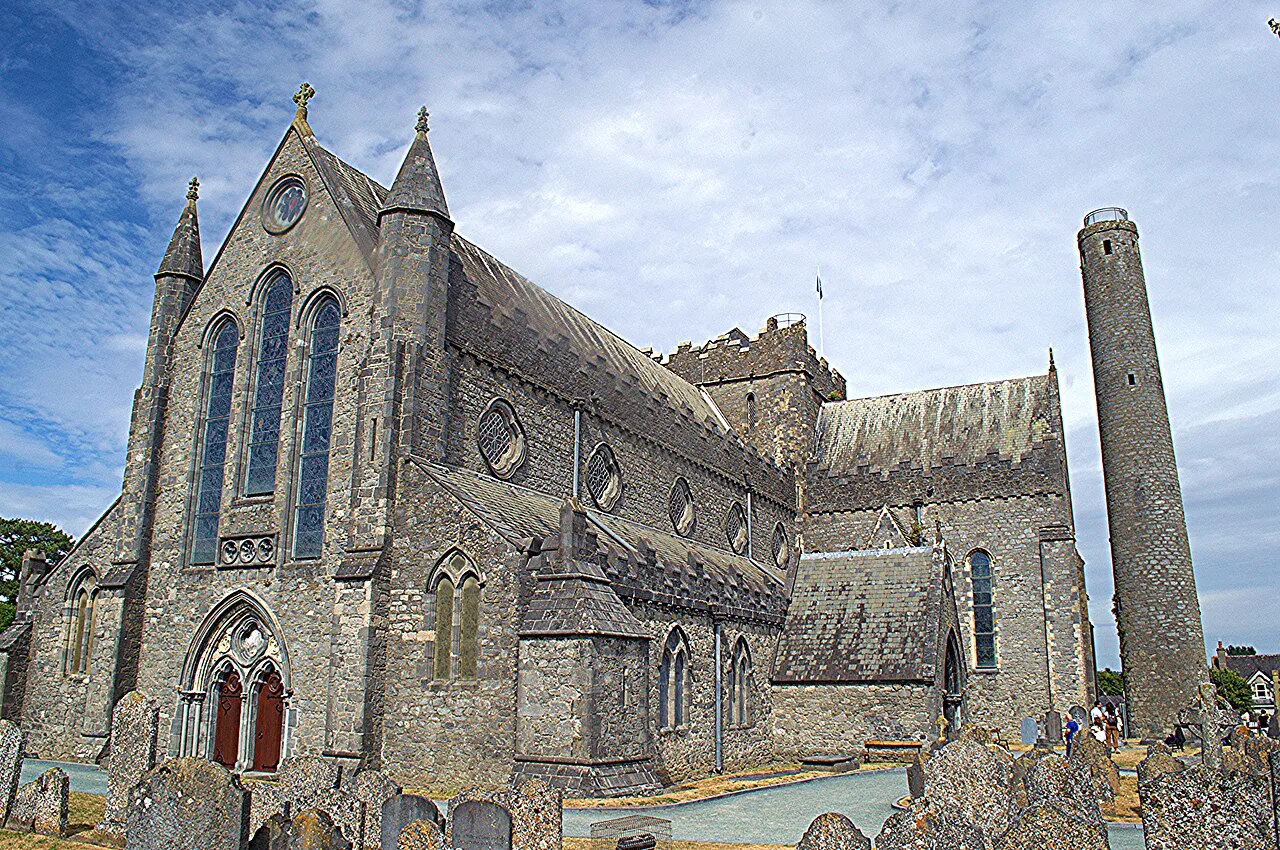
The present cathedral was built in stages during the thirteenth century. The cathedral's own history notes that Bishop Hugh de Mapilton (1251–1260) is credited as "first founder" and probably built the choir, transepts and crossing tower, with Bishop Geoffrey de St Leger (1260–86) completing the nave; completion is often cited as 1285. In 1332 the central tower collapsed into the choir, an event the cathedral's own history connects with the trial of Dame Alice Kyteler for witchcraft, and Bishop Ledrede later repaired the damage.
The round tower beside it is one of only two Irish round towers that people may climb, and it stands about 30 metres high with 121 steps up internal ladders. Climbing is weather-permitting, and the cathedral publishes seasonal opening times for the tower separately from cathedral visiting; check the cathedral website before relying on any summary. The surrounding close is described by the cathedral as the best-preserved medieval cathedral close in Ireland, with a deanery, library buildings and a graveyard where burials have taken place for over a thousand years.
Guided tours of cathedral and tower together run about forty minutes and are ticketed in adult, child, family and concession bands. The operator publishes current rates on its tour page, so confirm the price and the minimum height requirement for children before booking. The cathedral also remains an active place of worship, with regular services and notable use of its acoustics during the Kilkenny Arts Festival.
Black Abbey: A Dominican Foundation Outside the Walls
The Black Abbey was founded in 1225 as a Dominican house just outside the original city walls, and its full name is the Church and Priory of the Most Blessed Trinity. The popular name comes from the black cappa the friars wore over their white habits in the Middle Ages. It played a major part in the city's civil and ecclesiastical life until 1543, when Henry VIII confiscated it and converted it into a courthouse.
After ruin and later restoration, the abbey reopened for public worship in the nineteenth century. Visitors today can see fabric dating from the thirteenth to the sixteenth centuries, including sepulchral slabs, stone carvings and a figure of the Blessed Trinity. Also on display is the only known surviving wooden statue of St Dominic in Ireland, and the great Rosary Window depicts the fifteen mysteries of the Rosary.
Medieval Mile Museum: Inside St Mary's Church
The Medieval Mile Museum occupies the site of the thirteenth-century St Mary's church and graveyard, and its collection spans more than eight hundred years of Kilkenny history. Exhibits include Kilkenny's civic treasures, high crosses, carved stone tombs and objects unearthed during restoration of the church and graveyard. The Rothe Chapel, with tombs of the medieval merchant Rothe family, is among the highlights.
The High Cross exhibition introduces the High Kings of Ossory and the foundation of the monastery of Kilkenny by St Canice, which makes the museum a useful complement to the cathedral site. A LEGO minifigure trail gives younger visitors a reason to look closely at the displays. Nearby, a mural on St Mary's Lane celebrates the animated film Wolfwalkers, set in Kilkenny.
Rothe House: A Merchant Townhouse of 1594 to 1610
Rothe House is a merchant townhouse built between 1594 and 1610 according to the county council's chronology, and it is the best known of Kilkenny's late sixteenth- and early seventeenth-century merchants' houses. It comprises three houses linked by connecting courtyards, rising finally to a restored half-acre garden, and it sits on Parliament Street a short walk from both the castle and the cathedral.
Both guided and self-guided tours are offered, and the operator sells tickets online. Accessibility is partial: the courtyards and gardens are wheelchair accessible, but historic cobblestones and many internal staircases can be difficult for visitors with mobility issues, so the operator advises calling ahead to arrange assistance. Opening notices on the site vary by season and should be read directly rather than assumed.
Later Layers: Statutes, Confederation and City Status
The Statutes of Kilkenny, passed in 1367, were a series of laws aimed at curbing the decline of the Hiberno-Norman lordship. In 1609 James I granted Kilkenny a royal charter conferring city status and the title of Mayor for its chief citizen. These are constitutional milestones rather than visitor attractions, but they explain why Kilkenny calls itself a city despite its small size.
Following the Rebellion of 1641, the Irish Catholic Confederation, also known as the Confederation of Kilkenny, was based in the city; the sources place its activity across the 1640s and its effective end around the Cromwellian conquest of 1649–50. Cromwell's forces captured Kilkenny in 1650 and did extensive damage to St Canice's Cathedral, which the cathedral says remained abandoned and roofless for twelve years afterward. The city's written record also survives unusually well: the Tholsel on High Street holds documents from the thirteenth century onward, including the Liber Primus Kilkenniensis.
Combining the Sites on Foot
Because the two historic poles sit at opposite ends of the old town, the most coherent way to read Kilkenny's history is to start at one and walk to the other. St Canice's Cathedral and its close make a natural starting point; Parliament Street and High Street then carry you through the old burgage plots toward the castle. The Medieval Mile Museum and Rothe House both sit along this corridor, so they can be folded into the same walk.
Black Abbey lies outside the original walls, so treat it as a separate short excursion rather than a stop on the main axis. Allow more time than you expect at the cathedral if you intend to climb the tower, because the climb is weather-dependent and the tower can be busy in summer. Plan the castle tour around its published times rather than arriving and hoping.
Nothing about this route requires a ticket for every stop: the castle parkland and the streets themselves are open to walk, while the tower climb, castle tour and museums are ticketed where their operators say so. Check each operator's page for current times and admission before you set out, since those details change seasonally. Visitors who want to look at the wider set of denominational buildings can compare notes with this guide to churches in Kilkenny before deciding how far beyond the city centre to range.
Plan Your Visit
Kilkenny rewards visitors who arrive knowing it was two towns before it was one city. Read the street pattern first, then let the castle, the cathedral, the abbey and the merchant houses fill in the periods. The surviving fabric is dense enough that a single day of walking covers a thousand years of building.
Confirm current opening arrangements on each operator's own page before travelling, particularly for the round tower, which is weather-permitting, and for Rothe House, whose seasonal notices vary. Where a site publishes no hours, treat that as a prompt to check directly rather than an invitation to assume. For another heritage guide, read about Castles in Kilkenny.
Explore more Kilkenny guides
Frequently Asked Questions
Why does Kilkenny have two medieval town centres?
Kilkenny grew as two separate boroughs. The Irishtown clustered around St Canice's Cathedral and had its own corporation until the 1830s. The Anglo-Norman High town was laid out between the castle and the cathedral after the Normans built a castle by 1173. The Breagagh stream marked the boundary between them, and both towns had their own walls and gates.
Can you climb the round tower at St Canice's Cathedral?
Yes. The cathedral states that its round tower is one of only two Irish round towers that people may climb. It stands about 30 metres high and the ascent uses internal ladders over 121 steps. Climbing is weather-permitting, and the cathedral publishes separate seasonal opening times for the tower, so check before you go.
What can you see at Kilkenny Castle without joining a tour?
The castle parkland extends over fifty acres and includes a rose garden, orienteering courses and paths to a pond. An archaeological dig site exposes William Marshall's medieval gatehouse and part of the thirteenth-century south wall. The guided tour covers the interior and the Butler family history, and the medieval room has an audiovisual display.
Is the Medieval Mile Museum inside an old church?
Yes. The museum occupies the site of the thirteenth-century St Mary's church and graveyard. Its exhibits include civic treasures, high crosses, carved stone tombs and objects found during restoration of the church and graveyard, plus the Rothe Chapel with tombs of the merchant Rothe family.
Is Rothe House accessible?
The courtyards and gardens are wheelchair accessible, but historic cobblestones and many internal staircases can be challenging for visitors with mobility issues. The operator advises calling ahead to arrange assistance. Guided and self-guided tours are both offered, and tickets can be bought online through the operator's website.
Which Kilkenny site best shows the Anglo-Norman town plan?
The streets themselves do. High Street and Parliament Street still carry long burgage plots stretching back toward the old town wall, a layout associated with William Marshall's 1207 charter. Walking between the castle and the cathedral along these streets shows how the High town was laid out between the two poles.
Sources
You might also like
Continue reading
More guides you'll find useful