
Black Abbey, Kilkenny: Visiting the Church and Priory of the Most Blessed Trinity
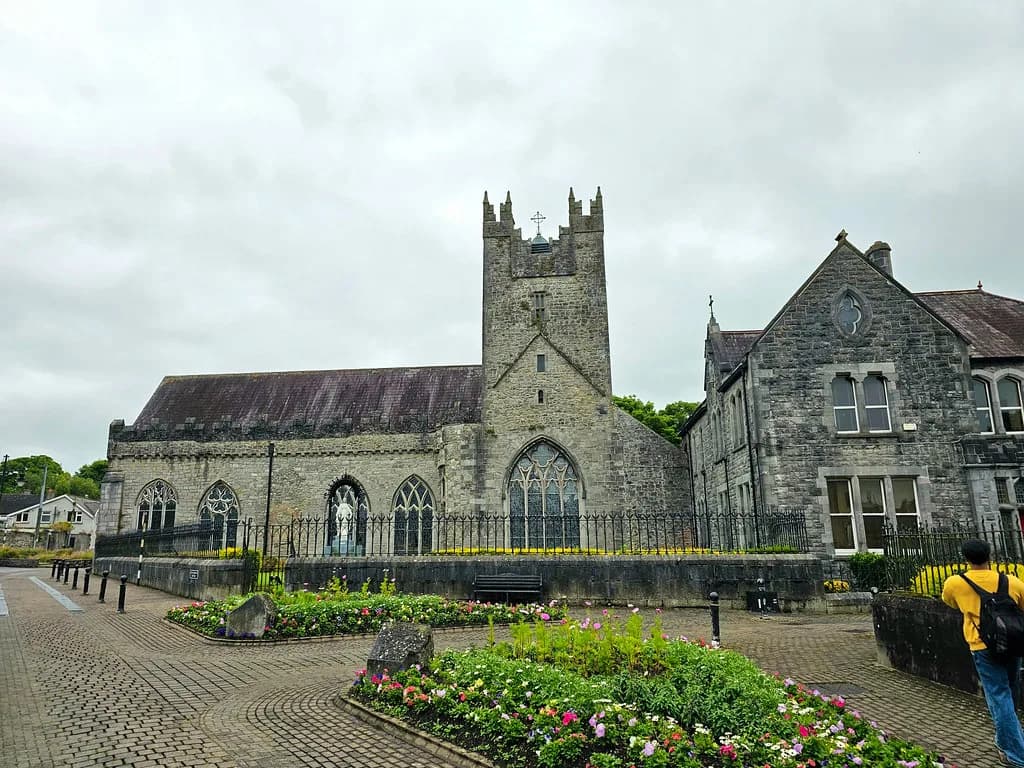
The Black Abbey in Kilkenny is a Dominican church and priory, formally the Church and Priory of the Most Blessed Trinity, standing just outside the line of the old city walls. It was founded in 1225 and remains an active place of worship rather than a museum piece, so a visit is a short, quiet stop woven into a city walk.
This guide covers what the name means, the features the sources describe inside, and the sequence of confiscation, ruin and restoration that shaped the building you see now. It does not print opening hours or service times, because those change and should be confirmed locally before you go.
Where the Black Abbey Stands
The abbey stands near Friars Bridge, just outside where the walls of Kilkenny City once ran, a short stroll from the city centre and the Medieval Mile. Approaching on foot from the centre takes only minutes, which makes the abbey an easy addition to a walk rather than a separate excursion.
The site lies just outside where the original walls of Kilkenny City once stood, a position consistent with the friars' preference for sites beyond the town gates when they settled in Kilkenny. Practically, that means you arrive at a church set slightly apart from a tight medieval street frontage. For the wider set of city options, see Kilkenny Attractions: 6 Visitor Guides.

What the Name Means
The formal dedication is the Church and Priory of the Most Blessed Trinity, and the site is a Dominican friary, not a Cistercian or Augustinian abbey. Locals know it as the Black Abbey because the friars wore a black cappa, a hooded cloak, over their white habits in the Middle Ages.
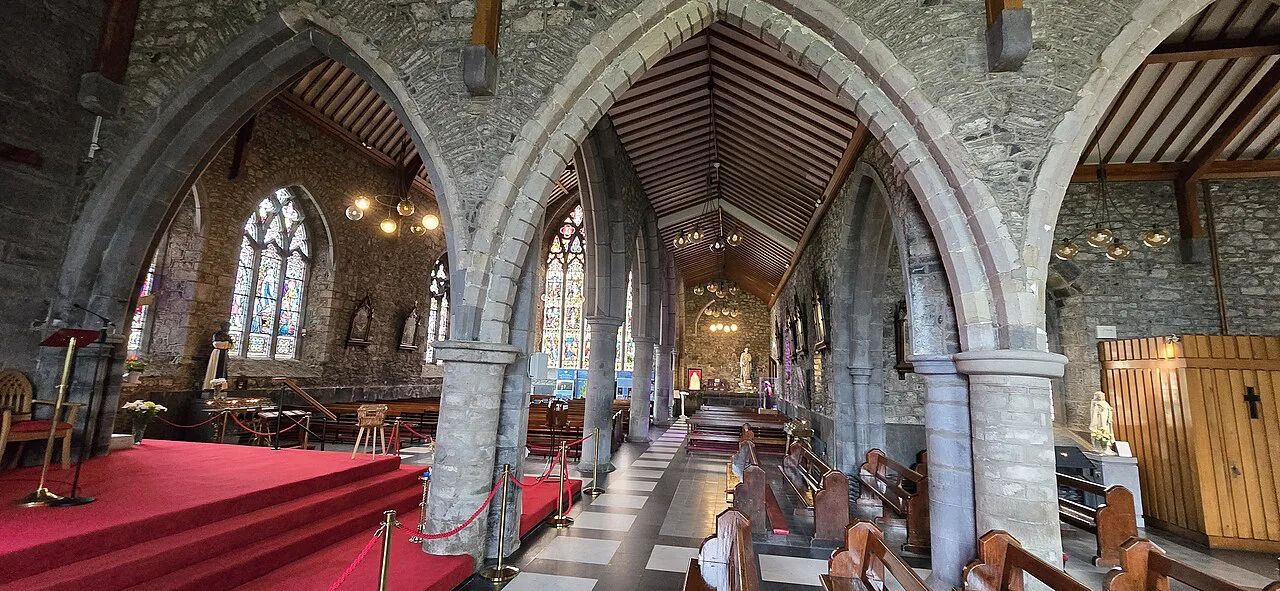
Inside, the black cloaks turn up again on statues of Dominican saints, which gives the nickname a visible anchor once you are standing in the nave. Knowing this saves the usual confusion about why an apparently pale-stone church carries a name about blackness.

Foundation and Early Fabric
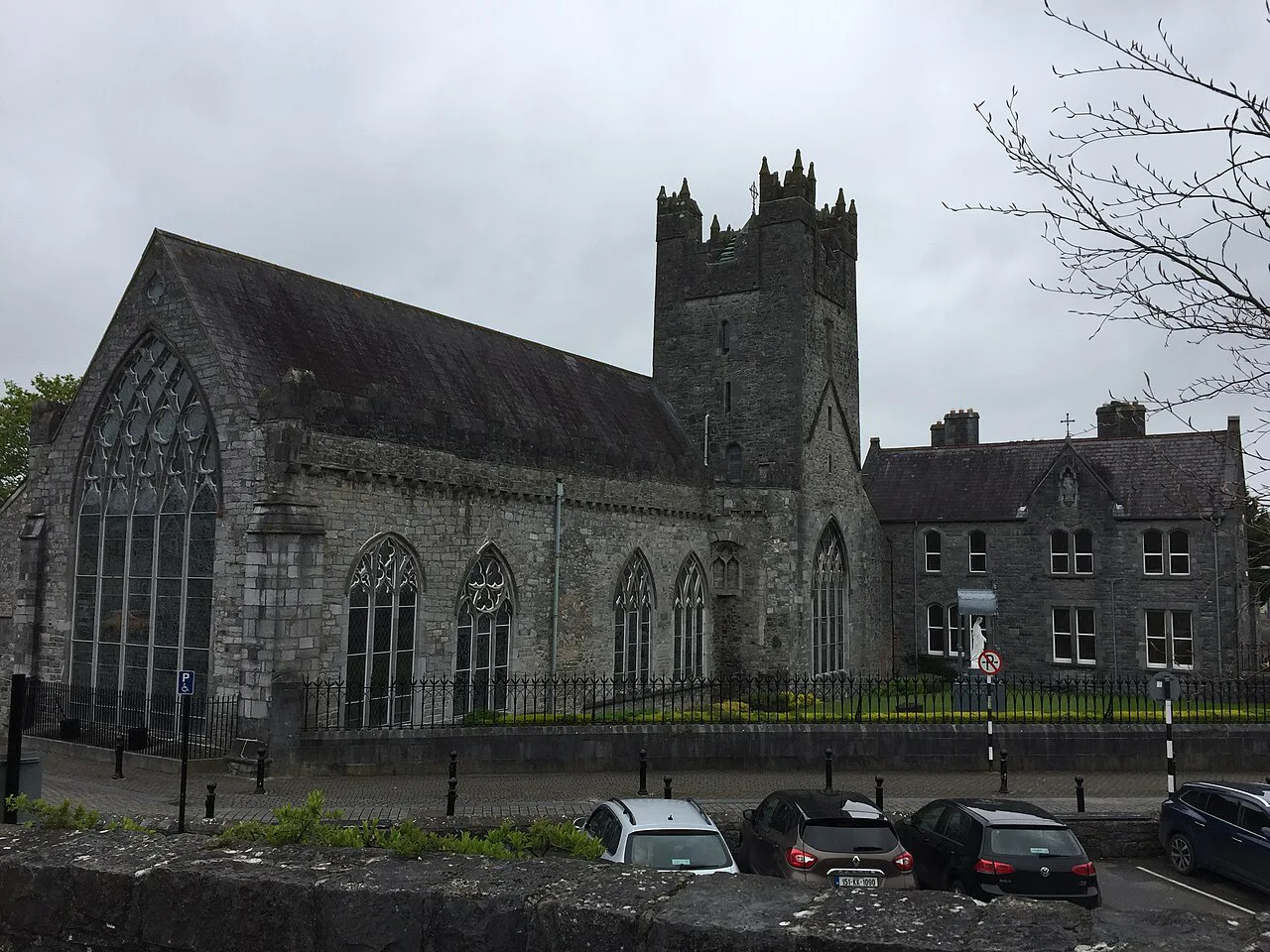
The Dominicans founded the house in 1225, and tradition also credits William Marshall, Earl of Pembroke, with a role in its establishment; treat that attribution as tradition rather than settled record. The friars chose a plot on the south bank of the Bregach outside the town gates, a position that gave them freedom of movement.
From that first church, the lower part of an ancient tower survives, along with the old nave and its aisle and thirteenth-century Norman tombstones uncovered nearby. Look for these early pieces as fragments rather than a complete medieval interior, since later rebuilding changed much of what surrounds them.
The Great Windows
The glory of the building is its glass. The east wall holds a group of three-light windows, and a magnificent five-light window fills the gable wall, described in a local heritage account as the largest of its kind in the country. Technically these belong to the curvilinear phase of the Decorated style and have been classed as the last major work of its kind in Ireland in the first half of the fourteenth century.
The most famous single feature is the Rosary Window, which depicts the fifteen mysteries of the rosary and is described as the largest of its kind in Ireland, with some 10,000 pieces of glass. A local history feature records that it was repaired in 1994; whatever the season, give it time from a distance and then up close.
Confiscation, Ruin and Return
In 1543 Henry VIII confiscated the house and converted it into a courthouse. By 1776 the building was in a dilapidated state: the roof had fallen in, part of the nave had vanished, pillars lay buried in rubble and the great gable window was bricked up.
Restoration began in 1789 despite legislation forbidding repair of ancient monasteries, and mass was celebrated there again in 1816, the first time since Cromwell's attack. By the end of the nineteenth century the nave had been restored and a new priory stood beside the church, which explains why the fabric reads as a palimpsest rather than a single medieval build.
Modern Renewal
Between 1976 and 1979 the abbey underwent extensive renovation: stone replaced plaster on the walls, new heating and lighting went in, the organ loft was repaired and a Kilkenny joiner recreated the ceiling's stone ribs in medieval style. The Bishop of Ossory dedicated the renewed church on 11 February 1979, with the President and Taoiseach among those attending.
The ancient tower, reputedly older than the church itself, now serves as the organ loft, so a feature that began as defensive or structural has a musical job. If you visit when the organ is in use, that corner of the building is worth a look upward.
What to Look For Inside
An alabaster image of the Trinity, dated in one local account to 1264, occupies a prominent position; it is said to have been hidden in an old wall through the repressive eras of Henry VIII, Cromwell and the Penal Laws. Nearby, look for a fourteenth-century limestone figure of St Catherine of Alexandria, carved with incised floriated patterns and regarded as a remarkable piece of medieval work.
Discover Ireland highlights a unique figure of the Blessed Trinity, sepulchral slabs, stone carvings and sculptures among the visible treasures, plus the only known surviving wooden statue of St Dominic in Ireland. That oak statue is said to retain marks from the swords of Cromwellian soldiers, giving the carving a history you can read on its surface.
To the left of the main entrance runs a line of stone monuments and antiquities, some from Norman times, including coffins of Norman lords unearthed during excavations in 1851. Movable items such as old chalices, a bell of notable weight and a banner from the Confederation of Kilkenny period are described in local histories, but their display should not be assumed; ask locally if you hope to see them.
Visiting Respectfully
This is an active Dominican church with a worshipping community, so sightseeing fits around services rather than the other way round. Keep voices low and photography considerate during liturgy, and hold back from walking through areas in use for prayer.
Allow around half an hour for the church itself, more if you want to study the glass and carvings closely or sit for a while. Confirm current visiting and service times locally before travelling, since published schedules vary and this guide prints none.
Nearby on the Same Walk
Because the abbey sits just off the centre, it pairs naturally with the city's larger set pieces. Kilkenny Castle is one anchor of a city walk, while St Canice's Cathedral and Round Tower adds a contrasting medieval ecclesiastical stop.
Closer to the abbey's end of town, the Medieval Mile Museum and Rothe House & Garden sit on the city's historic spine. Either gives a contrast of scale and domestic life against the abbey's religious architecture.
Plan Your Visit
Treat the Black Abbey as a quiet half-hour stop rather than a headline attraction, and it rewards you: the Rosary Window, the Trinity image and the sword-marked St Dominic statue give a condensed lesson in Irish church history. Approach from the centre, see the glass first, then walk the older monuments along the entrance wall.
Check locally for current visiting and service times before you set out, and plan around worship rather than through it. St Canice's Cathedral and St Mary's Cathedral in Kilkenny both make useful comparisons for anyone following the city's ecclesiastical architecture, and across the country St Mary's Cathedral, Limerick: A Visitor Guide to the Medieval Cathedral offers a similar medieval church to set beside them. For another heritage theme, read about Castles In Kilkenny.
Frequently Asked Questions
Is Black Abbey in Kilkenny free to visit?
The sources do not publish an entry charge for the Black Abbey, and as an active church it is not presented as a ticketed attraction. Do not assume this settles the question for every area of the site; check the parish's current visitor information before you go.
Why is it called the Black Abbey?
The nickname comes from the black cappa, a hooded cloak the Dominican friars wore over their white habits in the Middle Ages. The formal dedication is the Church and Priory of the Most Blessed Trinity. The black cloaks are echoed on statues of Dominican saints inside.
What is the Black Abbey known for?
It is best known for its stained glass, especially the Rosary Window depicting the fifteen mysteries of the rosary, described as the largest of its kind in Ireland. Inside, the sources also describe a figure of the Blessed Trinity and the only known surviving wooden statue of St Dominic in Ireland.
Can you go inside Black Abbey?
It is an active place of worship, so visiting depends on services and current arrangements rather than a fixed sightseeing timetable. Current opening and service information is not published in our sources, so confirm it locally before travelling, and keep quiet and photography considerate during liturgy.
How long do you need at Black Abbey?
Around half an hour covers the church comfortably. Allow longer if you want to study the glass, the carved figures and the monuments along the entrance wall, or to sit quietly; the building is compact but dense with detail.
What is there to see near Black Abbey in Kilkenny?
The abbey sits a short walk from the city centre and the Medieval Mile, so it combines easily with Kilkenny Castle, St Canice's Cathedral and Round Tower, the Medieval Mile Museum and Rothe House & Garden. Plan the abbey as one stop on a walking circuit rather than a separate outing.
Is Black Abbey the same as a Cistercian abbey?
No. It is a Dominican church and friary, founded by the Dominican friars in 1225 and formally the Church and Priory of the Most Blessed Trinity. The word abbey is a local usage here, not a sign of Cistercian or Augustinian rule.
Are the chalices, bell and banner always on display?
Local histories describe old chalices, a heavy bell and a banner from the Confederation of Kilkenny period, but the sources do not confirm these are on permanent public display. Treat them as items to ask about rather than guaranteed sights.