
Kilkenny Castle: A Visitor Guide to the Butler Seat and Its Parkland
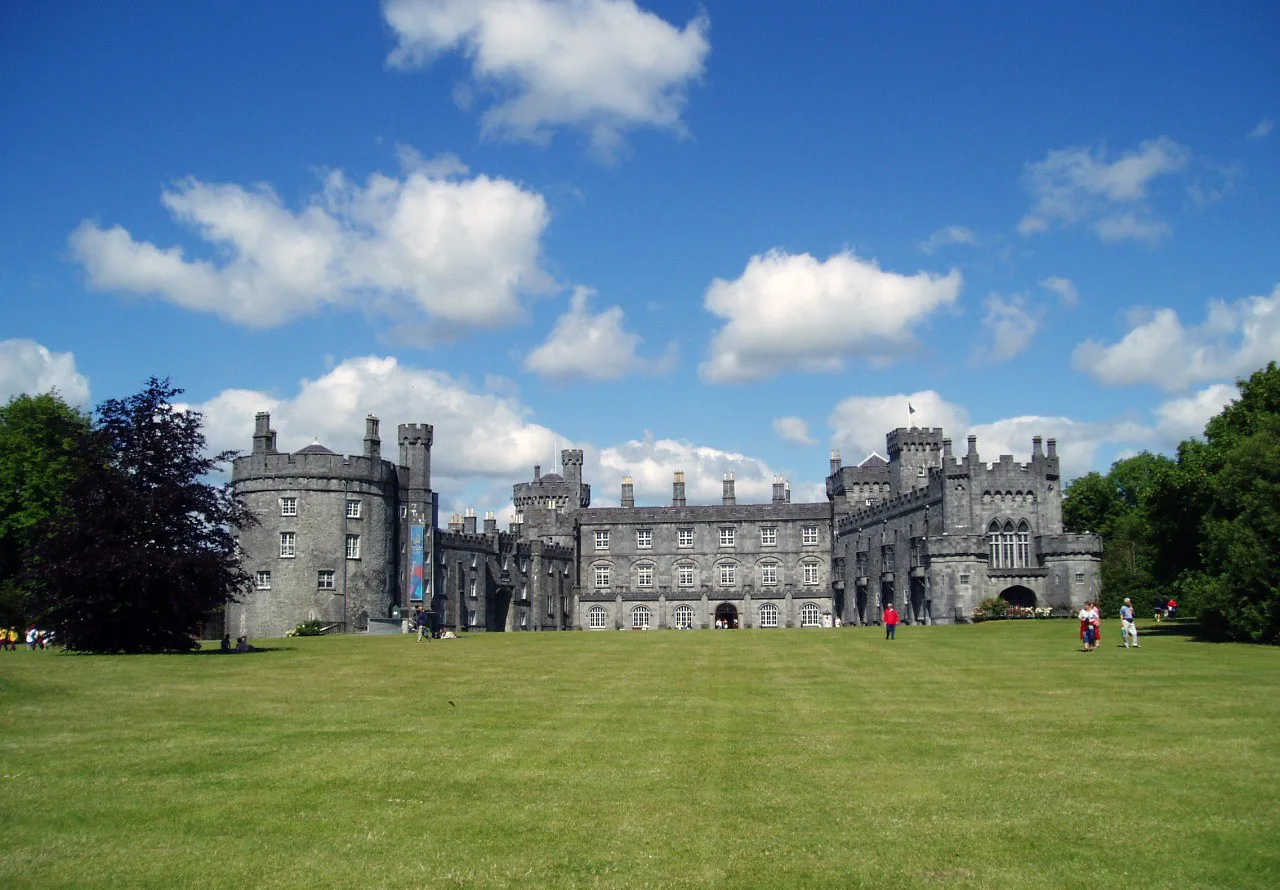
Kilkenny Castle is a restored Norman fortress and country house in the centre of Kilkenny, built above the River Nore and run today by the Office of Public Works. Its central block, Picture Gallery and period rooms are the paid attraction; the parkland and gardens around the walls are a separate, free layer of the same visit. Because a dated filming closure and an official ticket warning both affect planning, the practical details are worth reading before you travel.
Where the castle stands and how the visit fits together
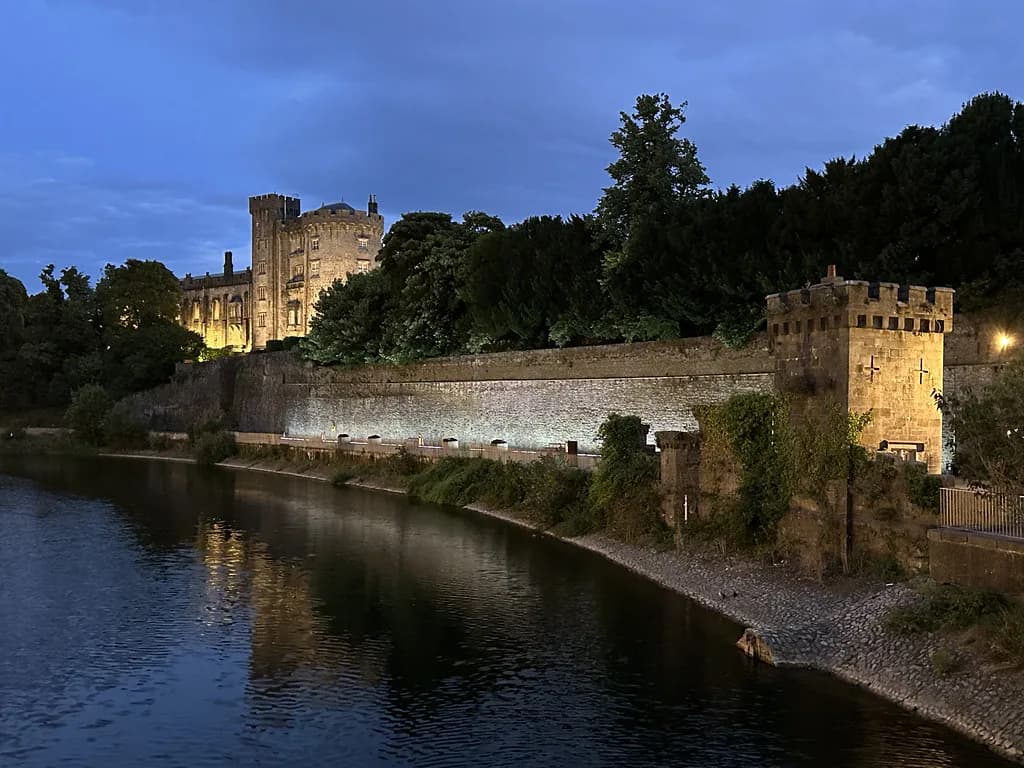
The castle dominates Kilkenny from the banks of the River Nore, and its towers are visible from much of the medieval core. It sits at the city end of the Medieval Mile, the route that runs from the castle towards St Canice's Cathedral, so a castle visit naturally slots into a walk through the old streets rather than a detour out of town. A useful plan is to treat the castle interior as one block of time and the grounds and city streets as a second, more flexible one.
Tourism Ireland describes entry to the castle as charged, with reduced rates for seniors and students, while the park and formal gardens are free. It suggests allowing around an hour for the castle itself, and longer if you want to explore the grounds. That split is the key to shaping a day: pay for the rooms you came to see, then use the free parkland to rest or walk without watching the clock.
The wider Kilkenny context is easy to add on foot. St Canice's Cathedral, with its round tower, stands at the far end of the Medieval Mile, and the city's medieval heritage is legible in its street pattern rather than confined to one building. If you want to plan that surrounding walk properly, the st canices cathedral kilkenny guide covers the cathedral and its precinct as its own stop.
The Butler story: from Norman fortress to State ownership
The Office of Public Works frames the castle as the principal seat of the Butlers, earls, marquesses and dukes of Ormond, for almost 600 years, which is why the interior reads as a family home layered over a fortress. The same page notes it was built in the twelfth century, remodelled in Victorian times, and formally taken over by the Irish State in 1969, with restoration work following.
Independent histories fill in the earlier chronology. History Hit traces a first castle from the Anglo-Norman period and a stone structure raised by William Marshal in 1192, with the Butler family buying the castle in 1391 and holding it as their seat for centuries afterwards. Treat these construction and ownership dates as the secondary historical account they come from, not as material printed on the operator's own page.
The two later dates are often blurred together, but they describe different things. Tourism Ireland records that by 1967 the castle had fallen into disrepair and James Butler, the 6th Marquess of Ormonde, offered it to the city of Kilkenny for a token payment; the State takeover followed in 1969. Keeping the offer and the takeover separate is more accurate than treating 1967 as the moment the castle became a public monument.
Inside the castle: period rooms, the Picture Gallery and your tour choices
The central block holds a library, drawing room, nursery and bedrooms decorated in 1830s splendour, according to the operator, while the Picture Gallery occupies the east wing and dates from the 19th century. The gallery was built chiefly to house the Butler family's painting collection, so it is the room that most directly explains what the family accumulated rather than simply how they lived.
You have a choice of formats. The operator publishes an audio guide to enhance the self-guided visit of the period rooms, which suits visitors who prefer to move at their own pace. Guided tours are also offered, and the operator's highlights page describes staff-led tours that trace the Butler family's fortunes and their royal connections.
History Hit notes that in the November to January window it documents, access was by guided tour only. Treat that as a description of a specific documented pattern rather than a standing rule, and confirm the current format for your dates with the operator before relying on it. Visitors who need a fixed structure should book the format they want rather than assume both are always running.
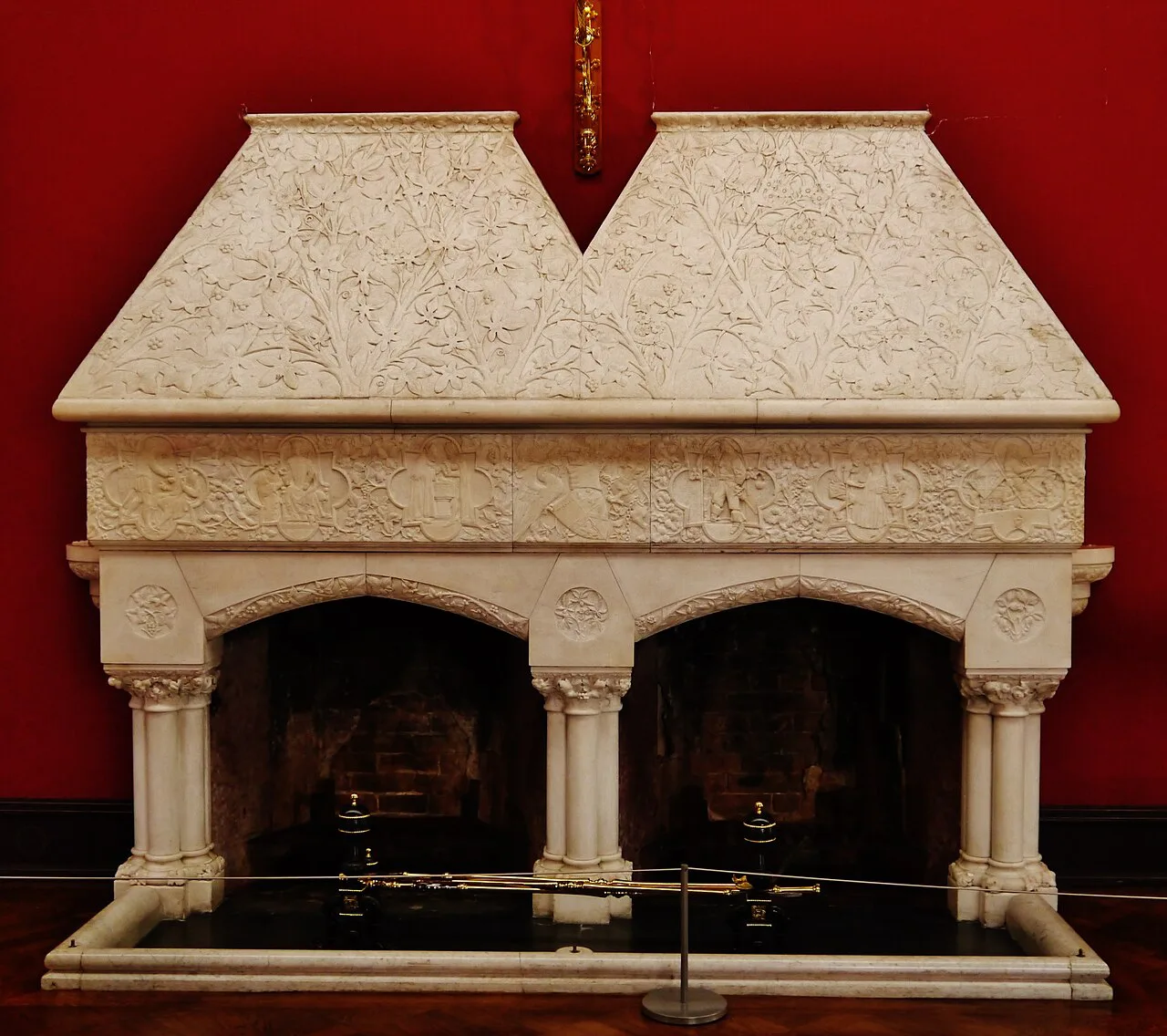
Collections inside reward a slower pass. Tourism Ireland points to the 17th-century Decius Mus tapestries woven from designs by Peter Paul Rubens, the handpainted Chinese wallpaper in the Withdrawing Room and the carved stone animals on the Moorish Staircase. History Hit separately singles out the Carrara marble fireplace by John Hungerford Pollen, which helps explain why the Victorian remodelling is not just background but part of the fabric you are looking at.
The Picture Gallery's roof is a detail worth looking up for. The operator records that John Hungerford Pollen painted the medieval-style roof in an eclectic array of styles in the 1860s, and describes the gallery as the second-longest room in Ireland. The Medieval Room, meanwhile, offers a ten-minute audiovisual display covering eight centuries of the castle's history, which is a compact way to orient yourself before walking the rooms.

Outside the walls: archaeology, parkland and gardens
An excavated dig site on the grounds exposes William Marshal's medieval gate house and what remains of the south wall of the thirteenth-century fortified castle. This is the part of the visit that makes the fortress legible as archaeology rather than only as a furnished house, and it sits within the same grounds as the rest of the outdoor walk.
The parkland runs to roughly 21 hectares, and the operator describes over 50 acres to enjoy, with formal gardens laid out around a central fountain against the castle's west side. The operator lists a pond with ducks and moorhens, four orienteering courses and a Saturday 5 km Park Run among the ways to use the grounds, alongside a tranquil rose garden. These are outdoor spaces rather than indoor shelter, so weather shapes how much of the park you actually use.
Parkland hours shift month by month, ranging from a shorter winter day to an evening close in high summer; the operator publishes the full monthly schedule, so check it against your dates rather than assuming the castle's own hours apply outside. The grounds also stay open during castle closures, which makes them a genuine fallback if your interior time is disrupted.
For a broader survey of fortifications in the county, including sites well outside the city, castles in Kilkenny sets Kilkenny Castle alongside other options rather than duplicating this single-place guide.

Closures, opening times and tickets: what to check first
One dated notice matters most for late-autumn plans. Because of filming on site, the castle is closed to the public from 13:00 on Monday 2 November until 09:30 on Thursday 5 November 2026, when it reopens as normal, and the parkland remains open throughout. That is a single scheduled interruption, not an indication of a longer shutdown, but anyone in Kilkenny that week should plan the interior around it.
Standard hours are split by season. From April to September the castle opens daily from 09:15 to 17:30 with last admission at 17:00, while October to March it runs 09:30 to 17:00 with last admission at 16:30. The operator also warns that this is a very busy site and that visitors may face delays during the summer months, so an early slot leaves more room than an afternoon arrival near the cutoff.
Admission is listed by category and by format. Self-guided entry is currently given as adult €8.00, senior or group €6.00, child or student €4.00 and family €20.00, with guided admission at adult €12.00, senior €10.00, child or student €6.00 and family €30.00. Read these as the operator's current listing and confirm them on the official page before paying.
Buy from the source. The Office of Public Works states plainly that no third-party organisations are authorised to sell tickets to Kilkenny Castle, that tickets bought from resale platforms will not be valid, and that holders will be refused entry; it also warns about fraudulent lookalike websites. If a page is not the official operator site, treat any ticket offer there as unusable.
Getting there and on-site practicalities
The castle is in the centre of Kilkenny on The Parade, and History Hit describes it as roughly a 15-minute walk from Kilkenny MacDonagh station on the Dublin to Waterford line, with coaches including route 600 also stopping in the city. By road, the same account points drivers from Dublin along the M9 to Junction 8 and the N10 into town. Treat those times as approximate and check current schedules yourself.
There is no parking on site. Tourism Ireland notes that the castle's central position puts several city carparks within easy reach, which is the realistic option if you drive. Arriving on foot also lets you combine the visit with the surrounding streets instead of moving the car between stops.
The operator lists a café, playground, picnic area, toilets, baby changing, bicycle parking and WiFi among the facilities, and an exhibition space alongside the guided tours. Restrictions include assistance dogs only and limited access in places, so visitors with mobility needs should read the access notes before booking rather than after arriving. A downloadable social guide is offered for first-time visitors, families and people with developmental and learning disabilities.
Extending the day beyond the castle
Two other Office of Public Works sites sit within reach of Kilkenny and work well as separate outings rather than add-ons to a castle ticket. Dunmore Cave is a show cave of limestone chambers with calcite formations, entered by guided tour only, with tours capped in number and capacity each day; the operator advises booking ahead by email because walk-in places are allocated first come, first served.
That cave visit carries real physical demands. Access involves 700 steps over uneven ground, the interior is cold and wet, the site is not wheelchair accessible, and children must be supervised with a maximum of three per adult. Visitors with health concerns should weigh those conditions honestly before committing, and check the operator's current admission figures and daily hours directly.
Kells Priory is an open monastic site founded around 1193 by Geoffrey FitzRobert, with surviving nave, chancel, lady chapel and cloister remains plus medieval defences that earned it the local name the Seven Castles of Kells. Access is currently via the car park on the L1023, and self-guided visits apply following the end of the onsite guide service; paths are uneven and dogs must be on a lead.
Back in the city, the Medieval Mile museum and Rothe House both sit within the historic core and give context that the castle alone cannot. The medieval mile museum kilkenny covers the civic and urban story, while rothe house kilkenny addresses a merchant townhouse of the 16th century. Either pairs naturally with a castle morning, but neither shares its ticket.
Two further stops round out the church architecture of the district. black abbey kilkenny covers the monastic ruin on the edge of the city centre, and st marys cathedral kilkenny addresses the 19th-century cathedral that replaced a medieval predecessor. Both are short walks from the castle area and are best treated as their own visits. If you are comparing medieval cathedrals across Ireland, this St Mary's Cathedral, Limerick: A Visitor Guide to the Medieval Cathedral offers a useful counterpart to Kilkenny's own.
Plan Your Visit
Kilkenny Castle works best when you separate its three parts: the paid interior with its period rooms and Picture Gallery, the free parkland and gardens, and the surrounding medieval streets. Check the operator's page for current hours, listed admission and any dated closure before you set out, since the November 2026 filming notice and the ticket-channel warning both directly affect a visit.
Allow about an hour inside and more if the grounds appeal, arrive earlier in summer to reduce delay risk, and buy only from the Office of Public Works. If your dates fall in the closure window, the parkland remains available and the city's other historic stops can fill the time.
Frequently Asked Questions
How long should I allow for a visit to Kilkenny Castle?
Tourism Ireland suggests around an hour for the castle interior, with more time needed if you also want to walk the parkland and formal gardens. Because the site can be busy in summer, an early slot gives you more margin around last admission.
Is the parkland at Kilkenny Castle free to enter?
Yes. The castle interior carries an entry charge, while the park and gardens are described as free to enter. The parkland also stays open during temporary castle closures, so it can be used even when the interior is shut.
What happens if I am in Kilkenny during the November 2026 filming closure?
The castle is closed to the public from 13:00 on Monday 2 November until 09:30 on Thursday 5 November 2026 because of filming, and it reopens as normal afterwards. The parkland remains open throughout, and the city's other historic sites are unaffected.
What is the difference between a self-guided and a guided visit?
Self-guided entry lets you move through the period rooms at your own pace, with an audio guide published by the operator. Guided admission follows a staff-led tour tracing the Butler family's history and their royal connections. Both formats are listed separately on the operator's page, so check which is running for your dates.
Can I buy Kilkenny Castle tickets from a resale site?
No. The Office of Public Works states that no third-party organisations are authorised to sell tickets, that resale-platform tickets are invalid, and that holders will be refused entry. It also warns about fraudulent lookalike sites, so buy only through the official operator page.
How do I get to Kilkenny Castle without a car?
Kilkenny MacDonagh station on the Dublin to Waterford line is roughly a 15-minute walk from the castle, and coach services including route 600 also stop in the city. If you drive, note there is no on-site parking and use one of the city carparks nearby.
Is Kilkenny Castle suitable for visitors with limited mobility or young children?
The operator lists limited access in places and an assistance-dogs-only restriction, so read the access notes before booking. A downloadable social guide is offered to help first-time visitors, families and people with developmental and learning disabilities prepare.