
St Canice's Cathedral and Round Tower: A Visitor's Guide to Kilkenny's Medieval Close

St Canice's Cathedral and its round tower stand together on the hill at the north end of Kilkenny's historic core, and the two are best understood as a single visit rather than separate sights. The cathedral describes the tower as the oldest standing structure in the city, and Kilkenny's Irish name, Cill Chainnigh, means Canice's church, though the cathedral is careful to say there is no evidence Canice himself founded a church here. Allow time for both the interior and the climb, and treat the surrounding cathedral close as part of the experience.
The site operates as a working place of worship first, so visitor access is fitted around services and, in the tower's case, around the weather. Opening hours change with the season and the tower keeps its own schedule, so check the cathedral's published times before you set out rather than relying on a fixed daily routine.
Where the Cathedral and Tower Sit in Kilkenny
The cathedral and round tower share one elevated site at the top of St Canice's Steps, a 17th-century flight of limestone steps built by the cathedral's procurator Robert Wale, according to the cathedral's own account. The complex sits at the edge of the medieval core, so a visit fits naturally into a walk across the old city rather than requiring a separate trip. If you are building a day around the city's historic sites, this is one of the anchors worth planning around within a wider set of Kilkenny Attractions.
The cathedral frames itself as a stop on the medieval mile, the historic route through the city, and its position on that route is the main reason to combine it with other sights on foot. Because the site sits a short walk from the old centre at the top of St Canice's Steps, it rewards being visited first or last in a day, when you can give the tower and the close proper time without rushing.

Why the Site Matters
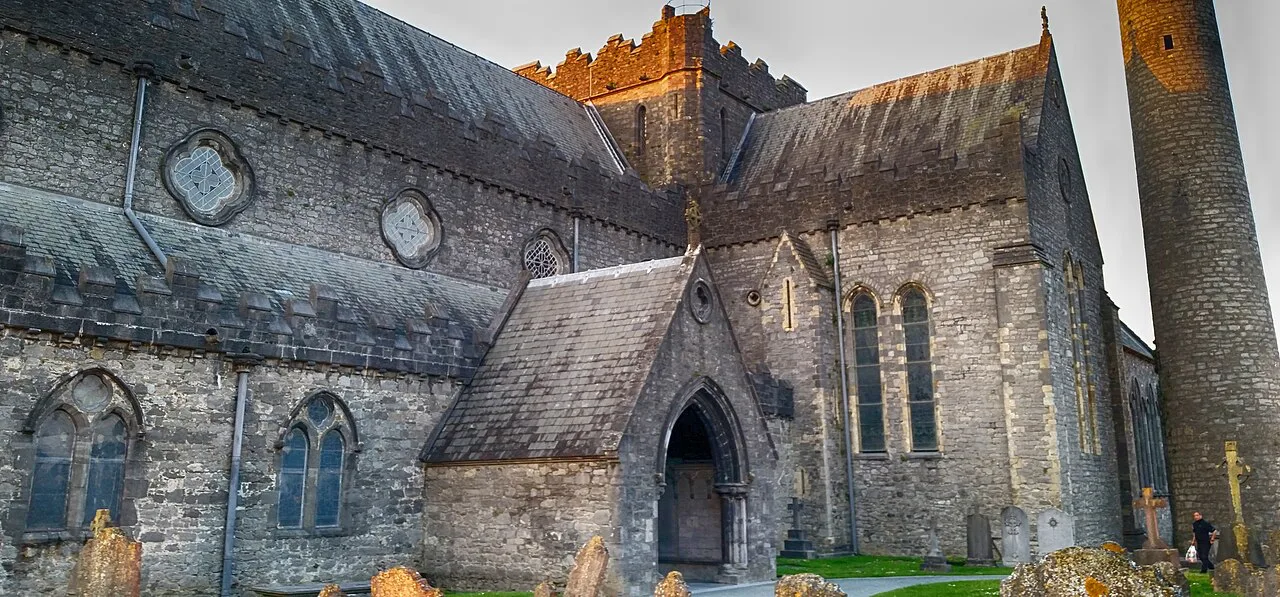
The cathedral states that Christian worship has taken place here since the 6th century, making it one of the longest continuously used religious sites in the region. The site's significance, though, is layered rather than simple: the surviving round tower points to an important early religious settlement, even if, as the cathedral notes, it may not have been a monastery. The bishop's seat was moved from Aghaboe to Kilkenny around 1120, which shifted the site's standing in the medieval church.
One common assumption is worth correcting. Although the city is named after St Canice, the cathedral is explicit that there is no evidence he himself founded a church on this spot, and that early references may point to his monastery at Aghaboe rather than to Kilkenny. Read the site's history with that caution; what can be said is that the location's religious importance long predates the present building.
Building the Medieval Cathedral
The cathedral's construction is usually described in two phases, with Bishop Hugh de Mapilton credited with the choir, transepts and crossing tower, and Bishop Geoffrey de St Leger completing the nave. The cathedral notes that contemporary building records do not survive, so the completion date is often cited as 1285 rather than firmly documented. What is clear is that the building was substantially medieval in fabric, as the surviving structure shows.
In 1332 the central tower collapsed, an event the cathedral links to the trial of Dame Alice Kyteler for witchcraft, and the fall destroyed much of the choir and side chapels. Bishop Ledrede later returned to repair the damage, reducing the tower's height and installing a large east window; stone vaulting was added beneath the tower in the 1470s. The story is a useful reminder that the building you see is the product of repeated rebuilding rather than a single medieval design.
The cathedral's history continues into the 17th century, when Oliver Cromwell's forces captured Kilkenny in 1650 and caused extensive damage; the building then stood roofless for twelve years. The cathedral describes this as one of the most disruptive periods in its history. None of this is a claim about current conditions: it is part of the building's past, and the site today operates as a functioning cathedral.
The Round Tower: History and Structure
The round tower is the clearest evidence of the site's early importance. The cathedral cites a reference suggesting a mid-9th-century date, which would make it the oldest standing structure in Kilkenny, and notes that it was built as a place of refuge during the Viking raids. It stands about 30 metres high, tapering from roughly 4.5 metres to 3.3 metres in diameter. Its conical cap is missing, and that loss is what allows the present viewing platform at the top.
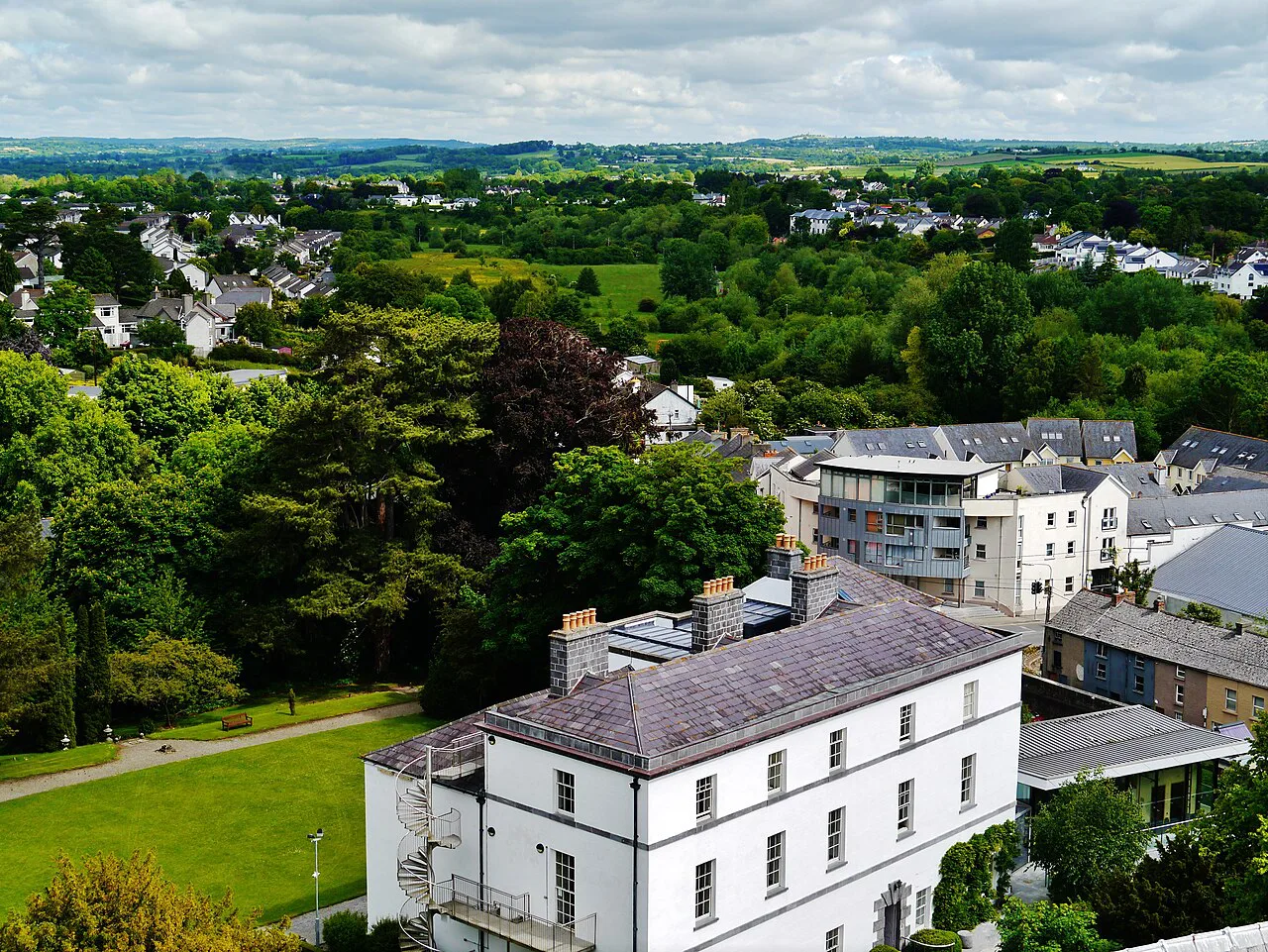
The climb uses internal ladders across seven floors and 121 steps, according to the cathedral, and the top opens to a 360-degree view over the city and surrounding countryside on a clear day. The cathedral also notes that the tower is slightly off plumb, a detail that makes more sense when you consider that its foundations are shallow. The cathedral describes it as one of only two Irish round towers that visitors may climb.

Climbing the Tower in Practice
The climb is weather permitting, which matters in a country where conditions change quickly, and the tower has its own last-climb times: 4.30pm in the shorter season and 5.30pm in the longer one, according to the cathedral's published schedule. In summer the tower is busiest from 11am to 4pm, and the cathedral advises climbing between 9am and 11am if you want to avoid the crowds. On Sunday mornings the tower stays closed for worship, which is why it opens at 1pm on summer Sundays.
If you take the guided cathedral-and-tower tour, children aged between 6 and 18 must meet a minimum height of 1.4 metres, and the tour itself runs about 40 minutes. That rule applies to the guided product rather than to every visitor, but it is a useful signal of the climb's physical demands: seven floors of ladders, tight space, and a summit platform rather than a wide observation deck. Anyone uneasy with heights or ladders should weigh that before booking.
Guided Tour, Audio Guide, or Both
The cathedral advertises two main ways to engage with the building: a self-guided audio tour, which lets you move at your own pace, and a guided tour that pairs the cathedral with the tower climb. The guided version is valid for one day, and the cathedral lists its duration as 40 minutes, so it is the more structured option. Which suits you depends on how much context you want and whether you plan to climb at all.
The audio option is the better fit if your priority is the interior and you want to linger at individual features without keeping to a group schedule. The guided tour pays off when you want the building's long history made coherent, particularly the medieval phases and the tower's place in it. Neither option substitutes for reading the cathedral's own history pages beforehand if you want a deeper grasp of what you are seeing.
Tickets in Brief
The published combined cathedral-and-tower tour is priced at €16 for adults, €9 for children, €13 for students or retirees, and €42.40 for a family of two adults and two children, with the figures listed by the cathedral. Those prices apply to the guided tour product, so do not assume they cover every kind of admission or visit. There is a charge for entry, and the cathedral sells tickets through its own booking page.
Because pricing and tour formats can change, confirm the current ticket options and any family or concession rates on the cathedral's booking page before you travel. If you only want to see the cathedral rather than climb, check whether a separate interior ticket is offered. The cathedral lists separate ticket types, suggesting admission options beyond the combined tour.
Beyond the Cathedral Walls: The Close and Graveyard
The cathedral close is described by the cathedral as the best-preserved surviving medieval cathedral close in Ireland, and it includes more than the two main buildings. Just outside the main gates stands the Deanery, built in 1729, with wrought-iron gates that originally came from the 16th-century Shee mansion on Parliament Street; a matching set now forms one of the entrances to Kilkenny Castle park. The graveyard has seen burials for over a thousand years, and a sarcophagus used by monks to prepare bodies for burial still leans against the back wall.
Among the graves, the Vicar's Residence and Library buildings began as a manse and later served as a grammar school before becoming a library in the 1690s; the building now incorporates offices and an apartment for the organist. Across the lane, the former Bishop's Palace served the diocese until 2008, when it was sold for use as the headquarters of the Heritage Council. These are working or institutional buildings rather than visitor attractions, so treat them as part of the setting rather than stops with their own opening hours.
Practical Trade-offs
The main trade-off is between the tower and the interior. Climbing takes time and energy, and the tower can close if the weather turns, so if the climb is the priority, aim for a morning slot and keep the cathedral interior as a fallback. If quiet reflection matters more, skip the climb and use the audio tour instead. The ascent is made on internal ladders across seven floors rather than a conventional staircase, so plan accordingly if ladders or confined spaces are a concern for anyone in your group.
Worship also shapes the visit. Services are published for Sundays at 11.30am (Sung Eucharist) and 3pm (Choral Evensong, except June to August), and Wednesdays at 10.30am for Holy Communion; these are as listed by the cathedral and may change. Sunday mornings are not a good time to expect full visitor access, particularly in winter when the cathedral is closed on Sundays. If you are combining the cathedral with other city sights such as the Medieval Mile Museum, Kilkenny Castle, or St Mary's Cathedral, sequence them around the published service times. If you are weighing up a second cathedral stop elsewhere, the Limerick heritage guide to St Mary's Cathedral, Limerick: A Visitor Guide to the Medieval Cathedral covers the same kind of decision.
How Much Time to Allow
A reasonable visit is about an hour to ninety minutes: perhaps 40 minutes for the guided tour, extra time for the climb if you take it, and a short walk around the close and graveyard. The tower climb itself involves 121 steps on ladders across seven floors, so build in recovery time and don't schedule it immediately before another timed booking. If you are exploring Kilkenny on foot for the day, the cathedral pairs well with a stop at Rothe House or the Black Abbey, both within the historic core.
Plan Your Visit
The single most important check is the seasonal schedule. The cathedral is open October to April, Monday to Saturday from 10am to 5pm with Sunday closed, and May to September, Monday to Saturday from 9am to 6pm and Sunday from 1pm to 6pm starting mid-April; last admission is 30 minutes before closing. The tower keeps its own last-climb times and closes in poor weather, so confirm both before you go.
St Canice's is first a working place of worship and second a heritage visit, and that order is worth respecting. Plan around the services, take the climb seriously as a physical undertaking, and leave time for the close and graveyard, which many visitors overlook. With the practical checks done, the site rewards a slow, deliberate visit.
Frequently Asked Questions
Can you climb the round tower at St Canice's Cathedral?
Yes. The cathedral describes the tower as one of only two Irish round towers visitors may climb, with access to a summit viewing platform via internal ladders. Climbing is weather permitting, and the tower has separate seasonal last-climb times. Children on the guided tour must meet a minimum height requirement, and the tower closes on Sunday mornings for worship.
How many steps are in the round tower?
According to the cathedral, the climb involves 121 steps over seven floors of internal ladders. That is a meaningful physical effort rather than a short stair, so allow recovery time and check the weather before committing.
Is St Canice's Cathedral open on Sundays?
It depends on the season. From October to April the cathedral is closed on Sundays, while from mid-April through September it opens from 1pm to 6pm. Even in summer, Sunday mornings are reserved for worship, so visitors should plan around the published service times rather than arriving early.
How much does the guided cathedral and tower tour cost?
The cathedral publishes adult, child, family and concession prices for its combined guided tour on its official booking page, so check the current rates there before you travel. Those figures apply to the guided tour product rather than to every type of visit.
Do children need a minimum height for the tower climb?
On the guided cathedral-and-tower tour, the cathedral states a minimum height of 1.4 metres for children aged 6 to 18. That rule is specific to the guided tour rather than to every visitor, but it reflects the ladder-based nature of the climb, so assess whether your child is comfortable with that kind of ascent.
How long does the guided tour take?
The published guided cathedral-and-tower tour runs about 40 minutes and is valid for one day. Add extra time if you want to explore the cathedral close and graveyard afterwards, since those are outside the tour itself.
Is there an audio guide at St Canice's Cathedral?
Yes. The cathedral advertises a self-guided audio tour as an alternative to the guided visit, and it lets you explore at your own pace. It is the more flexible option if you primarily want the cathedral interior rather than the tower climb.
What else is there to see around the cathedral?
The cathedral close includes the Deanery with its Shee mansion gates, the former library and vicarage buildings, the former Bishop's Palace across the lane, and the historic graveyard. These form part of the site's setting rather than separate ticketed attractions, so they are best seen as part of a walk around the cathedral grounds.