
St Mary's Cathedral, Kilkenny: Visiting the Gothic Revival Landmark

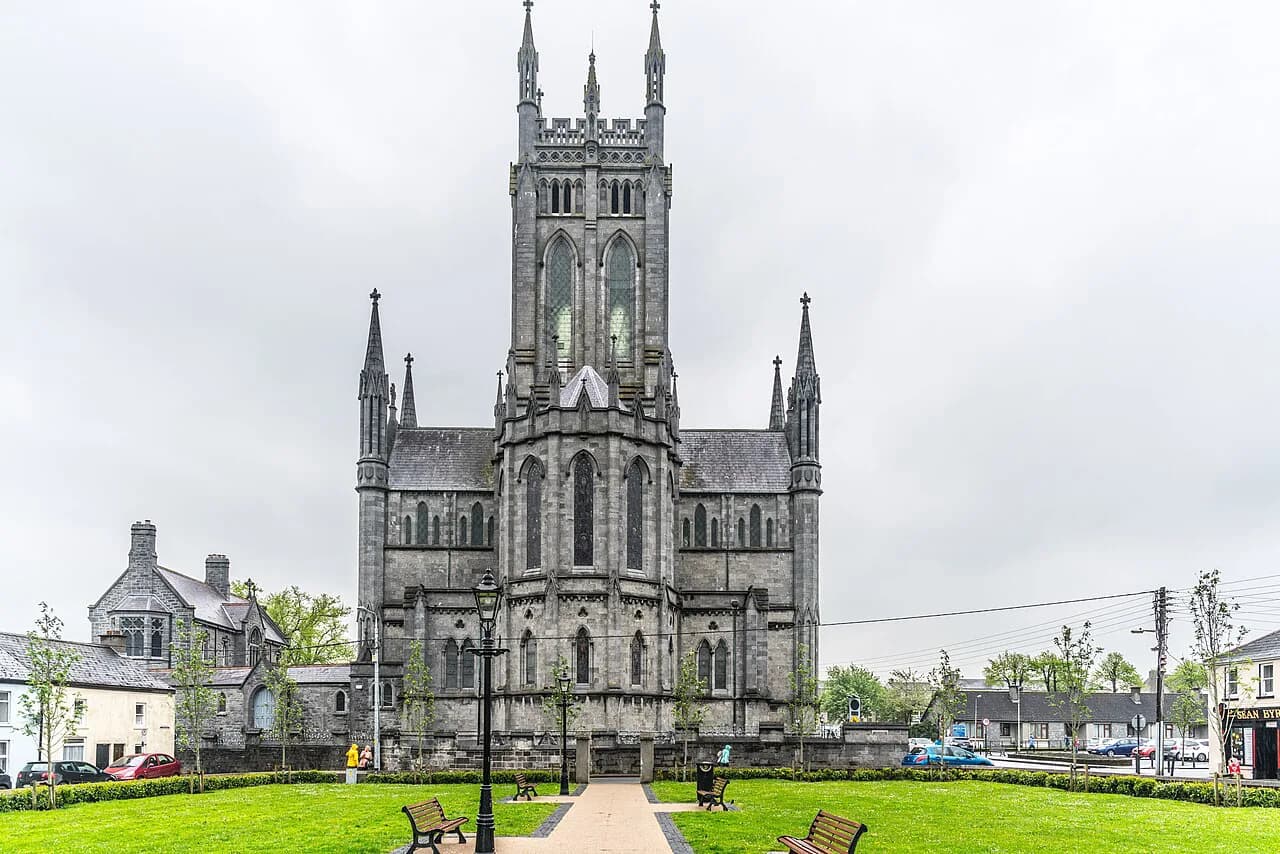
St Mary's Cathedral is the 19th-century Gothic Revival Catholic cathedral in Kilkenny city, built of hand-cut Kilkenny limestone and crowned by a tower of 186 feet that is visible from the approaches to the city. It is an active place of worship as well as a landmark, so a visit works best as a quiet stop for reading a building rather than a ticketed attraction. Allow roughly half an hour to an hour for the exterior and interior.
The shared name causes real confusion: an earlier St Mary's church, founded in 1218, stood behind the Town Hall just off High Street, and that site is now occupied by the Medieval Mile Museum. The cathedral described here is the later building, consecrated in 1857. Visitors heading for the cathedral should look for the limestone tower, not the museum entrance.
Where the cathedral stands
The cathedral occupies the site of Burrell's Hall, which had housed the first Catholic college founded in Ireland after the repeal of the law against Catholic schoolmasters in 1782. That detail matters for orientation: the building anchors a corner of the city's religious and educational history, and its tower serves as a fixed point for walkers. Because the sources do not publish a street address or transport directions, use the tower itself as your landmark when approaching on foot.
Visit Kilkenny describes the cathedral as standing at the heart of the medieval city and frames it as part of a compact group of city sights that also includes Kilkenny Castle, St Canice's Cathedral and Round Tower, Rothe House and the Medieval Mile Museum. That grouping is useful for planning a walking day rather than a single stop. If you are building a wider route, the Kilkenny Attractions: 6 Visitor Guides overview sets out the city's core sites. If your trip takes in other cathedral cities, the Limerick heritage guide covers St Mary's Cathedral there as a comparable stop.

Origins: Bishop Kinsella's project
William Kinsella, appointed bishop at thirty-three, announced his plan for a new cathedral in February 1842. Until then St James's Chapel, built in 1774, had served the Catholic population as a cathedral. Work began in April 1843, and on 18 August 1843 Kinsella laid the foundation stone. Keeping these two dates apart helps when reading later accounts that compress the project into a single construction period.
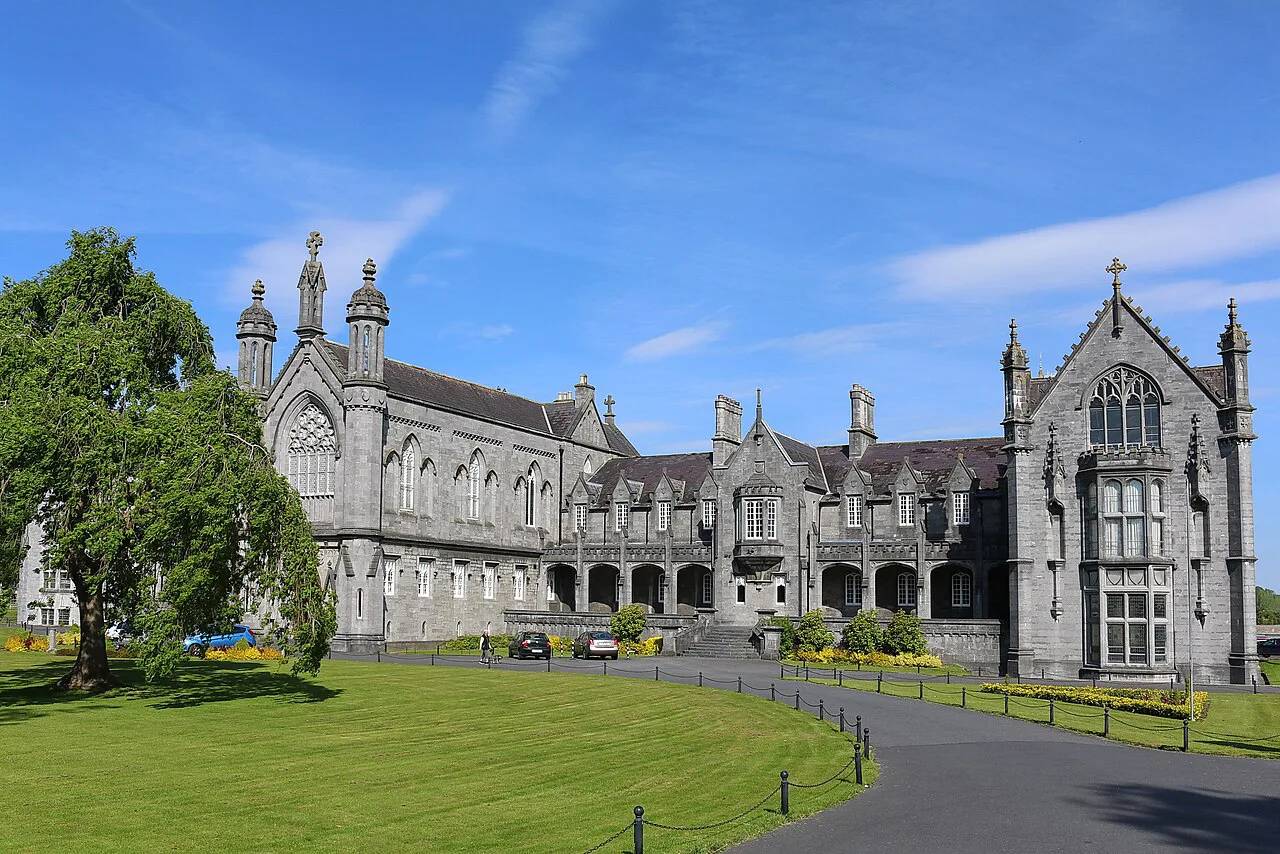
The cathedral's own history names the architect as William Deane Butler, who had also designed St Kieran's College and the church at Ballyragget. Visit Kilkenny, by contrast, gives the spelling William Dean Butler of Dublin and adds that Gloucester Cathedral in south-west England served as the model. Note the difference rather than treating the two descriptions as one statement: the sources agree on the architect's identity and differ in spelling and in the Gloucester comparison.

Building through hardship
When Kinsella died in December 1845, the walls stood only seven feet high. His successor, Edward Walsh, carried the project forward through the famine years, and the cathedral's history presents that continuity as a source of local employment at a difficult time. For a visitor, this is the part of the story that gives the limestone walls their weight: the building was finished in stages, not in one confident campaign.
Consecration in 1857
Bishop Walsh began the consecration ceremony at 6.15 a.m. on Sunday 4 October 1857 and concluded around 9.00 a.m., following the customary procession around the building and the entry through the main door. Admittance for the opening was by ticket, with prices set according to seating. The original building is estimated to have cost 25,000 pounds, and Visit Kilkenny records that the post-famine cathedral was built with contributions from the people of Kilkenny.
The cathedral's own history records that the recently opened railway ran special trains to bring crowds to the opening, with the C.Y.M.S stewarding. That practical detail is a reminder that the cathedral arrived as a public event as much as a building, and it explains why local memory of the consecration is bound up with the town rather than only with the parish.
Reading the exterior
Look first at the material: hand-cut Kilkenny limestone laid out on a cruciform plan, described in the cathedral's history as pure Gothic design built entirely of chiselled limestone. The tower rising to 186 feet was originally designed for St Kieran's College before becoming the cathedral's own landmark. Walk a short distance away to see how the tower sits above the surrounding roofline before returning to the façade.
What to see inside
The high altar of Italian marble was purchased in Italy, and the relics of SS Cosmos and Damian and St Clement were brought from Rome; the relics of St Victoria followed in 1867. A statue of Our Lady by Benzoni was already in the cathedral at the 1857 opening. Look for these named elements as fixed points in an interior that has been altered repeatedly.
Later campaigns reshaped the interior. During Bishop Brownrigg's time James Pearse, father of Patrick and Willie of the 1916 Rising, completed the marble altar rails and erected the altar to the Sacred Heart; the refurbished cathedral reopened on 9 April 1899. Under Bishop Birch, modernisation after the Second Vatican Council placed a new high altar of polished limestone beneath the great tower, surrounded by copper reliefs of biblical scenes.
Practical visiting details
Visit Kilkenny describes an interactive self-guided tour accessed by scanning QR codes placed through the cathedral and along the tour corridor at the front, and lists information leaflets, a gift shop, toilets and wheelchair access among the facilities. A cathedral cafe is noted as coming soon, so do not plan on refreshments inside on the strength of that entry. The same page does not publish general opening hours or admission arrangements, so check with the cathedral before travelling if these decide your timing.
Because this is an active faith community, visiting hours are shaped by services. Openness to tourists outside Mass is not documented, so time a look inside around worship rather than assuming all-day access.
Visit Kilkenny lists Mass on Sundays at 11am and 5.30pm, on Holy Days at 9am and Monday to Saturday at 9am, with the Sacrament of Reconciliation on the first Saturday of the month in the cathedral or by appointment, and Adoration on Monday, Tuesday, Wednesday and Sunday. Treat these as published schedules rather than confirmed times, and verify them with the parish before relying on them.
Nearby in the city
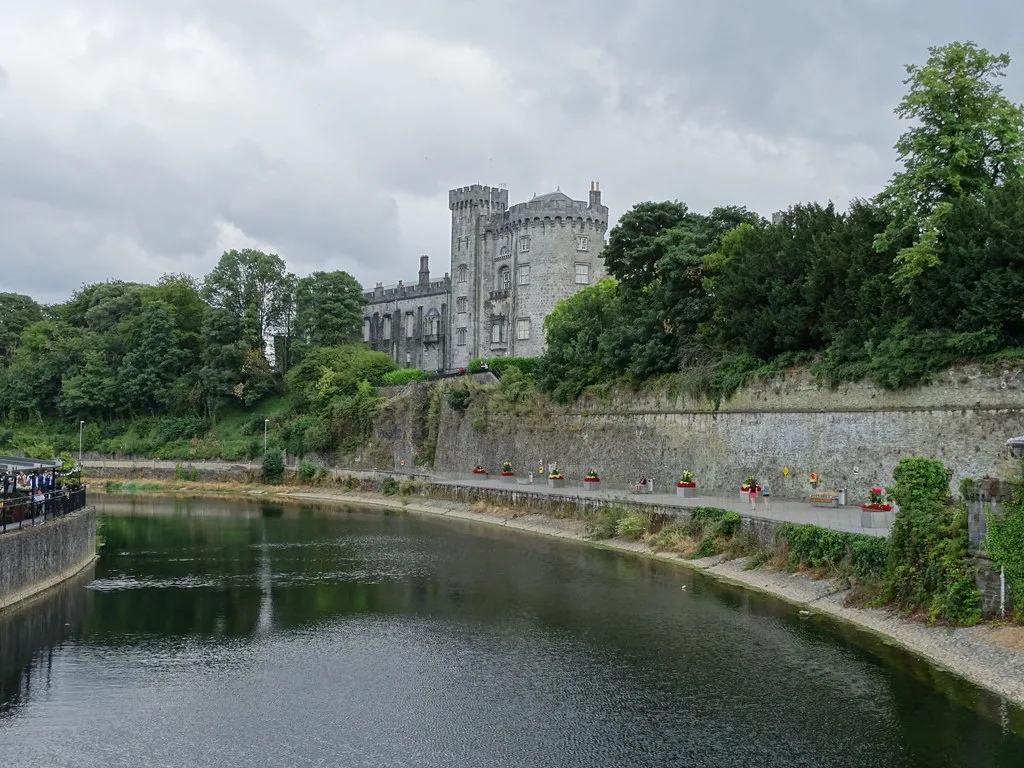
Kilkenny Castle is the big set-piece on a city walk and makes a natural companion stop; if you check its own opening arrangements separately, plan it as a distinct visit. St Canice's Cathedral and Round Tower is the medieval counterpart to this 19th-century building, and seeing both in one day makes the architectural contrast concrete. If you have time for a third stop, rothe house and its garden adds a merchant-town dimension.
Plan Your Visit
Treat St Mary's Cathedral as a building to read rather than a ticketed attraction: start outside with the limestone and the tower, move inside to the altars, statue and relics, and keep the 1843 to 1857 story in mind as you go. Check opening and service arrangements with the cathedral before you travel, since published visitor information focuses on facilities and Mass schedules rather than general hours.
Explore more Kilkenny guides
Frequently Asked Questions
Is St Mary's Cathedral the same as the Medieval Mile Museum?
No. The Medieval Mile Museum occupies the site of an earlier St Mary's church, founded in 1218, which stood off High Street behind the Town Hall. St Mary's Cathedral is the 19th-century Gothic Revival building consecrated in 1857.
When was St Mary's Cathedral built and consecrated?
The project was announced in February 1842, work began in April 1843 and the foundation stone was laid on 18 August 1843. The cathedral was consecrated on 4 October 1857, with a later refurbishment reopening on 9 April 1899.
How tall is the tower?
The cathedral's history gives the tower as 186 feet, and notes that it was originally designed for St Kieran's College. Visit Kilkenny also describes it as visible from the approaches to the city.
What can visitors see inside?
Among the documented features are an Italian marble high altar, relics brought from Rome, a Benzoni statue of Our Lady present at the 1857 opening, and, from later work, a Vatican II-era high altar of polished limestone beneath the tower.
Is there a self-guided tour?
Visit Kilkenny describes an interactive self-guided tour accessed by scanning QR codes through the cathedral and along the tour corridor at the front. It does not publish tour times or booking details, so check before relying on it.
What Mass times are listed?
Visit Kilkenny lists Sunday Mass at 11am and 5.30pm, Holy Days at 9am and Monday to Saturday at 9am, with Reconciliation on the first Saturday of the month or by appointment. Confirm with the parish before relying on these.