Kilkenny Walking Tour: Reading the Medieval City on Foot
Plan a self-guided Kilkenny walking tour between the castle and cathedral ends, taking in High Street's burgage plots, museum stops and the Black Abbey.
On this page
No guide or ticket is needed to read medieval Kilkenny: the castle and the cathedral sit at opposite ends of a street plan that still carries the town's medieval bones, so a self-guided sequence of named stops does most of the interpretive work. Add interiors only where they interest you. The sequence below runs from the castle end along High Street and Parliament Street to the cathedral close, then steps just beyond the old wall line.
The logic of the city is worth holding in mind before you set out. The Breagagh stream runs into the Nore, and in medieval times it marked the boundary between the boroughs of Kilkenny and Irishtown, a division that still explains why the cathedral feels like a separate small quarter rather than part of the commercial centre.
Why Kilkenny's Street Plan Works as a Walking Route
Four slight knolls carry the city's principal historic buildings: St Canice's Cathedral, St Mary's Cathedral, Kilkenny Castle and St Mary's church. That arrangement is why a single continuous walk feels coherent rather than arbitrary, since the route links two of those high points along the market street between them. Walkers heading for the castle end should treat the wider county context as a separate interest; our guide to castles in kilkenny covers the region's sites rather than this one building.
The Anglo-Norman borough that became the Hightown was established certainly before 1176, on the ground between the castle and the cathedral, while Irishtown grew around the older church of St Canice on the far side of the Breagagh. Each had its own walls and gates: the Hightown defences enclosed an area of 750m by 325m with seven gate houses including Castle Gate, St Patrick's Gate and Black Freren Gate, while Irishtown's smaller circuit of 300m by 250m had four gates. Reading those lines on the ground is the point of the walk, even where only fragments survive.
Kilkenny has had a continuous record of municipal government since its first council was elected in 1231, and the county council's planning framework describes the main thoroughfare of High Street and Parliament Street intersected by parallel slipways in a herringbone pattern. That grain is the quiet reason the centre rewards slow walking: the lanes are not decorative, they are the surviving structure of a planned merchant town.
Start at the Castle End
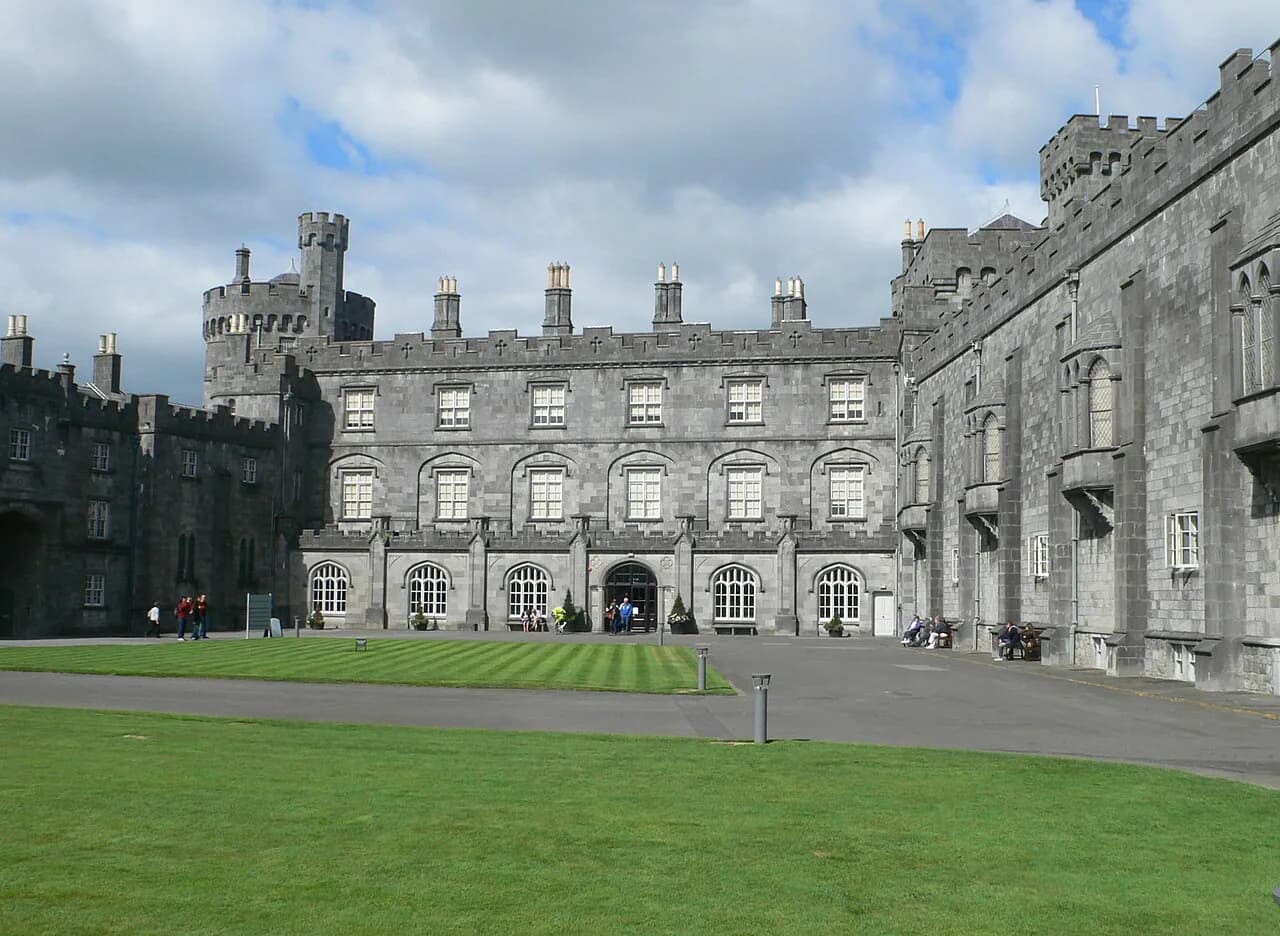
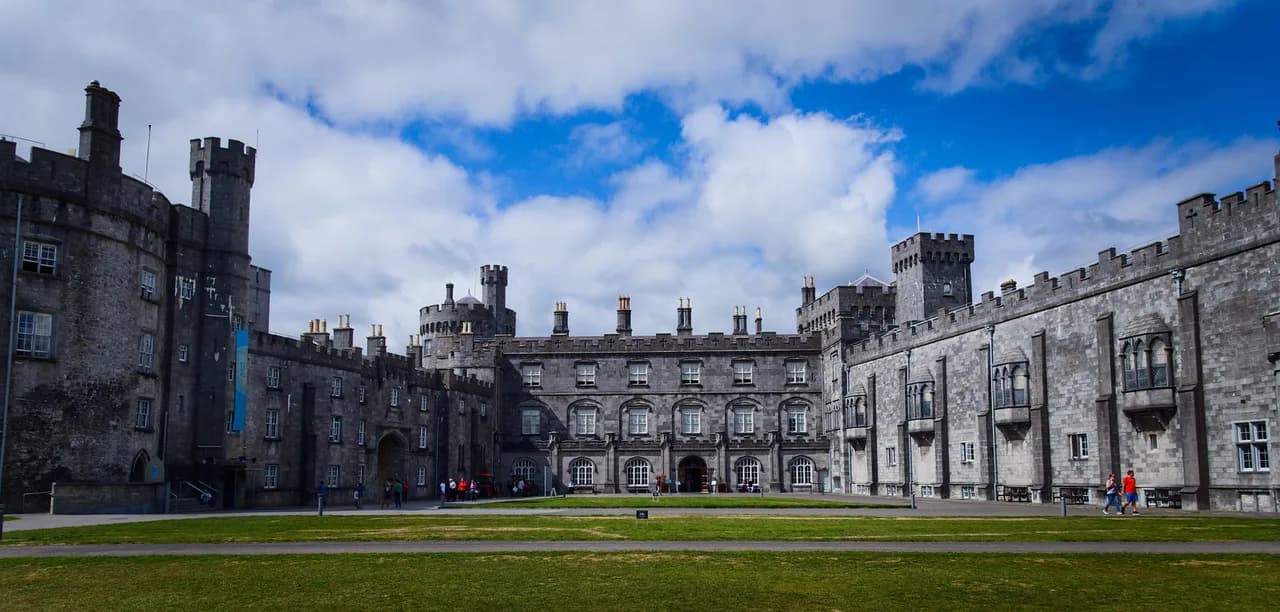
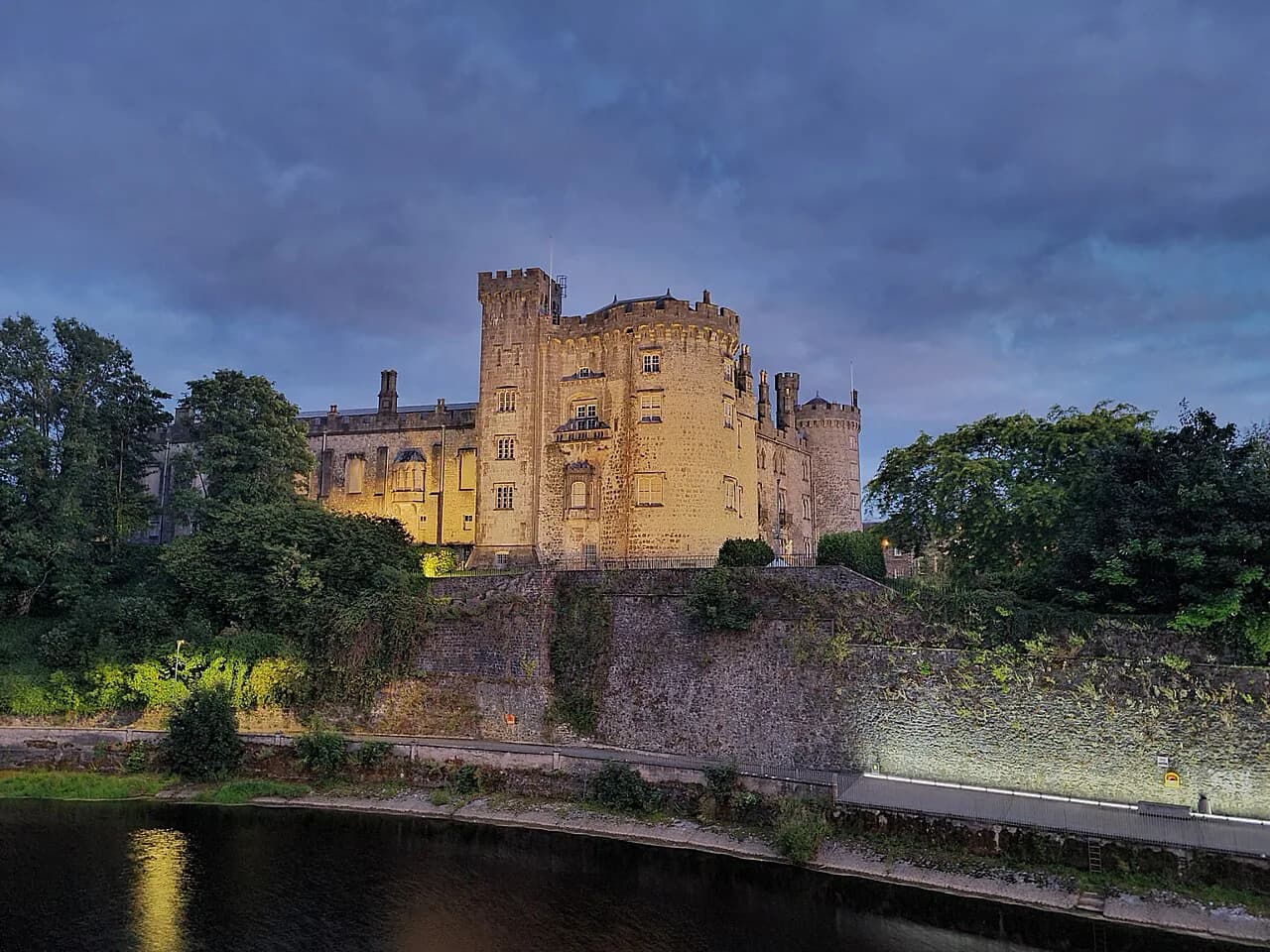
Kilkenny Castle began as a Norman fortress and became the seat of the Butler family for centuries, and the guided tour uses the family's fortunes as its narrative thread. The visitor route Heritage Ireland describes includes the Medieval Room, where a short audiovisual display covers eight centuries in about ten minutes, and the Picture Gallery, which the same source calls the second-longest room in Ireland, with a medieval-style roof painted by John Hungerford Pollen in the 1860s.
Outside, an archaeological dig site shows William Marshall's medieval gate house and what remains of the south wall of the thirteenth-century fortified castle. That is the most direct encounter with the town's Norman origins on the whole route, and it is worth pausing over before you walk uphill.
Kilkenny Castle Park spreads over 50 acres, with a path to the pond, orienteering courses and a park run among the things Heritage Ireland lists. It works as either a warm-up or a decompression after the house, and because the park is described separately from the castle itself, you can use it without committing to an interior visit. Check the operator's own notices before setting out, since house access and grounds access are described separately.
High Street as a Market Street
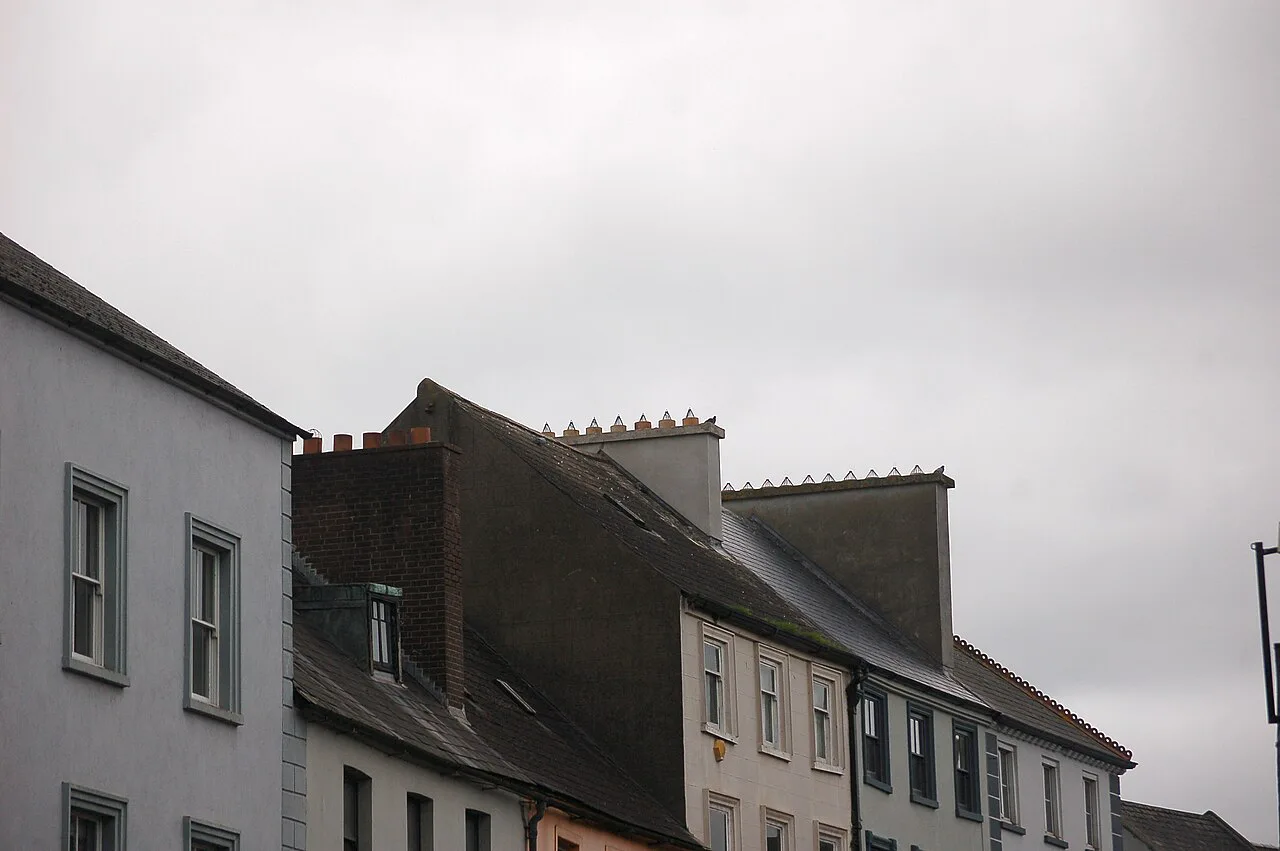
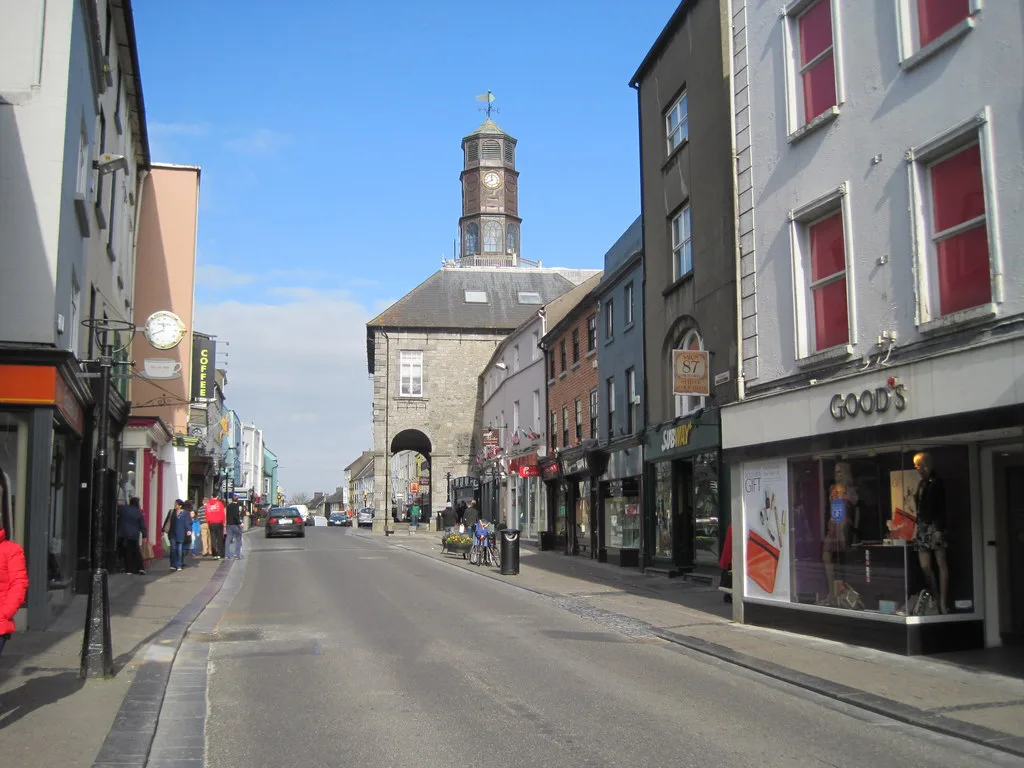
High Street was the market place as well as the main street, broader in the middle than at either end, and the Market Cross stood near the present Tholsel. The long burgage plots behind the frontages are the feature to look for: William Marshall's charter of 1207 fixed them at 20 feet wide, each held by a burgess who built a house on the street with storage, herb gardens or an orchard behind. The lanes that seam the centre exist because those plots needed light and access to their backs.
Many of the medieval core's surviving lanes still run back toward the line of the town wall, and the county council's framework notes that burgage plots were first established by Marshall in 1207, with a burgess renting a plot and building a house at the street edge. Some of the properties on High Street and Parliament Street retain those elongated plots today, so a glance down a slipway is a glance into the thirteenth-century plan.
The Tholsel on High Street houses a documentary collection running from the thirteenth century onward, including deeds, grants, leases and record books, and its most important item is the Liber Primus Kilkenniensis, a manuscript of urban records containing a copy of Marshall's charter. Whether you can consult the collection during a short visit is a separate question from standing outside the building; the council's description establishes what it holds rather than public reading arrangements.
Pause at the Medieval Mile Museum
The Medieval Mile Museum occupies the site of the thirteenth-century St Mary's church and graveyard, which makes it a natural interior stop right on the spine of the walk. Discover Ireland describes it as holding Kilkenny's civic treasures alongside high crosses, carved stone tombs and artefacts uncovered during the church's restoration, so it functions as a compact primer on the town you have just been reading through its streets.
Two specific things are singled out: the ornate Rothe Chapel with tombs of the medieval merchant Rothe family, and a High Cross Exhibition introducing the High Kings of Ossory and the monastery of Kilkenny attributed to St Canice. Younger visitors get a trail hunting for LEGO minifigures of figures from Kilkenny's history, and a Wolfwalkers mural on St Mary's Lane continues the theme outside. Visiting arrangements are not fixed by the tourism listing, so confirm current arrangements with the operator before packing several interiors into one day.
Turn onto Parliament Street: Rothe House and Garden
Rothe House and Garden is three connected merchant houses arranged around courtyards that rise to a restored half-acre garden, and it sits on Parliament Street within a short walk of both the castle and the cathedral. That position makes it a convenient stop if you want to understand the merchant class who occupied the burgage plots you have been tracing. See our guide to churches in kilkenny if the ecclesiastical buildings rather than the merchant houses are your priority for the day.
The mobility picture is mixed and worth knowing in advance. The courtyards and gardens are wheelchair accessible, but the historic cobblestones outside and the many staircases inside the houses may be challenging for visitors with mobility issues, braille panels are mounted on the garden walls, and guide and therapy dogs are welcome while other dogs are not. The operator asks visitors to call ahead to discuss arrangements, which is the sensible step if stairs are a concern.
There is a gift shop but no dining on site, with cafes and restaurants nearby on Parliament Street. Rothe House's page mixes a general FAQ with a dated seasonal notice, so rather than rely on any single stated time, buy tickets online where offered and confirm current hours directly with the operator before you go.
Finish the Spine at the Cathedral Close
St Canice's Cathedral closes the walk at the far end of the medieval town, and its own history page records at least three earlier churches on the site, with the bishop's seat transferred from Aghaboe around 1120. Construction is attributed to Bishop Hugh de Mapilton and Bishop Geoffrey de St Leger between 1251 and 1286, with completion often cited as 1285; the central tower collapsed in 1332 and was repaired under Bishop Ledrede, and Cromwell's campaign left the building roofless for twelve years from 1650.
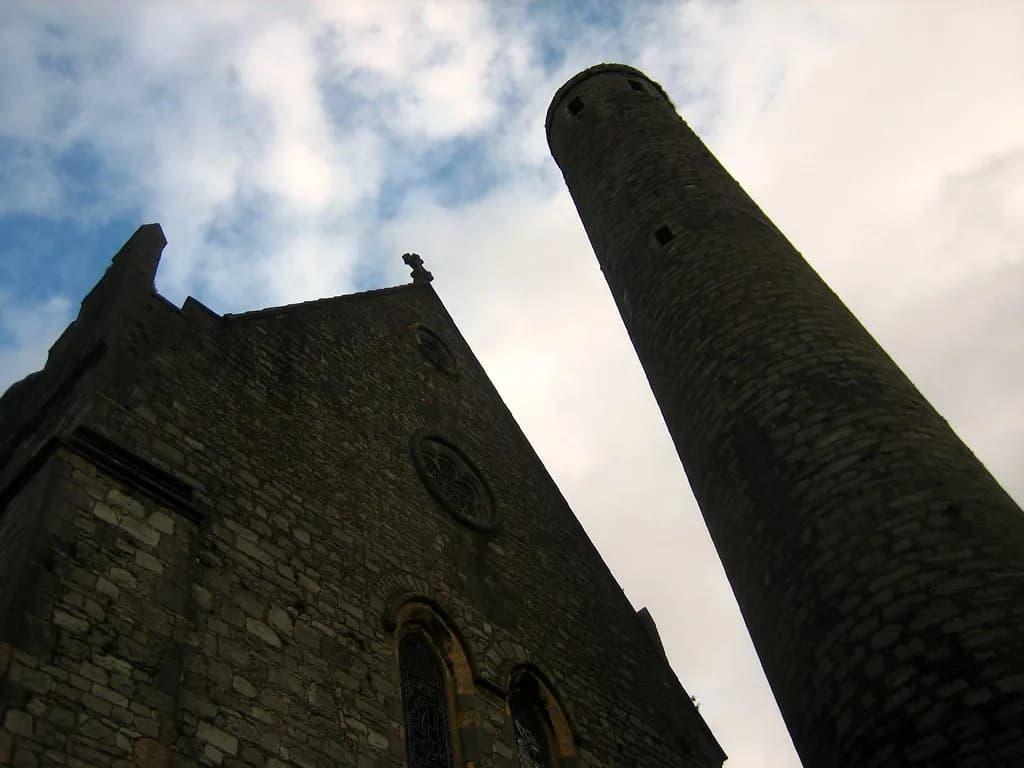
The Round Tower is the stop most walkers remember. At 30m it is climbed by internal ladders across seven floors and 121 steps, and the cathedral describes it as one of only two Irish round towers people may climb. The climb is weather permitting and the tower stays closed on Sunday mornings because of worship in the cathedral; children on the tower climb must meet a 4.5ft or 1.4m height requirement. A 40-minute guided tour of cathedral and tower is available if you want the interpretation done for you.
Allow time for the close itself rather than treating the cathedral as a single stop. The cathedral describes it as the best-preserved surviving medieval cathedral close in Ireland, and the cluster includes the Georgian Deanery of 1729, St Canice's Library, the 1750s Robing Room, the Bishop's Palace now used by the Heritage Council, the seventeenth-century steps and the graveyard. These are small buildings read from outside, not separate ticketed attractions, and together they give the walk a quiet final stretch.
Step Beyond the Old Wall Line: the Black Abbey
The Black Abbey sits just outside where the original city walls stood, and it is a working place of public worship rather than a visitor centre. Its full name is the Church and Priory of the Most Blessed Trinity, and the popular name comes from the black cappa the Dominican friars wore over their white habits; the community was founded in 1225 under William Marshall. Henry VIII confiscated the house in 1543 and turned it into a courthouse, and it was eventually restored and reopened for worship in the nineteenth century.
Inside, the surviving fabric spans the thirteenth to sixteenth centuries, with sepulchral slabs, stone carvings and sculptures including a figure of the Blessed Trinity, the only known surviving wooden statue of St Dominic in Ireland, and the Rosary Window stained glass depicting the fifteen mysteries. Visit as you would any parish church and confirm current visiting arrangements with the church rather than assuming the building is open at a particular hour.
Reading the Walk
The most rewarding version of this route pairs both anchors, the castle knoll and the cathedral close, with two or three interiors chosen to suit your interests: the Medieval Mile Museum for civic and ecclesiastical collections, Rothe House for the merchant town, or the tower climb for the view. Everything else is street-level reading, which asks only that you look down the lanes as well as up at the facades.
Treat this as a sequence of named stops rather than a booked product: there is no meeting point, no schedule and no guide, and the order can be reversed or shortened freely. If you are comparing approachable city walks elsewhere in Ireland, our dublin walking tour follows the same principle of reading a city through its own streets, and the galway walking tour applies it to a much smaller historic centre.
Explore more Kilkenny guides
Frequently Asked Questions
Do you need a guided tour to walk medieval Kilkenny?
No. The castle and the cathedral sit at opposite ends of a street plan that is itself the main exhibit, and High Street's lanes and long plots are visible from the pavement. Guided options exist inside individual sites, such as the castle tour and the cathedral and tower tour, but the walk between them needs no booking. Treat the route as your own sequence of stops and choose interiors separately.
How do the castle and cathedral ends of Kilkenny connect on foot?
They are linked by the historic spine of High Street and Parliament Street, with the cathedral standing in its own close on the far side of the old Irishtown. The lanes running off the main street follow the lines of medieval burgage plots, so the connection is both a practical route and the clearest surviving expression of the town's original plan.
Which stops on a Kilkenny walk are outdoors and which need a ticket?
The streets, the castle park, the cathedral close and the exterior of the Black Abbey are outdoor or freely viewed, while Kilkenny Castle, the Medieval Mile Museum, Rothe House and the cathedral with its tower involve interiors that may carry admission. Admission arrangements change, so check each operator's own page before deciding which interiors to include.
What can you see at Kilkenny Castle beyond the guided tour?
The visitor route described by Heritage Ireland includes the Medieval Room with its short audiovisual display, the Picture Gallery with its painted roof, and the exposed dig site showing William Marshall's medieval gate house and the thirteenth-century south wall. The park is described separately and covers over 50 acres. Check current notices before travelling, as house access and grounds access are handled differently.
Is the round tower at St Canice's Cathedral difficult to climb?
It is a real climb: 30m high, with internal ladders across seven floors and 121 steps to the viewing platform. It is weather permitting and closed on Sunday mornings for worship, and children must meet a height requirement. The cathedral describes it as one of only two Irish round towers that people may climb, so plan around it rather than treating it as an afterthought.
Is Rothe House suitable for visitors with limited mobility?
Partly. The courtyards and garden are wheelchair accessible, but historic cobblestones and many internal staircases may be difficult, and the operator advises calling ahead to discuss arrangements. Braille panels are mounted on the garden walls. Guide and therapy dogs are permitted, other dogs are not. Check the operator's page for current hours and ticket purchase.
Why is the Black Abbey outside the old city walls?
The tourism authority's description places it just outside where the original walls of Kilkenny once stood, and it was founded there as a Dominican house in 1225. It is a place of public worship rather than a ticketed attraction, and it retains fabric from the thirteenth to sixteenth centuries. Confirm current visiting arrangements with the church before making it the end of your walk.
Sources
- The early development of the medieval town of Kilkenny – Kilkenny Archaeological Society
- Section-2-ACQ-Masterplan-2015.pdf
- Kilkenny Castle | Heritage Ireland
- History of St Canice’s Cathedral | Kilkenny’s Past
- Guided Tour & Tower Climb | St Canice’s Cathedral
- Plan Your Kilkenny Museum Visit | Rothe House and Garden
- Visit Medieval Mile Museum with Discover Ireland
- Visit Black Abbey with Discover Ireland
You might also like
Continue reading
More guides you'll find useful