Churches in Kilkenny: Three Historic City Landmarks
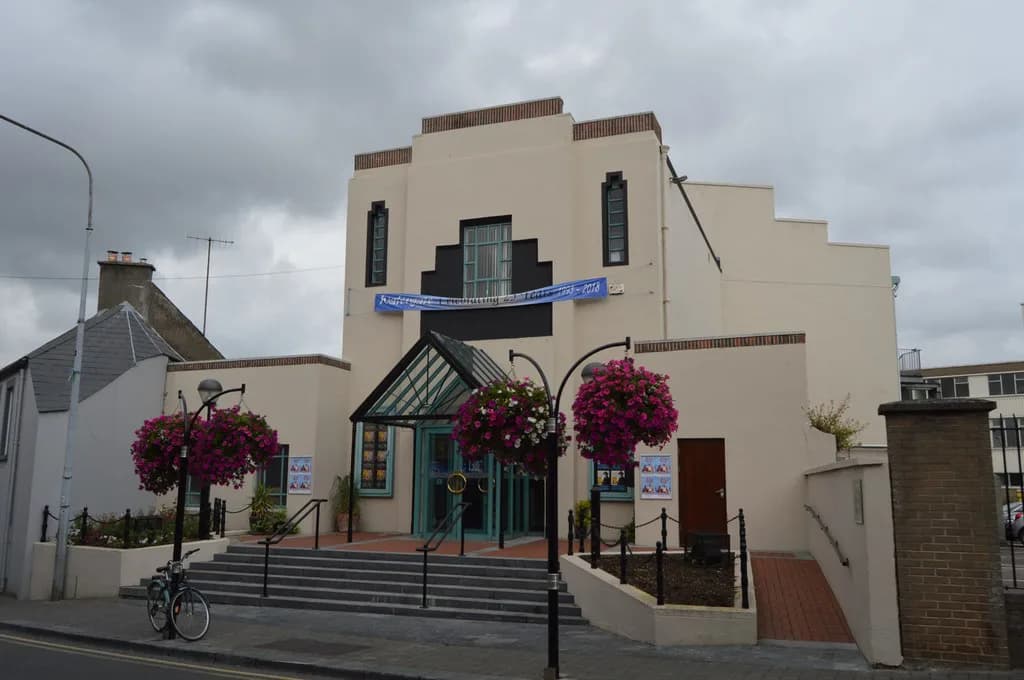
Churches in Kilkenny span three traditions: medieval St Canice's with its climbable round tower, Gothic St Mary's and the Dominican Black Abbey.
On this page
Kilkenny city holds three publicly accessible historic churches that, taken together, trace nearly eight centuries of building in one small compass: St Canice's Cathedral, St Mary's Cathedral and the Black Abbey. Each was built in a different era, and St Canice's and St Mary's also belong to different traditions, so a visit to all three is less a list of similar interiors than a walk through changing styles and reformations. This guide sets out what distinguishes each building and what the operators actually publish about visiting.
St Canice's Cathedral: A Medieval Site Built in Two Stages
St Canice's Cathedral is the Church of Ireland cathedral of Ossory and the city's deepest-rooted church site. The cathedral's own history explains that a round tower already marked an important religious site here, and that the bishop's seat was moved from Aghaboe to Kilkenny around 1120. The Norman lord William Earl Marshal later built a stone castle and a cathedral at opposite ends of his new town, though the name Kilkenny itself derives from Canice's church rather than from any claim that the saint founded this particular building.
The cathedral was raised in two campaigns, though no contemporary construction records survive. The operator's account credits Bishop Hugh de Mapilton, in office 1251 to 1260, with the choir, transepts and crossing tower, and Bishop Geoffrey de St Leger, 1260 to 1286, with completing the nave; a completion date of 1285 is often cited rather than proven. The same account ties the collapse of the central tower in 1332 to the era of Dame Alice Kyteler's witchcraft trial, after which Bishop Ledrede rebuilt the fallen choir and chapels and inserted the great east window that dominates the interior today.
Later upheaval left its own marks. The cathedral was devastated when Cromwell's forces took Kilkenny in 1650 and stood abandoned and roofless for twelve years before restoration. Look for the long view rather than a single treasure: the building is a palimpsest in which thirteenth-century fabric, fourteenth-century repair and seventeenth-century damage sit side by side, which is what rewards a slower reading of the interior over a quick photograph of the nave.
Climbing St Canice's Round Tower
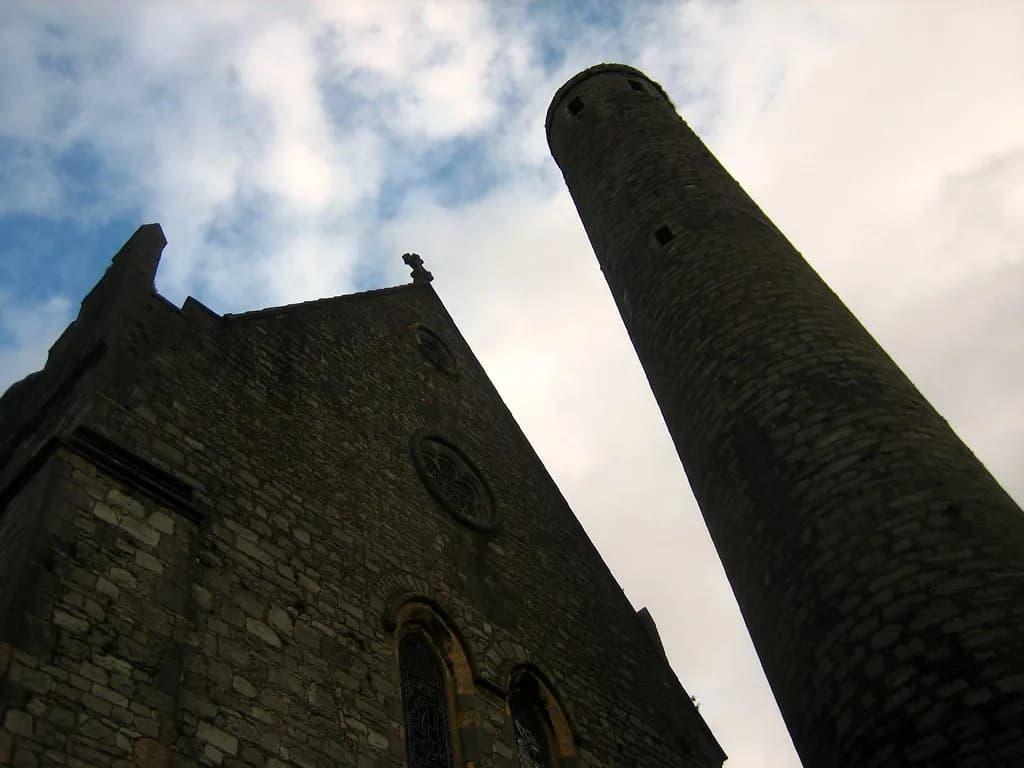
The round tower beside the cathedral is the clearest surviving witness to the site's early importance, and the operator suggests a mid-ninth-century date, making it the oldest standing structure in the city. It rises about 30 metres and narrows from roughly 4.5 metres in diameter at its base to 3.3 metres at the top. Excavation in 1846 and 1847 found that its foundations are only about 0.6 metres deep, and human burials beneath it predate the tower itself.
This is one of only two Irish round towers the public may climb, and the climb is the reason to allow time here. The ascent runs through seven floors of internal ladders and 121 steps to an open viewing platform, because the conical roof that would originally have added about 5 metres to the height is gone. The platform gives a 360-degree view of the city and surrounding countryside on a clear day, but the route is a genuine ladder climb rather than a staircase, so it suits confident walkers who are comfortable in enclosed stone spaces.
The Cathedral Close, Graveyard and a Working Church
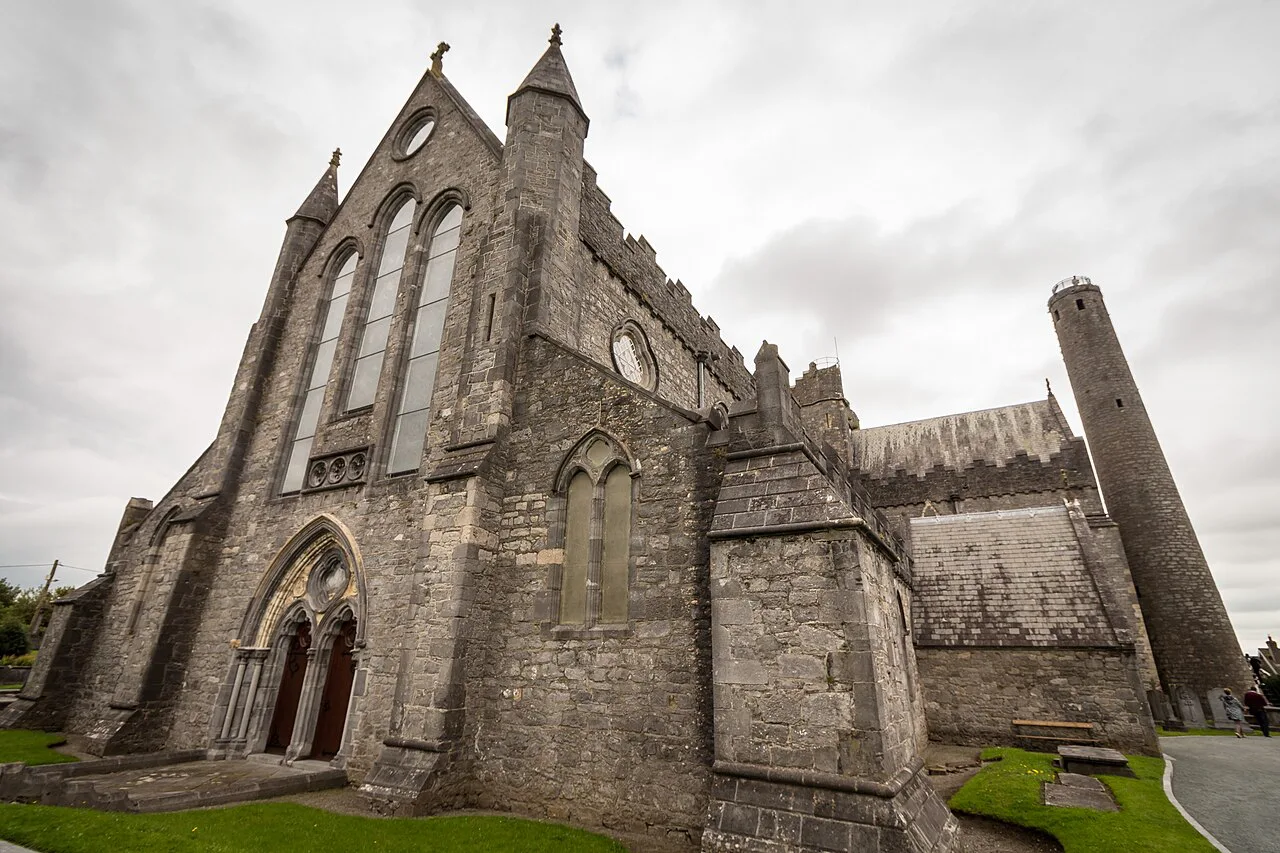
St Canice's sits within what its own history calls the best-preserved surviving medieval cathedral close in Ireland, and the surrounding buildings are worth walking slowly. The Deanery dates from 1729, the Sexton's house at the top of the seventeenth-century steps began as a precentor's manse in 1640, and carved sixteenth-century fragments survive in the gable beside the steps. Across the lane you can see the former Bishop's Palace, built in the fourteenth century with stone taken from churches emptied by the Black Death and now the headquarters of the Heritage Council.
The graveyard has received burials for more than a thousand years, and a monk's sarcophagus with drainage holes still leans against the rear wall; if you are tracing a particular grave, ask inside the cathedral, where some records and plans are held. The site remains a working place of worship rather than a monument: the operator notes that services continue and that the tower stays shut on Sunday mornings for worship, and that the cathedral's acoustics feature in the Kilkenny Arts Festival. Plan around services rather than treating them as an interruption.
Practical Notes for Visiting St Canice's
The operator publishes a combined guided cathedral and tower tour lasting about 40 minutes, so the climb is usually paired with interpretation of the building rather than done alone. Published admission at the time of writing was €16 for adults, €9 for children aged 6 to 18, €42.40 for a family of two adults and two children, and €13 for students or retirees, all of which can change and should be checked when you book. The height rule covers the climb, not general cathedral entry.
Children climbing the tower must meet a minimum height of 1.4 metres, so smaller children can still visit the cathedral but cannot make the ascent. Tower access is weather permitting throughout the year, and the operator advises climbing between 9am and 11am in summer, when the tower is busiest from about 11am to 4pm. Check the day's opening at the cathedral before you set out, and keep in mind that St Canice's Cathedral is the Church of Ireland building on the hill, not the separate Catholic parish church of the same name elsewhere in Kilkenny.
St Mary's Cathedral: A Nineteenth-Century Gothic Statement
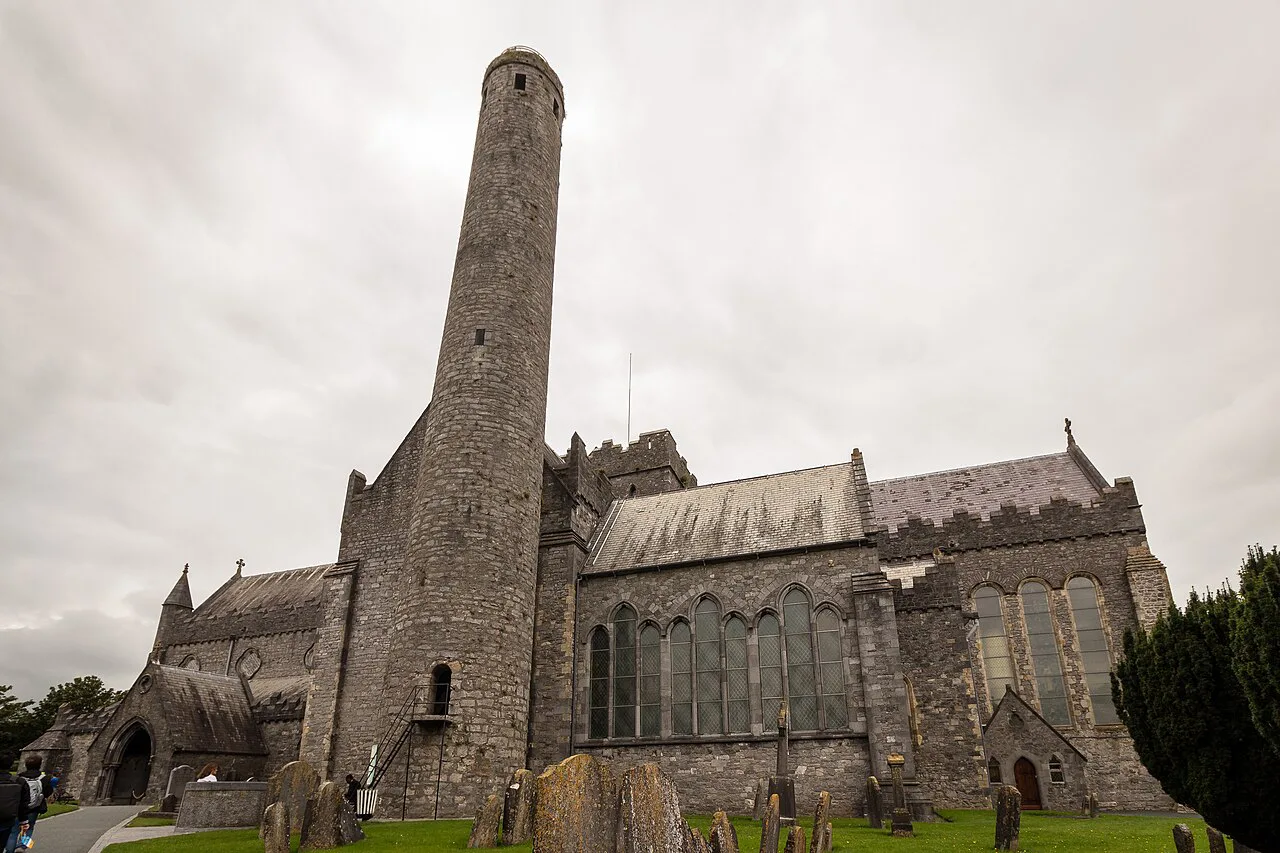
St Mary's Cathedral is the Catholic cathedral of Ossory and a nineteenth-century counterpoint to St Canice's, begun by Bishop William Kinsella, who announced the project in 1842 on the site of Burrell's Hall. Kinsella died in December 1845, when the walls stood only seven feet high. His successor Edward Walsh carried the work through the famine years, providing local employment, and the cathedral was consecrated on the morning of 4 October 1857.
The building Kinsella chose was Gothic in character, constructed of chiselled limestone in a cruciform plan, with William Deane Butler as architect; he had also designed St Kieran's College and Ballyragget. Its tower, designed originally for St Kieran's College and rising to 186 feet, is now the most visible landmark of the Catholic city and appears from every approach. Inside, the marble high altar was bought in Italy and relics were brought from Rome for the altars, giving the interior a deliberate Roman and continental dimension that differs sharply from the medieval fabric on the other hill.
Fabric and furnishing were reworked repeatedly in the decades after the opening. James Pearse, father of the 1916 leaders Patrick and Willie, completed the marble altar rails and erected the altar to the Sacred Heart, part of a refurbishment reopened in April 1899; further works followed in the 1920s, and later modernisation came under Bishop Birch after the Second Vatican Council. Look for these later layers when you visit, because they show a cathedral being adjusted to liturgical change rather than preserved untouched. If you want more on the city's broader story before or after, a wider Kilkenny history guide gives useful background.
Black Abbey: A Dominican Friary in the City's Shadow
The Black Abbey, formally the Church and Priory of the Most Blessed Trinity, was founded in 1225 for a community of Dominican friars just outside the original city walls. The familiar name refers to the black cappa the friars wore over white habits in the Middle Ages. Discover Ireland, the national tourism authority rather than the Dominican community, records that the abbey played a major part in the civic and church life of Kilkenny until 1543, when Henry VIII confiscated it.
The confiscation turned the priory into a courthouse, and the years of occupation left it in ruin before a nineteenth-century restoration returned it to public worship. The building you see now spans the thirteenth to sixteenth centuries, so the interior reflects a long medieval fabric restored after dispossession rather than a single design. It is a smaller, quieter visit than either cathedral, and its value lies in reading the surviving medieval work closely.
What to Look For Inside the Black Abbey
The abbey's interior is dense with monuments and carving: sepulchral slabs, stone carvings and a distinctive figure of the Blessed Trinity, plus the only known surviving wooden statue of St Dominic in Ireland, which Discover Ireland notes bears remaining marks from the hacking of Cromwellian soldiers' swords. The great Rosary Window in stained glass depicts the fifteen mysteries of the Holy Rosary, a full programme of imagery that rewards a few minutes of deliberate looking rather than a scan from the door.
Discover Ireland describes the abbey as a place visitors can see today, but it publishes no opening hours or admission details, so check with the Dominican community before making it your first stop of the day. Pair a short abbey visit with time on foot around the medieval streets, and if you are building an itinerary across the city, a Kilkenny walking tour can help you link the church sites with the rest of the old town.
Together the three churches sit close enough to compare in a single day. For more on the castles and civic buildings that shaped the same streets, the wider guide to castles in Kilkenny sets the town's two ends in context, since the Norman plan deliberately placed a castle and a cathedral at opposite points of the settlement.
Choosing Between the Three Churches
The choice comes down to what kind of visit you want. St Canice's rewards those interested in the medieval church and the physical experience of a round tower climb, St Mary's those drawn to nineteenth-century Gothic scale and the confident statement of a Catholic city, and the Black Abbey those who prefer a small, older friary interior with concentrated carving. None is a substitute for another, and none needs a ranking to justify the detour.
If your time is short, remember that the tower climb and the guided tour at St Canice's are the only element here with a fixed published duration and ticket structure, which makes it the easiest visit to schedule. St Mary's and the Black Abbey are better treated as flexible stops, with the abbey's access not published by Discover Ireland and best confirmed with the Dominican community beforehand. For the city's collections more broadly, the Kilkenny Attractions: 6 Visitor Guides page can help you extend the same walk.
Plan Your Visit
Kilkenny's three historic churches each occupy a distinct moment: a medieval cathedral on an ancient religious site, a nineteenth-century Catholic statement of scale, and a Dominican friary that survived confiscation and returned to worship. Giving each building time on its own terms, rather than treating them as one interchangeable stop, is what makes the comparison worthwhile. Confirm current access and admission with each operator before you travel, since details change through the year. For another heritage guide, read about Churches In Cork.
Explore more Kilkenny guides
Frequently Asked Questions
What is the difference between St Canice's Cathedral and St Canice's Catholic church in Kilkenny?
St Canice's Cathedral on the hill is the Church of Ireland cathedral of Ossory and the building described here, with the round tower and cathedral close around it. St Canice's Catholic parish church is a separate building in the city, so check which one your directions point to before setting out.
How long does the St Canice's Cathedral and tower tour take?
The operator publishes the combined guided cathedral and tower tour as lasting about 40 minutes. That covers interpretation of the building as well as the ascent, so allow additional time on site for the close and graveyard.
Can children climb the round tower at St Canice's?
Children may climb only if they meet a minimum height of 1.4 metres. The rule applies to the tower climb, not to entering the cathedral, so smaller children can still visit the building with you.
When was St Mary's Cathedral in Kilkenny consecrated?
The cathedral's own history gives the consecration as 4 October 1857, beginning early in the morning. Construction had begun in 1843 under Bishop Kinsella and continued through the famine years under Bishop Walsh.
What can visitors see inside the Black Abbey?
According to Discover Ireland, the interior holds sepulchral slabs, stone carvings, a figure of the Blessed Trinity, the only known surviving wooden statue of St Dominic in Ireland, and the stained-glass Rosary Window showing the fifteen mysteries.
Is the round tower climb at St Canice's always open?
No. The operator states that tower access is weather permitting and that the tower stays closed on Sunday mornings because of worship in the cathedral. Check the day's arrangements at the cathedral before travelling.
Sources
You might also like
Continue reading
More guides you'll find useful