Ancient Sites in Ireland: A Visitor's Guide to Tombs, Forts and Trackways
Ancient sites in Ireland range from guided passage tombs to unguided cliff forts and bog trackways. Learn how access works at each before you plan a visit.
On this page
Ancient Ireland, for a visitor, runs from Neolithic passage tombs and court tombs through Bronze Age hillforts to Iron Age wooden trackways and bog burials. What separates these places on the ground is rarely the era and almost always the access: a guided monument with a shuttle, an unguided National Monument in a field, or a staffed centre that opens for part of the year. Planning a trip around that difference is more useful than chasing a ranked list.
The sites below are a selection published by Fáilte Ireland's Discover Ireland and by the Office of Public Works through Heritage Ireland, not a complete inventory of Irish prehistory. Seasons, works and closures change, so read the managing body's own notices before travelling. Several monuments sit on open farmland or rough ground, so sturdy footwear matters as much as the map.
Three Ways You Will Meet an Ancient Site
The first access type is the guided monument: you park or arrive at a visitor centre, join a tour, and are taken to the monument itself. Newgrange and Knowth work this way, and the published description states there is no direct public road access to either tomb. The second type is the open landscape, where earthworks, cairns or a stone circle stand in fields or on hills and you walk among them without a guide. The third is the seasonal centre, where an exhibition or an introductory display opens for part of the year while the monument outside may remain reachable.
Knowing which type you are visiting changes what you pack and when you go. A guided tour fixes your timing and often bundles the monument with an exhibition, while an unguided site gives you freedom but no interpretation and, at some locations, an explicit care warning from the OPW. Seasonal centres reward a check of the calendar before you build a day around them, because an out-of-season arrival may leave you with the outdoor remains only.
Newgrange and Brú na Bóinne: The Guided Model
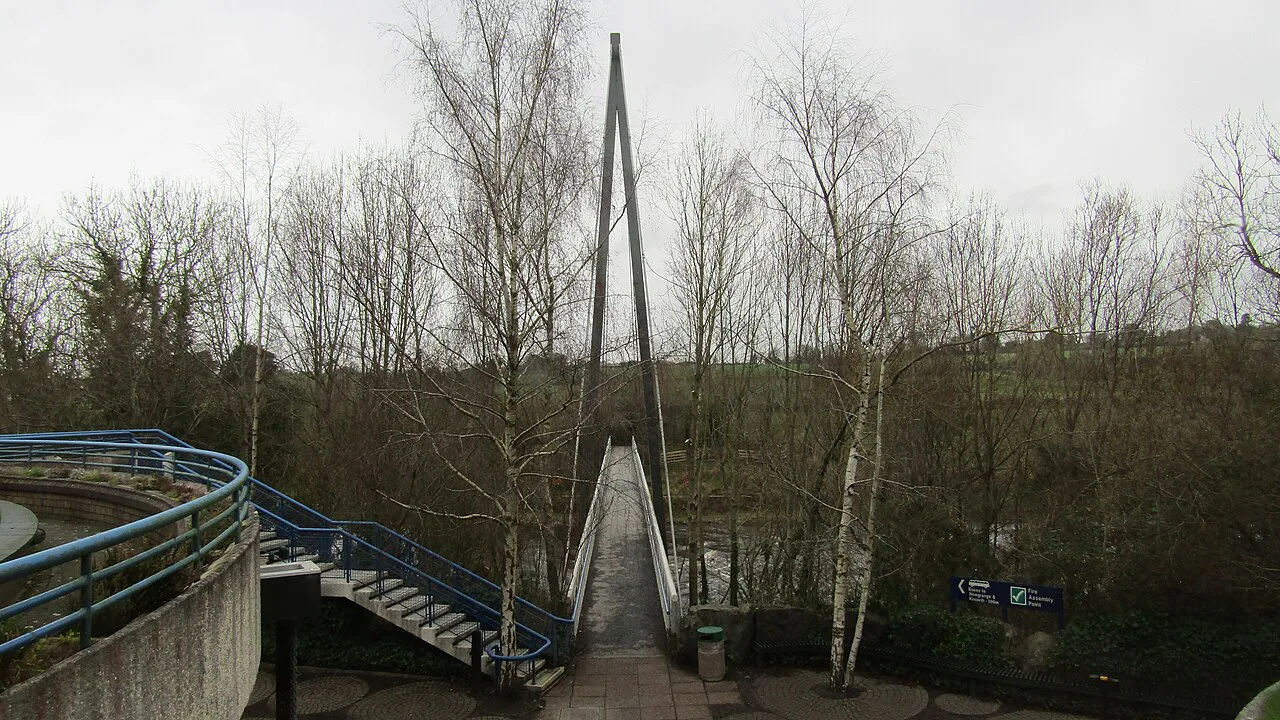
Newgrange is the clearest example of a monument you cannot simply drive up to. The independent specialist site newgrange.com describes it as a Neolithic passage tomb built around 3200 BC, with a circular mound roughly 85 metres across and a 19-metre passage leading to a chamber with three recesses. Visitors begin at the Brú na Bóinne Visitor Centre on the south side of the River Boyne, cross by pedestrian bridge and take a shuttle to the monuments on the north bank.
The same description places Newgrange alongside Knowth and Dowth in a wider ceremonial landscape, with up to 35 smaller mounds in the surrounding area. That context is the argument for treating Brú na Bóinne as a half-day rather than a single photo stop: the visitor centre sequence, the river crossing and the shuttle all structure your time. Note that these access mechanics come from that specialist publisher rather than from the OPW, so confirm current arrangements with the Brú na Bóinne Visitor Centre when you book.
The winter solstice is the monument's best-known feature and its most misunderstood. As published on newgrange.com, a roof-box above the entrance admits a beam of dawn light to the chamber around 21 December, an effect lasting about 17 minutes from roughly 9am. Chamber places at the solstice are allocated by a free annual lottery, with each winner able to bring a guest, so the sunrise event is not a standard ticket you buy. Members of the public may gather outside the entrance on solstice mornings, and access is free on those mornings, but overcast skies can wipe out the effect entirely.
Neolithic Cemeteries and Court Tombs
Loughcrew, near Oldcastle in County Meath, is a Neolithic passage-tomb complex rather than a single monument. Discover Ireland highlights Cairn T, whose chamber walls carry spiral and lozenge carvings described as among the finest Neolithic art in Europe, and notes that Iron Age objects in nearby Cairn H show later use of the hill. The same page states the site is open from early June to early September, is free to visit, and has guided tours available in that window.
Creevykeel Court Tomb in County Sligo offers the opposite experience: an unguided National Monument in the care of the Office of Public Works, 2 kilometres north-east of Cliffony. Heritage Ireland calls it the largest and finest example of a court tomb in Ireland, dating to between 4000 and 2500 BC, with a trapezoidal cairn and an internal oval court measuring 15 metres by 9 metres. Excavation in 1935 under Hugh O'Neill Hencken removed and replaced the cairn stones and recovered a polished diorite axe, pots, quartz crystals, a flint knife and animal bone.
Because Creevykeel has no centre, no staff and uneven stones underfoot, the OPW page carries a blunt notice that visitors should take care and that the Office of Public Works accepts no liability for injury or loss. Treat that as practical instruction rather than paperwork. If you want carved art and interpretation, choose a staffed site; if you want to read a monument's plan in the ground with nobody between you and the stones, an unguided tomb like this rewards the effort.
Céide Fields: Stone Age Farming Under Blanket Bog
Céide Fields in north Mayo preserves stone-walled fields, dwelling areas and megalithic tombs beneath a natural blanket bog, which Heritage Ireland describes as the most extensive Stone Age monument in the world, with the oldest known stone-walled fields dating back almost 6,000 years. The visitor centre sits near dramatic rock formations, and a viewing platform at the edge of a 110-metre cliff gives the landscape its scale. Because the archaeology lies under bog rather than in built galleries, this is a site where the exhibition and the ground together tell the story.
The operator publishes daily opening from 10:00 to 18:00 with last admission at 17:15, and notes that from 5 November the winter months are available for bookings rather than routine drop-in, so confirm the current schedule for your dates. Come dressed for wind and rain and wear sturdy footwear, since the terrain and weather are described as challenging. A visual guide PDF is offered to help first-time visitors and people with learning or developmental disabilities prepare, which is worth reading before you commit to the cliff-edge walk.
Bronze and Iron Age Power Centres
The Hill of Tara rises between Navan and Dunshaughlin in County Meath and holds earthworks spanning millennia. Discover Ireland describes the Mound of the Hostages as a 5,000-year-old passage tomb and the Ráith na Rí as the largest enclosure on the hill, roughly 300 metres across within a double bank and ditch; inside sit the Lia Fáil and Teach Cormaic. The guide notes the hill is open all year but the visitor centre, housed in a deconsecrated church with Evie Hone glass, opens May to September with a short audiovisual introduction. For a closer look at the earthworks and their legends, our guide to the hill of tara ireland sets out what to look for on foot.
Rathgall, outside Tullow in County Carlow, shows how long a strategic site can stay in use. Discover Ireland dates the fort's origins to the late Bronze Age around 800 BC, with continuous use into the early Middle Ages, an eighth-century outer wall and medieval inner walls, and finds running from Bronze Age tools to medieval coins and pottery plus an iron-smelting furnace. It is free to visit at all times and unguided, so the care expected at any earthwork applies.
In County Clare, Mooghaun Bronze Age Hillfort was built around 950 BC and is described as one of the largest hillforts in Ireland, with views toward the River Fergus and the Shannon estuary. The inner area beyond the ramparts is thought to have been a sacred space, and the Mooghaun North Hoard, found nearby in 1854 and described as the largest prehistoric gold hoard in Western Europe, now survives in the National Museum of Ireland and the British Museum. The hillfort itself is a self-guided walk, so pair it with a museum visit if you want to see original metalwork.
Rathcroghan and Oweynagat: Royal Landscape and Legend
Rathcroghan in County Roscommon is presented by Discover Ireland as the ancient capital of Connacht under Queen Maeve and as part of Cruachan Aí, described as the oldest and largest unexcavated royal site in Ireland, with 240 identified monuments. Access to the landscape is organised through the Rathcroghan Visitor Centre and its guided tours rather than by wandering onto the sites independently. Book the tour if the archaeology is your reason for coming.
Nearby Oweynagat, the Cave of the Cats, is where you have to separate tradition from history. The published account records the belief that its doorway opened at Samhain, when the boundary between the living and the dead was thought to thin, and that Christian scribes later renamed it the Gate to Hell. Those are traditions attached to the place, not excavated facts about what happened there. Visit it as part of the guided access, not as an independently entered cave.
Iron Age Movement and Death: Corlea and the Bog Bodies
The Corlea Trackway in County Longford preserves a wooden togher, a road of boards laid across bogland that sank and survived for roughly 2,000 years. Discover Ireland describes it as one of the largest trackways of its kind found in Europe, and the visitor centre displays an 18-metre stretch of the timber in a hall designed to conserve it. The centre opens from March to early November, which makes it a spring-to-autumn stop rather than a year-round one.
Croghan Hill in County Offaly ties a landscape to a person. The hill, an extinct volcano above the Bog of Allen, has a summit mound believed to be a Bronze Age burial site, and an engraved pillar by artist Ciaran Byrne records the hill's volcano, St Brigid, St Patrick and the 2003 discovery of Old Croghan Man in the bog below. That well-preserved Iron Age body is held in the Kingship and Sacrifice exhibition at the National Museum of Ireland on Kildare Street in Dublin, so the museum rather than the hill is where you see the remains.
Dún Aonghasa: A Cliff Fort That Demands a Status Check
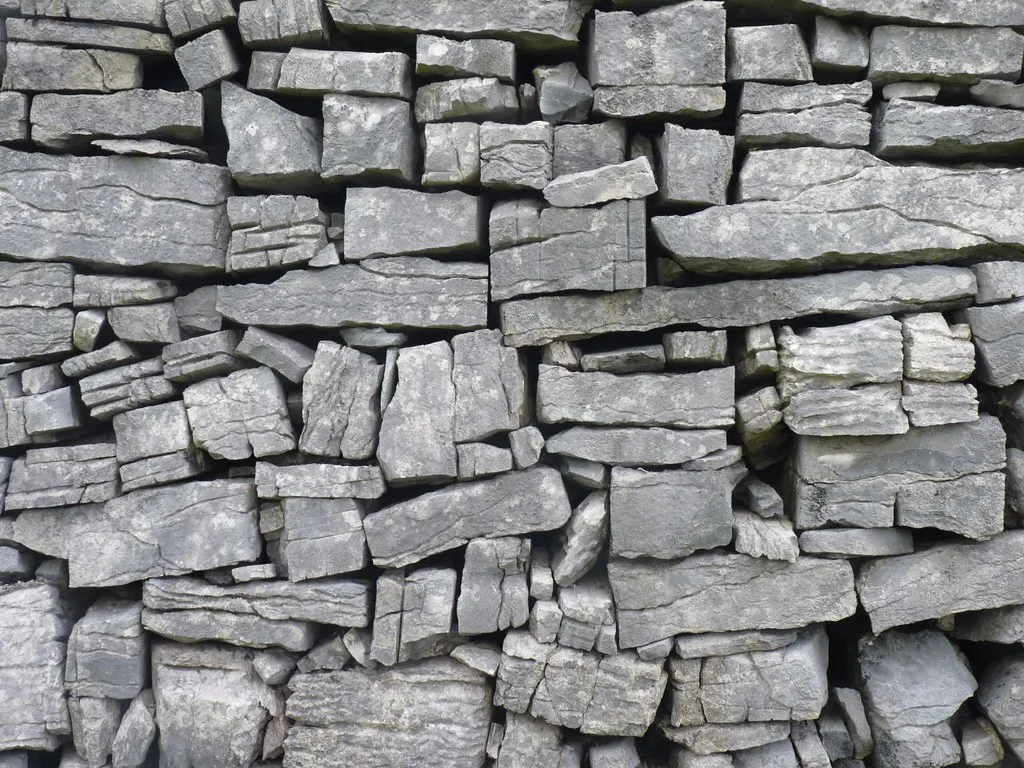
Dún Aonghasa on Inis Mór is the largest of the prehistoric stone forts of the Aran Islands, set on a sheer cliff above the Atlantic. Heritage Ireland describes three massive drystone walls and an outer band of jagged upright stones, a chevaux-de-frise that runs from cliff to cliff to slow attackers. It also notes the whole complex was refortified in AD 700 to 800, and excavation has produced evidence of prehistoric metalworking, houses and burials, which places the fort well beyond a single period of building. Our dun aonghasa guide covers the approach and what to expect at the walls.
The visit is a walk, not a stop. The visitor centre sits at the start of a 1-kilometre pedestrian route to the fort, the last stretch crosses rough natural rock, and there is no fence or barrier at the edge of an 87-metre drop. Boots or strong walking shoes are advised and drones are not permitted. The operator has described a major refurbishment by the Office of Public Works, Fáilte Ireland and the Department of Housing, Local Government and Heritage introducing a new visitor experience ahead of a reopening in 2026, with the visitor centre operating year-round with guided tours once open and closing 24 to 30 December. Because that reopening is future-tense in the published notice, treat current access as something to verify with the operator before you build a ferry crossing around the fort.
Stone Circles and Smaller Monuments on Foot
Drombeg in County Cork, locally called the Druid's Altar, is a circle of 17 standing stones on a rocky terrace above the sea near Glandore. Discover Ireland records that excavation in 1957 and 1958 found a cremated burial in a broken pot near the centre with smashed sherds and pyre sweepings, and that the midpoint of one stone aligns with the winter solstice sunset in a notch in the distant hills, a good but not perfect alignment.
To the west of the stones stands a hut site with a fulacht fiadh, a prehistoric cooking place with a flagged trough where heated stones boiled water; tests cited by Discover Ireland confirmed that the method could boil 70 or more gallons for nearly three hours. That practical detail makes Drombeg worth more than a quick photograph: it shows domestic life beside a ritual circle. If you want to compare monuments of this type across the country, our stone circles ireland overview explains how they vary in plan and setting.
Small single monuments belong to the same tradition of places you can walk to without booking. Treat them as short stops rather than destinations, and combine two or three in a day when they cluster in one landscape, keeping to paths and field gates and giving way to livestock.
Reconstructions and Museums: Seeing the Whole Picture
Reconstructions answer questions that original ruins cannot. The Irish National Heritage Park at Ferrycarrig outside Wexford spreads across 40 acres and uses 16 reconstructed sites, including a dolmen, a Bronze Age cooking site and a crannog, to walk visitors from first settlement to the Norman arrival in the twelfth century. Near Shannon Airport, Craggaunowen's Living Past Experience includes a reconstructed crannog and a ringfort with a souterrain, alongside demonstrations of crafts and tools.
What reconstructions cannot offer is the original object, so build in a museum visit. The National Museum of Ireland on Kildare Street in Dublin holds Old Croghan Man in its Kingship and Sacrifice exhibition, and Mooghaun's surviving goldwork is split between that museum and the British Museum. Pairing an outdoor monument with the finds from it turns a pile of stones into evidence. For a wider sense of what else stands nearby, our guide to castles in county galway is useful context if your route swings west.
Building a Route by Access, Not by Ranking
The most reliable way to plan is to sort candidate sites by the commitment each demands. A guided monument such as Newgrange fixes your day around a visitor-centre slot and a shuttle. A seasonal centre such as Céide Fields or Corlea narrows your window to particular months. An unguided site such as Rathgall or Creevykeel takes as long as you want but gives you no interpretation and, in some cases, rough footing.
Group by landscape as well as by era. The Boyne Valley holds Newgrange, Knowth and Dowth; County Meath also holds Tara and Loughcrew; Sligo has Creevykeel; Mayo has Céide Fields; the Aran Islands have Dún Aonghasa; Cork has Drombeg. Two well-chosen sites in one landscape will teach you more than four spread across the country. If your route passes through the midlands, our castles in county offaly notes give a sense of the later buildings layered onto the same region.
Finally, match the site to the weather and to your own comfort. Cliff-edge forts and bog-side fields are exposed, and a wet day makes rough rock and uneven stones genuinely harder. Where a site's status is unsettled, as with the works at Dún Aonghasa, check the operator's page directly rather than relying on an older description, and keep one indoor option such as a museum in reserve — our Museums in Cork: City and County Collections is a useful stand-in when a Cork day turns wet.
Choose the Visit You Can Actually Make
Ireland's ancient sites reward travellers who plan around access rather than prestige. Decide first whether you want a guided monument, a seasonal centre or an open landscape, then pick the era and the county to match. That sequence keeps you from arriving at a locked centre or an unfenced cliff without the right shoes.
Before you travel, read the managing body's own page for each site: the Office of Public Works through Heritage Ireland for Céide Fields, Creevykeel and Dún Aonghasa, and Fáilte Ireland's Discover Ireland for the others. Treat the Newgrange solstice and the Dún Aonghasa works as things to verify, not assumptions, and let the ground itself be the main attraction.
For more heritage reading, see our guides to Drombeg Stone Circle and Ceide Fields.
Explore more Ireland guides
Frequently Asked Questions
Do you need a guided tour to see Newgrange?
According to the specialist site newgrange.com, yes. Visitors start at the Brú na Bóinne Visitor Centre on the south side of the River Boyne, cross by pedestrian bridge and take a shuttle to the monuments, because there is no direct public road access to Newgrange or Knowth. These details come from that independent publisher rather than from the site's managing body, so confirm current booking arrangements with the Brú na Bóinne Visitor Centre.
Which ancient sites in Ireland can you visit without a guide?
Several selected monuments are unguided. Creevykeel Court Tomb in County Sligo is an OPW National Monument with no staffed centre, and the OPW asks visitors to take care on the stones. Rathgall in County Carlow is described as free to visit at all times, and Mooghaun in County Clare as a self-guided walk. Drombeg Stone Circle in County Cork is an open monument you walk to on foot, and the Hill of Tara's earthworks are open all year even when its visitor centre is closed.
How physically demanding is the walk to Dún Aonghasa?
It is a real walk with real exposure. The visitor centre sits at the start of a 1-kilometre route, and the final section crosses rough natural rock on rising ground. There is no fence or barrier at the edge of the 87-metre cliff, boots or strong walking shoes are advised, and drones are prohibited. The operator's page also describes a major refurbishment ahead of a 2026 reopening, so confirm current access before you travel, and allow more time than you would for a roadside monument, especially when the rock is wet.
When are Loughcrew, Corlea and Céide Fields open?
Each has its own published season, so do not assume one applies to another. Discover Ireland states that Loughcrew is open from early June to early September and is free, with guided tours available in that window. Corlea Trackway Visitor Centre is listed as open from March to early November. Heritage Ireland publishes Céide Fields as open daily from 10:00 to 18:00 with last admission at 17:15, and notes that from 5 November the winter months are available for bookings rather than routine drop-in.
Where can you see Iron Age bog bodies in Ireland?
Old Croghan Man was found in a bog below Croghan Hill in County Offaly in 2003. The remains are held in the Kingship and Sacrifice exhibition at the National Museum of Ireland on Kildare Street in Dublin, according to Discover Ireland. The hill itself carries an engraved pillar recording the discovery, but the remains are in the museum collection. Check the museum's own listing before you go, since exhibitions can change.
Are reconstructed sites like Craggaunowen authentic ancient monuments?
No. Craggaunowen's crannog and ringfort with its souterrain are described as reconstructions, and the Irish National Heritage Park at Ferrycarrig uses 16 reconstructed sites to illustrate periods from first settlement to the Norman arrival. They are useful for understanding how buildings worked, but they are not original monuments. Pair them with a genuine site and a museum collection, such as the National Museum's prehistoric finds, to see the difference between interpretation and archaeology.
Sources
- Uncover Ancient Ireland at Iron Age Sites and Museums
- Céide Fields Neolithic Site and Visitor Centre | Heritage Ireland
- Creevykeel Court Tomb | Heritage Ireland
- Visit Drombeg Stone Circle with Discover Ireland
- Dún Aonghasa – Ancient Stone Fort and Visitor Centre | Heritage Ireland
- Newgrange World Heritage Site | Boyne Valley, Ireland
You might also like



Continue reading
More guides you'll find useful