
Cairns in Ireland: A Visitor Guide to Loughcrew Passage Tombs
Cairns in Ireland explained through Loughcrew's Neolithic passage tombs: Cairn T's art and equinox alignment, hilltop layout and the access you can expect.
On this page
Cairns in Ireland are heaps of stone built over prehistoric tombs, and the Loughcrew Megalithic Cemetery near Oldcastle in County Meath is a publicly accessible example of the form. The Office of Public Works manages the site as a National Monument, and its cairns sit on open hilltops rather than behind a visitor-centre turnstile. That openness is the attraction, but it also means the visit depends on weather, footwear and knowing which hills you may legally climb.
Loughcrew is not a single monument but a cemetery of passage tombs spread across several summits — around thirty by Discover Boyne Valley's count. The most famous, Cairn T, holds a cruciform chamber and carved stones, and its interior is currently shut for conservation work while the surrounding monuments remain open. Plan around that distinction before you drive out, because it changes what the day actually offers.
What a Cairn Actually Is
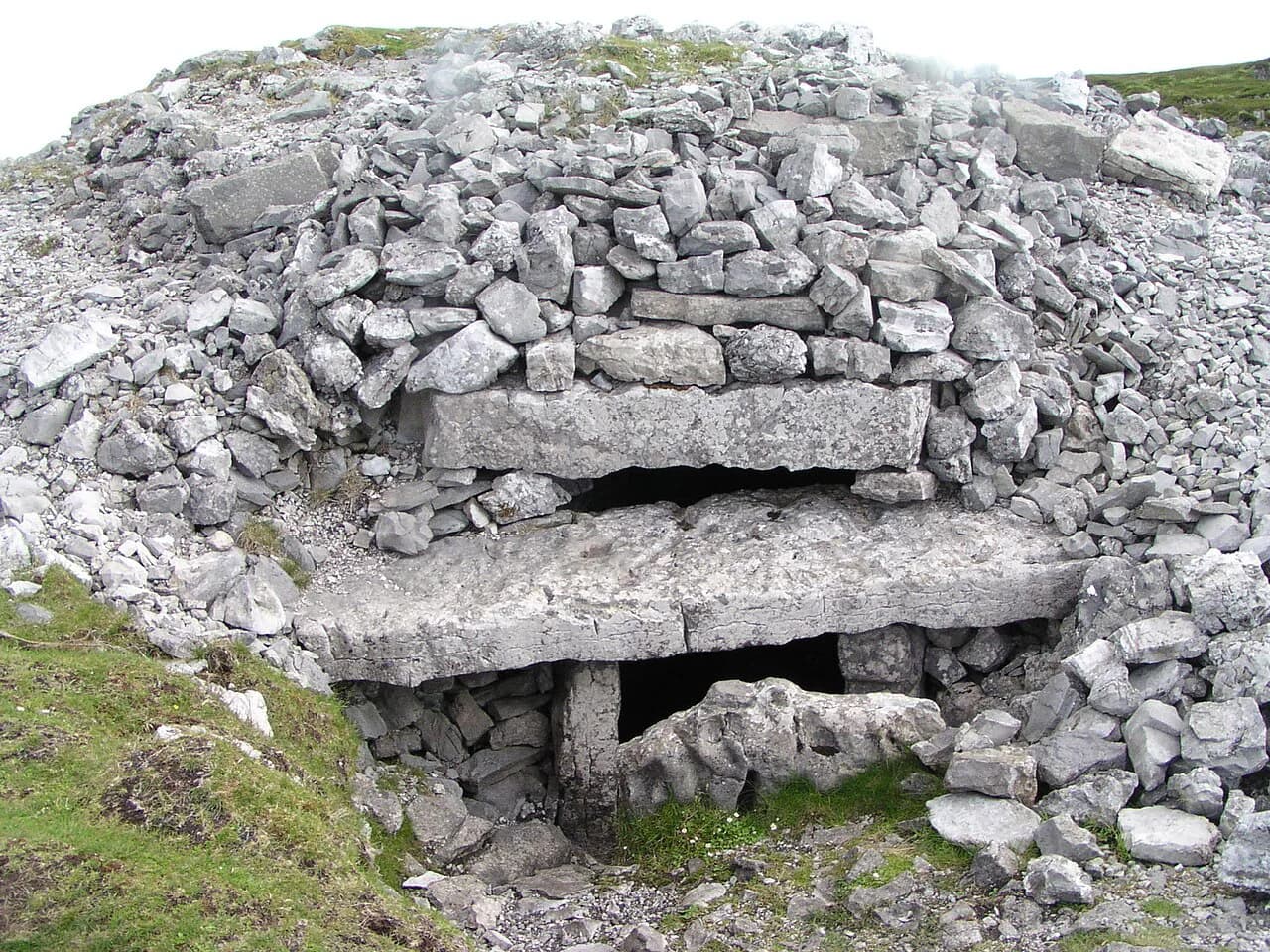
In Irish prehistory, a cairn is the mound of earth and stones piled over a built tomb, and passage tombs are the type most associated with Loughcrew. Neolithic communities cremated their dead and placed the remains in chambers above ground, then covered the structure with a cairn, which often does not survive intact. The name describes the covering, not the architecture inside it, which is why ruined cairns can look like little more than stone heaps.
The typical passage tomb has a long central passage leading to a main chamber with three smaller chambers off it, a cruciform plan. Irish passage tombs are further distinguished by rock art picked or carved onto internal and external stones, using abstract motifs rather than pictures of people or animals. Heritage Ireland dates Loughcrew's monuments to 3000 BC, while Discover Ireland's page gives about 3300 BC, so treat any single year as approximate rather than settled.
The Hilltop Landscape of Sliabh na Caillí
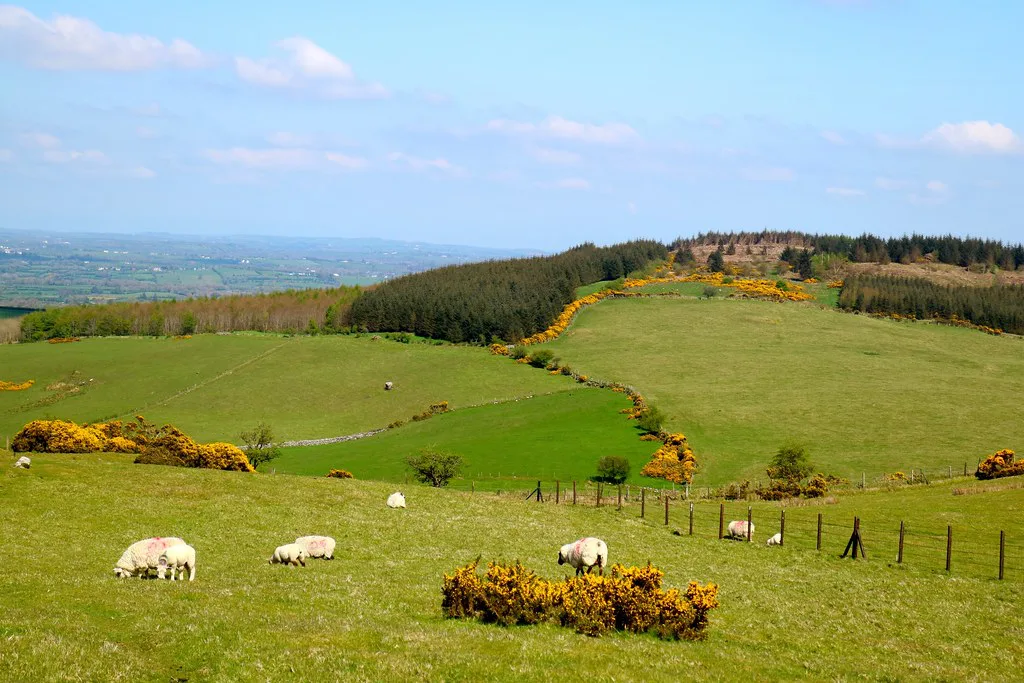
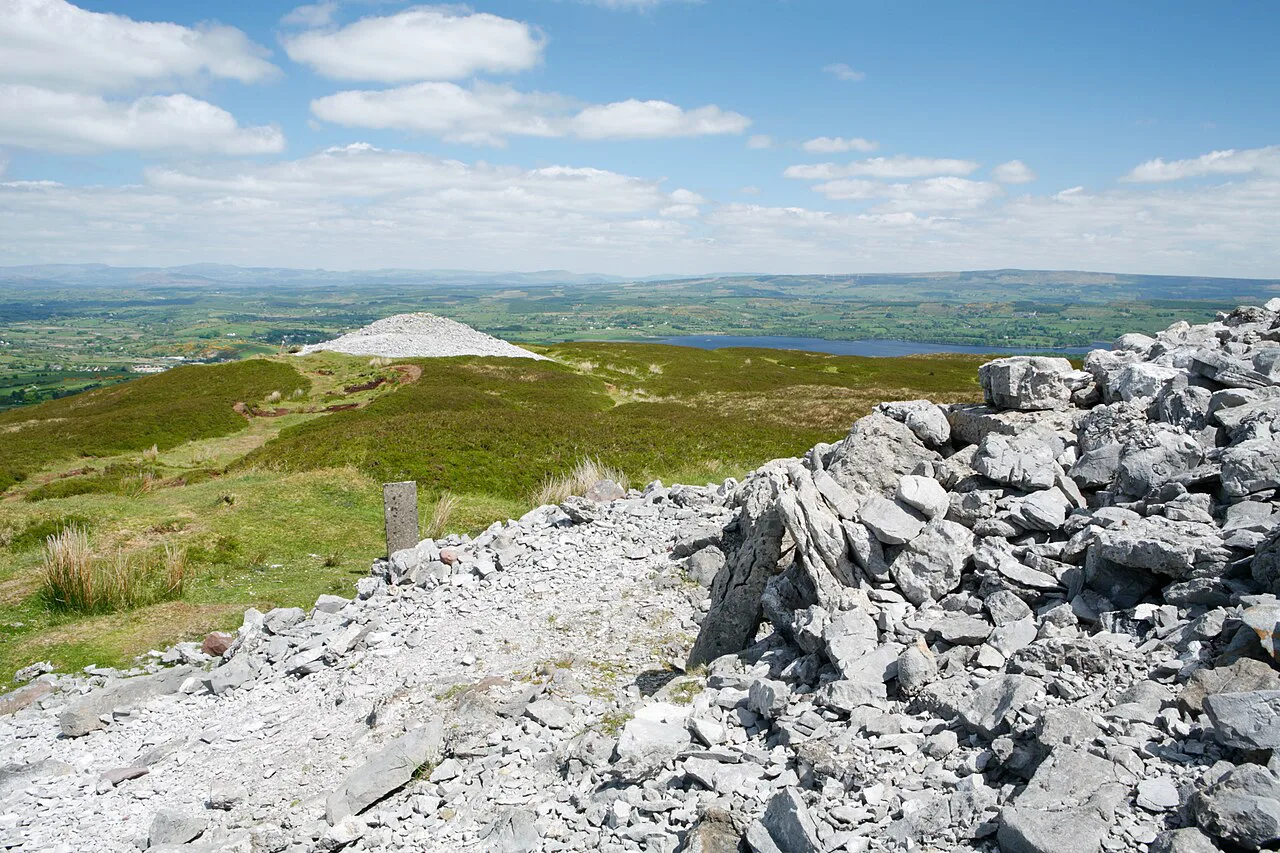
The cemetery takes its Irish name, Sliabh na Caillí, from the hills themselves, and the monuments are distributed across three of them: Carnbane East, Carnbane West and Patrickstown — the three-hill layout that Discover Ireland and Boyne Valley Tours both describe. Discover Ireland places the site roughly three kilometres east of Oldcastle, which makes the town the obvious orientation point for anyone arriving by road. Because the tombs crown high ground, the walk between viewpoints involves real ascent rather than a flat circuit.
The distribution matters for planning, because not all three hills are open on the same terms. Cairn T, the centrepiece, stands on Carnbane East, where public access is available. Carnbane West is private, and a tour-operator account states that the owner does not allow public access there, so a map showing the full cemetery should not be read as an invitation to cross fences.
The elevated setting is part of the experience: from the summits the cairns command wide views over the surrounding farmland of Meath. Neolithic builders chose this high ground, and the monuments would have been visible across long distances. Allow time to sit with that outlook rather than treating the climb as a quick photo stop.
Cairn T: Chamber, Kerbstones and Carvings
Heritage Ireland describes Cairn T as one of the largest tombs in the complex. Inside lies a cruciform chamber with a corbelled roof, and the stones carry some of the finest Neolithic art in Ireland. The chamber is shut at present, so the carvings are something to study in advance and recognise in the surrounding stones rather than enter and inspect.
The art at Loughcrew is abstract: circles, lozenges, arcs, zigzags and flower-like motifs, with rayed circles particularly associated with this cemetery. Discover Boyne Valley notes that Newgrange is known for spirals and Knowth for concentric rectangles, so motifs help identify which cemetery you are standing in. Some carvings are faint, and the soft local gritstone that made them easy to cut is also vulnerable, which is why marking or defacing the stones is prohibited and prosecutable.
The Equinox Alignment at Cairn T
Heritage Ireland notes that Cairn T is aligned to sunrise at the spring and autumn equinoxes, and that at these times people gather to greet the first rays of the sun. Discover Ireland describes the light shining through the passage to illuminate symbols carved into the back wall of the chamber. It is a documented effect rather than a staged display, and it depends on season, cloud and the chamber itself being open.
With the chamber interior closed, the alignment is something to understand rather than something to stand inside and watch. Read up on the backstone before you climb so the exterior and the hilltop setting carry more meaning. Treat any equinox visit as a hill walk at an evocative moment, not a guaranteed view of the illumination.
Folklore, Names and Legendary Kings
The hills are known as the Hills of the Witch. The Irish name Sliabh na Caillí means mountain of the witch, and the witch legend holds that the monuments were created when a giant witch striding across the land dropped her cargo of large stones from her apron. The story is folklore, told to explain the monuments, not a historical account of their building.
Cairn T is also reputed to be the resting place of Ollamh Fodhla, a legendary king of Ireland. The attribution belongs to tradition rather than excavated evidence, and it is best repeated as a legend attached to the place. The same tourism page calls Loughcrew one of the jewels in the crown of the Boyne Valley, which is promotion rather than proof of anything archaeological.
Getting Up the Hill: Terrain and Practical Limits
The climb to Cairn T is very steep, and visitors are asked to wear suitable footwear and take care on the way up and down. The approach road is also very narrow, and Heritage Ireland asks for extreme caution. Neither point is a formality: this is a hill walk on open ground, not a paved attraction.
There is no wheelchair access at the sites, as Discover Boyne Valley states plainly. Access is to outside spaces only, and climbing on Cairn T is not permitted. Discover Boyne Valley mentions that guides are on site in the summer months to answer questions; its page directs readers to the operator's website for times and details, so check that before relying on finding one.
Discover Boyne Valley gives an average length of visit of about one hour. That is a reasonable budget for walking the accessible hill and reading the monuments, and longer if you want to linger over the views. On-site interpretation is limited, so prepare with the operator's page or the Boyne Valley Drive audio material before you set out.
What Is Open Now and What Is Not
Access to the interior of Cairn T is not possible at present because of ongoing conservation works, and Heritage Ireland gives no reopening date. The operator states that the rest of the monuments on the hill are not affected by this work. Do not plan on entering the chamber, and do not treat a closed gate as an obstacle to be worked around.
A Boyne Valley Tours account dates the closure of the chamber to October 2018, citing health and safety concerns, and describes a steel prop visible inside the gate. That is the tour operator's account rather than an official schedule, so use it as background. Cairn L on Carnbane West is a different matter: the same page states the land is private and not accessible to the public.
Check the operator's page before travelling any distance, since the access position is set by the Office of Public Works as manager of the National Monument. The page also warns against defacing stones and offers a social guide in PDF form to help first-time visitors and families prepare. Those are the two notices worth reading before you pack boots.
Loughcrew in the Wider Neolithic Landscape
Loughcrew is broadly contemporary with Newgrange. Boyne Valley Tours describes the cairns as over 5,000 years old and contemporaneous with Brú na Bóinne, while noting Loughcrew has been less reconstructed and not extensively excavated. That rawer quality is the trade-off for fewer facilities and less shelter.
Ireland's passage-tomb cemeteries are concentrated in a few regions, with Brú na Bóinne in the Boyne Valley and the Carrowkeel and Carrowmore groups in County Sligo among the best known — a grouping Boyne Valley Tours makes explicitly. The Hill of Tara, also in Meath, adds a later royal and ceremonial landscape to the same day's driving. Together these places show how communities marked death, sky and high ground across the island.
If you want to place Loughcrew among other prehistoric sites, an ancient map of Ireland is a sensible way to build a route rather than treating each monument as an isolated stop. The Céide Fields and the stone circles scattered around the island belong to different periods and purposes, so read each site on its own terms before comparing them.
Plan Around the Hill, Not the Chamber
Loughcrew rewards a visitor who arrives expecting a steep grassy climb and a hilltop cemetery rather than an interpreted interior. Wear proper footwear, take the narrow road slowly, stay on the publicly accessible ground at Carnbane East, and leave Carnbane West alone. The carvings, kerbstones and views are the substance of the visit while the chamber is closed. For related heritage reading, see our guides to Knocknarea Cairn and Neolithic Ireland.
The Office of Public Works publishes the current access position on Heritage Ireland, and that page is the one to read before setting out. Pair the visit with the wider Boyne Valley rather than rushing back to a city, and the cairns will make more sense as part of a longer Neolithic story. For more heritage reading, see our guides to Creevykeel Court Tomb and Brownshill Dolmen. For another heritage guide, read about Ancient Sites Ireland. If your travels take you further south, our Museums in Cork: City and County Collections guide covers the collections that hold much of the region's archaeological material.
Other prehistoric stops worth pairing with a cairn visit include Dun Aonghasa on the Aran Islands, Drombeg Stone Circle in County Cork, and the standing stones scattered across the Irish countryside, each built to different purposes than a Neolithic passage tomb. For a later royal landscape in Meath, see our guide to the Hill of Tara.
Explore more Ireland guides
Frequently Asked Questions
What is a cairn in Irish prehistory?
A cairn is a mound of stones and earth raised over a tomb. In passage tombs such as those at Loughcrew, a stone passage and chambers were built first, cremated remains were placed inside, and the whole structure was covered by the cairn, which often erodes or is removed over time.
Can you go inside Cairn T at Loughcrew?
No. Heritage Ireland states that access to the interior of Cairn T is not possible at present because of ongoing conservation works, and the rest of the monuments on the hill are unaffected. Visitors should stay on outside ground and not climb on the structure.
What is the equinox alignment at Cairn T?
The cairn is aligned so that sunrise around the spring and autumn equinoxes shines along the passage and illuminates the decorated backstone of the chamber. It is a documented effect, but seeing it depends on season, weather and on the chamber being open, which it currently is not.
Why is Loughcrew called the Hills of the Witch?
The Irish name Sliabh na Caillí means mountain of the witch. Legend says the monuments were created when a giant witch dropped a load of stones from her apron while striding across the land; Discover Ireland records this as folklore, not a historical account.
Is Cairn L at Loughcrew open to the public?
No. Cairn L is on Carnbane West, which a tour-operator page describes as private land with no public access. Visitors should confine themselves to the publicly accessible ground on Carnbane East, where Cairn T stands.
How difficult is the climb to Cairn T?
The climb is very steep, and visitors are asked to wear suitable footwear and take care. There is no wheelchair access, the approach road is very narrow, and access is to outside spaces only, so this is a hill walk rather than a paved visitor route.
Is Loughcrew connected to Newgrange?
They are broadly contemporary Neolithic passage-tomb monuments, and both have solar alignments, but they are separate sites. A tour-operator page notes that Loughcrew has been less reconstructed and less extensively excavated than the monuments at Brú na Bóinne.
Sources
You might also like



Continue reading
More guides you'll find useful




