
Neolithic Ireland: Where to See Passage Tombs and Stone Fields
Neolithic Ireland is best understood on site. Visit Brú na Bóinne, Céide Fields, Brownshill dolmen and Carrowmore, with real booking and access rules.
On this page
Neolithic Ireland is not one site but a set of landscapes, and they differ sharply. At Brú na Bóinne in County Meath, three great passage tombs built circa 3200BC sit in a bend of the River Boyne, while at Céide Fields in north Mayo a stone-walled field system almost 6,000 years old lies beneath blanket bog. Planning a visit means choosing between guided monument access, open unguided ground, and museum collections, because no single stop covers all of it.
The practical difference matters more than the chronology. Newgrange and Knowth can only be entered on a guided tour that starts at the Brú na Bóinne Visitor Centre, whereas Brownshill dolmen and Carrowmore are outdoor monuments you approach on your own. Céide Fields combines a visitor centre with a bogland landscape, and the National Museum's Prehistoric Ireland exhibition holds the tools, pottery and ornaments that monuments themselves cannot show.
Brú na Bóinne: The Passage Tombs in the Boyne Bend
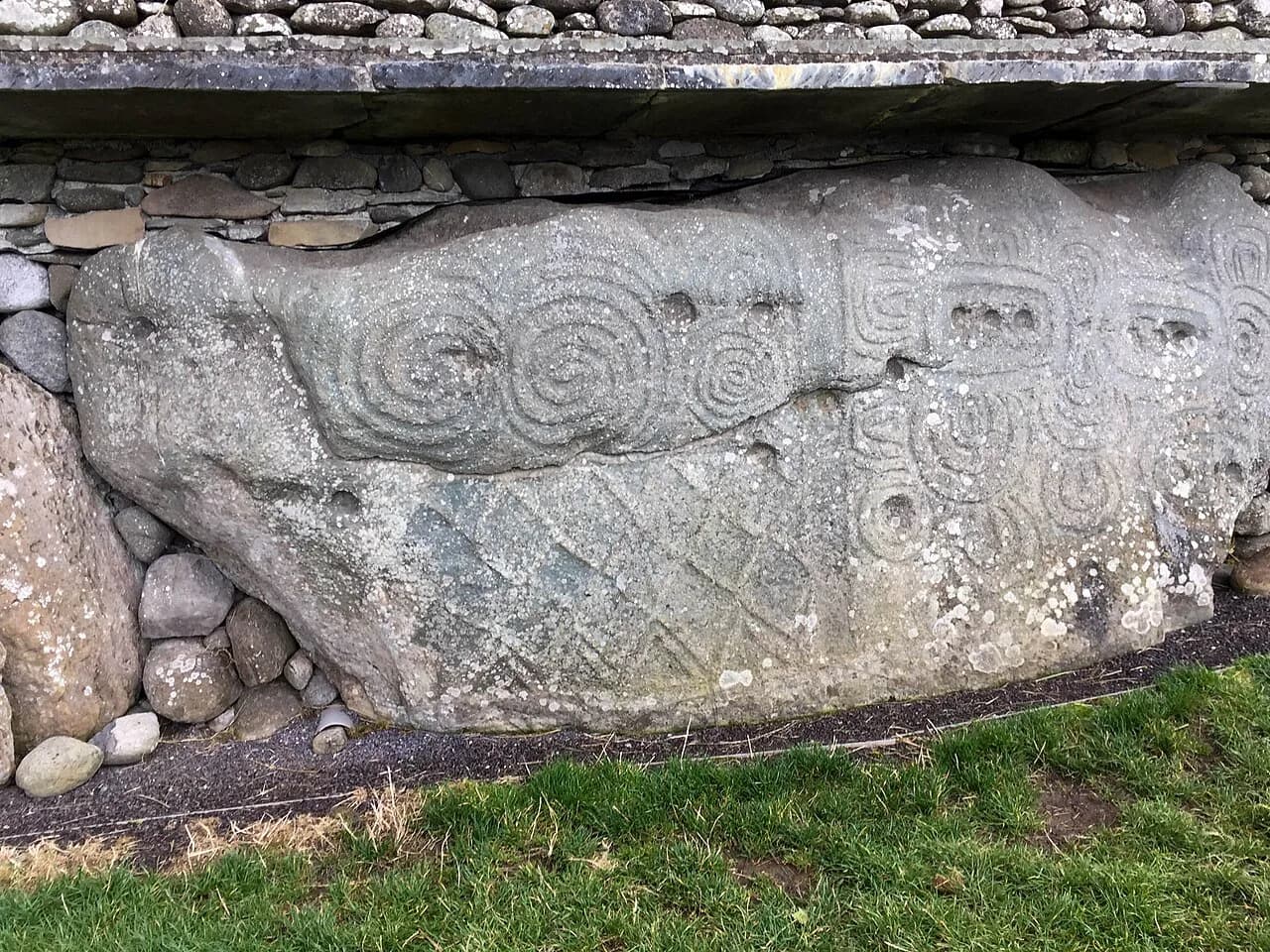
Brú na Bóinne is the core of any Neolithic itinerary. Heritage Ireland describes it as Ireland's richest archaeological landscape and dates the passage tombs of Knowth, Newgrange and Dowth to circa 3200BC, noting that they hold the largest collection of megalithic art in Western Europe. Those dates identify the monuments themselves, so treat them as history rather than a schedule.
UNESCO's inscription record places the three main sites on the north bank of the River Boyne about 50 km north of Dublin and calls the complex Europe's largest and most important concentration of prehistoric megalithic art. The same record states that the monuments served social, economic, religious and funerary functions, which is a useful corrective to the habit of reading them purely as tombs. Brú na Bóinne was inscribed as a World Heritage property in 1993.
Scale explains why access is managed so tightly. UNESCO gives the property as roughly 780 hectares, much of it in private ownership at inscription, with only about 42.75 hectares in State ownership by 2011. The State-managed ground around Knowth and Newgrange is where conservation and visitor infrastructure concentrate, and the visitor centre opened in 1997 chiefly to control the flow of people to the two main tombs.
Visiting Brú na Bóinne Without Getting Turned Away
The single rule to absorb is that the Visitor Centre is the mandatory starting point for Newgrange and Knowth. Visitors are transferred by shuttle bus, access to both monuments is by guided tour only, and anyone who drives directly to the tombs will not gain entry. Pre-booking is essential, and every visitor including children and infants needs a ticket.
Buy only through the official channel. Heritage Ireland states that no third-party organisations are authorised to sell tickets, and that tickets bought from other sites or resale platforms will not be valid, with holders refused entry. Unaccompanied visitors under 18 are also refused admission, so families need an adult ticket-holder present for each minor.
Tour options split into two seasons: 1 March to 1 November, and 2 November to 28 February. The published notices also mention earlier opening on winter-solstice mornings from 19 to 23 December with regular tour options suspended, and closure from 24 to 27 December and on 1 January. Check the booking page before fixing travel dates, since availability is described as very limited.
Fragility, Weather and Access at Newgrange and Knowth
The Newgrange passage and chamber are low and narrow, and Heritage Ireland warns they may not suit visitors with claustrophobia or mobility issues; photography inside the passage or chamber is not permitted, and commercial filming needs a permit. Universal access at the monuments is described as limited, so wheelchair users and anyone needing special assistance should email the visitor centre before booking rather than arriving to negotiate on the day.
Both monuments are outdoor sites with no shelter, so rain gear changes the experience far more than it would in a museum. Heritage Ireland notes that access can change at short notice for weather or safety reasons, and the same page carries a single important booking email for assistance requests and for groups of 15 to 30.
Prehistoric Ireland at the National Museum, Kildare Street
Monuments are fixed in place; the objects found in and around them are not. The National Museum of Ireland's permanent Prehistoric Ireland exhibition at Archaeology, Kildare Street, Dublin 2, is free and sets its material against a reconstructed passage tomb, including Neolithic tools, pottery and personal objects. Among the highlights is a decorated flint mace head from Knowth, one of the three main Brú na Bóinne passage tombs.
The exhibition traces settlement from the stone tools of the first hunter-gatherers around 7000 BC to Late Bronze Age weapons around 500 BC, and it displays copper axes, daggers, shields, cauldrons and cast bronze horns alongside amber, glass and stone jewellery. A 4,500-year-old logboat from Lurgan, Co. Galway, is one of the largest vessels of its type found in Ireland. Treat this as the place to see portable Neolithic craft close up, not as a substitute for visiting a tomb.
Céide Fields: A Neolithic Landscape Under Bog
Céide Fields in north Mayo is a completely different kind of Neolithic place. Beneath blanket bog lie stone-walled fields extending over hundreds of hectares, together with dwelling areas and megalithic tombs. Heritage Ireland characterises the complex as the most extensive Stone Age monument in the world and the fields as the oldest known globally, dating back almost 6,000 years; those superlatives are the heritage body's assessment rather than a neutral measurement.
There is no chamber to enter here, and that is the point. What you read is a preserved farming landscape, with the bog itself carrying its own vegetation and wildlife, so the visit rewards attention to walls, boundaries and ground rather than to carved stone. The visitor centre provides the interpretation that makes the buried field system legible before or after you look at the terrain.
The setting is dramatic and exposed: a viewing platform stands on the edge of a 110-metre-high cliff, and Heritage Ireland advises protective clothing and sturdy footwear because both terrain and weather can be challenging. General daily hours of 10:00 to 18:00 with last admission at 17:15 appear on the page, but the winter wording is ambiguous, so confirm seasonal opening directly before travelling to this remote corner of County Mayo.
Brownshill Portal Dolmen: One Enormous Unguided Monument
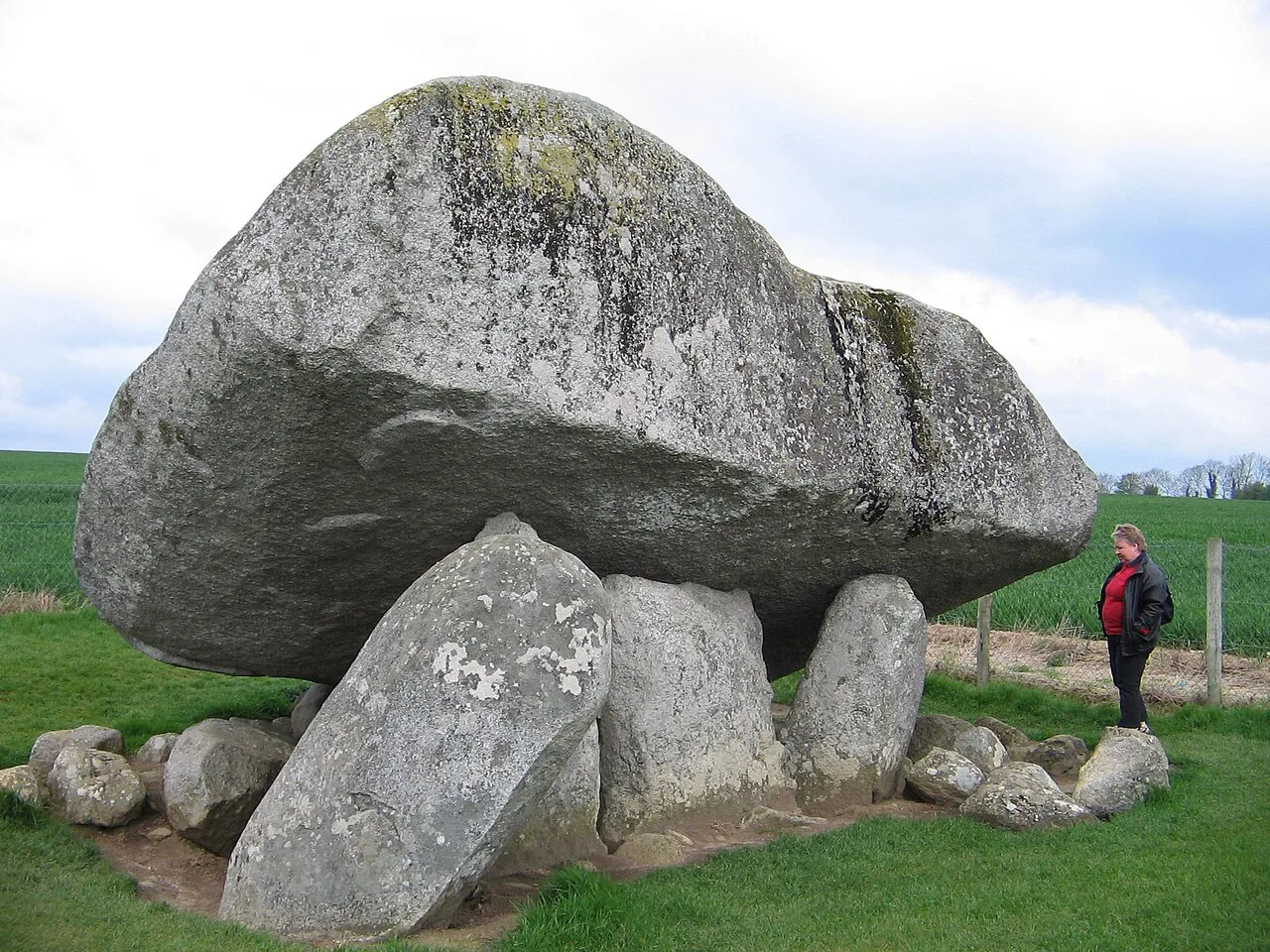
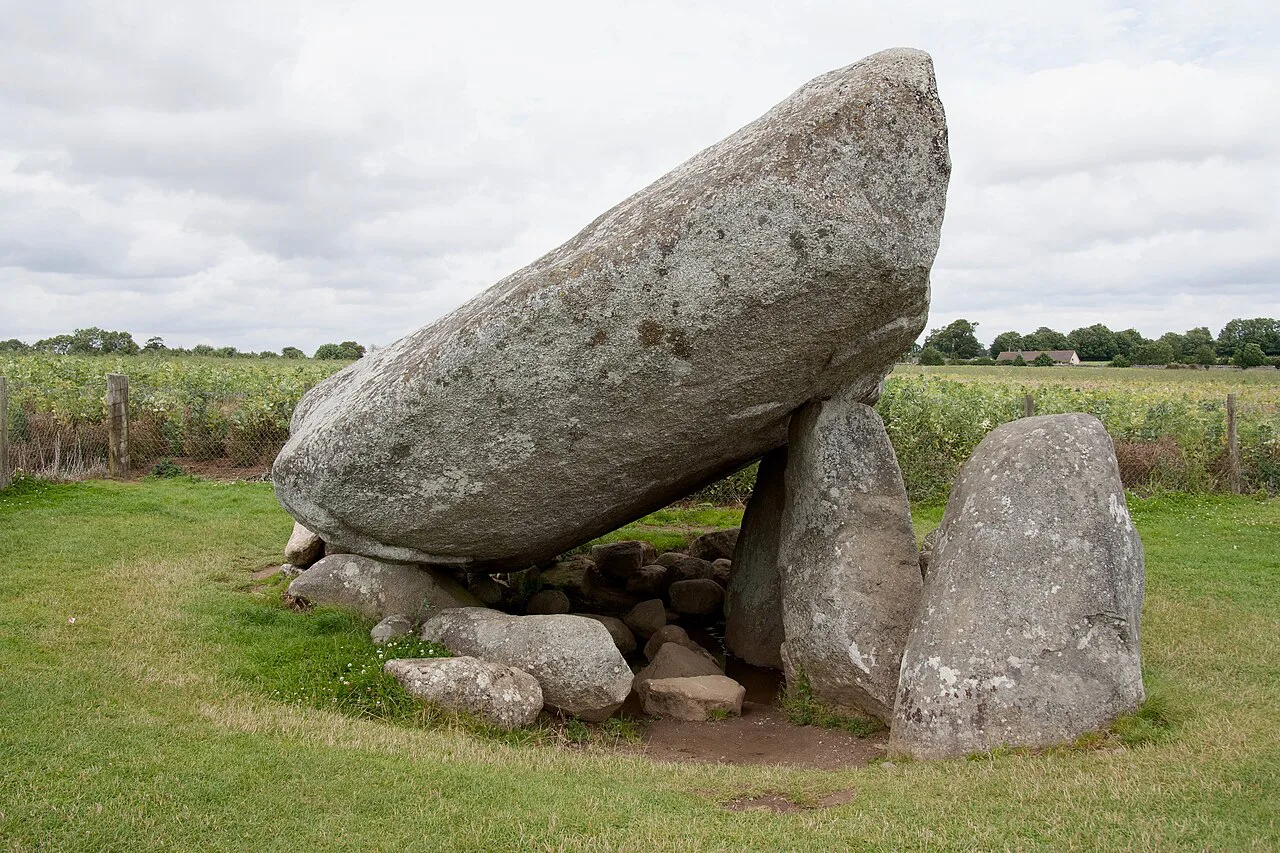
Brownshill, about 3 km east of Carlow town, is the opposite of a managed visitor experience. It is a state-owned National Monument in the care of the Office of Public Works, classified as a portal tomb, and you approach it without a guide. The capstone measures roughly 4.7 m by 6.1 m by 2 m and is believed to weigh over 100 tonnes, resting on two portal stones, a door stone and a flat slab.
Heritage Ireland attributes to the monument a reputed status as the largest capstone of its kind in Europe, and estimates its age at between 4,900 and 5,500 years. Both are claims worth repeating as claims: the dolmen itself has never been excavated, and its exact purpose remains a mystery, with ceremonial or burial use inferred from excavated similar tombs such as Poulnabrone rather than demonstrated here.
Because it is unguided and unprotected by a building, the OPW warns that a level of care and caution is needed and accepts no responsibility for injury or loss. It suits a short stop rather than a half day, and it pairs naturally with other open monuments in the wider Ancient Sites in Ireland itinerary if you are touring by car.
Carrowmore: Ireland's Largest Megalithic Cemetery
Carrowmore in County Sligo is described by Heritage Ireland as the largest cemetery of megalithic tombs in Ireland, a dense field of monuments rather than a single spectacle. Its central monument, Listoghil, is a passage tomb where six upright stones at the centre of the cairn support a massive roof-slab. Prehistoric carvings on the capstone are described as elusive and dependent on the light, so a visit is not a guaranteed viewing.
Heritage Ireland interprets an alignment at Samhain, when the rising sun appears above a distinctive saddle in the Ballygawley Mountains in line with the Listoghil chamber, lighting the underside of the tilted roof. Present this as the heritage body's reading of the monument and the landscape, not as a phenomenon you can count on seeing; the same page frames the wider collection as a place to learn how current research is changing views of prehistoric people.
The stories attached to the surroundings are explicitly legendary. Heritage Ireland presents the tomb of Queen Maeve on Knocknarea and the tale of the Cailleach Bhéara shaping the landscape as myth and legend, which is how they should be retold, alongside rather than instead of the archaeology.
Choosing Between These Neolithic Sites
Decide first whether you want built architecture or a worked landscape. Brú na Bóinne gives you megalithic art and accessible tomb interiors, but requires booking and locks you into tour times; Céide Fields gives you walls and boundaries under open sky, but asks for sturdy footwear and a tolerance for changeable weather. Brownshill delivers one overwhelming object in a few minutes, while Carrowmore rewards slow walking among many modest monuments.
If your trip runs through the Boyne valley, the Hill of Tara, Ireland sits in the same broad region and is often combined with Brú na Bóinne, though it is a different monument complex with its own history and should not be treated as an extension of the passage tombs.
What Came Afterwards: Metalworking from Around 2500 BC
The Neolithic monuments described here predate the arrival of metalworking, which the National Museum dates from around 2500 BC, when knowledge of working gold and copper opened a new cultural phase. Deposition of objects in hoards across the Bronze Age left the museum with exceptional holdings, including more than 50 lunulae, the crescent-shaped Early Bronze Age neck ornaments, and over 2,000 Early Bronze Age axeheads.
Late Bronze Age hoards such as Dowris in County Offaly and Mooghaun North in County Clare show how much portable wealth circulated later, but they do not date the passage tombs or prove continued use of them. Keep the two stories separate: the megaliths belong to the Neolithic world of stone, while the gold and bronze belong to a later metalworking society.
Practical Decisions Before You Go
Set your priorities before booking anything. If tomb interiors and megalithic art matter most, make Brú na Bóinne the spine of the trip and pre-book direct, remembering that the Visitor Centre is the only starting point and that resale tickets will be refused. If you prefer open landscape and unguided walking, build instead around Céide Fields, Brownshill and Carrowmore, and use the National Museum in Dublin to see the objects those places cannot display. The same planning principle applies across the city, as set out in Dublin History: A Chronological Guide to the City's Key Sites.
Two checks cover most of the risk. First, confirm current opening and booking conditions on Heritage Ireland before you travel, since outdoor monuments can close or change access at short notice. Second, pack for exposed ground at every site on this list, including a change of footwear for Céide Fields and rain protection for the unsheltered tombs at Brú na Bóinne. For another heritage guide, read about Creevykeel Court Tomb.
Explore more Ireland guides
Frequently Asked Questions
Do you need to book Brú na Bóinne in advance to see Newgrange?
Yes. Access to Newgrange and Knowth is by guided tour only, starting from the Brú na Bóinne Visitor Centre, and Heritage Ireland states that pre-booking is essential, with every visitor including infants requiring a ticket. Tickets sold by resale platforms or other sites will not be accepted, and unaccompanied under-18s are refused admission, so book through the official Heritage Ireland channel and confirm availability before fixing your dates.
Can you drive to Newgrange or Knowth and walk in without the Visitor Centre?
No. The Brú na Bóinne Visitor Centre is the starting point for all visits to Newgrange and Knowth, and visitors are transferred to the monuments by shuttle bus. Heritage Ireland warns that people who go directly to the tombs will not gain entry, so plan your day around a booked tour slot at the centre rather than around arriving at the monuments themselves.
Is Brú na Bóinne suitable for claustrophobic or mobility-limited visitors?
The Newgrange passage and chamber are low and narrow, and Heritage Ireland advises that they may not suit visitors with claustrophobia or mobility problems. Universal access at the monuments is described as limited, so wheelchair users or anyone needing assistance should contact the visitor centre in advance of booking. The outdoor monuments are also unsheltered, and access can change at short notice because of weather.
What is the difference between Céide Fields and a passage tomb like Newgrange?
Newgrange is a built passage tomb you enter, while Céide Fields is a buried farming landscape: stone-walled fields, dwelling areas and megalithic tombs under blanket bog in north Mayo. Heritage Ireland characterises it as the most extensive Stone Age monument in the world, with fields it describes as the oldest known globally. Expect open, exposed ground and sturdy footwear rather than a chamber, and confirm seasonal opening before travelling.
Is Brownshill dolmen open to visit without a guide?
Yes. Brownshill is a state-owned National Monument in the care of the Office of Public Works and is an unguided site about 3 km east of Carlow town. The OPW warns that these sites require care and caution and accepts no responsibility for injury or loss. Its giant capstone is believed to weigh over 100 tonnes, but the monument has never been excavated and its exact purpose remains unresolved.
Where can you see Neolithic objects rather than monuments?
The National Museum of Ireland's Prehistoric Ireland exhibition at Archaeology, Kildare Street, Dublin 2, is a permanent, free display set against a reconstructed passage tomb. It holds Neolithic tools, pottery and personal objects, including a decorated flint mace head from Knowth, and traces settlement from around 7000 BC to the Late Bronze Age. It complements rather than replaces a visit to the monuments.
Are the Carrowmore carvings and Samhain sunrise guaranteed to be visible?
No. Heritage Ireland describes the capstone carvings at Listoghil as elusive and dependent on the light. The Samhain sunrise alignment above the Ballygawley Mountains is the heritage body's interpretation of the monument and landscape, not a scheduled spectacle, so treat it as context for the site. The Queen Maeve and Cailleach Bhéara stories attached to the area are presented as legend, not verified history.
Sources
- Prehistoric Ireland | Archaeology | National Museum of Ireland
- Bronze Age | National Museum of Ireland
- Brú na Bóinne Visitor Centre: Newgrange, Knowth and Dowth | Heritage Ireland
- Unesco Boyne
- Céide Fields Neolithic Site and Visitor Centre | Heritage Ireland
- Brownshill Portal Dolmen | Heritage Ireland
- Carrowmore Megalithic Cemetery | Heritage Ireland
You might also like



Continue reading
More guides you'll find useful





