
Dún Aonghasa: Visitor Guide to the Aran Islands Cliff Fort
Plan a visit to Dún Aonghasa on Inis Mór: the cliff-top approach, three drystone walls, the refurbished visitor centre and the safety limits that matter.
On this page
Dún Aonghasa is the largest of the prehistoric stone forts on the Aran Islands, and it occupies a headland on Inis Mór where the ground simply ends above the Atlantic. The Office of Public Works, which presents the site through Heritage Ireland, describes a monument over 3,000 years old, refortified in the early medieval period, and now reached through a visitor centre that reopened after major refurbishment in 2026. The trip is less a museum stop than a short, exposed walk to a serious archaeological site, so footwear, weather and time shape the day as much as the ruins do.
What Dún Aonghasa Is and Why It Matters
The fort stands on a cliff edge on Inis Mór, the largest of the Aran Islands, roughly 7 km west of the island's main harbour village, Cill Rónáin. Heritage Ireland describes it as the largest of the Aran Islands' prehistoric stone forts, and its position above the sea is inseparable from the architecture: the defences run from cliff to cliff so the drop itself closes the circuit. That combination of massive masonry and natural precipice is why the site rewards a slow look rather than a quick photograph.
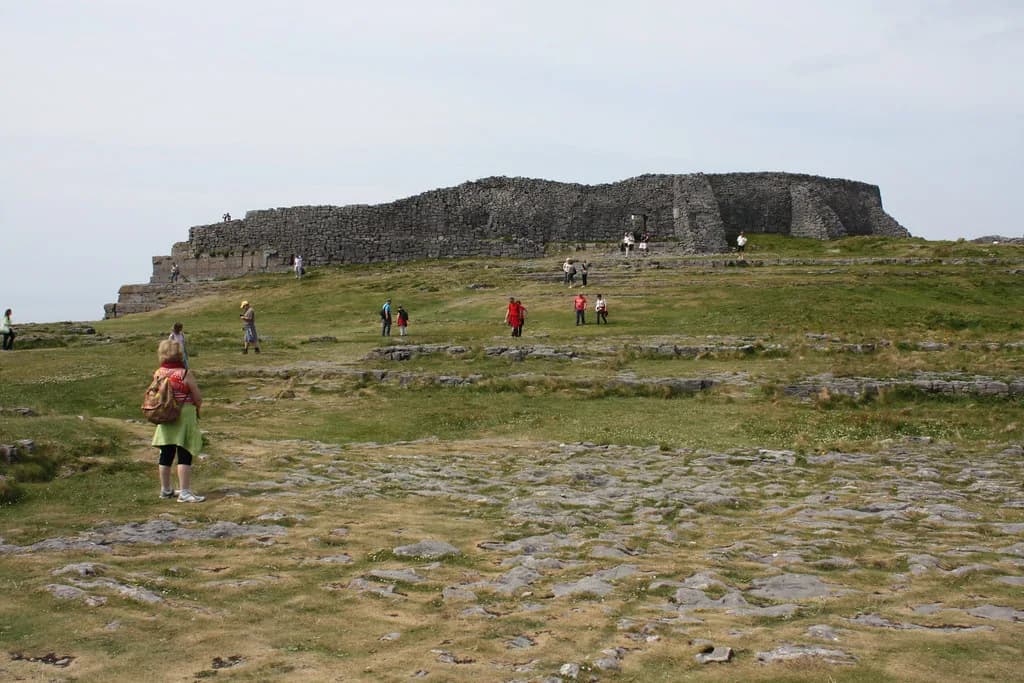
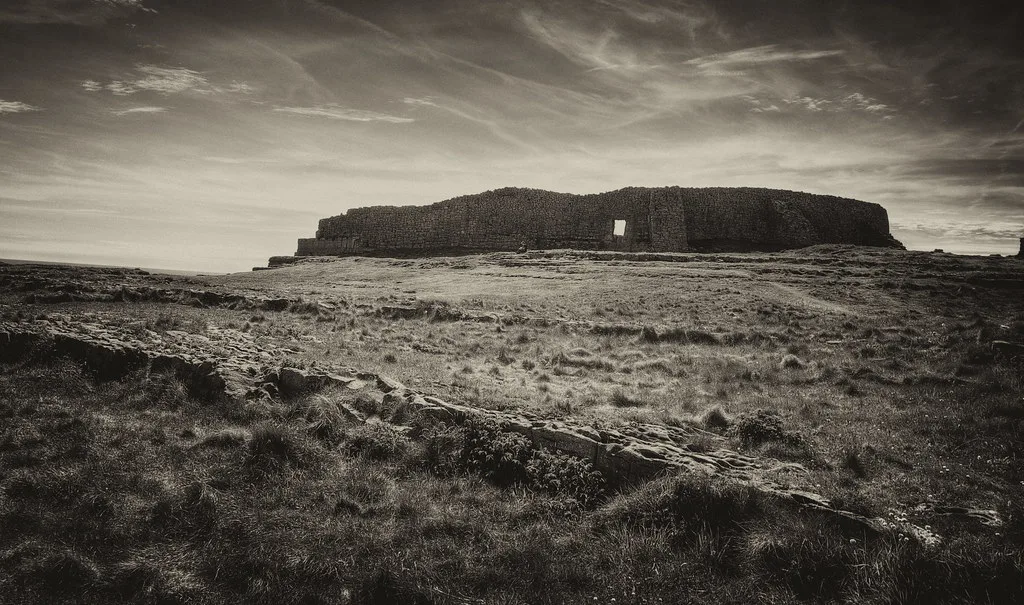
The monument consists of three heavy drystone walls enclosing progressively smaller spaces, with a dense band of jagged, upright stones set outside them. Those stones are the chevaux-de-frise, and the operator notes that thousands of them surround the entire fort from one cliff to the other, a deliberately hostile field to slow anyone approaching the walls. Inside, the innermost enclosure has a wall about 5 m high, and near it the foundations of circular Bronze Age huts survive.
Getting There: Ferries, Air and the Last Seven Kilometres
Access to the site begins with getting to Inis Mór. Heritage Ireland lists a local ferry from Ros a' Mhíl to Cill Rónáin, additional ferry services from Doolin in County Clare to Inis Mór, and an air service from Indreabhán to Cill Éinne. At the ferry port in Cill Rónáin, private tourist buses, bicycle hire, and horse and carriage services are available. Sailing times, fares and seat availability are set by the individual operators, so confirm them directly before you commit to a day trip.
From Cill Rónáin, the approach continues west; the aircraft lands at Cill Éinne and the ferries at Cill Rónáin, so the onward leg differs depending on how you arrive. Allow real margin around ferry departures: a crossing delay can eat the 1 to 1.5 hours the operator suggests for the site itself. Travellers comparing monumental landscapes elsewhere in Ireland often pair this kind of coastal fort with inland royal sites; the Hill of Tara, Ireland is a useful contrast in how power was expressed through landscape rather than cliff-edge defence.
The Walk from the Visitor Centre
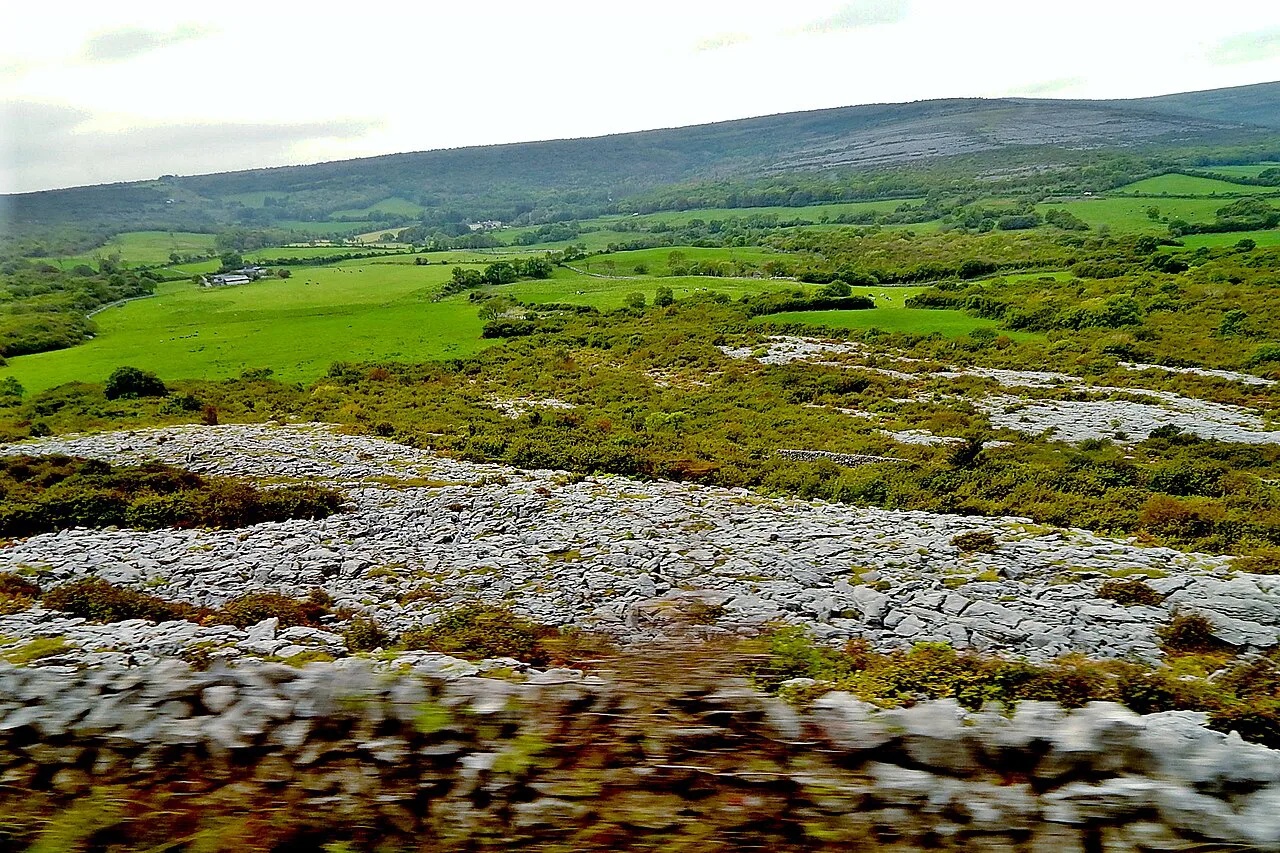
The visitor centre is the gateway to the monument, positioned at the start of a roughly 1 km pedestrian route to the cliff-top fort. Heritage Ireland warns that the approach is over rising ground and that the final section crosses rough, natural rock, with boots or strong walking shoes recommended. That is not marketing caution: the surface near the top is uneven bedrock, and the descent needs as much attention as the climb.
Budget the walk as part of the visit rather than an afterthought. The operator's average visit of 1 to 1.5 hours includes this approach and the time at the walls, so a slower group, wet ground or a strong headwind can stretch it. There is no shortcut and no vehicle access to the fort itself, which means the walk is the price of the view and part of the experience.
Reading the Three Enclosures
What each wall was for is a matter of archaeological argument, not settled signage fact. The operator's highlights page points visitors to the size of the inner wall and to the Bronze Age hut foundations hugging it, while an independent student essay published by Ohio Wesleyan University's Ancient, Medieval, and Renaissance Studies programme offers a layered reading: an outer boundary that may have served as a land or livestock division, a middle defensive wall taller than a person with a parapet, and an inner residential and craftworking enclosure. Treat that functional division as interpretation, not certainty.
The same essay is candid about its own limits, calling the phasing of the enclosures largely conjecture and noting that the stones themselves cannot be dated directly. That honesty is worth carrying up the hill. Look at the walls, the parapet and the chevaux-de-frise with an eye for how each would have worked in practice, but resist any guide or plaque that assigns a precise century to a specific wall.
What Excavation Found
Heritage Ireland states that the fort is over 3,000 years old and that excavations uncovered significant evidence of prehistoric metalworking alongside several houses and burials. The whole complex was refortified in AD 700–800, according to the operator. Those finds matter because they turn a dramatic ruin into a record of people who lived, worked metal and buried their dead on the headland.
Keep the chronology in proportion. A construction span reaching from the Late Bronze Age into the early medieval period means the fort was repeatedly modified and reused, so the walls you see record more than a single design. The student essay frames this as phases of building and rebuilding across many centuries, and notes the early medieval refortification in the annals attributed to the Ua Briain kings. That is a helpful orientation, but it is a programme essay, not a peer-reviewed excavation report.
The Refurbished Visitor Centre and Exhibition
Heritage Ireland reports a 1.6 million euro investment at Dún Aonghasa by the Office of Public Works, Fáilte Ireland and the Department of Housing, Local Government and Heritage, with a major refurbishment delivered ahead of the centre's reopening in 2026. The upgraded centre serves as the entry point to the monument, and the operator states the centre operates year-round with guided tours. The work is framed as an enhanced year-round offering rather than a change to the monument itself.
Inside, the operator describes a completely redesigned interpretative exhibition covering the story of the fort and the wider Aran Islands, plus a multilingual digital app that supports self-guided visits. Guides are on hand to talk about the history of the site and life on Árainn. The exhibition is a useful primer before the walk, but it is not a substitute for the 1 km route to the walls, and no tour frequency, duration or language list is published in the operator text.
Safety at the Cliff Edge
The single most important practical fact about Dún Aonghasa is that there is no fence or barrier at the cliff edge, where the drop is about 87 m. Heritage Ireland asks visitors to take care near the edge and to prepare for rough ground, and it also notes that drones are not permitted at the site for the safety and comfort of visitors and staff. The open edge places responsibility squarely on the visitor.
Families and nervous walkers should plan accordingly. Keep close supervision on the final stretch, avoid approaching the lip for a photograph, and dress for wind and rain even on a promising morning. The operator also asks visitors to protect the vulnerable monument by not interfering with the stones, which means no climbing on walls and no moving loose material.
Practical Planning: Hours, Closure and Admission Condition
The current notice lists opening at 09:30 and closing at 16:00, with closure from 24 to 30 December. Check the operator's page before you travel, since seasonal opening times are published separately and may differ from this notice. The same page gives an average visit length of 1 to 1.5 hours, which is the best available figure for shaping a ferry day.
On admission, Heritage Ireland states that entry is free when staying overnight on Inis Mór in participating accommodation. No ticket price is published in the operator text, so the reliable move is to check the admission section of the Heritage Ireland page and confirm the participating-accommodation condition with your host. Do not assume the overnight arrangement applies to day-trippers.
What Archaeology Still Cannot Settle
The unresolved questions at Dún Aonghasa are genuinely interesting. Because the drystone walls contain no datable mortar and written records are thin, archaeologists reconstruct sequence from excavated material, structural logic and analogy with other Irish forts. The student essay notes that the outer enclosures are sometimes placed in the Iron Age and only the innermost wall in the Bronze Age, but calls that arrangement conjecture.
Visitors who enjoy this kind of uncertainty will find Ireland rich in comparable problems, from the great Connacht tombs to the stone circles of the south-west. The same discipline applies at each: separate what is excavated from what is inferred, and value the operator's confirmed facts over a tidy story. If you are also weighing a city stop, our guide to museums in Galway City shows how urban collections handle the same gaps in the record.
Plan Your Visit
Dún Aonghasa works best as a deliberate visit with time built in: arrive on Inis Mór with enough margin to reach the centre, walk the 1 km route in proper footwear, and spend long enough at the walls to notice the chevaux-de-frise and the hut foundations rather than rushing the cliff edge. The operator's average visit of 1 to 1.5 hours is the figure to plan around, plus ferry time. Confirm the current opening notice and the overnight-stay admission condition before booking ferries or accommodation, since those are the details most likely to shift.
For travelers building a wider itinerary around Ireland's prehistoric and early medieval landscapes, treat Dún Aonghasa as one strong stop among several rather than a box to tick. Compare it with the inland ceremonial complexes gathered in the guide to ancient sites in Ireland, and allow the Aran visit its own day.
For more heritage reading, see our guides to Drombeg Stone Circle, Creevykeel Court Tomb, and Ceide Fields.
Explore more Ireland guides
Frequently Asked Questions
How long does it take to visit Dún Aonghasa?
Heritage Ireland gives an average visit length of 1 to 1.5 hours. That figure includes the roughly 1 km walk from the visitor centre to the fort and the return, so slower walkers, wet ground or a windy day will stretch it. Add margin for the ferry crossing and any onward transport from Cill Rónáin.
How far is the walk from the visitor centre to the fort?
The fort is about 1 km from the visitor centre along a pedestrian route. The path climbs over rising ground, and the last section crosses rough natural rock, so boots or strong walking shoes are recommended. There is no vehicle access to the monument itself.
Is there a fence at the cliff edge?
No. Heritage Ireland states plainly that there is no fence or barrier at the cliff edge, where the drop is about 87 m. Visitors should keep well back, supervise children closely, and take particular care on the descent.
Can you fly a drone at Dún Aonghasa?
No. The operator does not permit drones at Dún Aonghasa, citing the safety and comfort of visitors and staff. Leave drone equipment behind and plan ground-level photographs instead.
Is the visitor centre open year-round?
Heritage Ireland describes the visitor centre as operating year-round with guided tours. The current opening notice lists 09:30 to 16:00 and a closure from 24 to 30 December, and seasonal opening times are published separately, so check the operator's page before traveling.
What can you see inside the fort?
Inside the defences you can see three massive drystone walls, an inner wall about 5 m high, the chevaux-de-frise of jagged upright stones running from cliff to cliff, and the foundations of circular Bronze Age huts. The visitor centre adds a redesigned exhibition on the fort and the wider Aran Islands.
How do you get to Dún Aonghasa from Galway or Doolin?
Heritage Ireland lists a ferry from Ros a' Mhíl to Cill Rónáin, ferries from Doolin to Inis Mór, and an air service from Indreabhán to Cill Éinne. From Cill Rónáin, tourist buses, bicycle hire, and horse and carriage services are available at the ferry port. Timetables and fares are set by the individual operators.
How old is Dún Aonghasa?
Heritage Ireland describes the fort as over 3,000 years old, with the whole complex refortified in AD 700–800. Individual walls cannot be dated precisely from the stone alone, and the phasing of the enclosures remains debated among those who study the site.
Sources
You might also like



Continue reading
More guides you'll find useful



