Castles in Tipperary: A Practical Guide to Four OPW Sites
Four publicly accessible castles in County Tipperary, compared by type: Cahir's fortress, Ormond's Elizabethan manor, Roscrea's motte complex and Nenagh's tower.
On this page
Four castle sites in County Tipperary are cared for by the Office of Public Works and open to the public: Cahir Castle, Ormond Castle at Carrick-on-Suir, the Roscrea Castle complex with Black Mills, and Nenagh Castle. They are not variations on one experience. Cahir is a great river fortress, Ormond is an Elizabethan manor built onto an older castle, Roscrea is a motte castle within a wider town-centre complex, and Nenagh is a single Norman tower you climb on your own.
Choosing between them is mostly a matter of matching the building to your interests and to what your group can physically manage. Guided interiors suit some visitors, a self-guided tower climb suits others, and one site's headline house is closed for the whole of 2026. Each section below separates the history from the practical access notes so you can plan around the constraints rather than discover them at the gate.
Four Different Kinds of Castle
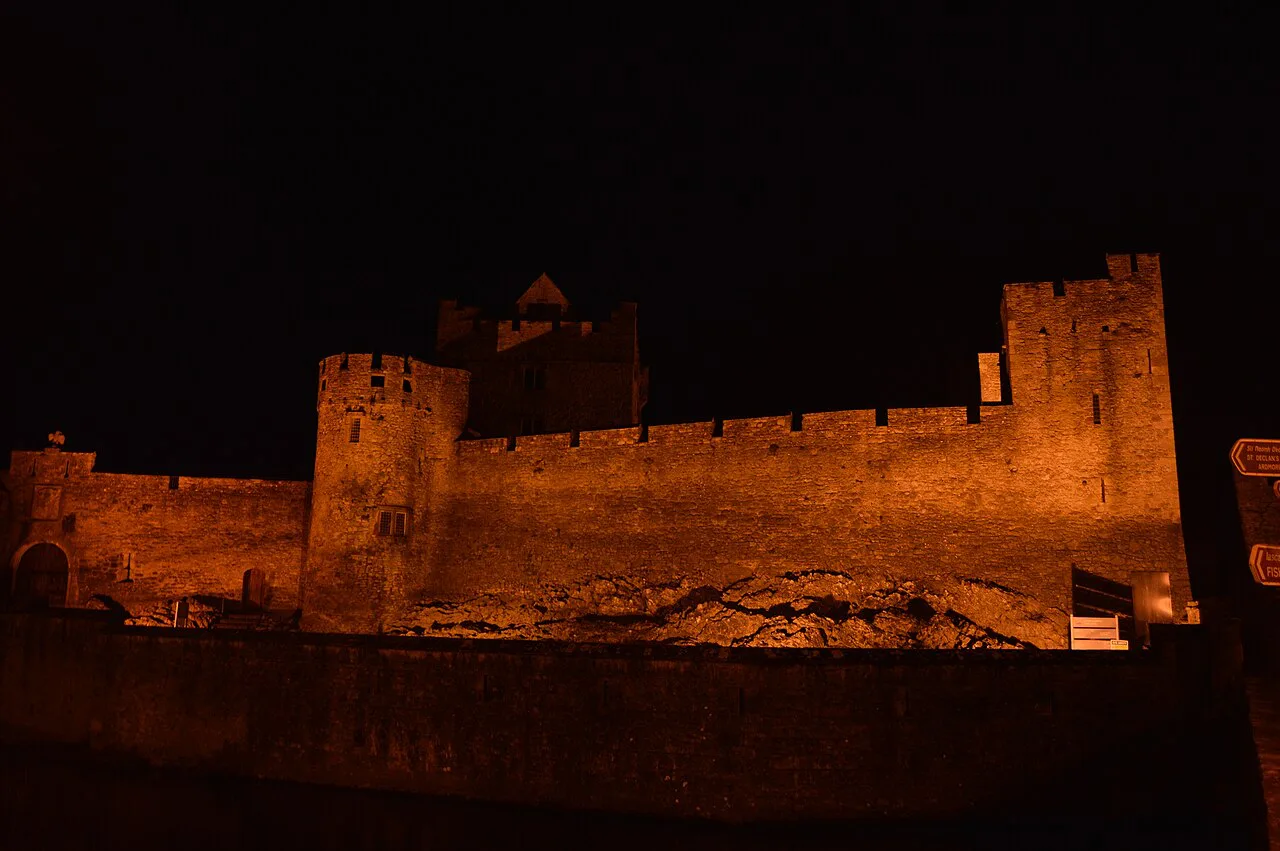
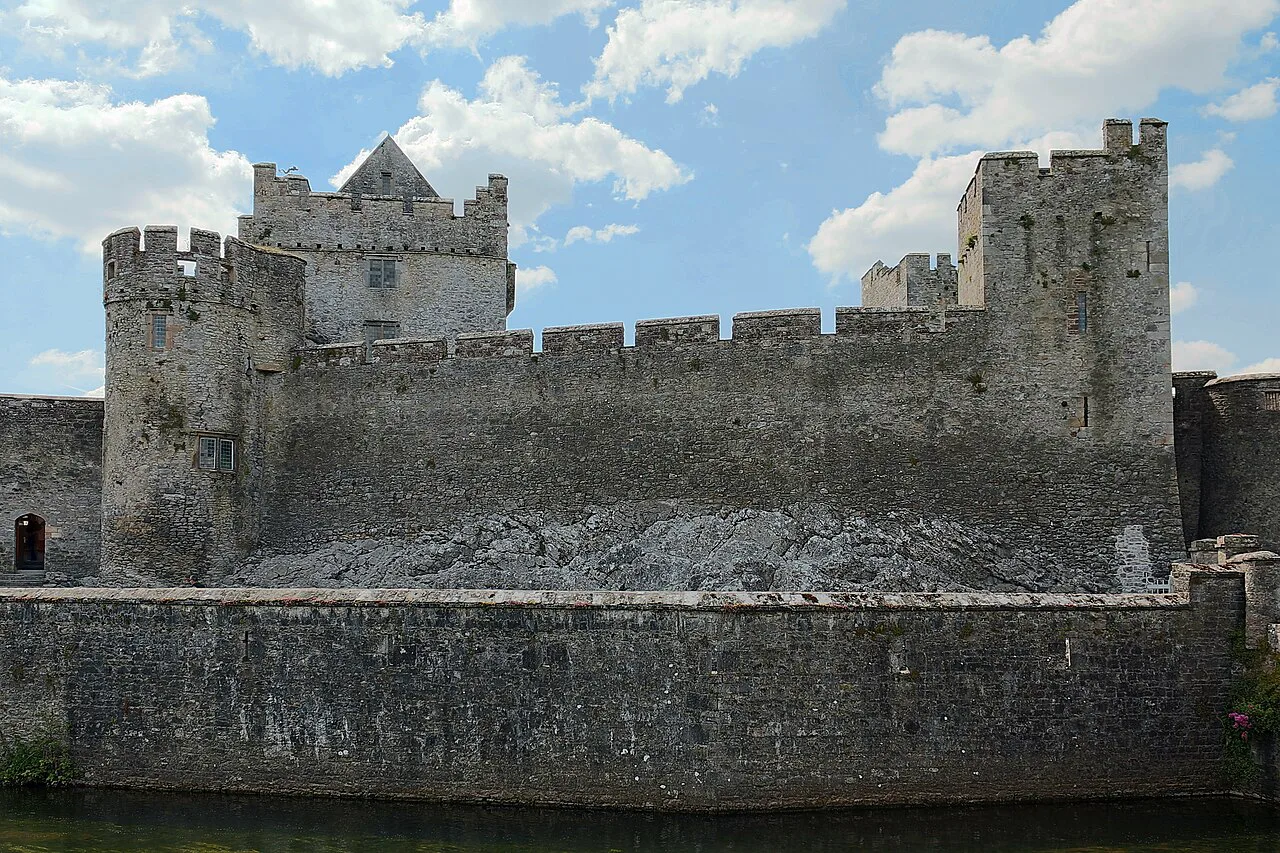
Cahir Castle, on the River Suir in the town of Cahir, is described by Heritage Ireland as one of Ireland's largest and best-preserved castles, built in the thirteenth century as the stronghold of the Butler family. Its defensive design was considered impregnable until the earl of Essex took it in 1599 with heavy artillery, and it was besieged twice more during the Irish Confederate Wars.
Ormond Castle, Carrick-on-Suir is a different proposition altogether: an Elizabethan manor house joined onto an earlier medieval riverside castle. Thomas, the 10th Earl of Ormond, built it in 1565 in honour of his distant cousin Queen Elizabeth, and its great hall holds some of the finest stucco plasterwork in the country, with portraits of the queen and her brother Edward VI.
roscrea castle is described by the operator as a stone motte castle dating from the 1280s in the middle of one of Ireland's oldest towns, and the surrounding complex includes Damer House, formal gardens and a restored mill displaying St Crónán's high cross and pillar stone. Nenagh Castle is the last surviving tower of what was once a larger complex of three towers, a curtain wall and a two-towered gatehouse, built between about 1200 and 1220; the operator page names Theobald Walter as its main early resident and notes that the Butler family, his descendants, held it until the mid-fourteenth century.
Cahir Castle: The River Fortress
At Cahir the building itself is the main exhibit. Inside, visitors move through tall towers, narrow corridors and winding staircases, with the great hall as the centrepiece, hung with the antlers of a giant Irish deer and furnished in period style. From the tower windows and the top of the well tower you get views over the surrounding countryside and the river.
The defences reward close looking. The gate has one of the few working portcullises in Ireland, the walls carry machicolations and several styles of arrow loop, and a culverin ball fired during the 1599 siege is still lodged high in the wall of the garderobe turret in the middle courtyard. A siege exhibition includes a detailed model of the castle under attack, and the castle's film career, from Excalibur to The Tudors, gives another way to read the site.
Cahir in Practice: Times, Restrictions and the Setting
Cahir Castle operates seasonal hours all year, with last admission set before closing and a shutdown from 24 to 30 December inclusive; the published pattern runs from a 9:30 to 16:30 day in winter to a 9:00 to 18:30 day in high summer, with last admission 45 minutes before closing. Treat those times as the operator's current published schedule rather than a permanent promise, and confirm them before travelling, because the timetable changes by season. Bus groups must be pre-booked.
Accessibility is partial. The operator lists a wheelchair-accessible toilet among the facilities, but also limited access, uneven walkways, a hand rail to hold and a caution to stay back from edges, so sturdy footwear matters and step-free movement through the whole castle should not be assumed. Guided tours and an audiovisual presentation are offered on site, alongside an exhibition, bookshop and toilets.
The castle stands on Castle Street in Cahir, on the Suir Blueway, and the setting extends the visit. A 15-minute audiovisual presentation, Cahir Castle and the Story of Irish Castles, traces the development of Irish castle building with commentary in Irish, English, French, German and Italian, and a public riverside walk leads about 2km to the Swiss Cottage. The Inch Field public park outside the walls has wooden sculptures and a nearby fairy trail for children.
Ormond Castle: An Elizabethan Manor on the Suir
Ormond Castle is best approached as a house as much as a fortress. Its great hall runs almost the whole length of the building and is decorated with stucco plasterwork featuring portraits of Queen Elizabeth and Edward VI along with Tudor motifs and emblems. Audiovisual and technological installations interpret the building's history, and guided tours, an exhibition and an audiovisual show are listed among the facilities.
The site's address is Castle Park, off Castle Street, Carrick-on-Suir, and it too sits on the Suir Blueway. The operator publishes a social guide as a downloadable PDF to help first-time visitors, families and people with developmental and learning disabilities prepare for a visit, which is worth reading before you go if anyone in your group needs predictability. A spiral staircase is listed among the restrictions, so the full route is not step-free.
Admission is published in two tiers on the operator page. A house tour with exhibition and audiovisual is listed at €5.00 adult, €4.00 group or senior, €3.00 child or student and €13.00 family, while a reduced ticket covering only the exhibition, audiovisual and courtyards is €3.00 adult, €2.00 group or senior, €1.00 child or student and €6.00 family. Those are the current published rates for Ormond alone and do not apply to the other Tipperary sites.
Ormond's 2026 Season
The 2026 season at Ormond Castle runs from 12 March to 4 November, daily from 10:00 to 18:00 with last admission at 17:15. That is a dated season rather than a year-round schedule, so anyone planning a late-autumn or winter visit should expect the house to be outside its published opening period.
Because the season closes in early November, Ormond suits a spring-to-autumn itinerary better than a winter one, and the combination of a defined season with a two-tier ticket means it rewards a little planning. Decide in advance whether you want the full house tour or the shorter exhibition-and-courtyard option, since the difference shapes how long you spend inside.
Roscrea Castle, Gardens and Black Mills
Roscrea Castle began as a stone motte castle in the 1280s and has since served as a barracks housing 350 soldiers from 1798, then as a school, a library and a sanatorium. Damer House, named for the local merchant John Damer who came into possession of the castle in the eighteenth century, is a pre-Palladian building with nine bay windows and one room furnished in period style, though it is closed for the whole of 2026 for works. The restored mill displays St Crónán's high cross and pillar stone.
The complex has been awarded funding under a regenerative tourism scheme to improve accessibility, interpretation and the courtyard and garden facilities, which signals that parts of the site may be in transition. Read the operator's notices before you travel, especially while Damer House is closed, rather than relying on older descriptions of what is open.
Roscrea Access in 2026
Start with the closure: Damer House is closed for the duration of 2026 for works, so its interior cannot be visited this year regardless of what else is running. The castle and Black Mills are open for tours Wednesday to Sunday with an admission fee of €3, as published by the operator. No reopening date for Damer House is given beyond the end of 2026.
Because the castle operates by guided tour on set days, the practical decision is to fix your Roscrea day around Wednesday to Sunday and to check the current notice before setting out. The site lists a lift among its facilities, a detail that matters for anyone weighing a visit against the stairs elsewhere, along with an interpretive exhibit, picnic area and brochure. The grounds and garden with the fountain remain part of the visit even while the house is shut.
Nenagh Castle: Climbing a Norman Tower
Nenagh Castle is a state-owned National Monument in the care of the Office of Public Works, and it is unguided, with an explicit warning that visitors should take care and caution at all stages. The tower is five storeys high and takes 101 steps to reach the top; the second floor is believed to have been the main public hall and the third the lord's private residence. What survives is the last of three towers, once ringed by a curtain wall and defended by a moat.
Opening is seasonal: Tuesday to Saturday, 10:00 to 13:00 and 14:00 to 16:00, with a midday gap that will catch out anyone arriving at lunchtime, and under-18s must be accompanied by an adult. Check the current notice before travelling, because a site that closes for an hour in the middle of the day leaves little room for a late arrival.
The tower's history includes a memorable episode in 1760, when a farmer packed gunpowder into the wall to clear sparrows nesting there and succeeded only in blowing a hole in the masonry. The climb is the point of the visit: there is no furnished interior or guided narrative to carry you, so the reward is the structure itself and the view from the top after 101 steps.
Choosing Between the Four
Match the site to the effort it demands. Cahir and Ormond offer guided or interpreted interiors with uneven ground or a spiral staircase respectively, while Nenagh is a self-guided stair climb and Roscrea runs on scheduled tours with its main house closed in 2026. None of the four promises step-free access throughout, so visitors with limited mobility should read the restrictions on each operator page rather than assume a smooth route.
Another way to choose is by what you want to look at. Cahir's defences and siege display suit anyone interested in military architecture, Ormond's plasterwork great hall suits an interest in Tudor domestic design, Roscrea's motte-and-mill complex suits a broader town and landscape visit, and Nenagh suits a short, active stop. If you are building a wider castle itinerary, the castles in county galway follow a similar logic of matching fortress, tower house and manor to different days out, and the museums in Galway city make a useful rainy-day counterpart to that plan.
What the Four Sites Trace
Read together, the four give a compressed history of Irish castle building. Nenagh and the motte at Roscrea represent the Norman military phase, with thick towers, curtain walls and earthworks; Cahir shows how that defensive language was refined and then broken by artillery in 1599; Ormond shows the later adaptation of a medieval riverside castle into an Elizabethan manor with a stucco-decorated great hall.
The Butler family thread runs through several of them, as lords of Cahir and later holders of Nenagh, while the Earl of Ormond's 1565 manor shows the same family network expressed in domestic architecture rather than fortification. Following that thread across the county turns four separate visits into a single argument about power, defence and comfort over four centuries.
Plan Your Visit
A Tipperary castle trip works best when you treat the four sites as different days out rather than interchangeable stops. Fix dates around the closures and seasons: Ormond runs only from 12 March to 4 November in 2026, Damer House at Roscrea is shut for the whole year, Nenagh keeps a midday break, and Cahir uses seasonal times across the year.
Before booking, read the restrictions on each operator page, confirm notices for the day you plan to travel, and pack footwear suited to uneven ground at Cahir and stairs at Nenagh and Ormond. That small preparation is what separates a smooth visit from one spent in the car park checking whether the site is actually open.
Explore more Ireland guides
Frequently Asked Questions
What castles can you visit in County Tipperary?
The Office of Public Works manages four castle sites with public access in County Tipperary: Cahir Castle, Ormond Castle at Carrick-on-Suir, the Roscrea Castle complex including Black Mills, and Nenagh Castle. Each has its own opening pattern and access rules, so check the individual site page before travelling.
Is Cahir Castle guided or self-guided?
Cahir Castle can be explored at your own pace, and the operator also lists guided tours and an audiovisual presentation among its facilities. The castle warns of uneven walkways and limited access, so visitors with mobility concerns should check the restrictions before they arrive.
When is Ormond Castle open?
Ormond Castle's published 2026 season runs from 12 March to 4 November, daily from 10:00 to 18:00 with last admission at 17:15. It is a dated season rather than a year-round opening, so confirm the current notice before planning a visit outside those dates.
Is Damer House in Roscrea open?
Damer House is closed for the duration of 2026 for works, as stated on the Heritage Ireland page for the Roscrea complex. The castle and Black Mills tours run Wednesday to Sunday during that period, and no reopening date for the house is published beyond the end of 2026.
How many steps are there at Nenagh Castle?
Nenagh Castle has 101 steps to the top of its five-storey tower, and the site is unguided, so the climb is entirely your own responsibility. The operator advises care and caution throughout, and under-18s must be accompanied by an adult.
Which Tipperary castle suits visitors who cannot manage stairs?
Roscrea lists a lift among its facilities, which is worth noting if stairs are a problem, but the castle there is toured and Damer House is closed in 2026. Cahir lists a wheelchair-accessible toilet but also uneven walkways and limited access, and Ormond has a spiral staircase, so none of the four offers unqualified step-free access.
Do I need to book ahead for these castles?
Bus groups must be pre-booked at Cahir Castle, and Roscrea runs on scheduled tours from Wednesday to Sunday, which makes a fixed day sensible. For individual visits, check each operator page for current notices on tickets, tour times and any temporary closures before you set out.
Sources
You might also like



Continue reading
More guides you'll find useful