
Roscrea Castle: Castle, Gardens and Black Mills Guide
Roscrea Castle and Black Mills run tours Wednesday to Sunday, but Damer House is closed throughout 2026. Here is what to plan around at this Tipperary site.
On this page
Roscrea Castle is an Office of Public Works heritage site in the town of Roscrea, County Tipperary, built around a stone castle first raised in the 1280s. It is not a single building you walk through once: the courtyard ensemble also takes in a garden with a fountain, a restored mill known as Black Mills, and Damer House, a separate Georgian house on the same grounds. Because one part of that group is shut this year, the trip works best if you plan around what is actually open.
2026 Access at a Glance
The practical position is split, and it decides how you spend the day. According to the operator, the castle and Black Mills are open for tours Wednesday to Sunday with a three-euro admission fee, while Damer House is closed for the duration of 2026 for works. No reopening date beyond that closure is published, so anyone counting on seeing the house interior should assume it will not be available this year.
The admission charge is the operator's stated fee for the castle and Black Mills tours; it should not be read as covering Damer House or any element the page does not name. Tour times, duration, group size and whether booking is needed are not set out on the operator's page, so confirm those details directly with the site before travelling rather than assuming a walk-up slot. The same applies to facilities and restrictions, which the page does not detail in the material reviewed here.
The Castle: A 1280s Stone Structure
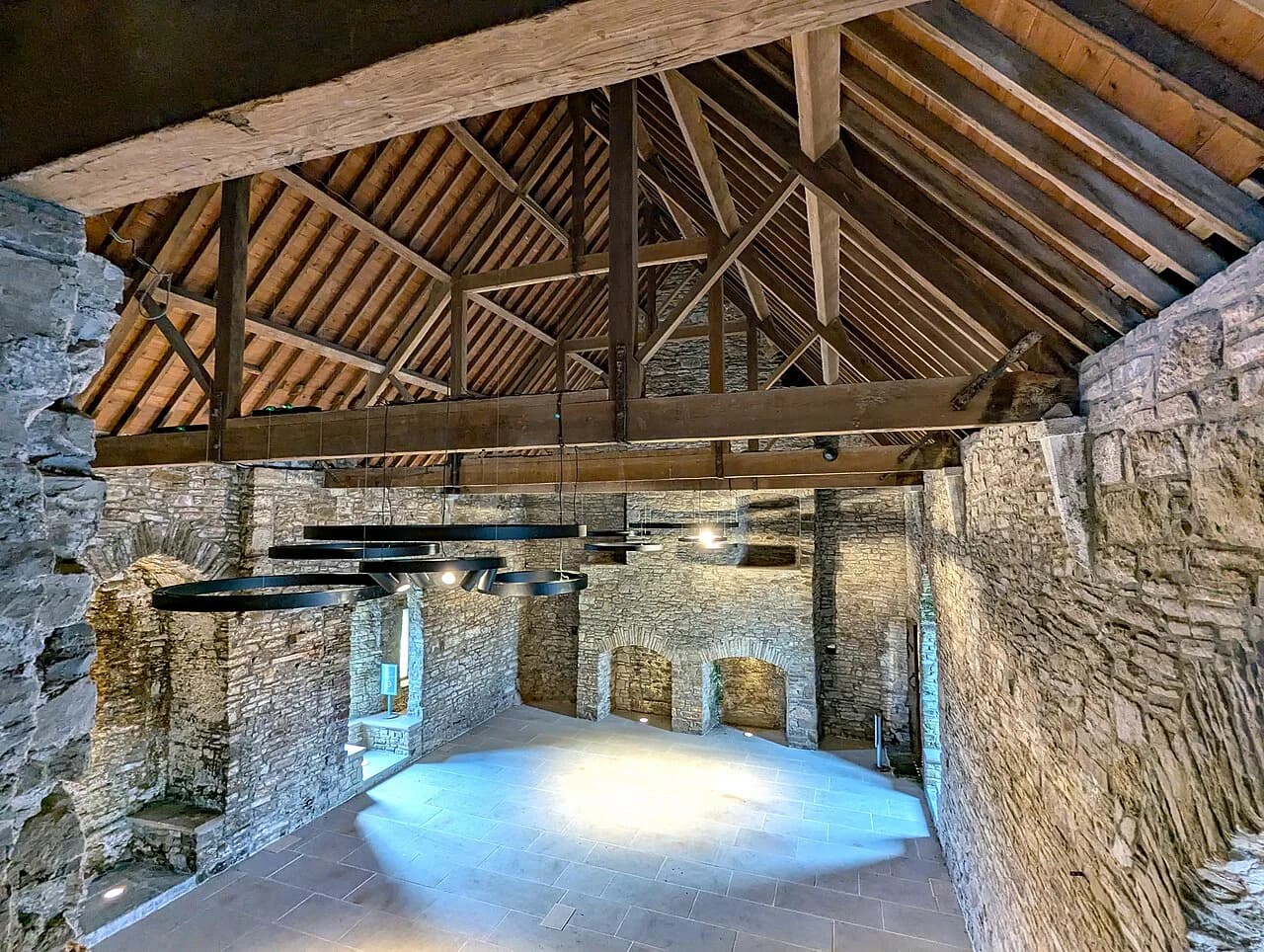
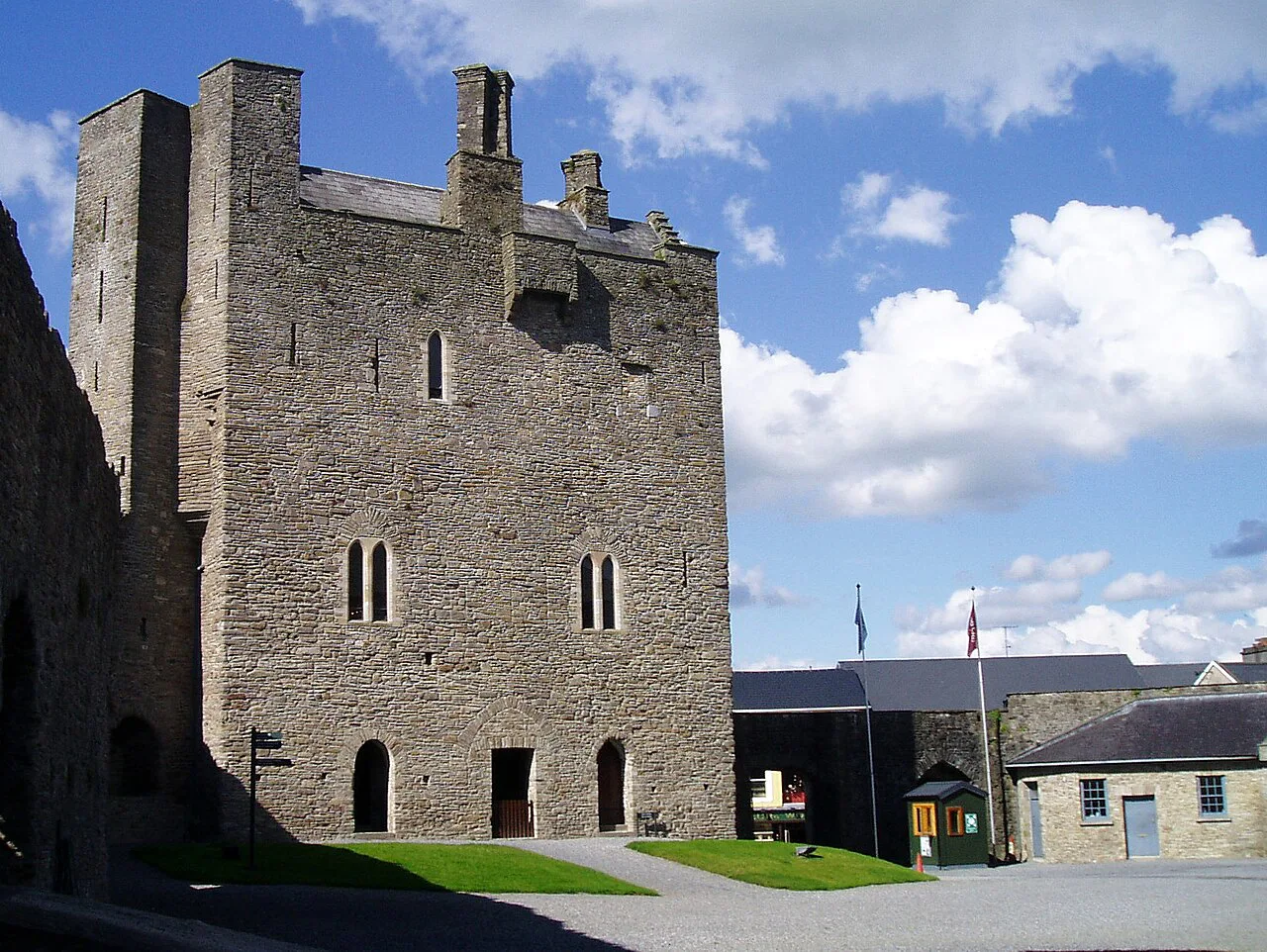
The castle at the heart of the site is a stone motte structure dating from the 1280s, and it sits within a courtyard rather than standing alone in open ground. An independent heritage account, Irish Historic Houses, describes the wider defensive scheme in more detail than the operator page does: a curtain wall roughly three metres thick with a wall-walk, a drawbridge, a machicolation above the entrance and arrow loop windows. Treat those specifics as that account's description rather than official interpretation.
The same account places the present stone structure's construction between 1274 and 1295 under John de Lydyard, replacing an earlier wooden motte-and-bailey known as King John's Castle, and notes that a river once formed a moat on the east side with a dry moat on the west. If you want to compare a castle of similar period that is presented as a standalone monument, Cahir Castle in the same county makes a natural second stop on a wider circuit.
A Building With Several Lives
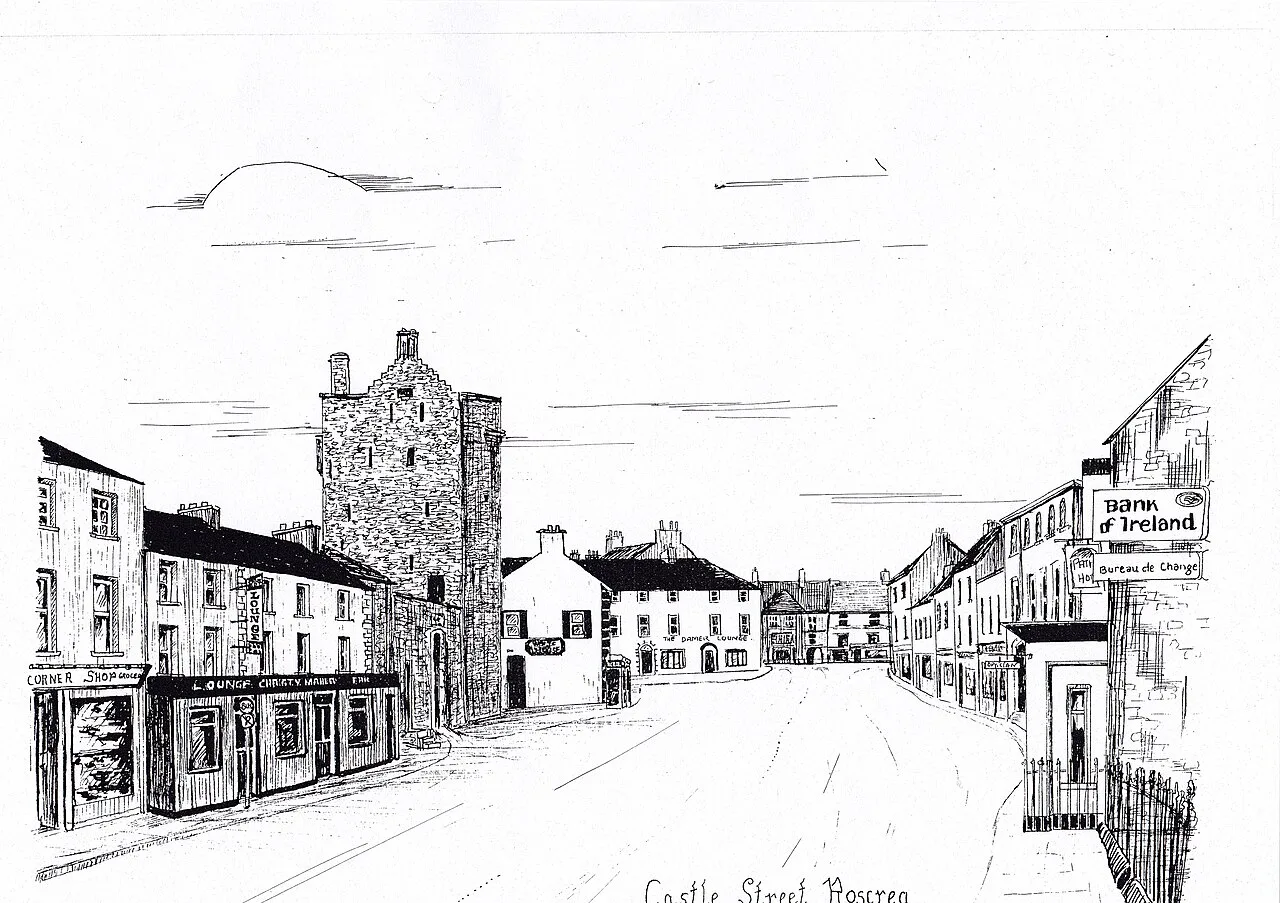
Roscrea Castle was not always a monument. The operator notes that it served as a barracks from 1798, housing 350 soldiers, and was later used as a school, a library and a sanatorium. Those successive roles help explain why the site reads as a cluster of buildings and yards rather than a single preserved keep: each generation adapted the same footprint for a different purpose.
The Irish Historic Houses account adds that the castle fell into disrepair in the nineteenth century, needed extensive repairs after its roof collapsed in the 1850s, and was named a national monument in 1892. It also describes later military and institutional use of the wider site, including a period as a school for boys, a barracks during the Civil War and a sanatorium before returning to school and library use. Read these as context for the fabric you see, not as a guaranteed itinerary of rooms.
Damer House: Courtyard Context Only in 2026
Damer House is the Georgian element of the ensemble, and it matters architecturally even while shut. The operator describes it as a handsome example of pre-Palladian architecture with nine bay windows and one room furnished in period style, sharing the castle grounds and named for a local merchant family connected to the castle from the eighteenth century. In 2026 that description is background: the house is closed for works, and its interiors, period room and any exhibition space cannot be visited this year. If you want a riverside fortress you can actually walk through this year, the King John's Castle, Limerick: A Visitor Guide to the Riverside Fortress covers one within easy reach.
The secondary account dates the house to about 1730 as a three-storey, nine-bay building within the bawn walls, and describes a carved staircase with original hall stairs and floor. It also flags genuine uncertainty about which member of the Damer family built the house, distinguishing the merchant uncle from his nephew and naming a different brother as the builder, so avoid repeating a single-name attribution as settled. Details like these are why the house is worth a return visit once works finish, but they do not change access now.
The Gardens, the Fountain and Black Mills
With the house closed, the outdoor and mill elements carry more of the visit. The operator notes an impressive garden with a fountain within the grounds, and a restored mill that displays St Crónán's high cross and pillar stone. Those two carved stones are the collection highlight most easily missed by visitors who come only for the castle walls, so build time for the mill into the day.
Practical questions about the grounds are worth settling before you go: which parts can be walked without joining a tour, and how the garden and mill fit with tour times, are not spelled out on the operator's page. Ask when you contact the site rather than assuming free run of the courtyard, and browse the ancient sites Ireland guide if carved stone monuments are the thread you want to follow afterwards.
Ownership and the Fight to Save the House
Ownership history explains why a Norman castle and a Georgian house sit together. The Irish Historic Houses account traces the castle to a grant to the Butlers of Ormond in 1315, a sale to the Royal Hospital, Kilmainham in 1703, and subsequent purchase by the Damers, who built the house in the courtyard. It also records that the house was threatened with demolition around 1970, when the local authority proposed clearing it for an amenity centre, and that the Old Roscrea Society and the Irish Georgian Society campaigned to save it before restoration.
That rescue story is the reason there is a house to refurbish at all, and it is a useful frame for a visit in a year when you can only see the outside. The same Butler family name recurs at Carrick-on-Suir, where Ormond Castle Ireland preserves a later Elizabethan mansion associated with the dynasty, giving a sense of how far the family's building reached.
Investment and What It Means for Visitors
The site is in line for change. The operator states that Roscrea Castle and Damer House was awarded 2.97 million euro under Fáilte Ireland's Regenerative Tourism and Placemaking Scheme, co-funded by the EU Just Transition Fund and the Government of Ireland, with the money intended to improve accessibility, add new interpretation and upgrade the courtyard and garden facilities. That is funding for planned works, not a description of facilities already open.
For a traveller, the sensible reading is that some disruption and improvement are both plausible over the coming period, and that the official page is the place to check what has actually been completed. Do not plan around new interpretation or upgraded facilities until the operator confirms them; plan around the castle tours and the mill instead.
Nearby Alternatives on the Same Circuit
If Roscrea leaves you wanting more of the same era, the operator's page lists nearby heritage sites with distances from the castle, among them Portumna Castle and Gardens, Heywood Gardens and Famine Warhouse 1848. Each of those is a separate site with its own opening arrangements, so check it before adding it to the day rather than assuming it is open when Roscrea is.
Travellers heading west can extend the trip using the castles in county galway guide, which suits a themed break better than a scatter of unconnected stops. Whichever order you choose, give Roscrea proper time for its courtyard, garden and mill rather than treating it as a quick roadside pause.
Where Roscrea Fits on a Tipperary Castle Route
Roscrea is best understood as one stop on a county-wide circuit rather than a destination on its own, since the courtyard ensemble takes half a day at most. The broader castles in tipperary guide sets out the keeps, tower houses and later houses that can be strung together across the county, and it helps to see Roscrea's mix of Norman walls and Georgian domestic architecture against those alternatives.
The trade-off is time against depth. A tight circuit lets you compare several sites in a day, but Roscrea rewards a slower pace precisely because its interest is layered: defensive stonework from the medieval phase, a barracks and institutional afterlife, and a Georgian house you can only study from outside this year. Decide which layer you came for before you set the order of stops.
Plan Your Visit
Roscrea Castle in 2026 is a visit to a courtyard ensemble rather than a single interior: the 1280s stone castle and Black Mills run tours Wednesday to Sunday, while Damer House remains closed for works through the year. Plan the day around the castle, the fountain garden and St Crónán's high cross, and expect to see the house only from outside.
Before travelling, check the official page for current tour arrangements and for anything the regenerative tourism works have altered on site, and ask directly about the grounds if you intend to spend time in the garden. Historical detail drawn from the Irish Historic Houses account is context only, so treat it as a reading aid rather than an access promise.
Explore more Ireland guides
Frequently Asked Questions
Is Roscrea Castle open in 2026?
The operator says the castle and Black Mills are open for tours Wednesday to Sunday, with admission charged. Tour times, duration and whether booking is required are not set out on the published page reviewed here, so check the official Heritage Ireland page and contact the site to confirm arrangements before you travel.
Can you visit Damer House in 2026?
The operator states that Damer House is closed for the duration of 2026 for works, and publishes no reopening date beyond that. You can see the house from the courtyard, but its interiors, period-furnished room and any exhibition space are not available this year.
How much does it cost to tour Roscrea Castle?
The operator publishes an admission fee for the castle and Black Mills tours on its Heritage Ireland page, and that page is the place to check the current figure. The charge covers only what the operator names, so do not assume it extends to Damer House or any other element, and re-check close to your visit during the improvement works.
What can you see if Damer House is closed?
The castle itself, described by the operator as a stone motte structure dating from the 1280s, plus a garden with a fountain and the restored mill known as Black Mills, which displays St Crónán's high cross and pillar stone. Which parts of the grounds can be walked without a tour is not detailed on the operator's page, so ask when you arrive.
Where is St Crónán's high cross kept?
The operator places St Crónán's high cross and pillar stone in the restored mill on the Roscrea Castle grounds, known as Black Mills. Since the mill is covered by the tour arrangement rather than a separate published entry, confirm with the site that it is included on the day you plan to visit.
How does Roscrea compare with other Tipperary castles?
Roscrea is unusual because a Norman castle, a Georgian house, gardens and a mill share one courtyard, so the visit is a small ensemble rather than one keep. Cahir Castle, further south in the county, offers a different, single-monument experience that pairs well on a wider Tipperary castle circuit.
Sources
You might also like



Continue reading
More guides you'll find useful





