
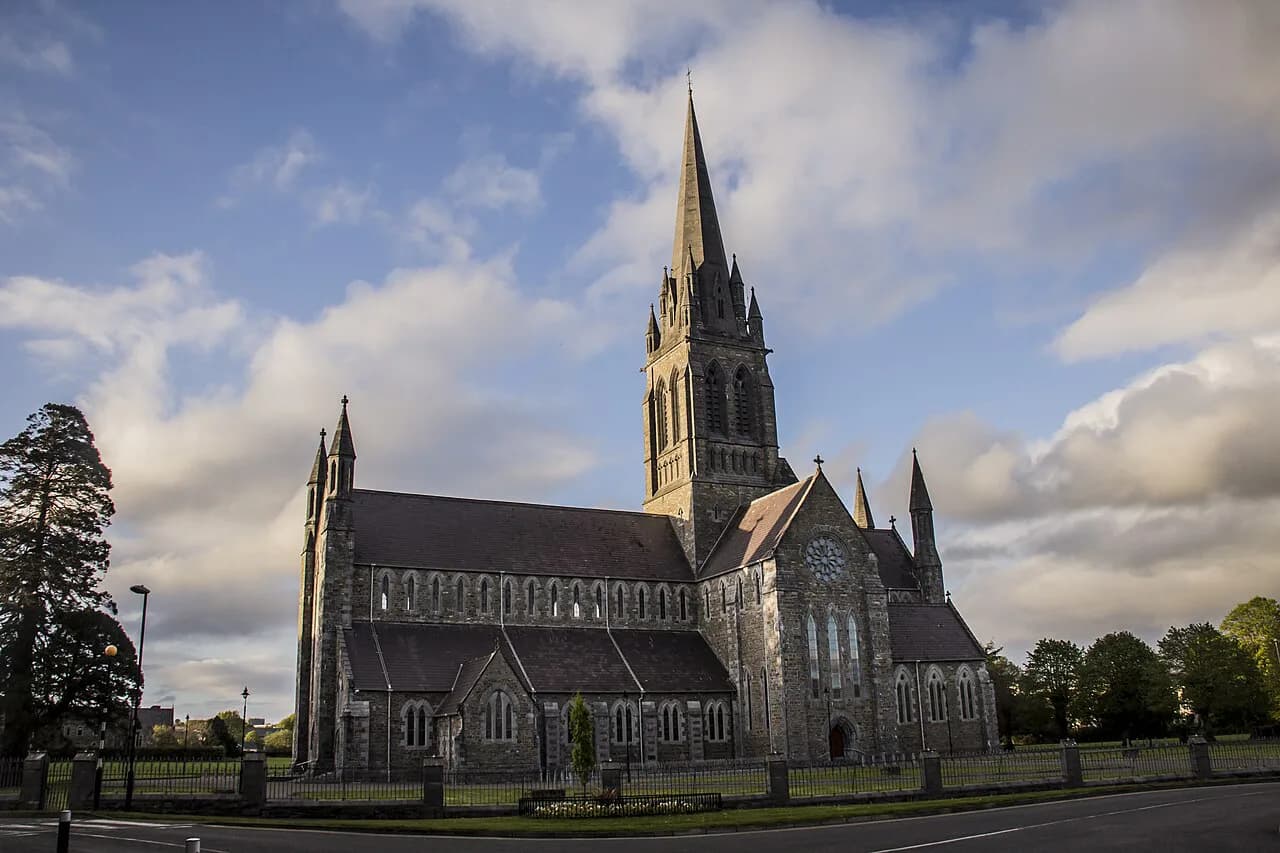
St Mary's Cathedral Killarney: A Pugin Visitor Guide
St Mary's Cathedral Killarney is the Catholic cathedral of the Diocese of Kerry, designed by A.W.N. Pugin. Learn what to see outside and inside on a quiet visit.
On this page
St Mary's Cathedral is the Roman Catholic cathedral of the Diocese of Kerry, and its formal dedication is to Our Lady of the Assumption, which explains why signs and parish material use both names. It stands in Killarney itself. The building's interest is architectural and liturgical, so the most rewarding visit is a slow look at the fabric before and after a quiet moment inside, fitted around worship rather than treated as a sight to tick off.
A cathedral, not a museum
The cathedral belongs to the Diocese of Kerry, and the parish describes it as the successor to St Brendan's Cathedral at Ardfert, to the north-west of Tralee. That succession is worth holding onto, because the name St Mary's recurs across Ireland and short listings blur one building with another. The one you want is the Catholic diocesan cathedral at Cathedral Place on Port Road in Killarney. For a second instance of the same naming confusion, our Limerick heritage guide covers a different St Mary's Cathedral in that city.
Discover Ireland frames the same building as the Gothic-style cathedral of the Catholic Diocese of Kerry and notes that St Brendan's at Ardfert previously held that role. Because the tourism authority and the parish agree on that diocesan status, the identity question is settled. To follow the story back further, our page on Ardfert Cathedral covers the predecessor building and its ruins.
Who designed it and when it was built
The National Inventory of Architectural Heritage records the cathedral as built between 1842 and 1855 to a design by A.W.N. Pugin, then extended between 1908 and 1912 by Ashlin and Coleman, who added the central tower at the crossing with its octagonal limestone spire. That two-phase history becomes visible once you know to look for it: the earlier Gothic Revival body and the later addition read differently at close range, especially where the tower meets the older roofline.
Discover Ireland states that the cathedral was consecrated in 1855 and renovated in the 1970s. Keep those dates distinct from the construction period: the consecration year closes the Pugin campaign as recorded, while the 1970s work is a later intervention attributed to the tourism authority rather than inferred from the architecture. If you are comparing Irish cathedrals by date, our roundup of Cathedrals in Ireland sets these phases beside other buildings.
Reading the exterior on foot
The survey describes a freestanding cruciform church, with a tall nave between lower side aisles, transepts to north and south, and corner turrets on square plans at the west entrance gable. Those turrets carry limestone open belfries and conical roofs, and there is a second pair to the east gable, so the skyline rewards a walk around the building rather than a single frontal photograph. The walls are coursed rubble stone with limestone ashlar dressings, which is why the trim reads crisp and pale against the rougher wall.
Window details are the quickest way to read what you are seeing. The inventory notes single lancets with limestone surrounds and hood mouldings, paired lancets to the aisles, paired lancets with trefoil heads to the side chapels, and rose windows to both transepts. Look too for the central tower rising at the crossing with its octagonal spire and corner pinnacles, the element that belongs to the early twentieth-century extension rather than the Pugin campaign.
The west entrance and the gateway
At the west gable the inventory records a pointed arched entrance flanked by doorcases with stepped reveals and timber boarded double-leaf doors. A limestone gateway of about 1855 survives to the south, built with six panelled ashlar piers, smaller intermediate piers and sections of cast-iron railing. It is a small piece of street architecture worth a look before you go in, and it belongs to the same mid-nineteenth-century campaign as the Pugin building.
Treat the entrance as a working doorway rather than a viewpoint. If a service is forming or people are arriving, step aside and study the doorcases and gateway from a few paces back instead of standing in the opening. Comparing the detail here with work at other Irish cathedrals helps you read the Pugin Gothic Revival vocabulary.
Inside the building
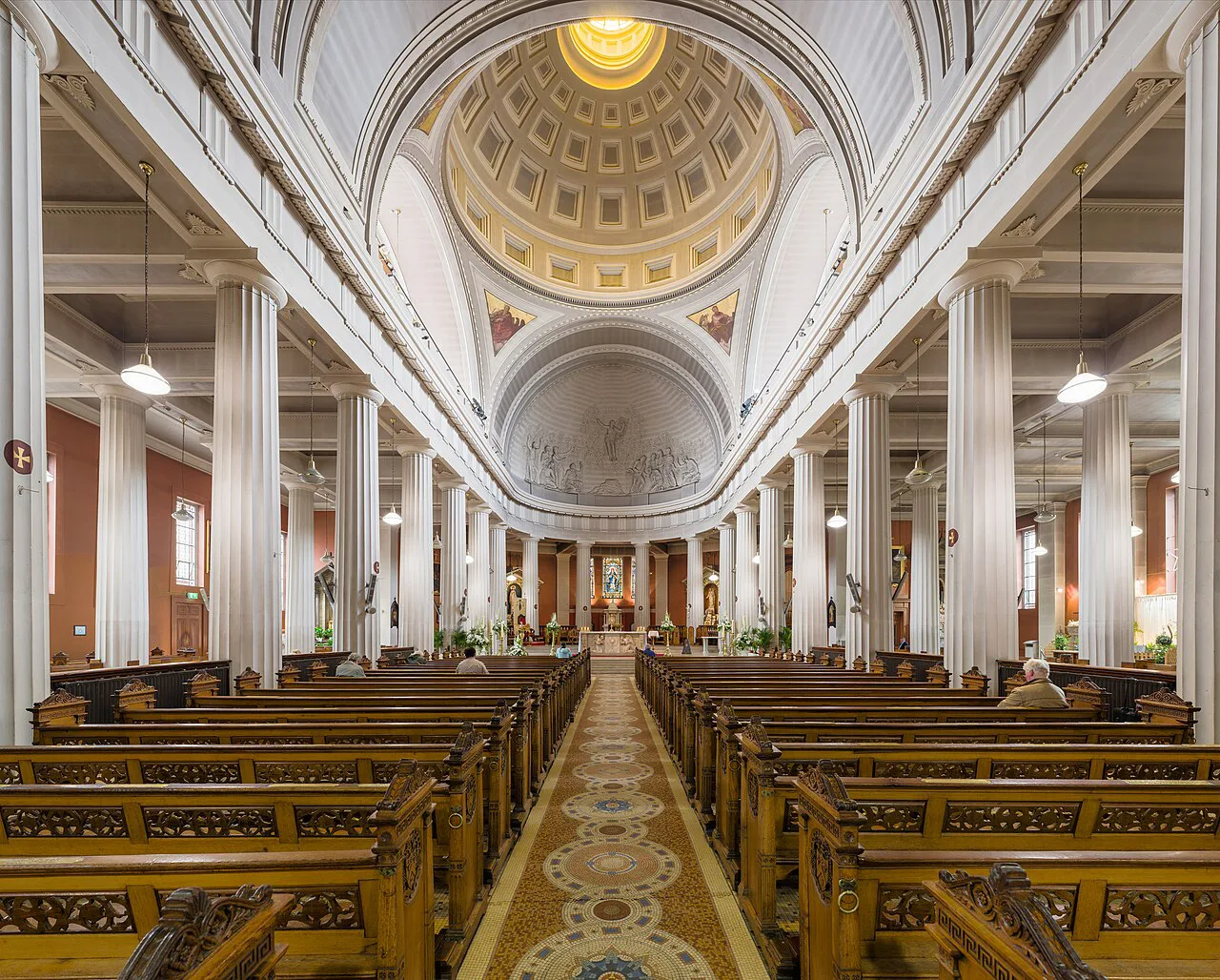
The inventory describes a cruciform interior where pointed arched arcades on limestone columns separate the nave from the aisles across twelve bays, with an open cruck-framed ceiling over the nave. It also notes a lower chapel to the south-east and a reordered chancel, a term that signals later liturgical adjustment rather than original furnishing. Read the columns and the roof first, then look toward the chancel to see how the sanctuary has been reshaped.
Discover Ireland's mention of a renovation in the 1970s helps explain why the interior does not read as a wholly nineteenth-century scheme, though the tourism page does not itemise what changed. You can attribute the renovation, but you should not claim particular fittings date from it unless the parish says so. Pairing the exterior with the arcade and ceiling inside makes the building legible in a way that a photograph cannot.
St Mary's as a working church
The Diocese of Kerry parish page publishes Mass times for St Mary's Cathedral, including weekday, Saturday evening and several Sunday morning and midday celebrations. Those are worship schedules, not visitor opening hours, and the distinction matters when you plan a look inside. A church with a full Sunday timetable is busy at exactly the hours a casual visitor might pick.
The parish's own site presents the cathedral as the centre of a community's worship and heritage, describing it as rising above the town and carrying the prayers of generations. That framing is a reminder that the building is not a stage set for architecture enthusiasts. If you arrive as a congregation is gathering or dispersing, the right move is to return later rather than walk the aisles mid-service.
Timing a respectful visit
Use the published Mass schedule to identify when the church is in worship, then aim for the gaps between services rather than the published times themselves. Aim to see the building in two parts: a walking circuit outside for the turrets, transept rose windows and the later crossing tower, then a short interior stop for the arcades and ceiling. If a service is under way, wait outside rather than entering.
Quiet, modest dress and no flash are ordinary courtesies in any active Irish church, and a midweek stop is often gentler than the busy Sunday pattern. The same rhythm of looking and pausing applies elsewhere, as our guide to Churches in Ireland sets out. Read that page as context for the visit rather than as evidence about this building, which has its own documented sequence of construction and alteration.
Beyond the cathedral: the wider parish
The Diocese of Kerry parish page names two further churches in the same parish, the Church of the Resurrection and the Church of the Holy Spirit at Muckross. They confirm that St Mary's is one node in a larger pastoral network rather than a standalone monument. The same page gives the parish office contact, which is the practical route for questions about the cathedral itself.
For a wider sense of how Irish church architecture develops from medieval to Gothic Revival, our guide to ancient sites Ireland points to comparable places and landscapes. Each building has its own documented sequence of construction and alteration, so use such collections as context, not as substitutes for a site's own record.
Confirming current access before you go
The parish office is the correct contact for access questions, and its listed opening times are administrative rather than a visiting window for the cathedral. Do not read office hours as evidence that the church interior is open to the public at those times. Ask directly about interior availability and any arrangements for groups, and re-check close to your date rather than relying on older travel notes.
Neither the parish nor the diocesan page sets out ticket prices, guided tours, photography rules or accessibility provision, so none of those should be assumed. The parish describes the cathedral first as a place of worship, which is the safest baseline for planning. If a need is specific, such as step-free entry, put the question to the office rather than inferring from the building's age.
Plan Your Visit
St Mary's Cathedral rewards a visitor who arrives knowing the basics: it is the Catholic cathedral of the Diocese of Kerry, built in 1842 to 1855 to a Pugin design and extended in the early twentieth century with a central tower and spire. Walk the outside for the turrets, transept rose windows and ashlar trim, then step in quietly for the limestone arcades and open timber roof. Fit the interior stop around worship rather than against it.
Before travelling, confirm interior access and any group arrangements with the parish office, because no visitor opening hours, ticket details or facilities information is published on the parish or diocesan pages. If those questions matter to your plans, a quick enquiry is the sensible final step.
Explore more Ireland guides
Frequently Asked Questions
Is St Mary's Cathedral in Killarney Catholic or Church of Ireland?
St Mary's Cathedral, formally the Cathedral of Our Lady of the Assumption, is the Roman Catholic cathedral of the Diocese of Kerry, at Cathedral Place on Port Road. Check which building a short listing means, because the name recurs around Ireland, and confirm the identity from the parish or diocesan page rather than from an old travel note.
Who designed St Mary's Cathedral in Killarney?
The National Inventory of Architectural Heritage records the cathedral as built between 1842 and 1855 to a design by A.W.N. Pugin, with a later extension by Ashlin and Coleman between 1908 and 1912 that added the central tower and octagonal spire.
When was St Mary's Cathedral built and consecrated?
The building dates from 1842 to 1855 according to the architectural inventory. Discover Ireland states that the cathedral was consecrated in 1855 and renovated in the 1970s, so keep the construction period and the consecration year separate when you describe the building.
Can visitors go inside St Mary's Cathedral?
The cathedral is an active place of worship rather than a ticketed attraction, and no tourist opening hours are published on the parish or diocesan pages. Ask the parish office about current interior availability before you go, and time any look inside around the published Mass schedule rather than during worship.
What should I look for on the outside of St Mary's Cathedral?
Look for the cruciform plan, coursed rubble walls with limestone ashlar dressings, single lancets with hood mouldings, paired lancets to the aisles and side chapels, and rose windows in both transepts. The square corner turrets with open belfries and conical roofs, plus the central tower and octagonal spire, give the building its characteristic skyline.
How do I avoid disturbing services at St Mary's Cathedral?
The Diocese of Kerry parish page publishes Mass times for weekdays, Saturdays and Sundays, and those are worship schedules rather than visitor hours. Aim for quiet gaps between services, keep conversation low inside, and wait outside if a congregation is gathering.
Where can I confirm current access details for St Mary's Cathedral?
The parish office is the right contact for interior availability, group arrangements and any specific needs. Its published opening times are administrative, not visiting hours, so do not treat them as evidence that the church is open to the public at those times. Re-check shortly before your date.
What other Catholic churches are in the Killarney parish?
The Diocese of Kerry parish page names the Church of the Resurrection and the Church of the Holy Spirit at Muckross alongside St Mary's Cathedral. They form one pastoral network, so a visit to the cathedral can be set within a wider sense of Catholic Killarney rather than treated in isolation.
Sources
You might also like



Continue reading
More guides you'll find useful





