Castles in County Offaly: Charleville, Birr and Leap
Offaly's named castles are three different visits: Charleville's Gothic shell, Birr's science demesne with a closed castle, and Leap's contested ruin.
On this page
The castles most often named in County Offaly are three distinct places rather than variations on one experience: Charleville near Tullamore, Birr Castle Demesne in the heritage town of Birr, and Leap at Coolderry. The county's visitor body names all three as Offaly castles, but their histories, settings and what a visitor actually encounters differ sharply.
A Gothic-revival mansion under long-term conservation, a landscaped demesne built around a scientific family, and a tower house whose chronology its own archive leaves open do not compete on the same terms. This guide explains what each property is, what its own record says, and what you need to check before travelling.
A Landlocked Midlands County of Several Building Types
Offaly lies in Leinster with no coastline and was formerly known as King's County, a name useful for understanding older estate histories. The county is small by Irish standards, yet its castle landscape runs from tower houses to a Gothic-revival mansion and a burnt-and-rebuilt stronghold rather than a single type.
For an independent traveller, that variety is the point. A morning in landscaped parkland and an afternoon reading the architectural record of a ruin demand different expectations. Treat the county as a set of distinct properties with separate operators rather than a castle trail with shared tickets or shared opening patterns.
Charleville Castle: A Gothic-Revival Shell Near Tullamore
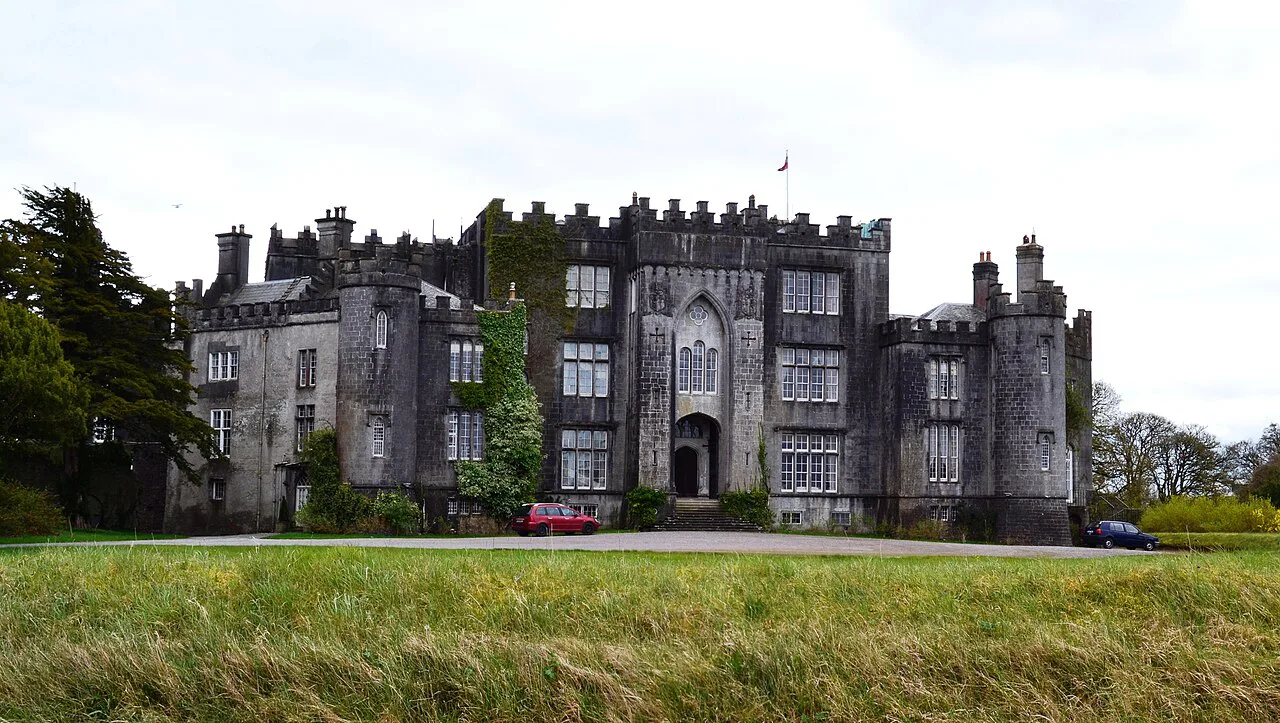
Charleville was designed in the Gothic-revival style by Francis Johnston for Charles William Bury, with construction beginning in 1798 and lasting about fourteen years. The castle's own account credits Irish craftsmen with the building work, and records that the estate lands had earlier passed through the Moore family and a lapsed earldom before reaching Bury. Later additions included stencilling designed by William Morris for the dining room in the 1890s.
The property's more recent history is a cycle of abandonment and repair. Its own pages record that the castle stood uninhabited from 1912 and that restoration began in 1971, and its history page describes the roof being deliberately damaged after the owner's 1963 death as a device to avoid high local property levies. The Charleville Castle Heritage Trust now oversees conservation. Those events explain why the gallery, entrance hall, main staircase, library, morning room and dining room are described as surviving features rather than intact rooms.
That distinction matters when you plan. The operator's pages detail construction, ownership and the principal rooms but do not confirm current opening days, tour times or admission arrangements. Check the Trust's own website directly before setting out rather than relying on older listings.
Birr Castle Demesne: Gardens, Science and a Closed Castle
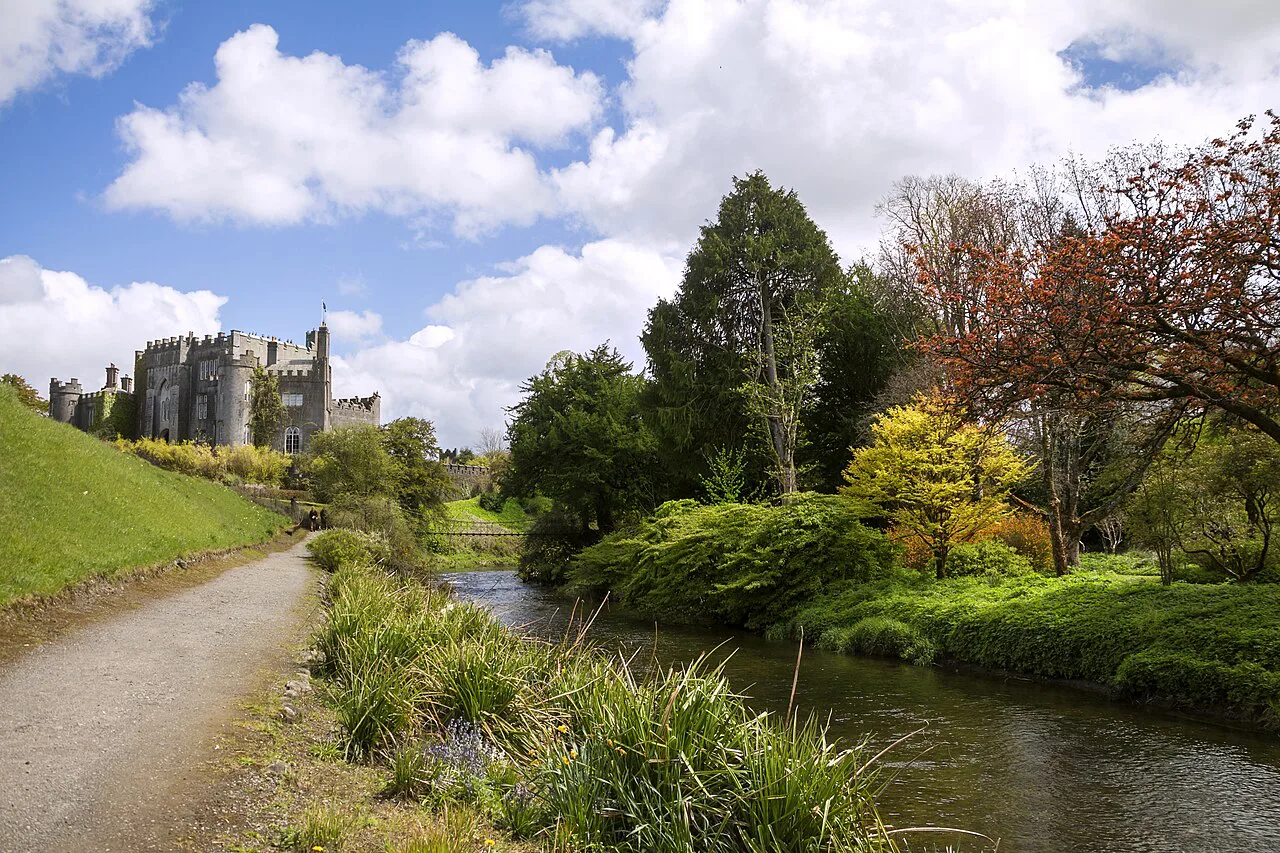
Birr Castle Demesne spreads across 120 acres of parkland and gardens in the heritage town of Birr, with thousands of tree and plant species, rivers and waterfalls, and a Historic Science Centre covering the Parsons family's work in astronomy, engineering and early photography. The Great Telescope, which the operator says remained the largest reflecting telescope in the world for over 70 years, still stands at the centre of the demesne.
That framing is practical, not just promotional. The same operator page lists the gardens and Science Centre as open 09.00-16.30 while the castle itself is listed as Closed, with the cafe open at weekends from 10.00. These hours appear as an October notice, so confirm the current position before travelling. Visitors should plan for grounds, exhibitions and the telescope rather than castle interiors.
If architecture or interiors are your priority, this is the trade-off to weigh: Birr offers the most complete day out of the three but not the castle rooms. If you want to stand inside a historic building, check with the relevant operator first, since neither Charleville nor Leap publishes confirmed interior access. The castles in county galway guide weighs the same question of interiors against grounds for four western sites.
Leap Castle: A Stronghold With a Contested Date
Leap, at Coolderry, is traditionally linked to the O'Bannon clan, secondary chieftains under the O'Carrolls, with the current building thought to have been built over an earlier castle. The Darby family held it from 1642 until its burning in 1922, and its archive records that the inhabited wings were destroyed by fire and looting that year. Peter Bartlett purchased the ruin in 1974 and undertook rebuilding and preliminary restoration, work now continued under the Ryans.
The site's own archive is unusually frank about uncertainty. It preserves a traditional early-1500s origin while also quoting an archaeological inventory that characterises the surviving tower house as late sixteenth century, and it states that the disagreement is flagged rather than resolved. Read any confident single date for Leap with that caveat.
The archive deliberately separates documented history, historical accounts, oral tradition, paranormal testimony and legend, and pairs pre-1922 photographs with restored display versions. That makes it valuable for research, but it is not a visitor guide: no opening hours or access terms are set out, and restoration is described as continuing. Treat Leap as documentary context, not a guaranteed entry.
West Offaly Tower Houses in Historical Context
Offaly's castle landscape extends beyond the three headline names. A local history account of a 2018 heritage-week tour describes Garrycastle with its Sheela-na-gig, Streamstown Castle, and Clonony Castle, a tower house built by the MacCoghlan clan and occupied around 1612-1620 by Matthew de Renzy, a London cloth merchant of German origin. The same account records that Clonony had been a ruin for a century or more before a restoration project.
Use that account for what it is: a dated record of a guided day out and of the buildings' histories and architectural features. It mentions opening details posted on social media at the time, which is not evidence of current access. If you want to see lesser tower houses, contact the relevant owner or the local heritage office for the present position, and do not assume a ruin can be entered.
Reading Each Property's Own Admissions
Each property is clearest about a different thing. Charleville's record is strong on construction and conservation but silent on visitor logistics. Birr states opening hours openly while marking the castle closed. Leap's archive is candid about its internal conflicts of evidence, including the dating problem and the distinction between legend and record.
That pattern is a useful reminder that an absence of visitor information on a heritage page is not permission to visit. Where a site publishes hours, rely on them as dated statements; where it does not, contact the operator rather than assuming a ruin, a restoration project or a private estate welcomes the public.
Choosing Between the Three
Match the property to your interest rather than trying to see everything. For Gothic-revival architecture and the story of decline and repair, Charleville is the focus; for a half-day in gardens with scientific collections, Birr is the strongest option; for documentary history and the archaeology of a fortified house, Leap's archive offers more than a plaque. If you are weighing tower houses further west, the castles in county galway guide applies the same approach to four sites and current access.
Accept the trade-offs. Charleville and Leap require you to verify access, while Birr publishes hours and a clear statement that the castle is closed. If your trip depends on going inside a building, Birr's demesne-only offering may not satisfy you even though its collections are substantial.
Wider context helps you place Offaly's buildings within Irish heritage. If your interests also run to stone circles, monastic ruins and other archaeological monuments, the same collection covers ancient sites elsewhere in Ireland, and it is worth comparing what you see here with them. Readers weighing castles against older monuments may find the castles in county galway guide a useful counterpoint.
Sacred Ground and the Grand Canal: The Wider Offaly Story Around Its Castles
Travellers who come to County Offaly for its castles often discover that the county's heritage reaches well beyond the castle walls. County Offaly is landlocked and, by land area, the 18th largest of Ireland's 32 counties and the 24th largest by population, yet it holds an unusual concentration of historic places. Along the River Shannon stands Clonmacnoise, a monastic site with a history dating back to the 6th century. It was founded by Saint Ciaran, and it grew into a major centre of religion and learning that attracted scholars and pilgrims. Its strategic riverside position made it a target for Viking raids in the 9th century, yet it flourished through the medieval period, and today it stands as a beautifully preserved ruin offering an authentic glimpse into Ireland's past as a great centre of religion. Linking this sacred landscape back to the castles is the monastic thread in the Charleville story: in the 6th century the lands on which Charleville Castle stands were part of an ancient monastic site of Lynally, itself an ancient Durrow monastic settlement. Those who drive to Tullamore for the Gothic-revival castle are, in a sense, following in the footsteps of early monastic settlement.
The county's later history is equally bound up with its castles and estates. Charleville's own record traces the land from a gift of 1,700 acres to the Moore family, made in 1577 by Queen Elizabeth I, through the first Stuart and later more violent Elizabethan plantations, when Dublin felt threatened by the wild tribes of the West and these lands became a focal point. Tullamore itself, a village of thatched roofs in those times, was largely destroyed by fire in 1785 as a result of a hot-air balloon being mismanaged during the 21st birthday celebrations of Charles William Bury. Its rebuilding on an improved plan and scale, with wider streets and more substantial buildings, was sponsored by the trustees and estate of Charles William Bury. By 1833 Tullamore, having expanded greatly in population and wealth due to being a terminus of the Grand Canal, was recognised as the county town of the then King's county in preference to Philipstown, which had performed that role since the times of Philip and Mary. The Grand Canal that made Tullamore's fortune can still be crossed on the road towards West Offaly's older sites.
For those tracing the tower houses of West Offaly, the historical context is richly documented. Matthew de Renzy (1577–1634) was a London cloth merchant originally from Cologne in Germany who created the first English-Irish dictionary, according to his tombstone in Athlone. He had land in the heart of MacCoghlan's country in West Offaly or Garrycastle barony by 1613, lived for a while in Clonony, and later secured lands near Tinnycross, Tullamore, where he was established by 1635. Clonony Castle, a Tudor castle built by the MacCoughlan clan, was occupied by de Renzy from 1612 to about 1620; it has all the basic features of a tower house of this period such as machicolation, murder hole, base batter, mural passages, spiral staircase, gun-loops, garderobe and bawn, and its bawn wall with its two square corner towers was reconstructed in the nineteenth century. The castle had been a ruin for a hundred years or more before being restored by its current owner; as opening arrangements are published separately, check before travelling. A day spent among these West Offaly sites gives a fuller picture of the county than the three famous castles alone.
Before You Travel
Two things change between visits and deserve a direct check: Birr's current opening arrangement, since the hours are an October notice and the castle is listed as closed, and Charleville's access, because its own pages do not confirm days or tours. Leap's archive is the best place to read its history, but it sets out no visitor terms.
Plan by building type and by what you actually want to see. That will take you to the right property in Offaly faster than any ranked list of castles. For another heritage guide, read about Leap Castle.
Explore more Ireland guides
Frequently Asked Questions
What castles are there in County Offaly?
The three most often named are Charleville near Tullamore, Birr Castle Demesne at Birr, and Leap at Coolderry, as the county's visitor body sets out. West Offaly also holds lesser tower houses and ruins, including Garrycastle and Clonony, but these are historical landscape rather than confirmed visitor attractions. Check each operator's own page for current access.
Can you go inside the castles in County Offaly?
It varies. Birr's operator lists the gardens and Historic Science Centre as open while the castle itself is closed, so interiors should not be expected there. Charleville's pages describe surviving principal rooms but do not confirm current tour days or admission, and Leap's archive sets out history without visitor terms. Verify each property directly before travel.
Is Birr Castle open to visitors?
As the operator currently states it, the demesne's gardens and Historic Science Centre are open with set hours, the castle is listed as closed, and the cafe runs at weekends. Those hours appear in an October notice, so confirm them on the official site before relying on them for a particular day.
Why is Leap Castle's construction date disputed?
Its own archive preserves a traditional early-sixteenth-century origin while also citing an archaeological inventory that describes the surviving tower house as late sixteenth century. Rather than choosing between them, the archive flags the conflict for further research, so treat any single confident date for Leap with caution.
What happened to Charleville Castle?
Charleville was built from 1798 in the Gothic-revival style to Francis Johnston's design for Charles William Bury. It stood uninhabited from 1912, and its history page describes the roof being deliberately damaged after the owner's 1963 death to avoid high local property levies. Restoration began in 1971, the Charleville Castle Heritage Trust now oversees conservation, and several principal rooms survive.
Are Clonony Castle and Garrycastle visitable?
That is not confirmed by current sources. A 2018 local-history account describes a heritage-week tour including Garrycastle, Streamstown and Clonony, and notes restoration work at Clonony, but dated accounts are not evidence of present access. Contact the relevant owner or Offaly's heritage office before planning a stop.
How do I choose between the three castles?
Choose by interest: Charleville for Gothic-revival architecture and the story of neglect and repair, Birr for parkland, gardens and scientific collections with published hours, and Leap for documentary history and archaeology with a public archive. If going inside a building is essential, verify access first, since only Birr makes its position clear.
Sources
- History | castle
- Birr Castle Demesne - One Of The Top 10 Attractions In Ireland
- Leap Castle, County Offaly — History, Architecture & Archive
- County Offaly Visitor Information
- MacCoghlans, De Renzy and West Offaly Castles. Blogs No 96, 25 August 2018 – offalyhistoryblog
- History of Leap Castle — Leap Castle Archive
You might also like



Continue reading
More guides you'll find useful