
Cathedrals in Ireland: A Visitor Guide to Six Historic Churches
Compare six Irish cathedrals in Cork, Dublin, Limerick, Galway and Kilkenny, with sourced histories, visitor access and worship etiquette.
On this page
Ireland's cathedrals are working churches first and heritage sites second. A cathedral is technically the bishop's seat, which is why several Irish cities have more than one: the Church of Ireland and the Roman Catholic Church each maintain their own. The six buildings here span Cork, Dublin, Limerick, Galway and Kilkenny, and each can be visited, though access details differ from place to place.
The most important practical point is to separate sightseeing hours from service times. A cathedral may list daily Mass or Evensong without publishing visitor opening hours, so a service schedule is not a substitute for sightseeing information. Where a cathedral does publish visitor times, those are the times to plan around, and they are worth confirming before you travel.
St Fin Barre's Cathedral, Cork
St Fin Barre's Cathedral in Cork was designed by William Burges, who was appointed architect in 1862. The foundation stone was laid in 1865, and the cathedral was consecrated on St Andrew's Day in 1870. Burges's attention extended to sculpture, mosaics, furniture and metalwork as well as the structure itself.
The towers and spires are built from Cork limestone, and much of the interior uses red Cork marble. Inside, the walls of Bath stone hold stained glass that the cathedral describes as among the finest in Ireland, with colours that have remained vivid. For visitors interested in 19th-century church architecture and stained glass, the interior is unusually ornamented, and it is part of the wider story of churches in Ireland.
The cathedral sits within what the institution calls the St Fin Barre's Quarter, which it describes as where Cork began, and the surrounding area gives context to the building's place in the city. The cathedral's website carries worship and event information alongside an opening-hours section, so check the current times directly before visiting rather than assuming the building is open for tourists throughout the day.
Christ Church Cathedral, Dublin
Christ Church Cathedral has stood at the heart of Dublin for almost 1,000 years and has built a reputation for liturgy, outreach, music and hospitality. It is one of the city's most important heritage sites and welcomes visitors daily, with admission structured around self-guided tours.
The cathedral publishes specific visiting times for self-guided tours: Monday, Wednesday, Friday and Saturday from 09:30 to 18:00; Tuesday and Thursday from 09:30 to 17:30; and Sunday in two windows, 12:30 to 15:00 and 16:30 to 18:00. Last admission for tours is 45 minutes before closing. Adult admission is €11.50, with a family ticket at €26.00 for two adults and two children. Under-4s and disabled visitors with an accompanying carer enter free, and a reduced rate is available online only. These details are specific to this cathedral and should be confirmed before travel.
Saint Patrick's Cathedral, Dublin
Saint Patrick's Cathedral in Dublin describes itself as a house of prayer for all nations, a place where all are welcome. The cathedral maintains a daily pattern of worship, including Sung Matins, Eucharist and Choral Evensong, and it runs a separate programme of concerts and events. These two schedules serve different purposes and should not be conflated.
For a visitor, the daily services are an opportunity to experience the cathedral as a working church, while the concert programme offers a different kind of access. The cathedral's website does not publish separate sightseeing opening hours alongside these listings, so check directly for visitor access rather than treating a service time as an opening time. If you plan to attend a service, arrive early and participate respectfully rather than walking around during worship.
Saint Mary's Cathedral, Limerick (Church of Ireland)
Saint Mary's Cathedral in Limerick is a Church of Ireland building dating to 1168 and described by its operator as the oldest cathedral on the Wild Atlantic Way. It stands on the banks of the Shannon in the heart of Limerick's medieval city, and it remains a living place of worship open to all Christians as well as a heritage attraction.
The cathedral publishes visitor hours: Monday to Saturday from 11:00 to 16:00 with last admission at 15:30, Sundays reserved for services and worship, and bank holidays from 11:00 to 15:00 with last admission at 14:30. These hours apply only to this cathedral. Confirm them before travelling, particularly around bank holidays and religious festivals when access may differ.
The cathedral's operator describes it as one of the oldest historic buildings in Ireland, having witnessed invasions, sieges and famines as well as quieter periods. That long history is part of what makes the building worth visiting, but the primary purpose remains worship. Visitors should be mindful of that when planning a trip around published sightseeing hours.
St John's Cathedral, Limerick (Roman Catholic)
St John's Cathedral is the Roman Catholic cathedral in Limerick, designed by the English architect Thomas Hardwick. Its foundation stone was laid in May 1856, and by March 1859 the building had been roofed and the first Mass was celebrated. The tower, designed by the Limerick firm Messrs Hennessey, was completed in 1882, and the cathedral was consecrated in June 1894.
The cathedral's spire rises to 265 feet 9 inches from the base of the tower to the top of the cross, according to the diocese. The altar is made of Limerick marble with a substructure of alabaster and coloured marble, and six bishops are buried within the building. Floodlighting installed in 1986 and replaced in 2003 gives the building a presence on the city's skyline at night.
This is a working Catholic cathedral, so visitor access may be affected by Mass times and parish events. The diocese page does not publish sightseeing hours, so check with the cathedral office before planning a visit. The building's scale and its prominence on the Limerick skyline make it useful to view from outside even when interior access is limited.
Galway Cathedral
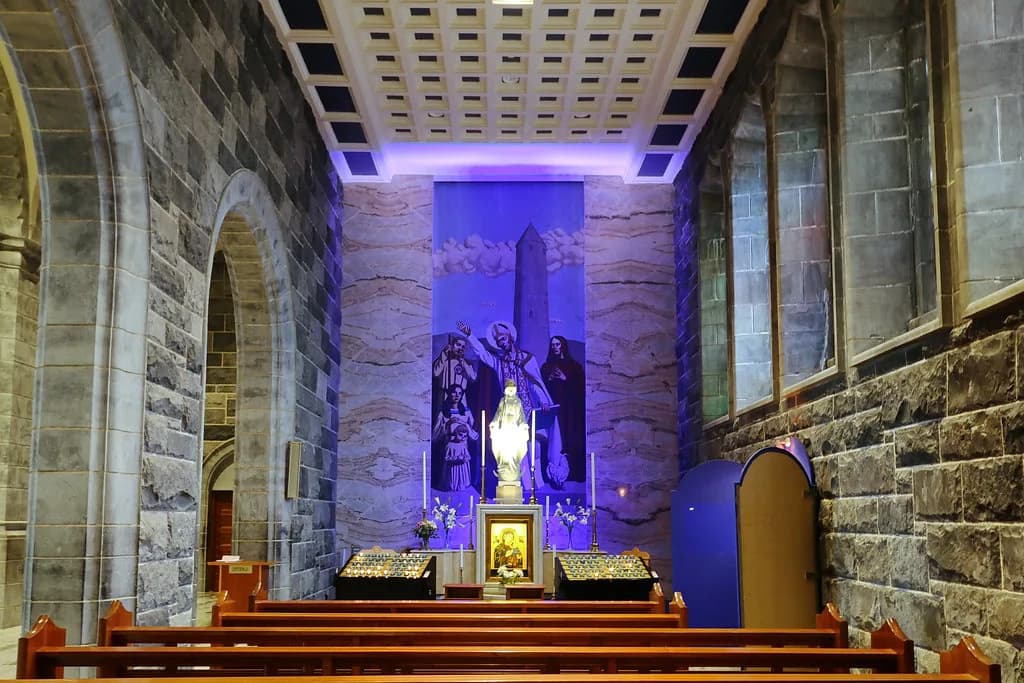
Galway Cathedral is located on the west bank of the River Corrib, a little north and west of the city centre. The cathedral publishes its visitor arrangements clearly: there is no admission charge but a suggested donation of €3 towards upkeep; groups do not need to book ahead unless they wish to celebrate Mass; and visitors are asked not to enter during Mass unless they intend to participate. For the full picture of what to expect inside, our Galway Cathedral: Visitor Guide to the Riverside Cathedral covers the same building in more detail.
The cathedral is usually open from 08:00 until 20:00, though the cathedral describes these times as approximate and notes that on certain days such as Christmas Day it may close earlier. Parking is available in the cathedral grounds, pay-per-hour and open 24 hours, but camper vans are not permitted. A wheelchair ramp is available at the main entrance in the east transept facing Salmon Weir Bridge, a hearing loop operates throughout, and there are a limited number of public toilets.
A visit here can be combined with a walk along the Corrib, and the cathedral's published facilities make it one of the more straightforward cathedrals in Ireland to visit for those with access needs. Just remember that these details apply only here; other cathedrals may not offer the same facilities. The suggested donation is not an entrance fee, and the cathedral remains reliant on voluntary support.
St Mary's Cathedral, Kilkenny (Roman Catholic)
St Mary's Cathedral in Kilkenny is the Roman Catholic cathedral, distinct from the Church of Ireland cathedral of the same name in Limerick. Its building was initiated by Bishop William Kinsella, who announced the project in February 1842 and selected the site of Burrell's Hall. Work began in April 1843, and the foundation stone was laid on 18 August that year. The architect was William Deane Butler.
The cathedral opened with a grand ceremony of consecration on Sunday 4 October 1857, after a construction period that continued through the Famine years and provided much-needed local employment. It was described at the time as pure Gothic design, built entirely of chiselled limestone and cruciform in shape, and its tower rises to 186 feet, dominating the Kilkenny skyline. The high altar of Italian marble was purchased in Italy. Later work included marble altar rails by James Pearse, father of Patrick and Willie Pearse of the 1916 Rising.
The cathedral's history page does not publish visitor opening hours, so check with the cathedral directly before travelling. The building is an active parish church, and its scale and setting, dominated by a 186-foot tower, make it an important landmark in Kilkenny even when viewed from outside. Its history page records a pure Gothic design in chiselled limestone, with later work including Italian marble and altar rails by James Pearse.
Practical differences between the six cathedrals
Only Galway Cathedral documents on-site parking, a wheelchair ramp and a hearing loop, so visitors with mobility or hearing needs should confirm arrangements with the other five directly. Christ Church Cathedral and Saint Mary's Cathedral in Limerick publish explicit sightseeing hours, while St Fin Barre's, Saint Patrick's, St John's and St Mary's Kilkenny do not publish separate visitor hours on the pages reviewed. That means the planners should check each cathedral's website or contact the office rather than assuming standard opening times.
Admission charges also vary. Christ Church Cathedral publishes a detailed self-guided tour price list, while Galway Cathedral states no admission charge with a suggested donation, and Saint Mary's Cathedral in Limerick lists an admission ticket among its visitor information without publishing a figure on the page reviewed. The remaining cathedrals in this guide do not publish an admission charge on the pages reviewed, but that does not guarantee free entry; check before you travel. Treat all hours, charges and access arrangements as subject to change, especially around religious festivals and public holidays.
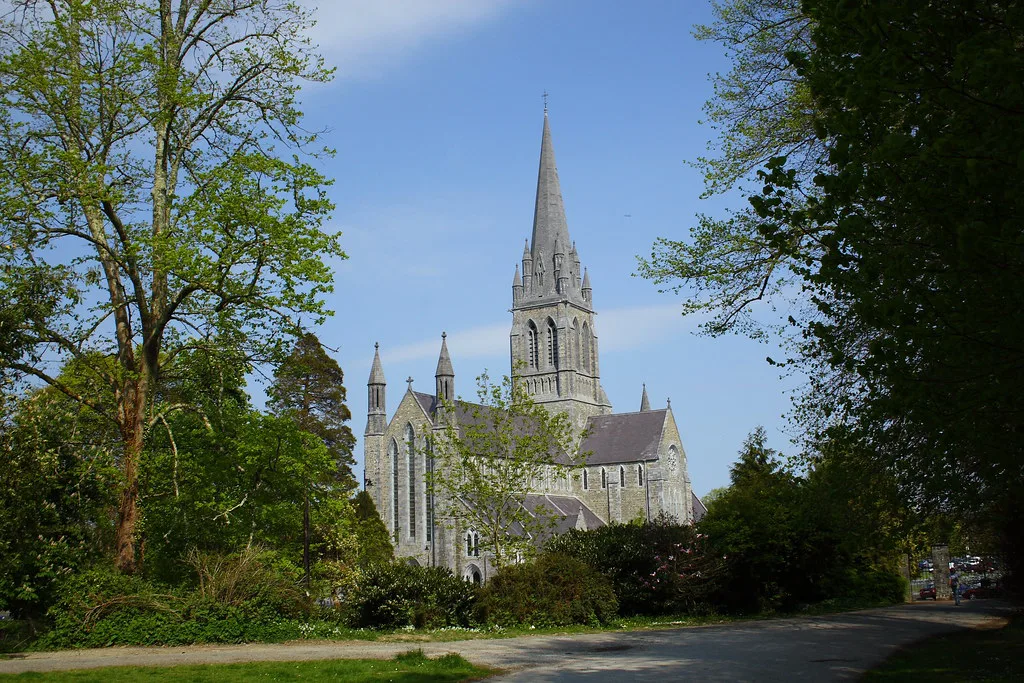
The broader story of Irish church building did not end with the medieval period, and comparing a Victorian revival interior with earlier work sharpens what you notice inside the six cathedrals above; our wider guide to churches in Ireland sets out that longer sequence, and St Mary's Cathedral, Killarney offers another Irish cathedral with its own history to explore.
Plan Your Visit
Choose your cathedral by city and by the kind of building you want to see. Cork's St Fin Barre's offers a richly ornamented Victorian Gothic interior, designed by William Burges, while Dublin's Christ Church and Saint Patrick's combine centuries of worship with major music traditions. Limerick gives you two cathedrals of different denominations within the same city, and Kilkenny's St Mary's is a 19th-century Gothic revival landmark with a distinctive tower.
Before travelling, confirm opening hours and any admission charges directly with each cathedral, since published details can change. Remember that these are working churches: if a service is in progress, either participate respectfully or wait until it ends. With that approach, a cathedral visit becomes both a heritage experience and an encounter with living worship. For related reading, explore St Mary's Cathedral, Killarney, another Irish cathedral with its own story.
Explore more Ireland guides
Frequently Asked Questions
Are Irish cathedrals free to visit?
Not all of them. Galway Cathedral states there is no admission charge, though it suggests a donation. Christ Church Cathedral in Dublin publishes admission charges for self-guided tours. Other cathedrals covered here do not publish entrance fees on the pages reviewed, so check directly rather than assuming entry is free.
What is the difference between Saint Mary's Cathedral in Limerick and St Mary's Cathedral in Kilkenny?
They are two different buildings belonging to different churches. Saint Mary's in Limerick is a Church of Ireland cathedral dating to 1168 and stands in the medieval city centre. St Mary's in Kilkenny is a Roman Catholic cathedral built from the 1840s and consecrated in 1857.
Can I visit a cathedral during a service?
Galway Cathedral asks visitors not to enter during Mass unless they intend to participate. Where a cathedral welcomes visitors at services, arrive early, sit quietly and avoid walking around. If you only want to sightsee, visit during published visitor hours instead.
Which Irish cathedrals have published opening hours for sightseeing?
Christ Church Cathedral in Dublin publishes self-guided tour times for each day of the week, and Saint Mary's Cathedral in Limerick publishes visitor hours Monday to Saturday with shorter bank holiday hours. Galway Cathedral publishes approximate opening times. St Fin Barre's, Saint Patrick's, St John's and St Mary's Kilkenny do not publish separate sightseeing hours on the pages reviewed, so contact them directly.
What should I know before visiting a working cathedral?
Dress respectfully, keep noise low, and check whether photography is allowed. If a service is taking place, either join in or wait. Confirm opening hours and any charges with the cathedral before you travel, because these can change, especially around religious festivals.
Sources
You might also like



Continue reading
More guides you'll find useful


