
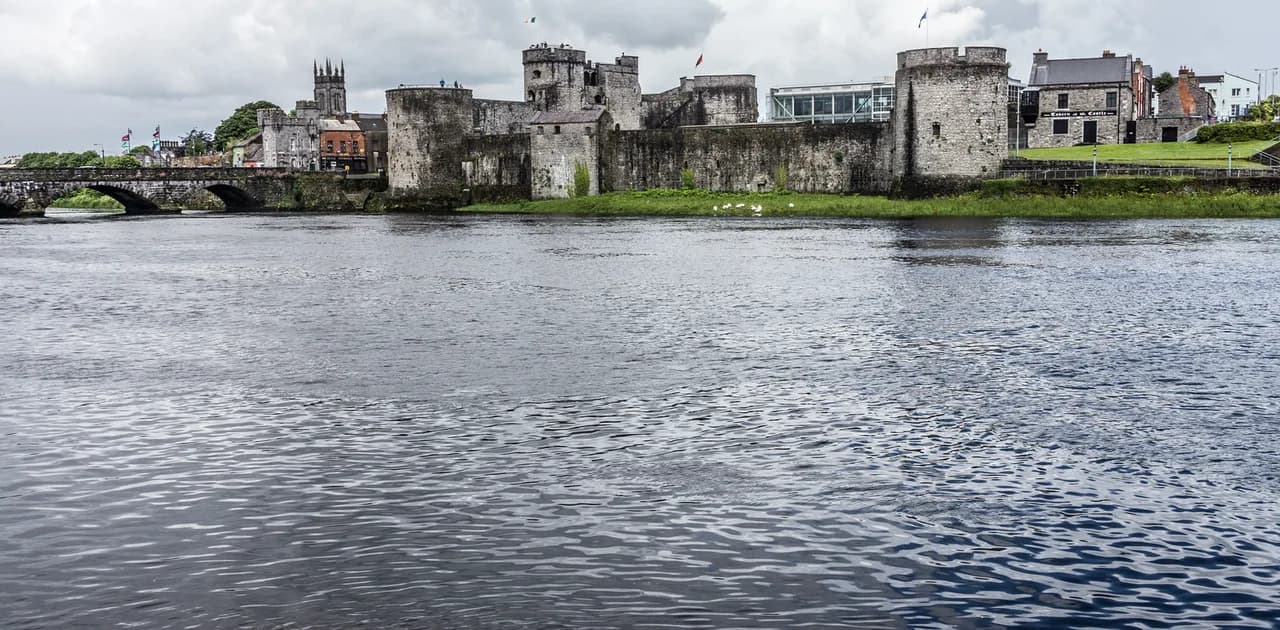
King John's Castle, Limerick: What to See Inside the Medieval Fortress
King John's Castle is Limerick's medieval fortress on King's Island, built beside the River Shannon on ground that held a Viking settlement long before the stone walls went up. The official site records that King John ordered the fortress in 1200, and that visitors today can walk the castle walls, explore towers, chambers and immersive exhibitions, and look out over the Shannon from the heart of the city.
This guide sticks to what the operator and published sources say about the site itself: the layers beneath it, the ruler who built it, the gatehouse and walls that survive, the sieges that damaged it, and the exhibition that interprets it. Practical detail is limited to the seasonal hours the castle publishes, because that is the only operational information confirmed here.
Where the Castle Stands: King's Island and the Shannon
The castle sits in Limerick's Medieval Quarter on King's Island, with the River Shannon running alongside it. That setting is the first thing to grasp: this is an urban fortress built into a working city beside a major river, not a stronghold on a remote hilltop. Its placement let it command the water, the crossing points and the trade that made Limerick valuable.
The address published by the operator is Nicholas Street, Limerick, V95 FX25, which puts you in the old core of the city rather than at its edges. Because the river, bridges and streets all shape the visit, the geography reads clearly once you are standing in the towers. Any wider Limerick plan should treat the castle as one part of a walkable medieval district rather than an isolated stop.
Before the Stone: The Viking Ground Beneath the Fortress
One of the most useful things to understand before arriving is that the story begins well before King John. The operator notes that the site was a Viking settlement at the heart of early Limerick before the stone walls rose above the Shannon. The castle is therefore a Norman structure resting on older urban ground, and the visit makes most sense when you hold both phases in mind.
Archaeological work at the site uncovered Viking houses and other remains beneath the fortress, according to the independent heritage account of the castle's history. That evidence makes the transition visible: Viking settlement, then Norman military control, then centuries of city life layered over the same patch of King's Island. Expect the interpretation to address this deeper history rather than presenting the medieval castle as the beginning of the story.
King John and 1200: Why a Distant Outpost Got a Fortress
King John is the ruler most associated with the site, and the operator's own profile of him is unexpectedly blunt: his reputation is of a suspicious, vengeful and treacherous monarch whose behaviour pushed English barons into rebellion and produced Magna Carta, which stripped him of many powers. He was also, by that account, the first King of England since the Norman Conquest who could speak English, which is a useful corrective to the cartoon image of him.
His investment in Limerick becomes easier to understand through his administrative interests. The same official profile highlights his attention to judicial and financial administration, the exchequer, taxation, military organisation and chartered privileges for towns, which explains why he put money into what would then have been a distant outpost. The castle, in other words, was a statement of governance as much as a defensive need.
What Survives to See: Gatehouse, Walls, Battlements and Towers
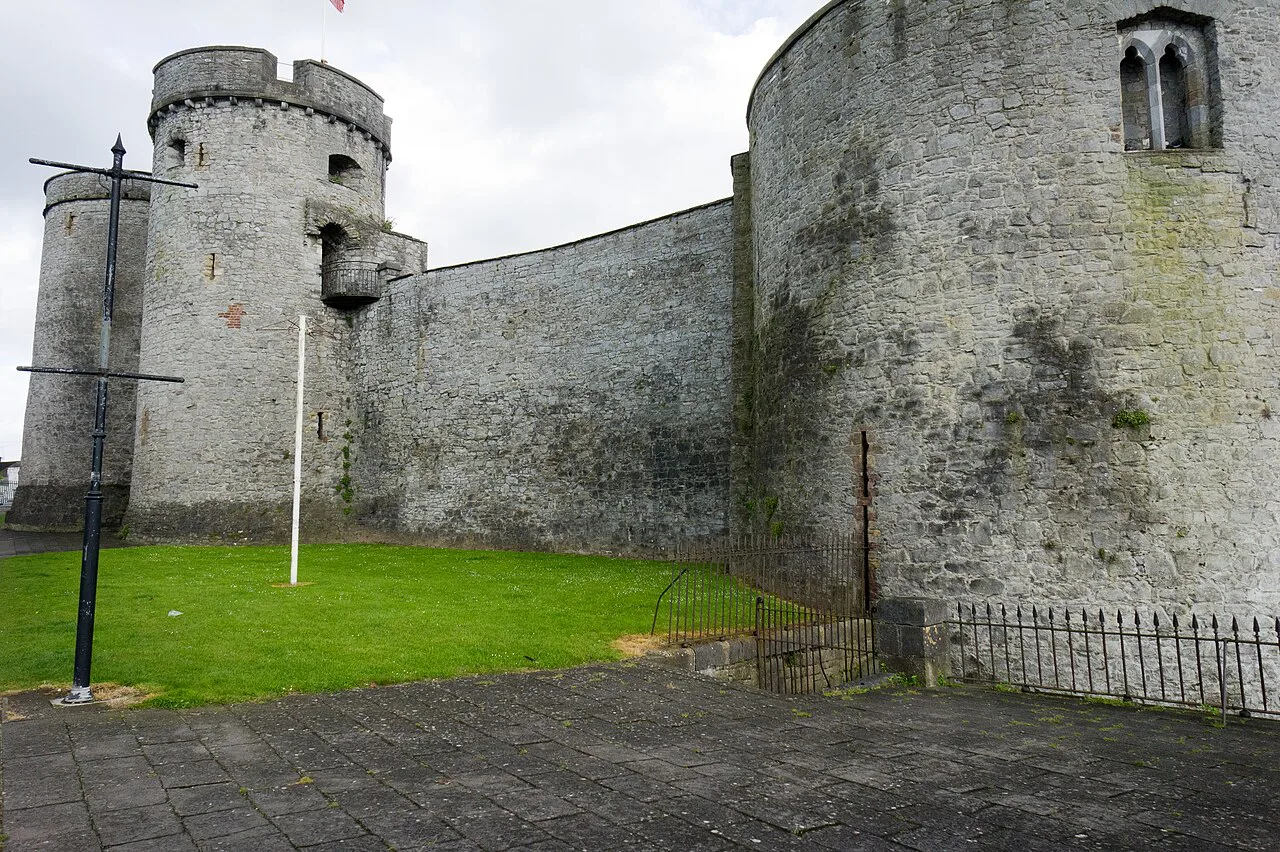
The surviving structure keeps the elements that made the fortress imposing. The heritage account of the building identifies its great gatehouse, thick curtain walls, battlements and corner towers as the features that still convey its original scale. Walk the exterior first if you can, so the gatehouse and wall line register before you go inside.
Dating is usually given as the early thirteenth century, with the fortress placed generally in the years around 1200 to 1210. The operator's own history points to 1200 as the year King John ordered construction, so treat that as the anchor date and the wider range as scholarly framing. What matters for a visitor is that you are looking at an Anglo-Norman fortress, not a later reproduction.
Siege, Damage and Repair: A Castle That Was Used
The castle was not preserved in a single frozen moment. Published summaries record repeated sieges over the centuries, especially in the seventeenth century, and those episodes left real physical damage that changed the site. That is one reason the building feels layered: you are reading years of conflict, repair and reuse, not just original medieval masonry.
For a visitor, that history rewards attention to the fabric as you move through the site, since later alterations and repairs sit alongside medieval work. The operator frames the castle's long story as one of sieges, rebellion and renewal over roughly eight centuries. Keeping that arc in mind helps explain why the interiors read as an evolving visitor experience rather than an untouched ruin.
Inside the Visit: Towers, Chambers and the Exhibition
Inside, the operator describes a route through the castle's towers and chambers that combines the medieval stronghold with modern storytelling. The exhibitions are presented as immersive, and the independent account adds that they include 3D models and computer-generated animations to carry more than 800 years of local history. Treat these as interpretive aids rather than substitutes for the building itself.
The operator also mentions a cafe serving light bites and coffee with castle views, which can help structure a break in the middle of a visit; the independent heritage account adds that the courtyard has hosted medieval-themed activities. Neither is a reason to visit on its own, but both add to the time you may want to spend on site.
River Views from the Walls: Reading the Site's Geography
The clearest way to understand why the castle mattered is to look outward from the towers. The heritage account makes the point that views from the towers take in the river, the bridges and the surrounding city, so the military logic of the site becomes immediate: control of the Shannon meant control of trade and access. That is why the castle sat inside an urban landscape rather than on an empty hill.
The operator likewise highlights panoramic views over the River Shannon from the walls and towers. Build in time to pause at the openings and match what you see to a map of King's Island. A short pause at the river-facing points will tell you more about the fortress than any single panel inside.

How Much Time to Allow
No official visit duration is published, so the following is an editorial suggestion rather than a castle recommendation. If you want to see the walls, climb into the towers and spend real time in the exhibition, allow a half day and let the river views slow you down. A rushed pass of forty minutes is possible, but you will miss the layering that makes the site interesting.
Anyone combining the castle with other stops on King's Island should treat the fortress as the anchor rather than an add-on. The nearby cathedral and the surrounding streets are part of the same medieval core, so the walk between them matters as much as each individual building. A little extra time between sites is often better spent than a longer checklist.

Practical Details: Seasonal Hours and Last Entry
The castle publishes two seasonal hour bands. From 1 October to 31 March, winter hours run 9:30am to 5pm with last entrance at 4pm. From 1 April to 30 September, summer hours run 9:30am to 6pm with last entrance at 5pm. These are the operator's published times, so confirm them on the official site before travelling in case they change.
The operator's site carries dated closure notices for 24, 25, 26 and 27 December and for 1 January, listed for the 2025–26 season, and these should not be read as covering any other date or year. The same site lists a programme of events, including Live at the Castle 2026, so check the events page for current listings and any booking details before you plan around a specific date.
Nearby in the Medieval Quarter: St Mary's Cathedral and the Old Streets
The castle stands on King's Island, and the surrounding Medieval Quarter rewards a slow walk. St Mary's Cathedral, Limerick sits nearby on King's Island and is the most obvious companion stop for a medieval-themed morning or afternoon, while Nicholas Street and the surrounding lanes preserve the shape of the old city. If you are comparing medieval cathedrals across the country, St Mary's Cathedral, Kilkenny: A Visitor's Guide makes a useful counterpart. Pairing the two makes the district legible rather than a scatter of individual buildings.
If you want more of Limerick's collections after the castle, the Hunt Museum is a natural next step for objects and art in the city, and the surrounding area has further options worth mapping out in advance. You can also browse our roundup of Limerick Attractions: 10 Visitor Guides to choose companions for the castle rather than trying to cover the whole city in one day.
Plan Your Visit
King John's Castle is best visited as a layered site: Viking ground, a fortress ordered in 1200, walls and towers shaped by siege and repair, and a modern exhibition that pulls the story together. Check the official site for the current seasonal hours and any event notices before you travel, since published times can change.
Build the castle into a walk around King's Island rather than treating it as a standalone stop, and a morning in the Medieval Quarter becomes a coherent piece of Limerick's history. Allow more time than you think you need for the walls and towers, and leave space to look out over the Shannon. For another heritage guide, read about Treaty Stone Limerick. For another heritage guide, read about Thomond Bridge Limerick.
Explore more Limerick guides
Frequently Asked Questions
Where is King John's Castle in Limerick?
It stands on King's Island in Limerick's Medieval Quarter, beside the River Shannon, at the address the operator publishes as Nicholas Street, Limerick, V95 FX25. The setting is part of the story: it is an urban riverside fortress, not a hilltop castle.
Why did King John build a castle in Limerick?
The official history says King John ordered the fortress in 1200, and the same profile explains his interest in administration, taxation and chartered privileges for towns, which made a distant outpost worth investment. The castle projected royal authority over a valuable river port on the Shannon.
What can you see inside the castle?
Visitors can move through towers and chambers, walk sections of the castle walls, and explore the exhibitions, which the operator describes as immersive. The independent account notes that the displays include 3D models and computer-generated animations alongside the surviving gatehouse, curtain walls, battlements and corner towers.
How long should a visit take?
No official duration is published. As an editorial suggestion, allow around half a day if you want time for the walls, the towers and the exhibition, and less if you are passing through. Ask staff on arrival which areas are open.
When is King John's Castle open?
The operator publishes seasonal hours: 1 October to 31 March from 9:30am to 5pm with last entrance at 4pm, and 1 April to 30 September from 9:30am to 6pm with last entrance at 5pm. Confirm on the official site before travelling, and check for event notices or closures.
What is nearby in Limerick's Medieval Quarter?
St Mary's Cathedral, Limerick is nearby on King's Island and is a natural companion stop, and the streets around Nicholas Street preserve the shape of the old city. The Hunt Museum is another option if you want more of Limerick's collections after the castle.