
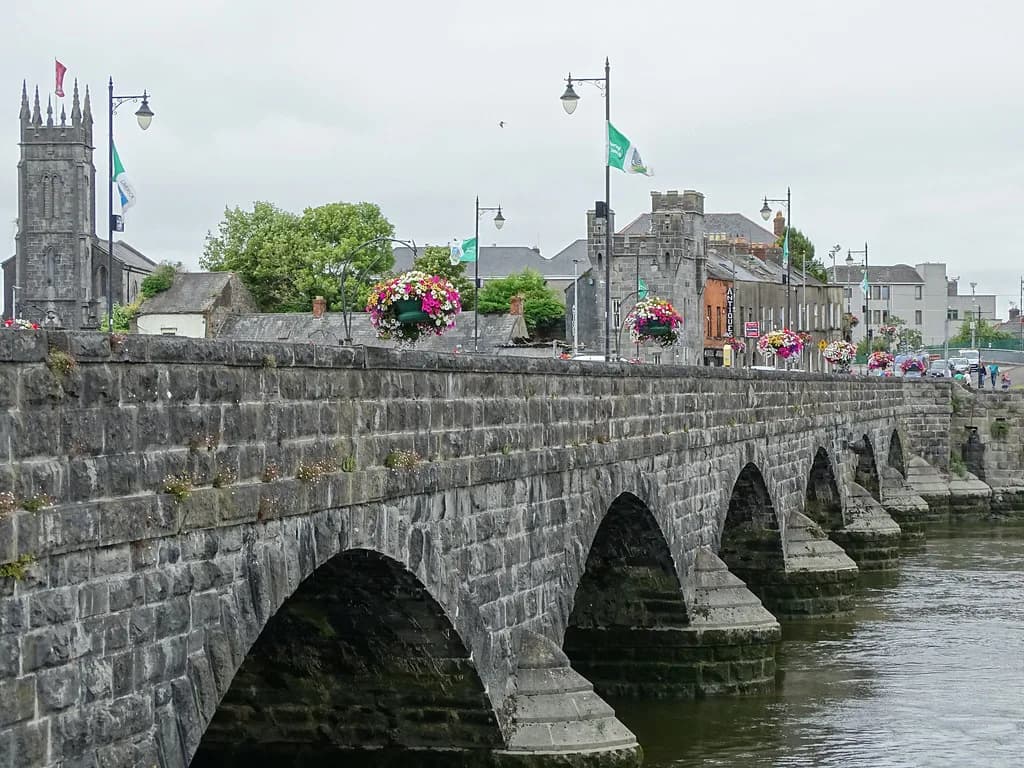
Thomond Bridge, Limerick: The Historic Shannon Crossing
Thomond Bridge is the historic crossing of the River Shannon at the western edge of Limerick's medieval quarter, joining the Clare bank with the streets that lead toward King John's Castle. The structure you walk across today was completed in 1840, but it stands in a line of crossings that the city's own visitor guide traces back to the late twelfth century. It is a piece of streetscape rather than a ticketed attraction, so the reward is in the crossing itself, the river views and the monuments grouped at either end.
This guide sticks to what Limerick City and County Council publishes about the bridge, its predecessors and the landmarks beside it. It separates the 1840 bridge from the earlier structures it replaced, treats the Treaty Stone story as tradition rather than settled fact, and flags where you need to check current arrangements, such as at the gallery or the castle, rather than assume them.
Where Thomond Bridge Sits in Limerick
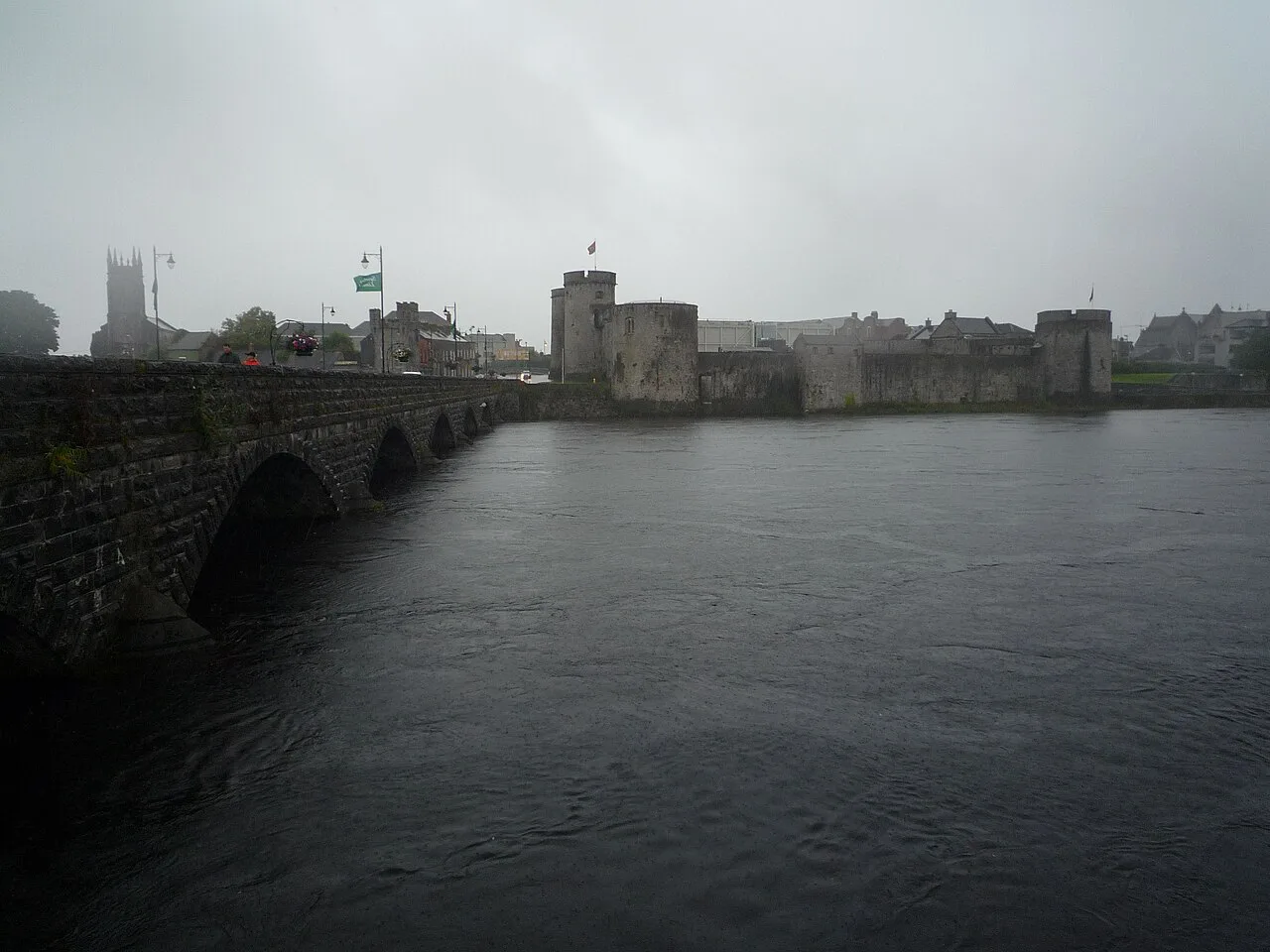
The bridge spans the Shannon on the north-west side of the historic core, connecting the Clare side of the river with the ground approaching King John's Castle. The castle occupies the southern tip of King's Island, and the city guide's walking route treats the bridge as the link between the Clare bank and that early medieval settlement. Crossing it on foot puts you directly into the medieval quarter rather than on a separate excursion.
As route context, the council's self-guided tour comes to the bridge after the Treaty Stone and before the castle, so the crossing works as a hinge between the riverbank and the walled-city sights. The tour is a suggested sequence, not a fixed itinerary, and the bridge has no gate, desk or timed entry described in the source. Treat it as part of the city's streetscape and build your own order around it rather than following a schedule.

A Crossing With Deep Roots
The council's walking tour describes Thomond Bridge as the oldest bridge in Limerick City, erected around 1185 and rebuilt several times over the centuries. At one stage it was the only bridge across the Shannon, which explains why the crossing point carried so much of the city's traffic and why its survival mattered strategically as well as practically. Those details come from the city's heritage account rather than from independent engineering records.
The same source notes that the walls of Limerick came down in the 1760s, allowing the city to spread south of the medieval core into the Georgian grid of Newtown Pery. That shift helps explain why this northern crossing, once the city's lifeline, now sits at the quieter medieval edge rather than at the centre of modern Limerick. Reading the bridge against that expansion gives the crossing more meaning than a quick photo stop.

The Bridge You See Today
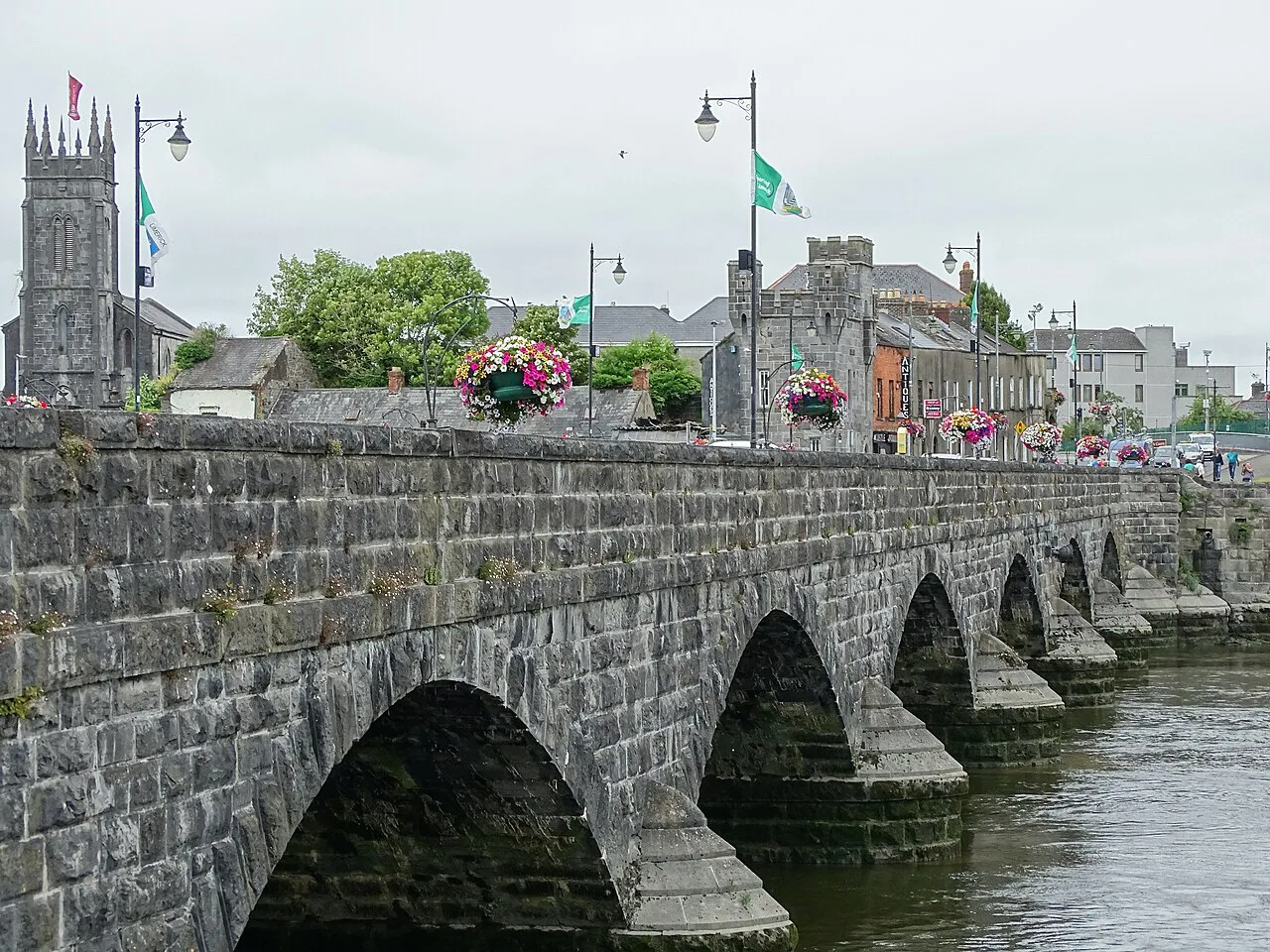
The present bridge was completed in 1840, and the city guide attributes its design to the Pain Brothers, the architects also credited there with Limerick's County Courthouse and Custom House. A toll house stands with the bridge, a reminder that crossing the Shannon was once a charged transaction rather than a free right of way. Beyond those points, the published account is thin, so it is better to observe the structure than to repeat unverified claims about its materials or span.
Do not confuse the 1840 bridge with the medieval crossing: the earlier versions were replaced, so nothing you walk on today is the twelfth-century structure. The value of the site lies in the continuity of the crossing point rather than in surviving medieval fabric. Knowing that distinction keeps a visit honest and makes the bridge's modest appearance easier to read.
Seeing an Earlier Bridge in Limerick's Collection
Limerick City Gallery of Art holds an anonymous oil painting titled Old Thomond Bridge, catalogued as most likely from the early nineteenth century, which shows a predecessor rather than the 1840 structure. The gallery's own note explains that the work spent decades stored in a corporation office before returning to the collection at Pery Square, where cleaning and repair revealed a finely composed painting rather than a mere topographical record. It is one of the collection's quieter treasures, and worth seeking out if you want a visual sense of what the older crossing looked like.
The painting is a useful corrective to the assumption that today's bridge is simply an old structure left in place. It records a crossing that no longer exists, and the gallery text is careful to describe the work as likely early nineteenth century rather than fixed to a precise date or artist. Check the gallery's current displays before travelling specifically for it, since hanging arrangements change.
The Clare End and the Treaty Stone
At the Clare end of Thomond Bridge stands the Treaty Stone, the rock that, according to tradition, was the spot where the Treaty of Limerick was signed on 3 October 1691, marking the city's surrender to William of Orange. The city's heritage page is careful to frame the signing as tradition, and notes that the stone rested elsewhere for some years, opposite its present site, near where the old Ennis mail coach departed. Presenting it that way keeps the story vivid without overstating what is documented.
The stone has sat on its plinth since 1865, when the pedestal was erected by John Richard Tinsley, then mayor of the city. That Victorian framing is part of what visitors actually see: a monument staged for nineteenth-century civic memory as much as a relic of the seventeenth-century treaty. The Treaty Stone is also the subject of its own visitor guide if you want to read the landmark in more depth.
Viewpoints and What to Notice
Standing on the bridge, the relationship between the river and the medieval quarter becomes clear: the castle sits on King's Island nearby, the Treaty Stone stands at the Clare end of the crossing, and the bridge reads as the seam between the two banks of the historic city. The city guide also notes the North Munster Masonic Centre as you pass over the bridge; it describes tours there as pre-arranged, so do not expect an open door. Similarly, the nearby Bard of Thomond statue commemorates the poet Michael Hogan, born in Thomondgate in 1832.
Allow a short pause at each end rather than a long stop on the bridge itself, which is a working crossing rather than a viewing platform. Early mornings or quieter hours give the best chance of an uninterrupted view toward the castle, and the Treaty Stone plinth on the Clare side is the natural place to finish. Beyond that, the streets of the medieval quarter reward a slow walk toward the cathedral and the castle grounds.
Nearby Sights for Context
King John's Castle, on the island just beyond the bridge, is described in the city guide as open daily all year, with exposed archaeology in the undercroft, courtyard and fortification tours, and exhibitions on the castle's archaeology and Georgian Limerick. Those arrangements can change with the season, so confirm current opening before planning around them. The castle is the most substantial single sight within a short walk of the crossing.
Further into the medieval quarter, St Mary's Cathedral on Bridge Street was founded in 1168 on a site donated by Donal Mór O'Brien, King of Munster, and the city guide calls it the oldest building in Limerick still in use for its original purpose. If you are comparing cathedral visits across the region, St Mary's Cathedral, Kilkenny: A Visitor's Guide covers the same kind of stop elsewhere. Bishop's Palace on Castle Street, an eighteenth-century building once home to the city's Protestant bishops, now houses Limerick Civic Trust and the Carrol Collection of family memorabilia. Both are within easy walking distance and give the bridge's setting its texture.
For a wider set of indoor collections in the same compact city, Limerick Museum on Henry Street holds nearly 60,000 objects spanning Stone Age axes to medieval coins, and the Hunt Museum is another option for those building a museum day around the medieval core. If the weather turns, these give the bridge excursion somewhere to retreat to without leaving the historic centre.
Practical Framing for a Bridge Visit
No published source gives opening hours, admission charges or guided tours specific to Thomond Bridge itself, which fits its character as part of the public streetscape rather than a managed site. Check the council's visitor pages for any current notices if you plan to combine the crossing with specific sights, and treat everything else as a walk rather than a booking. The bridge is best understood as a waypoint on a longer stroll through the medieval quarter, not a destination with a turnstile.
A sensible structure is to start at the Treaty Stone on the Clare side, cross toward the castle, and finish with the cathedral and Bishop's Palace streets. That order keeps the river views in front of you and ends among the densest medieval fabric in the city. Allow roughly an hour for the bridge and immediate surroundings, more if you add the castle or a gallery stop.
Plan Your Visit
Thomond Bridge rewards travellers who treat it as a piece of living history rather than a monument to tick off: the 1840 structure is modest, but the crossing point carries centuries of the city's story. Pair it with the Treaty Stone at the Clare end and the medieval streets around King John's Castle for a compact, coherent walk. Check current arrangements at the gallery and castle before travelling specifically for a collection or exhibition. For more on the city's sights, see Limerick Attractions: 10 Visitor Guides.
Explore more Limerick guides
Frequently Asked Questions
What is Thomond Bridge and where is it in Limerick?
Thomond Bridge is the historic crossing of the River Shannon on the north-west side of Limerick's medieval quarter, linking the Clare bank with the ground approaching King John's Castle on King's Island. The present structure dates from the nineteenth century, but the city's visitor guide traces the crossing point back much further. It forms part of the public streetscape rather than a ticketed attraction.
How old is Thomond Bridge?
Limerick City and County Council's self-guided walking tour describes the bridge as Limerick's oldest, erected around 1185 and rebuilt several times since. The structure standing today was completed in 1840, so the age of the crossing point and the age of the visible bridge are different things. The council attributes the 1840 design to the Pain Brothers.
What happened to the earlier bridge?
The city guide records repeated rebuilding over the centuries, with the present structure completed in 1840. An anonymous early nineteenth-century painting titled Old Thomond Bridge, held by Limerick City Gallery of Art, shows a predecessor rather than the current bridge. The painting spent decades in storage before conservation revealed its quality.
Where is the Treaty Stone in relation to Thomond Bridge?
The Treaty Stone stands at the Clare end of Thomond Bridge, on a plinth erected in 1865 by mayor John Richard Tinsley. According to tradition, the Treaty of Limerick was signed on the stone on 3 October 1691, though the city's heritage page presents that as tradition rather than settled fact. It is a short walk from the bridge itself.
Can you see the old Thomond Bridge in a painting in Limerick?
Yes, Limerick City Gallery of Art holds the anonymous painting Old Thomond Bridge, catalogued as likely early nineteenth century. It depicts an earlier crossing, not the 1840 bridge, and the gallery notes its decades in storage and subsequent conservation. Check current displays before travelling specifically for it, since hanging arrangements change.
What else can you see near Thomond Bridge?
Within a short walk are King John's Castle on King's Island, St Mary's Cathedral on Bridge Street and Bishop's Palace on Castle Street, along with the Bard of Thomond statue nearby. The city guide describes the castle as open daily all year, though arrangements can change seasonally. Limerick Museum and the Hunt Museum offer indoor options in the wider city centre.