
People's Park, Limerick: Monuments, Planting and the Pery Square Setting
People's Park is the historic town park at Pery Square in Georgian Limerick. Limerick.ie calls it the principal park in the city, and it opened formally to the public in 1877 after beginning life as a private garden for the surrounding Georgian houses.
It is compact enough to fold into a city-centre walk rather than a separate outing, and it sits beside two indoor stops: Limerick City Gallery of Art and the People's Museum of Limerick. This guide covers what is inside the park, what the monuments and planting tell you about its history, and where its edges meet the rest of the Georgian grid.
Where People's Park Sits
The park occupies Pery Square within Newtown Pery, the Georgian grid laid out south of Limerick's medieval core. Discover Ireland places it in the heart of Georgian Limerick and notes its limestone triumphal arch entrance, a useful landmark when you approach from O'Connell Street or the Pery Square terraces. The council's self-guided walking tour begins here at Pery Square, so the arch is also where its route starts.
The setting is the point: some of Ireland's finest Georgian townhouses line Pery Square, and Limerick.ie's walking-tour page describes the Newtown Pery terraces as the largest collection of Georgian townhouses in Ireland outside Dublin. Original street furniture survives in the Newtown Pery area, down to door knockers, boot scrapers and fanlights, so the walk to the railings is part of the visit. If the terraces tempt you to explore further, the Limerick Neighborhoods guide covers the surrounding districts.
Plan on arriving on foot: the council describes Limerick as a compact city that is easy to get around on foot or by its TFI Bikes rental service, and Pery Square sits within that walkable centre. For orientation across the wider city and its districts, compare the area guides to Limerick before fixing your route.

From Key-Holders' Garden to Public Park
The park's origins explain why it feels like a residents' garden rather than a purpose-built civic park. Limerick.ie's walking tour describes a town park developed by the Pery Square Tontine Company and dedicated to Richard Russell, a prominent local businessman, originally open only to key-holders from the surrounding Georgian houses. The council's park profile instead records the opening in 1877 as being in memory of Russell, so the exact nature of the dedication is best read across both council pages.
It became public ground in 1877, and the walking-tour page gives the precise date: 20 August 1877, when The Park at Pery Square became known as People's Park. The council's park profile simply records the park as formally opened in 1877 in memory of Richard Russell.
Discover Ireland frames the transfer differently, describing the park as gifted to the city by the Earl of Limerick at its 1877 opening. Read the two 1877 accounts side by side rather than forcing them into one story: what is consistent is the year and the park's Georgian residential origins.

Monuments Inside the Railings
Standing in the middle of the park is a free-standing limestone column erected in 1829 and topped with a statue of Thomas Spring Rice, MP for the city from 1820 to 1832. The column predates the public park, which is a reminder that the ground has been part of Limerick's civic life for longer than its 1877 opening suggests.
Nearby is the Little Angels Children's Remembrance Memorial, unveiled in 2002 in memory of forgotten children and deceased infants, with bronze footprints on top. It is a modern addition to a Victorian park, and a quiet, easy element to miss if you only walk the perimeter.
In Pery Square itself, just outside the park, look for the Tait Clock of about 1867, a Gothic Revival tower honouring a former mayor of Limerick, and the Limerick Military Memorial designed in 1960 for the dead of both World Wars. Treat these as square-side features seen before or after the park rather than within it.
Victorian Features That Survive
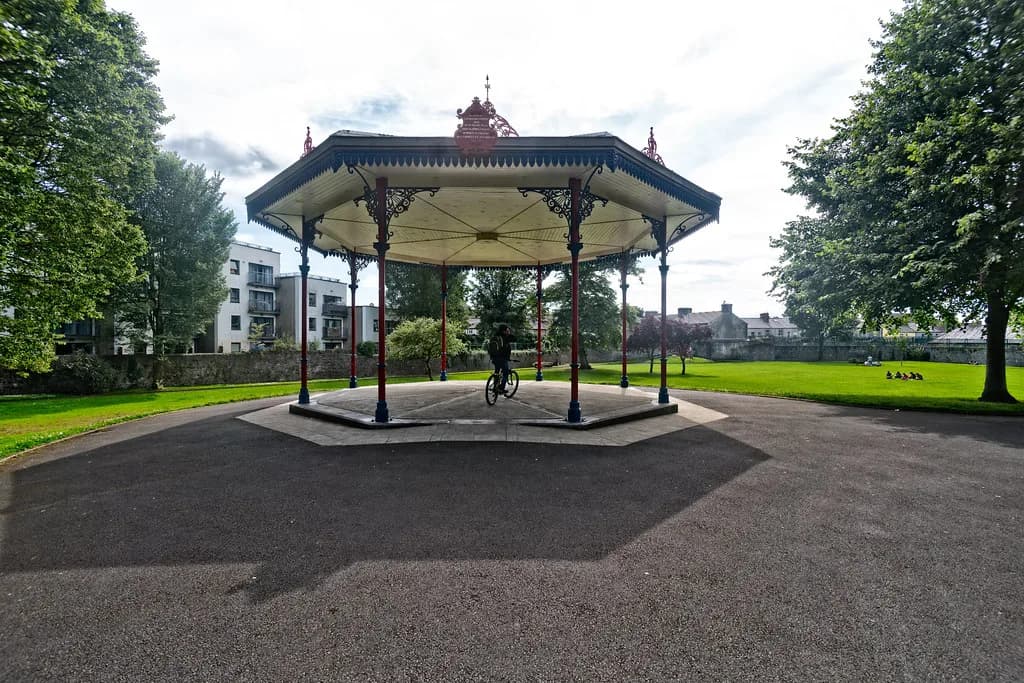
Several dated features survive inside the park and are worth identifying as you walk. The bandstand was erected in 1895, the park kiosk dates from about 1917, and two gazebos stand among the lawns; the council's park profile lists a bandstand and two park shelters among the items of interest.
The ornate drinking fountain has been refurbished and forms part of the park's furniture. Discover Ireland goes further and calls the Richard Russell fountain the only one of its kind in Ireland; that claim comes from the tourism board rather than the council, so treat it as an attributed description instead of settled fact.
These are small-scale monuments, so a monument-by-monument read takes longer than a circuit of the lawns. If you want the full Victorian set, allow a little extra time to locate each one rather than treating the park as a pass-through between streets.
Planting and Seasonal Character
The park holds a large selection of mature deciduous and evergreen trees. Limerick.ie lists ash, beech, birch, elm, lime, plane, horse chestnut, walnut, oak, willow and whitebeam, which gives you a simple way to identify specimens as you walk.
The same council page notes a summer display of flowers, while Discover Ireland describes colour from spring until autumn along with rosebushes, lawns and flowering trees. Treat both as seasonal character rather than a bloom calendar, since the timing of flowering shifts with the weather each year.
For a short visit, the planting is best appreciated slowly: pick one bench or lawn edge and compare the leaf shapes and bark of a few named species. The park's mature canopy is also what gives a compact Georgian square its sense of shade and depth.
The Fully Inclusive Playground
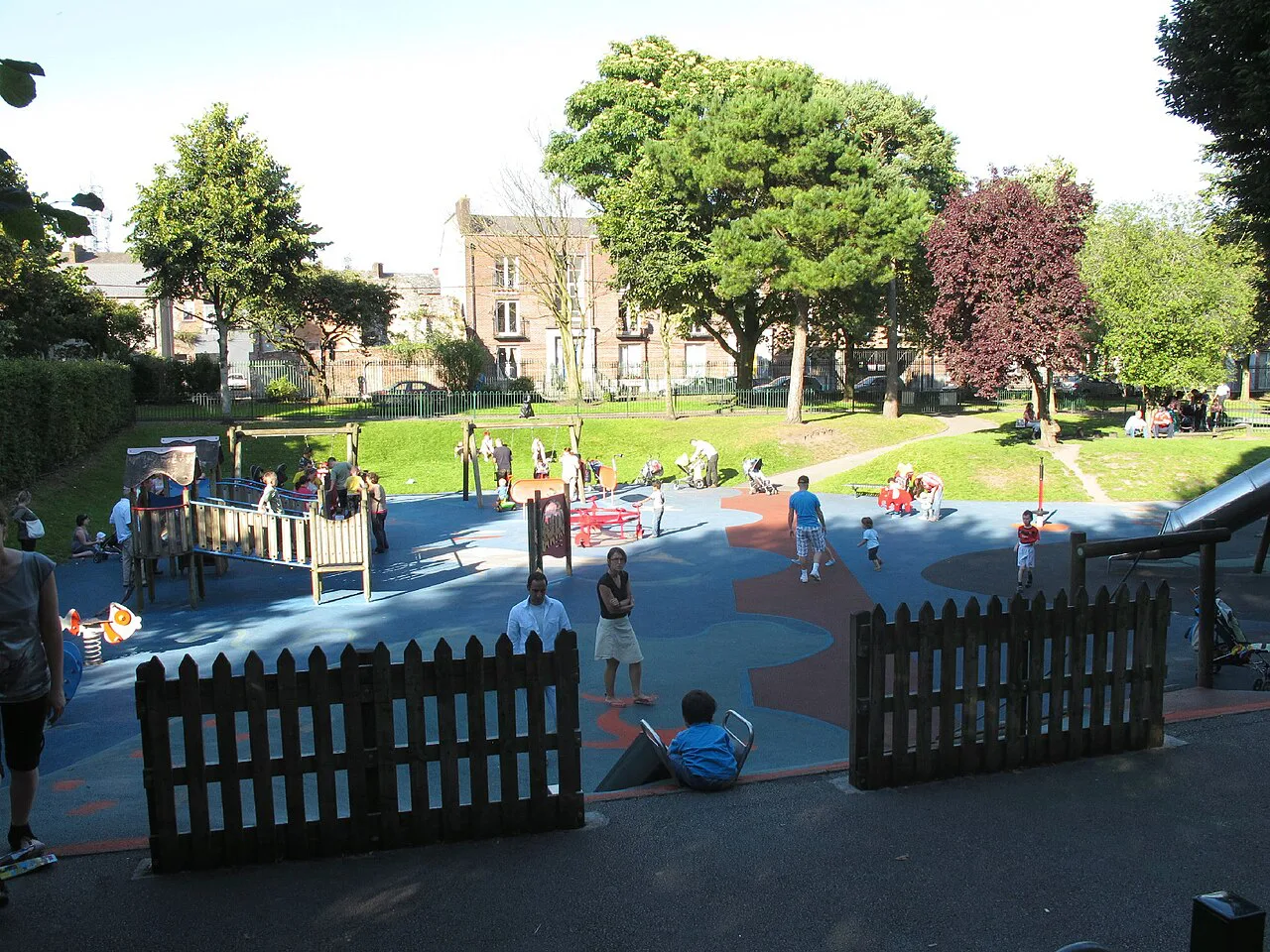
The playground inside the park is Limerick City's first fully inclusive playground, designed so children of all abilities can play together. Limerick.ie lists a wheelchair-accessible roundabout, trampoline and sand digger, a wide embankment slide that lets a child and caregiver slide together, and swings with bucket seats and harnesses.
The same page describes a sensory garden with games and musical panels, a storytelling space, and an adventure trail on the embankment. The council's park profile mentions a playground suited to toddlers up to about ten years old, which is useful when deciding how much of your visit to give it.
Families should build the playground into the middle of the walk rather than the end, since a play stop can absorb an indefinite amount of time. Combine it with the lawns and gazebos so the adults have somewhere to sit nearby.
Around the Edges: Gallery, Museum and City Walk
Two adjoining indoor options sit just beyond the railings. The Carnegie building of 1903 next to People's Park houses Limerick City Gallery of Art, which Limerick.ie's walking tour says is open daily and free, with a permanent collection including works by Sean Keating and Jack B Yeats. Treat that daily-and-free note as applying to the gallery, not the park, and pair the park with a look at the gallery for a natural half-day in Georgian Limerick.
Opposite the gallery at No. 2 Pery Square is the People's Museum of Limerick, in one of a terrace of houses built about 1830 by the Pery Square Tontine Company. Limerick.ie describes the museum as showing the eclectic collection held by Limerick Civic Trust; check its opening arrangements before you build it into a park visit, and see the museums guide to Limerick for more of the city's collections.
The wider city adds further stops of the same kind. The Hunt Museum in the former Custom House displays the collections of John and Gertrude Hunt, with free volunteer-led guided tours according to Limerick.ie, and King John's Castle on King's Island covers the medieval city from its courtyard and exhibitions.
The council's own route treats People's Park as one stop on a self-guided walk that begins at Pery Square and continues via O'Connell Street, Sarsfield Bridge and the medieval quarter. Use the city's attractions overview to see how the park fits alongside the castle, cathedral and museum stops.
How Much Time to Allow
For a park-only stop, a stroll around the lawns and a look at the bandstand and fountain is the basic circuit. Add time for the Spring Rice column and Little Angels memorial if you want to read the monuments, and considerably more if children want the playground.
The trade-off runs the other way too: because the park adjoins the gallery and museum, it is easy to give it a rushed five minutes on the way to somewhere else. If you specifically want the Victorian features and the planting, treat the park as a destination in its own right and let the adjoining sights wait.
The most rewarding approach is as one link in a longer city walk. Start at Pery Square for the Georgian streetscape, cross into the park for the monuments and planting, then continue along O'Connell Street or down towards the medieval quarter by the river. If you want to compare how the Georgian quarter sits against the city's other districts before committing to a route, the Limerick Neighborhoods guide is a useful second read. For the medieval side of the same route, the museums in limerick guide maps the core collections.
Before You Set Out
The council's park profile and Discover Ireland both describe the park without publishing a general opening schedule or an admission charge. Confirm current access and any temporary notices on Limerick.ie before you travel, particularly if the playground is the main reason for the visit.
Treat the park as a short, purposeful stop within a Georgian Limerick walk: the square, the monuments, the planting and an adjoining gallery or museum make a coherent half-day without rushing. For the wider medieval layer of the city, including the cathedral on Bridge Street, the adjacent sights reward the extra walking.
Explore more Limerick guides
Frequently Asked Questions
Is People's Park in Limerick free to visit?
The park's public grounds are a local authority park and no admission charge is mentioned in the council's park profile or in Discover Ireland's description. The sources also give no general opening hours, so check Limerick.ie for current access details before you go.
How long should I spend at People's Park?
Allow around half an hour for a circuit of the lawns, bandstand and fountain, more if you want to identify the Spring Rice column and the Little Angels memorial. Families using the inclusive playground usually need considerably longer, so decide in advance which element matters most.
What is there to see inside People's Park?
Look for the limestone column to Thomas Spring Rice erected in 1829, the bandstand of 1895, the park kiosk of about 1917, two gazebos and the refurbished drinking fountain. The Little Angels Children's Remembrance Memorial was unveiled in 2002, and the playground is fully inclusive.
Why is the park associated with Richard Russell?
Limerick.ie's park profile records the park as opened in 1877 in memory of Richard Russell, a prominent local businessman, while the walking-tour page describes it as developed by the Pery Square Tontine Company and dedicated to him. Discover Ireland instead describes the park as gifted to the city by the Earl of Limerick, so the associations are best read together.
Is the playground at People's Park suitable for children with disabilities?
The council describes it as Limerick City's first fully inclusive playground, with a wheelchair-accessible roundabout, trampoline and sand digger, harness and bucket swings, a wide embankment slide and a sensory area. The park profile separately mentions a playground for toddlers up to about ten, but the sources do not set an age range for the inclusive equipment itself.
What else is within walking distance of People's Park?
Limerick City Gallery of Art adjoins the park in the 1903 Carnegie building and is described by Limerick.ie as free and open daily, and the People's Museum of Limerick sits opposite at No. 2 Pery Square. Continue on foot for O'Connell Street, the Hunt Museum and, across the river, King John's Castle.