
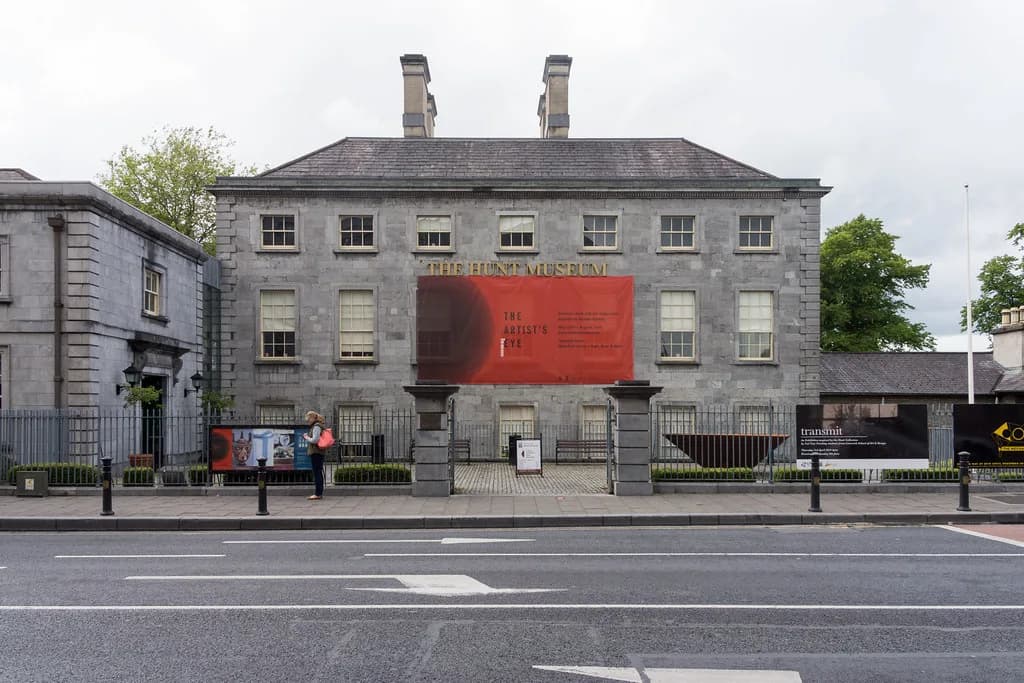
Hunt Museum, Limerick: What to See at the Custom House
The Hunt Museum is at the Custom House, Rutland Street, Limerick City, where it displays a private collection of art and antiquities assembled by John and Gertrude Hunt. The range runs from Neolithic flints and Bronze Age metalwork to medieval sculpture and painting, decorative arts and works by named modern artists. Because the material is dense rather than sprawling, a little planning about what you want to see matters more here than at a large national museum.
Where the Museum Is and How to Approach It
The published address is the Custom House on Rutland Street in Limerick City, a riverside location that puts the museum in the older civic quarter rather than in a suburban park. Arriving on foot through the city centre, treat Rutland Street as your anchor and look for the Custom House building rather than a purpose-built museum block. This is also a useful base for a wider day in Limerick, and our Limerick Attractions: 10 Visitor Guides covers the surrounding places in more depth.
The Custom House sits on the banks of the River Shannon, which shapes the approach: you are arriving at a historic waterfront building, not a gallery set back in a garden. That matters for orientation, because the building itself is part of what you are visiting, and the riverside position explains why several other historic sights cluster in the same part of the city. If you are building a walking day around the river, sequence the museum with those neighbours rather than treating it as an isolated stop.
Why the Collection Exists
The museum reflects the tastes of the two people who formed the collection, John and Gertrude Hunt, and the displays follow their interests rather than a strict chronological march through art history. That is the single most useful thing to know before you go in: expect medieval religious material to sit near archaeological finds and international antiquities. Once you accept that logic, the collection reads as a portrait of two collectors rather than a textbook survey.
Because the strength of the museum lies in what the Hunts chose to gather, it rewards visitors who pick a thread and follow it instead of trying to see everything with equal attention. If medieval religious art interests you, give it the bulk of your time and treat the rest as context; if archaeological material is your priority, work backwards from the Irish pieces. The collection is described by Limerick.ie as reflecting the diverse tastes and interests of the founders, which is a fair warning that the displays jump between cultures and periods.

Irish Archaeology and the Medieval Core
For visitors interested in Ireland's own past, the archaeological material is the place to start. The collection includes Neolithic flints and Bronze Age objects, and Limerick.ie specifically names a Bronze Age shield and cauldron among the holdings. These are the kind of pieces that reward slow looking: metalwork of this kind carries evidence of craft and deposition that is easy to walk past if you are moving quickly through a case.
The medieval material is the other core strength. Limerick.ie describes a unique ninth-century Antrim Cross, alongside stone and wood statues, painted panels, jewellery, enamels, ivories, ceramics, crystal and crucifixes. The mix of scale is part of the appeal: monumental carved figures and small personal objects sit in the same collection, so pace yourself between the two rather than treating the medieval rooms as a single sweep.
International Antiquities and Decorative Arts
Beyond Ireland, the collection holds artefacts from Greece, Rome, Egypt and the Olmec civilisation, which gives the museum a reach well beyond its regional setting. For a visitor used to Irish material in Irish museums, this is the section that most clearly explains why the Hunt collection is distinctive. It also makes the museum a useful complement to the city's other collections rather than a repeat of them.
The decorative arts cover silver, glass and ceramics of the eighteenth and nineteenth centuries, and the collection also includes works by Pablo Picasso, Pierre Auguste Renoir, Roderic O'Conor, Jack B. Yeats, Robert Fagan and Henry Moore. The presence of Yeats and O'Conor gives Irish painting a foothold, while the European names show the collectors' wider buying interests. Go looking for the painters you already know, then let the decorative arts fill the gaps between them.
Practical Details: Hours, Admission and On-Site Facilities
The Limerick.ie listing carries a published operational notice of Sunday 11am to 5pm, closed Monday, with adult admission at €10. The page does not disclose the date of that notice, and no source supplies other weekday hours, holiday arrangements, last admission times or concession prices. Treat those lines as the museum's published information rather than a confirmed current schedule, and check directly before travelling, particularly on a Monday.
Inside, Limerick.ie mentions a purpose-built exhibition gallery used for temporary shows, plus a café and a gift shop on site. It does not publish details of what is currently on display in the gallery, so if a particular exhibition is your reason for visiting, confirm it is running before you set out. The permanent collection alone justifies the trip; the temporary gallery is a bonus rather than the core.
There is no sourced information on step-free access, lifts, photography rules or group bookings, so raise those questions with the museum directly if they affect your plans. The same Limerick.ie page refers to the Discover Limerick Pass as an option covering several city attractions, but whether it suits you depends on how many of those sites you intend to visit, so compare the pass cost against the individual admissions you actually plan to pay.
How Long to Allow
A focused visit built around the medieval material or the Irish archaeology can be done in a compact block, while anyone wanting to work through the international antiquities, the decorative arts and the named paintings should set aside considerably more time. The collection is concentrated rather than spread across a long circuit, so fatigue comes from looking rather than from covering ground. Decide before you enter whether this is a highlights visit or a full collection visit.
Choose your priorities in advance. If the Antrim Cross and the Bronze Age metalwork are the draw, go to those first while your attention is fresh; if you are more interested in the paintings, reverse the order. Save the decorative arts for the end, when a slower pace through cases of silver, glass and ceramics suits tired legs better than close reading of small medieval carvings.
Nearby Places to Plan Separately
Several city sights sit in the same broader riverside area, including King John's Castle, the Treaty Stone and St Mary's Cathedral, with Limerick City Museum beside the castle and the Milk Market elsewhere in the centre. These are separate places with their own arrangements, and no source consulted here gives their distances from the museum or their hours, so plan each one individually rather than assuming they can be bundled into a single short stop. King John's Castle, Limerick and St Mary's Cathedral, Limerick both reward a dedicated visit, and if you are weighing another cathedral stop, this Kilkenny heritage guide to St Mary's Cathedral, Kilkenny covers the same kind of decision.
For the wider picture of what else the city holds, including the city museum and the gallery, use the Limerick Neighborhoods guide to work out which streets and quarters you want to cover on foot. The advantage of the Custom House location is that you can pair the museum with a riverside walk and one or two adjacent sights without committing the whole day to a single building.
Mistakes Worth Avoiding
The most common misstep is treating the Hunt Museum as a brief rainy-day shelter and seeing only whichever cases catch your eye first. The medieval collection, the archaeological material and the international pieces are the sections that explain why the collection matters, and skipping them means missing its core. Give it a proper slot rather than an hour grabbed between other stops.
The second is assuming that published hours are current. The €10 adult rate and the Sunday 11am to 5pm line come from the Limerick.ie listing, which does not date its notice, so confirm before you travel and do not build a day around a Monday opening. The third is rushing the medieval rooms: the carved statues, painted panels and small ivories are the kind of objects that only make sense when you slow down.
Plan Your Visit
The Hunt Museum suits a traveller who wants a concentrated, idiosyncratic collection in a historic riverside building rather than a comprehensive national survey. Go with a priority in mind, whether that is the Antrim Cross, the Bronze Age metalwork, the medieval carvings or the named painters, and let the rest of the collection fill in around it. Confirm the published hours and adult admission with the museum before you set out, then plan the neighbouring riverside sights as separate stops.
Explore more Limerick guides
Frequently Asked Questions
Where exactly is the Hunt Museum in Limerick?
It is at the Custom House, Rutland Street, Limerick City, on the bank of the River Shannon in the older civic quarter. The address is published on the Limerick.ie listing. Several other historic sights sit in the same part of the city, but plan each of them as its own visit rather than assuming they can be combined in one short stop.
What kind of collection does the Hunt Museum hold?
It holds a private collection of art and antiquities assembled by John and Gertrude Hunt: Irish archaeological material including Neolithic flints and Bronze Age objects, medieval stone and wood statues, painted panels, jewellery, enamels, ivories, ceramics, crystal and crucifixes, antiquities from Greece, Rome, Egypt and the Olmec civilisation, eighteenth and nineteenth century decorative arts, and works by named European and Irish artists including Picasso, Renoir, O'Conor, Yeats, Fagan and Moore.
Who were John and Gertrude Hunt?
They are the collectors whose interests shaped the museum's holdings, and the displays are organised around their tastes rather than a strict chronology. The official listings describe the collection as reflecting the two founders and their wide-ranging interests, which is why medieval religious material sits near archaeological finds and international antiquities.
How much does it cost to visit the Hunt Museum?
The Limerick.ie listing publishes an adult admission rate in an operational notice, but the page does not date that notice and gives no concession or family pricing, so the figure should not be relied on as current. Check the current admission and any published price list with the museum directly before travelling, and compare any multi-attraction pass against the individual tickets you actually expect to buy.
What are the Hunt Museum's opening hours?
The Limerick.ie listing publishes Sunday 11am to 5pm and states that the museum is closed on Monday. No other weekday hours, holiday arrangements or last admission times are given, and the notice is undated, so confirm the schedule directly before you travel rather than relying on the published line alone.
How long should I spend at the Hunt Museum?
Allow a short focused visit if you are targeting the medieval material or the Irish archaeology, and considerably longer if you also want the international antiquities, decorative arts and named paintings. The museum is concentrated rather than spread across a long circuit, so the limit is attention rather than walking distance. Decide your priorities before entering.
Is the Hunt Museum worth visiting for Irish archaeology?
Yes, if Irish archaeological material is your interest: the collection includes Neolithic flints and Bronze Age objects, with a Bronze Age shield and cauldron specifically named by Limerick.ie, plus medieval Irish material including the Antrim Cross. Go to those pieces first while your attention is fresh, then move on to the international and decorative collections.
What else is near the Hunt Museum in Limerick?
King John's Castle, the Treaty Stone, St Mary's Cathedral, Limerick City Museum and the Milk Market are all in the city and worth planning separately. No distances, walking times or opening hours for those places are confirmed here, so check each one's own arrangements before building a walking day around the museum.