
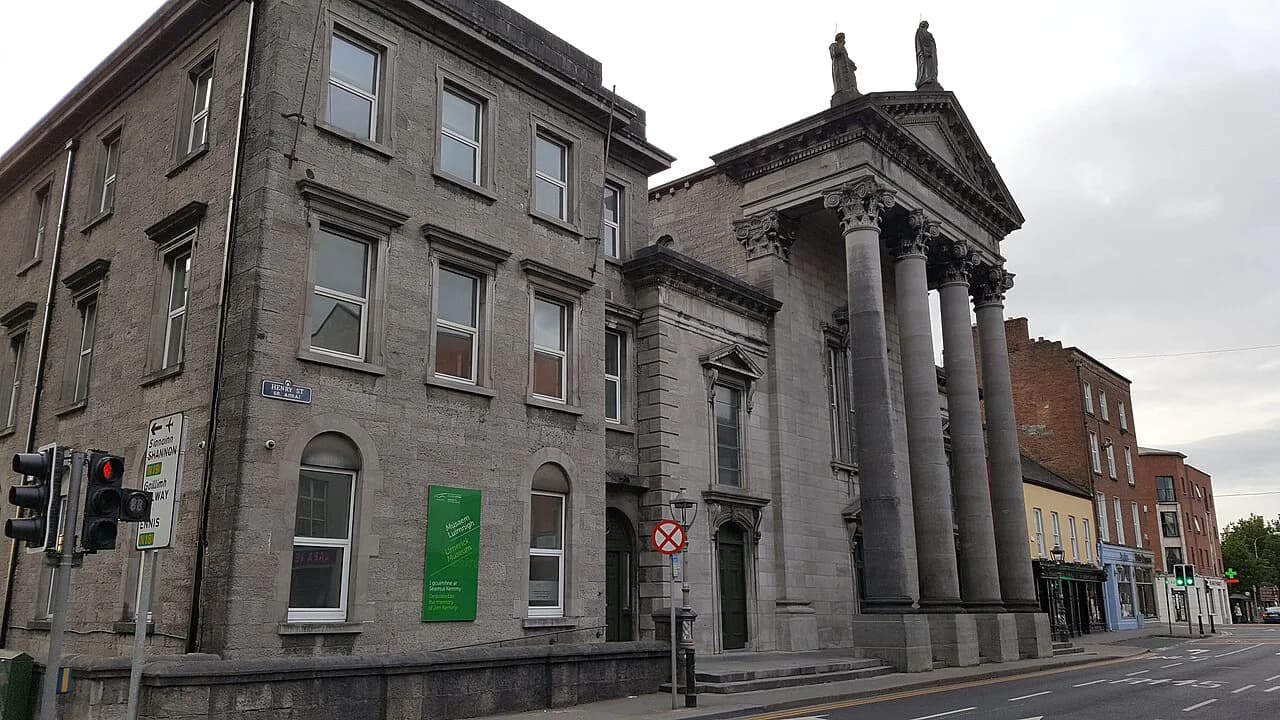
Limerick Museum at the Old Franciscan Friary, Henry Street

Limerick Museum is the city's own museum, housed in the former Franciscan friary on Henry Street in the centre of Limerick. It is free to enter, and its displays use objects to tell the story of Limerick city and county rather than to assemble a national collection. That focus makes it a useful first stop before walking the older streets around it.
A visit fits easily into a day: the museum sits under five minutes on foot from the Tourist Office and O'Connell Street, and about fifteen minutes from the rail and bus station, per the operator. The galleries reward slower reading than the modest scale might suggest, because individual pieces connect to specific episodes in Limerick's past.
Where Limerick Museum Is
The address is The Old Franciscan Friary, Henry Street, Limerick, V94 C7W1. The building has been the museum's home since 30 May 2017, when the collection moved from Istabraq Hall on Merchant's Quay into the former friary. That matters for anyone working from an older map or guidebook, which may still point to one of the museum's earlier addresses.
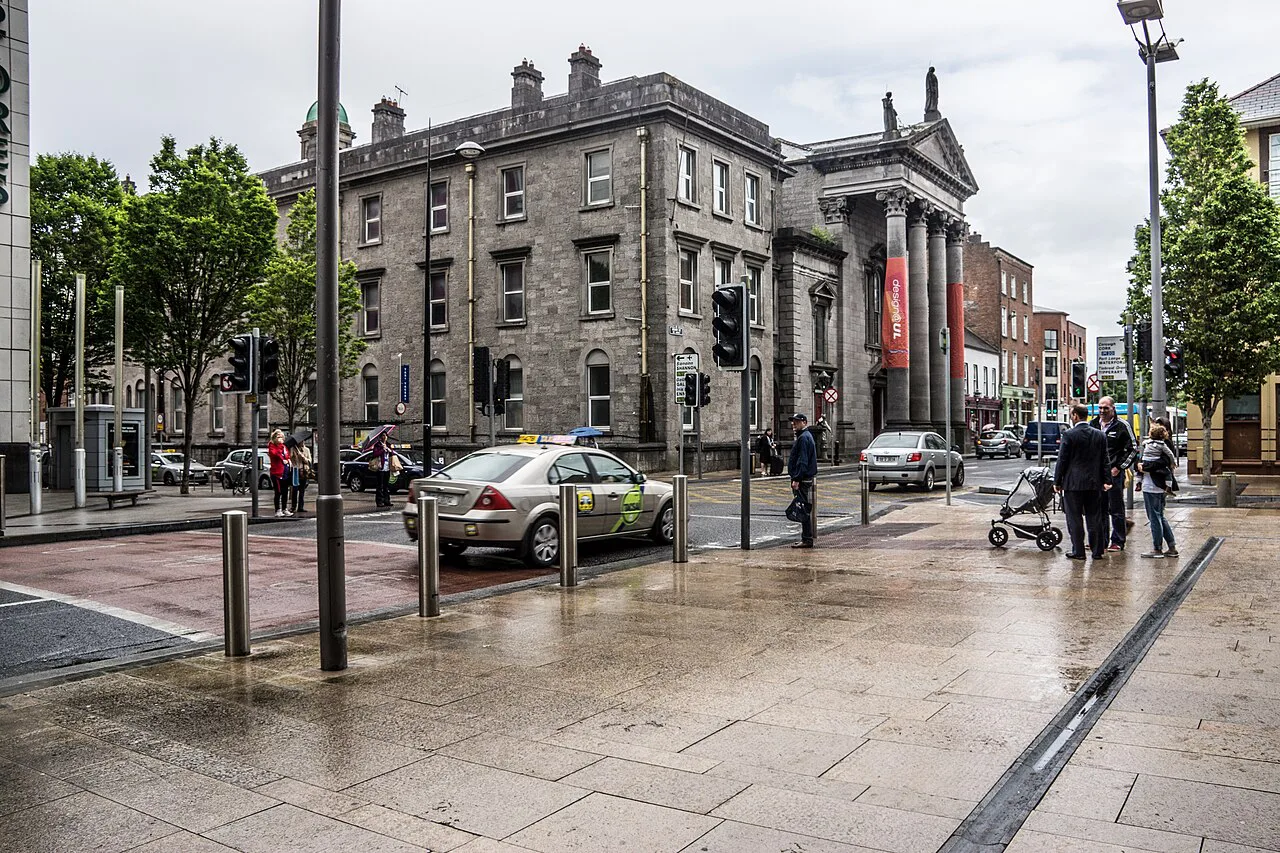
Henry Street runs through the commercial core of the city, so the museum is naturally combined with a walk between O'Connell Street and the river quarter rather than treated as a separate excursion. The council describes the setting as the heart of the city centre, and the short walk from the main street is the simplest approach. Use the Eircode if you are navigating by phone, since Henry Street has several frontages.
Getting There on Foot, by Bus and by Car
On foot, the museum is less than five minutes from the Tourist Office and O'Connell Street, and roughly fifteen minutes from Limerick's rail and bus station. Those are the operator's published walking times, so treat them as a guide rather than a promise if you are carrying luggage or walking slowly.
Local buses stop on Henry Street itself, served by routes 302, 303 and 306, and on Sarsfield Street, which covers Raheen, Edward Street and the University of Limerick. Long-distance coaches set down near Arthur's Quay, including M7 Express services from Tralee, Killarney, Ennis and Dublin as well as other operators. If you arrive by coach, the Arthur's Quay area is the practical starting point for the walk.
Drivers can use parking at the Arthur's Quay shopping centre or the Dunnes Stores car park on Henry Street, both named by the museum. Rates and opening times for those car parks are set by their operators and are not published with the museum information, so check them directly if you plan to leave a car. For most city-centre stays, walking is the simpler choice.

Admission and Opening Hours
Admission is free, and the museum publishes no ticketing or booking requirement, so you can treat it as a drop-in stop rather than a scheduled appointment. Opening hours are Monday to Friday from 10am to 5pm, with Saturday split into 10am to 1pm and 2pm to 5pm. Note the Saturday lunchtime gap before planning an arrival.
Check the museum's own page shortly before you travel, because public holiday arrangements and occasional changes are not reflected in a printed guidebook. The published schedule is the only reliable baseline. If Saturday is your only window, aim for the morning session and leave the early afternoon free rather than arriving at the closed hour.
What the Collection Covers
The displays are organised around the history of Limerick and its people. They include archaeological material, Limerick silver, Limerick lace, examples of local printing and military objects, which together give a broader picture than a single-theme museum would. The range is the point: a medieval find and a piece of civic silver speak to different centuries and different social worlds.
Among the objects the museum and the Irish Museums Association both describe are Stone Age axes, medieval coins, the civic sword of Queen Elizabeth I, and medals given to veterans of the 1916 Rising. The same sources list Ireton's Cat, a mummified cat found on Nicholas Street in the 1890s, a fragment of the largest meteorite to fall in Ireland in 1813, and two unused World War II gas masks. These are documented collection items, not a guarantee that each is on view on the day you visit.
The museum's catalogue is published online and can be searched for individual artefacts, which is useful if you want to follow up on something seen in a case or prepare a question before arriving. The postcard collection is described by the museum as probably the largest collection of Limerick-related postcards in existence, a reminder that paper ephemera can carry as much local history as formal antiquities.
The Museum's Story and Its Building
The institution's origins are usually given as 1906 or 1907, with the Irish Museums Association citing 1906 and the council's own history page giving 1907, so around 1906 to 1907 is the honest way to describe it. It opened to the public in 1916 in the City Library in the Carnegie Building on Pery Square, with the librarian of the day acting as curator. That library link explains why early collecting was bound up with the city's reading rooms and civic buildings.
The museum closed to the public between 1974 and 1979, then reopened at St John's Square, where it stayed for about twenty years. It moved to Castle Lane in 1998 and later to Istabraq Hall on Merchant's Quay, before the 2017 transfer to Henry Street. The current friary building gives the collection a street-level presence in the city centre.
The museum is dedicated to the memory of Jim Kemmy, the former Democratic Socialist Party and Labour Party TD for Limerick East and twice Mayor of Limerick. That dedication shapes how the institution presents itself: it is a municipal museum with a civic and labour-political association rather than a private collection. Visitors who know his political career will find the connection relevant to how the city's history is framed.

Online Exhibitions and the Catalogue
Beyond the physical galleries, Limerick Museum has commissioned online exhibitions that can be read before or after a visit. One examines Limerick newspapers between 1916 and 1923 and how they reported the Easter Rising, the 1918 General Election, the War of Independence and the Treaty, drawing on digitised papers held by the Local Studies section of Limerick Library Service.
Another online feature explores the history of the postcard through the museum's postcard collection; it complemented a museum exhibition that ran at Saint Mary's Cathedral from August to November 2023. These are digital features, not a statement of what hangs in the museum today, so read them as context for the collection rather than as a gallery guide. They are particularly useful if your interest is revolutionary-era Limerick or local print.
Nearby in the City Centre
Henry Street places you close to the medieval quarter and the riverfront. King John's Castle, Limerick and the Hunt Museum, Limerick hold separate collections and are run independently, so confirm their opening arrangements before setting out. Kinsale Museum offers a comparable small-town civic collection if you are charting how local museums tell a place's story. The museum's short walk from O'Connell Street makes it a natural addition to a city-centre circuit rather than a stand-alone trip.
Because the museum is free and central, it works well as an anchor between other stops, breaking up a day of walking with an indoor interval. A look at the area guides can help you decide which direction to walk afterwards; Limerick Neighborhoods: 4 Area Guides sets out the surrounding districts so you can choose a route from Henry Street.
If your interests lean toward decorative arts and archaeology in a comparative setting, the Hunt Museum, Limerick is the obvious counterpart to this civic collection. Plan them on different days or with a clear break, as both reward unhurried attention.
Planning Your Visit
Limerick Museum suits travellers who want a compact, free introduction to the city's own story, from Stone Age axes to Limerick lace and the civic objects of later centuries. Its Henry Street location makes it simple to reach on foot, and the published weekday and Saturday hours give enough flexibility to slot it into a wider day. Check the official page for current times before setting out. To plan more of the city, see Limerick Attractions: 10 Visitor Guides, or browse Museums In Limerick and Peoples Park.
Explore more Limerick guides
Frequently Asked Questions
Is Limerick Museum free to enter?
Yes. Limerick City and County Council lists admission as free, and the museum publishes no ticketing or booking requirement. You can arrive during published opening hours without reserving ahead, though it is worth checking the official page before travelling in case of holiday changes.
Where is Limerick Museum located?
It is in The Old Franciscan Friary on Henry Street in Limerick city centre, Eircode V94 C7W1. The museum has occupied this building since May 2017, having previously been at Istabraq Hall on Merchant's Quay.
How long does a visit to Limerick Museum take?
The museum does not publish an official recommended duration. A first pass through the galleries is often enough to see the collection, and readers with a particular interest in Limerick silver, lace or military material may wish to allow longer.
What can you see in Limerick Museum's collection?
The displays cover Limerick's history and people through archaeological material, Limerick silver, Limerick lace, local printing and military objects. Documented items include Stone Age axes, medieval coins, a civic sword, 1916 Rising medals, a mummified cat found on Nicholas Street and a fragment of an 1813 meteorite. Individual pieces may not always be on view.
How do you get to Limerick Museum from the train and bus station?
The museum's published walking time from Limerick's rail and bus station is about fifteen minutes. Local buses also serve Henry Street and Sarsfield Street, and long-distance coaches stop near Arthur's Quay, a short walk away.