
Treaty Stone, Limerick: A Riverside Landmark and Its History
The Treaty Stone is a rough-hewn limestone block mounted on a pedestal at the Clare end of Thomond Bridge in Limerick, on the bank of the River Shannon opposite King John's Castle. It is an outdoor riverside monument rather than a museum, so a visit means looking at the stone and reading its pedestal, usually as one stop within a longer city walk; broader Limerick Attractions and area guides help place it in a route.
Its interest lies in two separate things: the long tradition that the Treaty of Limerick was signed on the rock in 1691, and the documented nineteenth-century monument built to frame it. Keeping those apart makes the stop more rewarding than a quick photograph.
What the Treaty Stone Actually Is
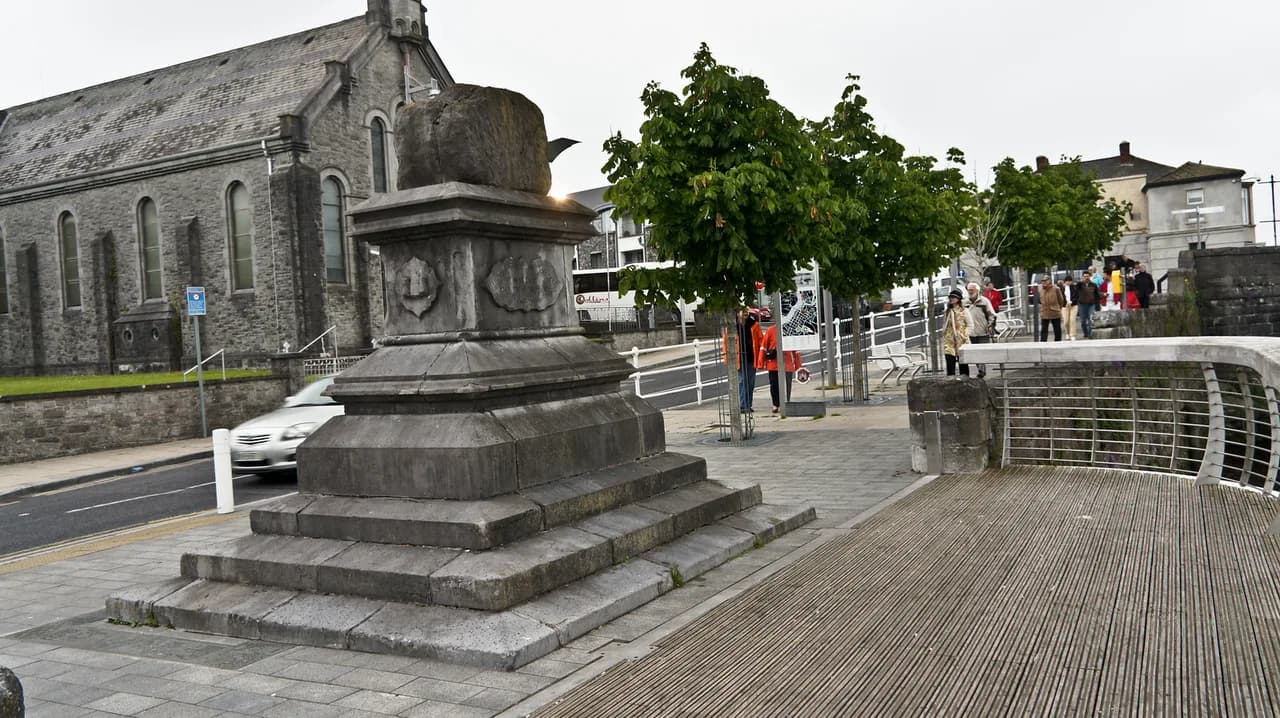
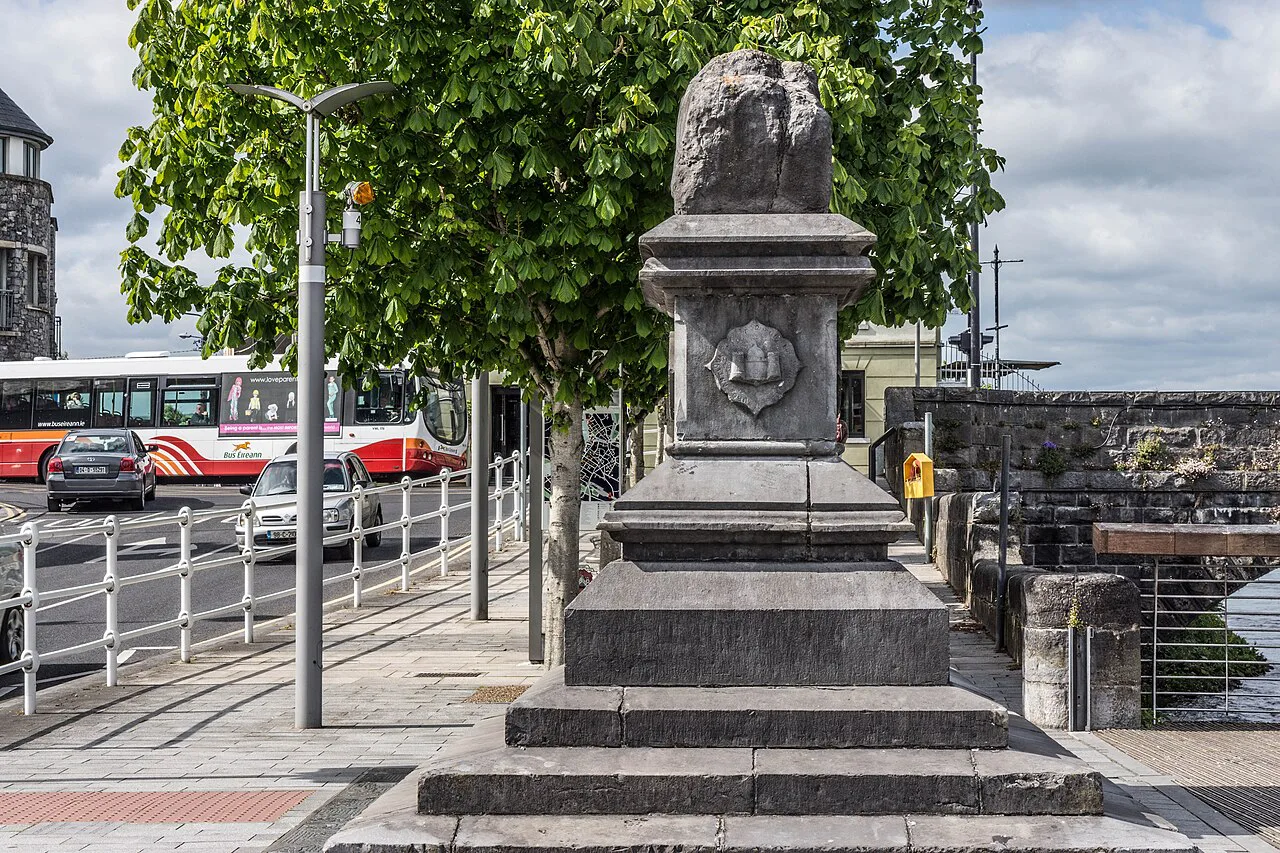
Physically the monument is modest: a rough block of limestone lifted onto a carved plinth, with the pedestal doing most of the visual work. Discover Ireland describes it as a rough-hewn limestone block raised on a pedestal standing across the Shannon from King John's Castle, which is the correct orientation to hold in mind as you approach.
Limerick City and County Council's heritage entry places the stone at the Clare end of Thomond Bridge and records that it rested on a plinth there from 1865, with the pedestal erected in May of that year by the mayor, John Richard Tinsley. The pedestal is therefore the part with a firm date; the rock it supports carries the story.
For orientation, treat the stone as a point at the bridgehead on the far bank from the castle, not as an enclosure or visitor centre. There is no cited interior to enter, so expectations should be set on a roadside monument seen from the pavement.

Getting There on Foot From the City Centre
The council's self-guided walking tour supplies a clear approach: from the city side, cross Sarsfield Bridge to Clancy Strand and follow the strand for five to ten minutes until the stone comes into view at the bridge. That route keeps the river in sight and links the monument to the Georgian streets behind you.
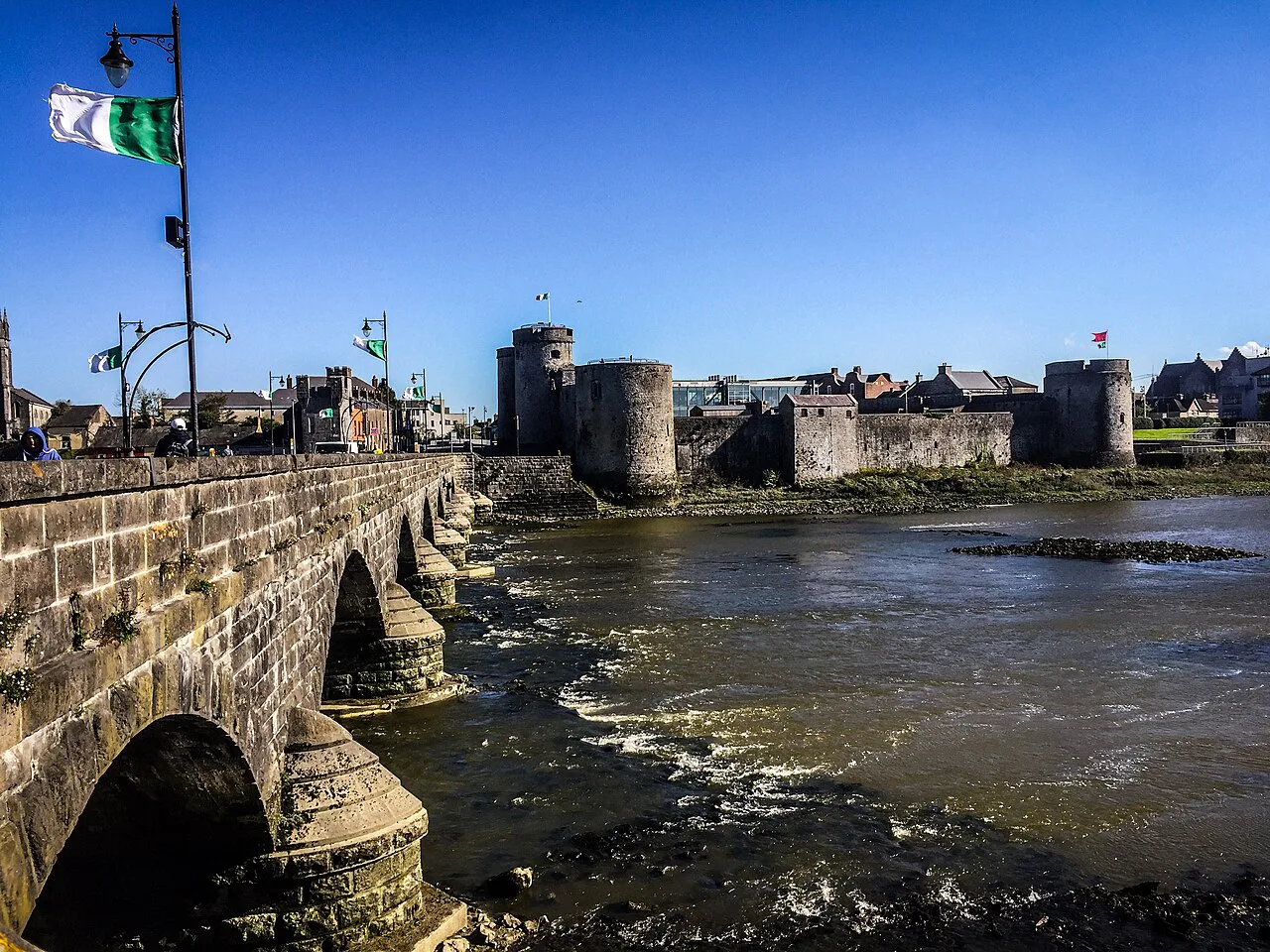
From the stone, the natural continuation is over Thomond Bridge toward King John's Castle and the Medieval Quarter. The bridge you cross today is not the medieval structure: the tour page records that the present bridge was completed in 1840 to a design by the Pain Brothers.
Because the stone sits at a bridgehead, it works best as a link between two halves of a walk rather than a destination in itself. Plan the stop for the middle of a route, then continue on foot into the lanes around the castle.

The 1691 Treaty Tradition
According to tradition, the Treaty of Limerick was signed on the rock on 3 October 1691, in sight of both armies, at the Clare end of Thomond Bridge. The treaty marked the surrender of the city to the army of William of Orange, and the council's page frames the signing as a matter of tradition rather than documented fact.
RTÉ's archive item on the monument uses the same careful wording, calling the stone reputedly the one on which the treaty was signed on that date. It also notes the war it ended, between the Jacobites and supporters of William of Orange. Visitors should read the monument as a commemoration of that tradition, not as proof of the signing surface.
The treaty's association with the city is why Limerick is known as the Treaty City. Discover Ireland's entry frames the outcome as a promise to respect Catholicism that the English and Irish Parliaments rejected and whose terms were ignored, giving rise to Limerick's other name, the City of the Broken Treaty.
That second name is best understood as a tradition of political memory. Read the labels and pedestal with that distinction in mind, and treat the phrase as part of the city's self-description.
From Roadside Rock to Carved Pedestal
Before it was fixed in place, the stone lay elsewhere. The council's heritage page records that for some years it rested on the ground opposite its present site, near where the old Ennis mail coach left from the Clare end of Thomond Bridge on its route through Cratloe woods toward Ennis.
The monument you see now dates from May 1865, when Mayor John Richard Tinsley had the pedestal erected. Discover Ireland spells the name Tinslay, a variant of the same mayor rather than a second figure, so don't be thrown by the difference between the two pages.
The 1962 RTÉ report adds an attribution for the design and build, naming William Corbett as designer and John Connelly as builder of the pedestal. That detail comes from the broadcaster's report on the monument rather than from a plaque, which is worth knowing if you are trying to read the structure closely.
Reading the Carvings
The pedestal is decorated with an image of the castle on the opposite bank, surmounted by a dome and cross that signify Limerick as a cathedral city. Discover Ireland notes that this symbol became the civic insignia of Limerick Corporation, which makes the plinth a small piece of municipal self-representation as much as a memorial.
The same entry records a Latin inscription taken from Virgil's description of Troy, an allusion that casts Limerick's siege and treaty in classical terms. Look for the lettering on the pedestal before stepping back to the bridge; the stone itself carries no comparable carved programme.
Pairs of details like these repay a couple of minutes of slow looking rather than a passing glance. They also show how a nineteenth-century city chose to present a seventeenth-century event to its own citizens.
The 1962 Repair Episode
The monument's modern conservation history is short but specific. In July 1962 a councillor told Limerick City Council that the stone was deteriorating through neglect and that the pedestal needed pointing, and the city engineer agreed to investigate, according to RTÉ's archive report.
By late November 1962 the work had been done: stonemason John McNamara, assisted by Michael O'Laughlin, pointed and scrubbed the monument, described in the report as its first overhaul since it was erected. These are dated events of that year, not evidence of recent or ongoing works, and no current restoration notice applies to the stone.
Knowing this history helps a visitor read the pedestal as a maintained object with a documented repair record, rather than an untouched relic. It also explains why the masonry may look more crisp than the raw block it holds.
Nearby Stops That Justify the Walk
The stone's position makes it a natural hinge between two clusters of sights. Across Thomond Bridge, King John's Castle occupies the medieval core on the tip of King's Island, while Thomond Park Museum lies a short distance beyond the stone, and both appear as stops on the council's walking route.
Back on the city side, the Georgian grid around Pery Square and the collections on Rutland Street reward a half-day. The Hunt Museum, housed in the former Custom House, holds the collection assembled by John and Gertrude Hunt, and the council's route lists it among the city's historic attractions.
For a broader choice of indoor stops to pair with the riverside walk, compare the city's museums and galleries before setting out, since opening days vary between them.
Is the Treaty Stone Worth a Detour?
On its own, the stone does not fill an afternoon: it is a single pedestal at a bridgehead with no cited hours, admission or interior access. Treat it as a ten-minute pause built into a walk, and let the surrounding streets supply the rest of the outing.
The trade-off is between depth and convenience. Visitors wanting documented collections and interpretative displays will get more from the castle or the Hunt Museum, while those following the river on foot can absorb the Treaty Stone almost in passing.
If the treaty story is the reason for your interest, pair the stone with St Mary's Cathedral in the Medieval Quarter, the oldest building in the city still in use for its original purpose according to the council's route. If you are comparing cathedral stops across the region, St Mary's Cathedral, Kilkenny: A Visitor's Guide shows how another city's ecclesiastical heritage is presented to visitors.
Plan Your Visit
Approach the Treaty Stone from Sarsfield Bridge along Clancy Strand, spend a few minutes on the pedestal's carvings and inscription, then cross Thomond Bridge toward the castle. It is an outdoor roadside monument with no cited hours, so check the council's route page, which is the most useful planning document for stringing the stops together.
For a wider choice of districts and sights to build around this riverside stop, browse the area guides and the fuller set of Limerick Attractions before fixing your route. For another heritage guide, read about People's Park in Limerick.
Explore more Limerick guides
Frequently Asked Questions
Where exactly is the Treaty Stone in Limerick?
It stands at the Clare end of Thomond Bridge, across the River Shannon from King John's Castle. The approach on foot from the city side runs over Sarsfield Bridge and along Clancy Strand for five to ten minutes.
Was the Treaty of Limerick actually signed on the stone?
That is the tradition rather than an established fact. Limerick's heritage listing and RTÉ's archive report both describe the stone as reputedly the surface on which the treaty was signed on 3 October 1691, in sight of both armies. Look at the monument as a commemoration of that story.
When was the pedestal erected and by whom?
The pedestal was erected in May 1865 by the mayor of Limerick, John Richard Tinsley. Some pages spell his surname Tinslay, but it refers to the same person, and a 1962 broadcast attributed the design to William Corbett and the construction to John Connelly.
Why is Limerick called the City of the Broken Treaty?
Discover Ireland frames the story as a promise to respect Catholicism that was not honoured, and the nickname captures that tradition of broken faith. The sources do not attach a precise date to any rejection.
How long does a visit to the Treaty Stone take?
Expect a short stop of a few minutes to read the pedestal and take in the river view. There is no cited interior, ticket desk or exhibition, so the stone works best as a pause inside a longer walk between the Georgian streets and the Medieval Quarter.
What else can I see near the Treaty Stone?
Cross Thomond Bridge to King John's Castle and the medieval lanes, or continue a short distance to Thomond Park Museum. Back across the river, the Hunt Museum and the Georgian terraces around Pery Square extend the outing.
Are there opening hours or tickets for the Treaty Stone?
No official operator page with opening hours, admission charges or booking rules accompanies the monument, so check the Limerick council heritage listing before travelling if you need certainty. Do not assume guided access or interior entry, because none is described.