
St Munchin's Church, Limerick: History, Setting and What to Expect

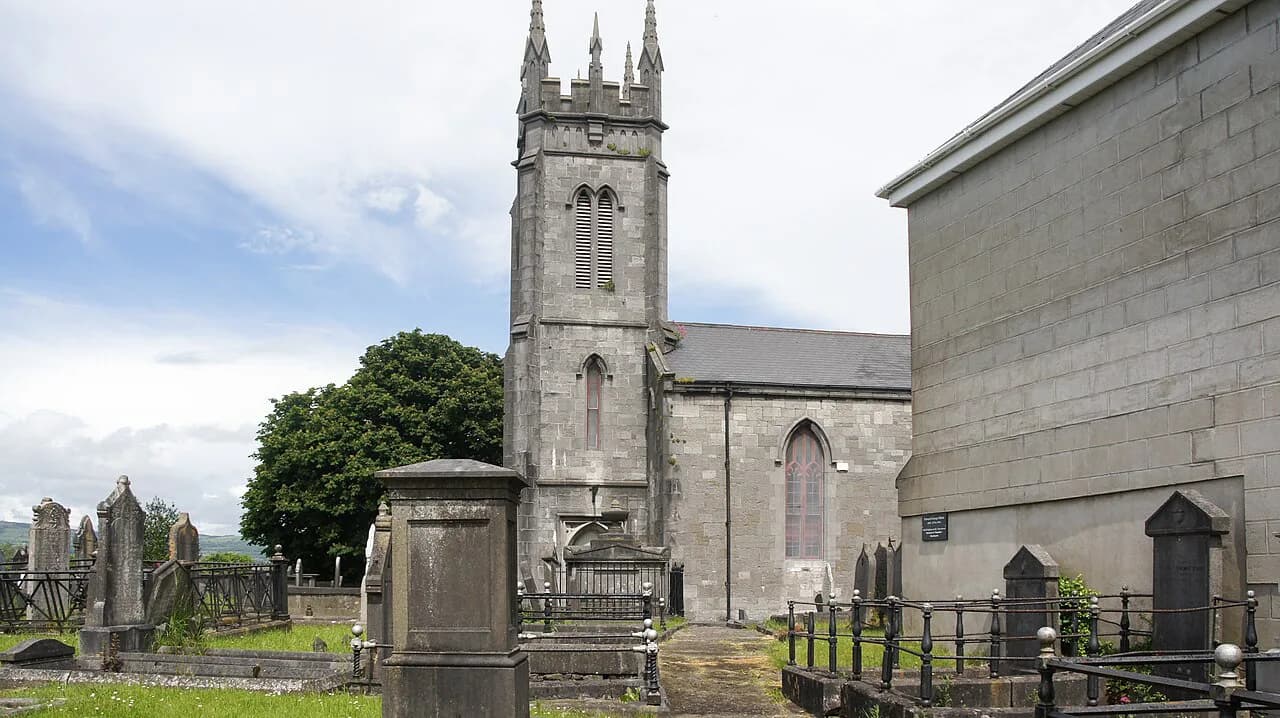
St Munchin's Church is a deconsecrated Gothic-style church with an adjoining graveyard on Church Street in Limerick's historic core, on King's Island. Limerick Civic Trust, the conservation body entrusted with its care since the early 1990s, describes the present building as dating from 1827. It is not an active place of worship, and no source sets out current arrangements for going inside.
That makes it a building to read from the street rather than a ticketed attraction with a reception desk. Its value to a visitor lies in where it stands: within a few minutes' walk of Bishop's Palace, King John's Castle and the river crossing at Thomond Bridge, in the part of the city where Limerick's medieval layout is easiest to sense. The city's own walking material places these stops close together in the historic core.
Where St Munchin's Church Sits
The church stands on Church Street in Limerick's historic core, on King's Island. The local authority's walking material places it on the same street as Bishop's Palace and a short distance from King John's Castle, which occupies the southern tip of the island. Thomond Bridge, the crossing toward the castle, is described there as the oldest bridge in the city, rebuilt several times and completed in its present form in 1840.
Orientation is straightforward once you are in the medieval quarter: Church Street runs near Castle Street, and the churchyard sits beside the institutional buildings of the old English town. Limerick's centre is compact and easy to cover on foot, with TFI Bikes rental as an alternative for longer hops, so the church works best as a stop on a walk rather than a destination requiring transport of its own.
Because the building fronts a street in a living neighbourhood rather than a fenced visitor campus, treat it as you would any historic churchyard in a city centre. Keep to public footpaths, respect the graves, and do not assume a gate, door or enclosure is open simply because it is unlocked on the day you pass.

Reading the 1827 Building From Outside
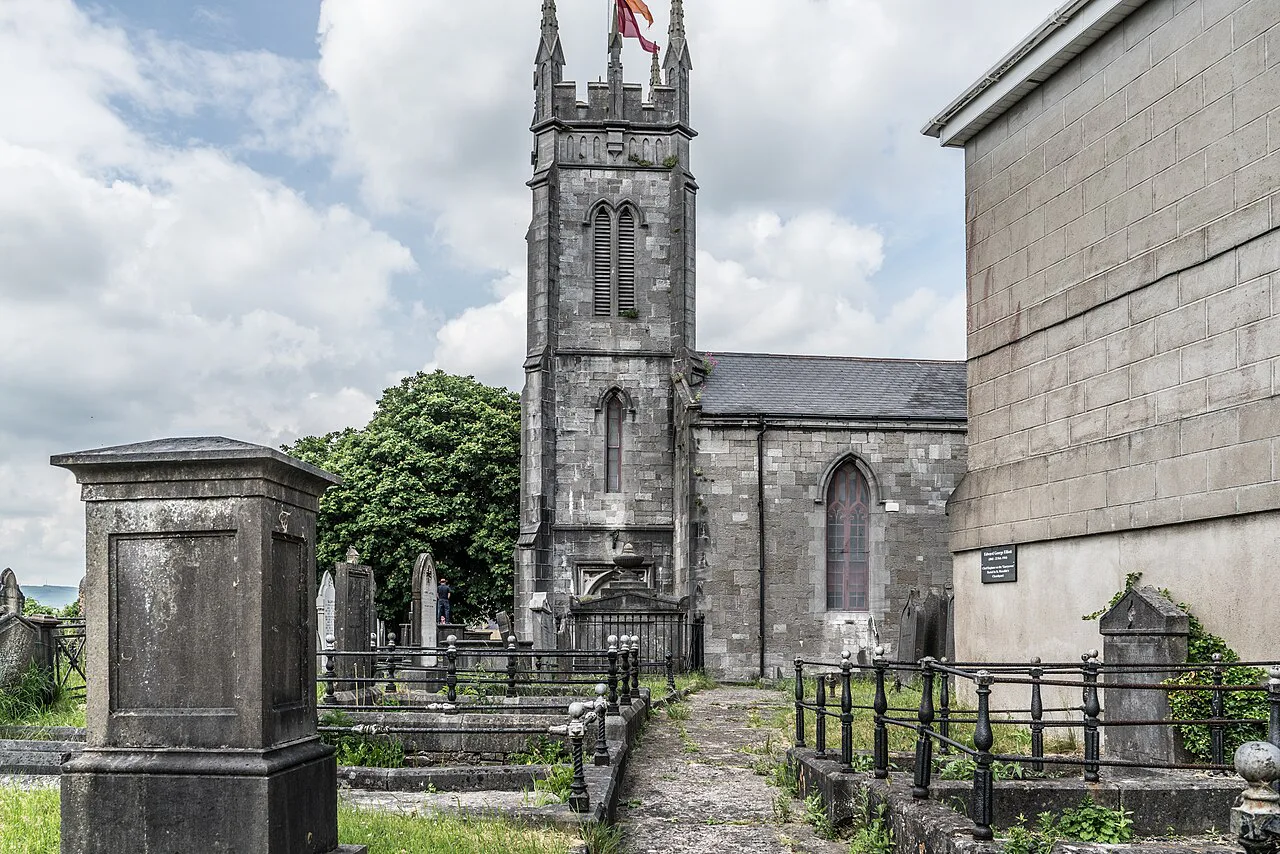
Limerick.ie describes St Munchin's Church as Gothic in style, built in 1827 and now deconsecrated. Limerick Civic Trust gives the same date and adds that the church was designed by the Pain Brothers, the practice responsible for several civic buildings in Limerick in this period. The design attribution comes from the Trust's own account of the site, so it is best repeated as their attribution rather than as an uncontested fact.
The Trust also describes the 1827 church as replacing a crumbling oratory on the site. That is the Trust's phrasing of the site's history; the surviving sources do not set out an independently dated sequence of earlier buildings, so it is safer to think of the present structure as an early nineteenth-century replacement on an older ecclesiastical site than to reconstruct phases that the record does not detail.
From the street, the useful things to look at are the Gothic detailing of the façade, the proportion of the building against its graveyard, and the way the church sits among the surrounding eighteenth- and nineteenth-century structures. The Trust notes that before its planned conversion the interior was used as a training centre and as a space for local groups and art exhibitions, which explains why the building reads as a community-adapted church rather than a ruined one.

Who St Munchin Was, and Why the Story Is Contested
Munchin, also given as Mainchín or Mainchin, is presented in Irish tradition as patron saint of the diocese of Limerick and is associated with an early church foundation at Inis Sibtonn in the tidal waters near Limerick. He is also called Munchin the Wise. The Catholic reference account is careful to say that his origins and the date of his association with the city are debated and that what survives are genealogies and martyrologies rather than contemporary records.
Even his feast day varies between calendars in that account, appearing on 29 December, 2 January and 3 January depending on the source. The same reference adds a modern scholarly caveat that the Dál Cais, the population group to which later genealogies attach him, are not known by that name before the 930s. For a visitor, the practical point is that the saint's biography belongs to tradition and scholarly argument, not to a fixed set of dates you can simply read off the church wall.
None of that diminishes the building. It does mean the church should not be described as the saint's own foundation: the 1827 structure, the earlier oratory the Trust mentions, and the early medieval church in tradition are three different things layered on one site and one name.
Why the Name Needs Care
Two confusions are worth heading off before you arrive. First, this deconsecrated Church Street building is not an active Catholic parish church; the sources describe it as deconsecrated, and a deconsecrated church has no regular liturgy. Second, the historic church in tradition attributed to Munchin's founding is a separate matter of early medieval record, not the nineteenth-century building you see.
If your reason for visiting is devotional rather than historical, check with the diocese or a current parish listing for Mass times at an active church before you travel. The Limerick walking-tour page lists the city's churches as heritage stops, not as places of worship with published schedules, and it should not be read as a timetable.
The Graveyard Setting
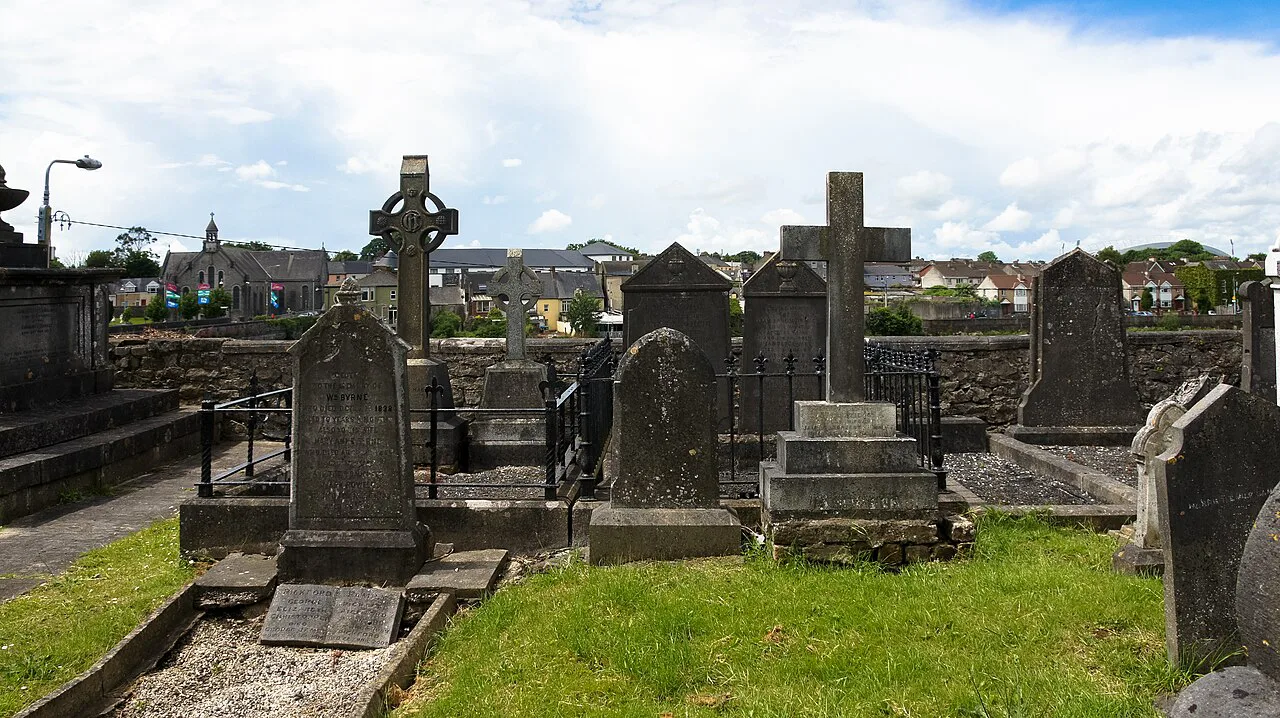
Limerick Civic Trust states that it has been entrusted with the church and graveyard on King's Island since the early 1990s. That is the clearest indication of who looks after the site. It is not evidence that the graveyard is open at particular hours, maintained in a particular condition, or available to enter at will, and no source here provides those details.
Read the enclosure as part of the medieval-quarter fabric rather than a separately ticketed sight. Old burial grounds in Irish city centres are often bounded by low walls and gates, and the appropriate approach is to view them from the public side and follow any local signage rather than to test access. If you have a specific research interest in a grave or memorial, contact Limerick Civic Trust in advance rather than turning up and hoping.
The Museum Project as Dated History
The Trust's page on the church describes a plan to convert the building into a local military museum commemorating Limerick's regiments from the 1691 siege onward, with a target opening in 2019. The collections named for it were the Armstrong military collection, the Carrol Collection, then housed at Bishop's Palace, and a repatriated First World War memorial staircase, the Bannatyne staircase, donated from Britain.
That page is a fundraising appeal from around 2018, so it records an intention at a point in time rather than the current state of the building. It does not establish that the museum opened, that it closed, or that the scheme was abandoned. Anyone planning a visit on the strength of the military-museum idea should confirm the position with Limerick Civic Trust directly before travelling, because neither the Trust page nor the local authority material gives present-day admission or opening details.
Walking It Into a City Route
Limerick's compact centre rewards walking, and the church sits naturally on a loop through the medieval quarter. A workable sequence is to start at the river crossing by Thomond Bridge, take in King John's Castle with its exposed archaeology and courtyard fortifications, then follow Castle Street and Church Street past Bishop's Palace before continuing to St Mary's Cathedral. Allow a couple of hours for that stretch if you go inside the castle. If you enjoy comparing ecclesiastical architecture, see our Kilkenny heritage guide to St Mary's Cathedral for another Gothic church to read alongside this one.
St Mary's Cathedral, founded in 1168 on a site donated by Donal Mór O'Brien, King of Munster, is described as the oldest building in Limerick still in use for its original purpose, with its East Window of 1860 among the features to look for. Check its current visitor arrangements separately, since cathedral hours are a different question from anything at St Munchin's.
Crossing to the other bank adds the Treaty Stone, associated with the 1691 treaty, a short walk along Clancy Strand, so a longer circuit can take in both sides of the Shannon without any transport. The city's own walking material sets out a fuller route if you want a structured itinerary rather than an improvised one.
What to See Nearby
Bishop's Palace on Castle Street, an eighteenth-century building once home to the city's Protestant bishops, now houses Limerick Civic Trust's offices and the Carrol Collection, an exhibition of military memorabilia and family heirlooms gathered by five generations of one family. The local authority's walking page lists scheduled heritage walking tours at set weekday times and the palace collection as open to the public on weekdays; confirm current times with the Trust before relying on them.
The Hunt Museum on Rutland Street occupies the former Custom House and holds the collection assembled by John and Gertrude Hunt, including works by Renoir, Gauguin and Jack B Yeats and a Syracuse coin traditionally linked to the Thirty Pieces of Silver. Volunteer-led guided tours are described as free and lasting about an hour. It is a good pairing with the medieval quarter because it puts the archaeology and church architecture into a wider collecting context.
Treaty City Brewery on Nicholas Street occupies buildings with eighteenth-century brewing links, and the local authority page notes that number 25 was once the home of a Limerick mayor who brewed at the rear until 1756. The same page describes regular tours lasting about 45 minutes across six days a week, but brewery schedules change, so check with the operator rather than treating that as a standing promise. A short distance away, St Michael's Church on Denmark Street, first opened in 1781 and rebuilt in 1881, adds another layer to the same walk.
Before You Go
St Munchin's Church rewards a short, informed stop rather than a dedicated outing. You are looking at a deconsecrated 1827 Gothic building on an older ecclesiastical site, with a graveyard in the care of Limerick Civic Trust since the early 1990s, set among the streets of Limerick's medieval quarter. Read it from outside, give it fifteen or twenty minutes, and let the castle, Bishop's Palace and cathedral carry the rest of the morning.
The one thing to settle before you travel is interior access. Limerick Civic Trust's museum page is a fundraising appeal from around 2018 and does not update opening arrangements, so ask the Trust directly, and separately confirm opening times for any neighbouring venue you plan to enter. If you want the fuller set of city stops, start with Limerick Attractions: 10 Visitor Guides and build your own order. The city's own walking material sets out further heritage stops on the same circuit.
Explore more Limerick guides
Frequently Asked Questions
Is St Munchin's Church in Limerick open to visitors?
Limerick Civic Trust, which has been entrusted with the church and graveyard since the early 1990s, does not publish current visiting arrangements for the interior on its church page, and the local authority describes the building as a heritage stop on a walking route rather than a staffed attraction with published opening hours. Anyone hoping to go inside should contact the Trust before travelling. Viewing the exterior and the graveyard setting from the public street is straightforward.
When was St Munchin's Church built?
The present church on Church Street dates from 1827 and is Gothic in style, according to Limerick's local authority tourism material and Limerick Civic Trust. The Trust adds that it replaced what it describes as a crumbling oratory, and attributes the design to the Pain Brothers. That earlier oratory is not independently dated in the available sources, so the 1827 date should be attached to the standing building rather than to the whole history of the site.
Is St Munchin's Church still a working church?
No. St Munchin's on Church Street is described as deconsecrated, so it does not hold regular services. Do not confuse it with an active Catholic parish church of similar name in Limerick. If you want to attend Mass, check current diocesan or parish listings for an active church rather than travelling to this building.
Who was St Munchin?
Tradition presents Munchin, also spelled Mainchín, as patron saint of the diocese of Limerick, associated with an early church foundation at Inis Sibtonn near the city and known as Munchin the Wise. The surviving accounts are genealogies and martyrologies, and reference works note that his origins, dates and association with Limerick are debated, with feast days varying between calendars. Treat the biography as tradition and scholarly argument rather than settled fact.
What is there to see near St Munchin's Church?
Within a short walk are Bishop's Palace on Castle Street with the Carrol Collection, King John's Castle with its courtyard fortifications and exhibition spaces, St Mary's Cathedral on Bridge Street, and the Hunt Museum on Rutland Street. Treaty City Brewery on Nicholas Street and St Michael's Church on Denmark Street extend the same circuit. Confirm opening times for each separately, since they are independently run.