
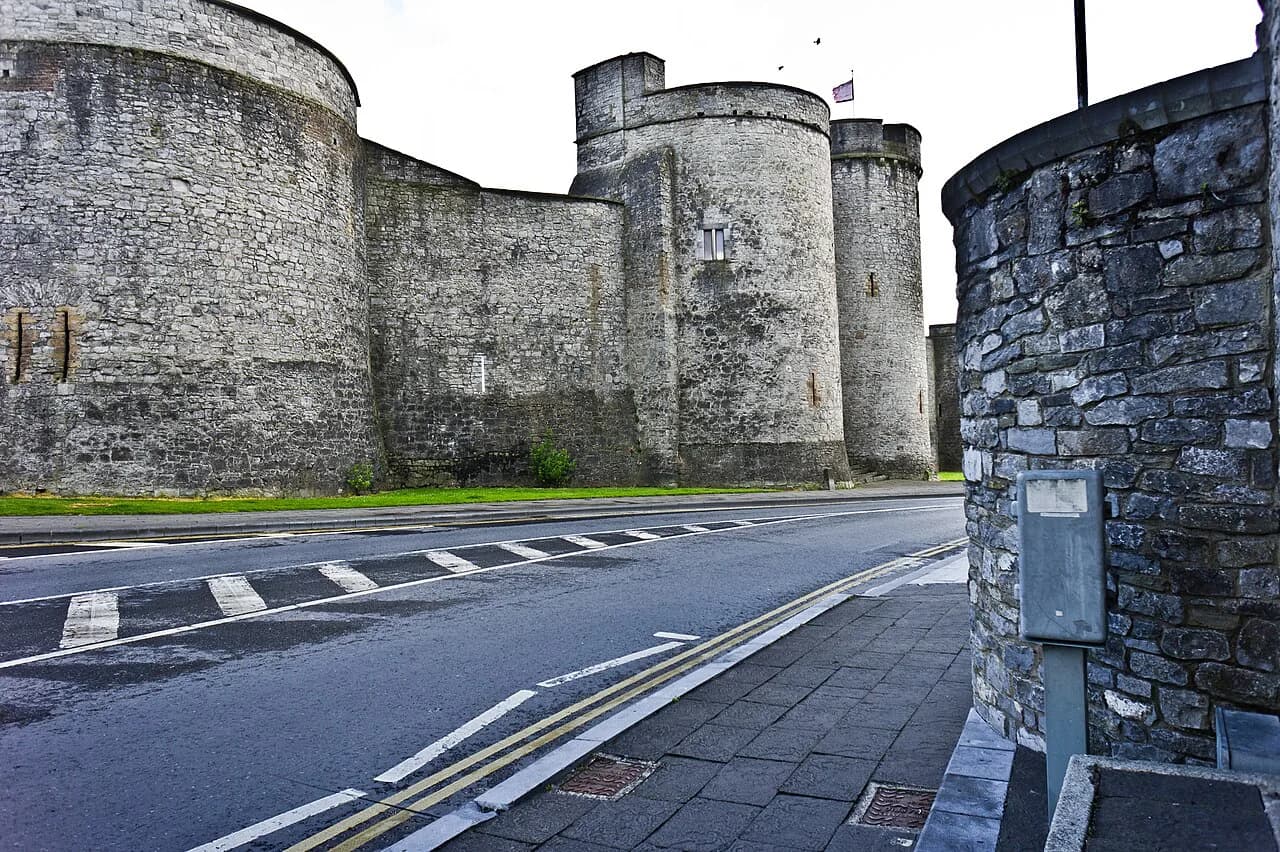
Medieval Quarter Limerick: Walking the Historic Heart of King's Island

Limerick's Medieval Quarter is the historic core on King's Island, the ground formed by the River Shannon and enclosed by the old town walls. It is compact enough to cover on foot, and the city's own tourism office treats walking as the natural way to read it, with a self-guided route laid out stop by stop.
The quarter is not a museum set. Census-based area profiling describes King's Island as a genuine residential neighbourhood where locals live alongside the heritage sites, with Nicholas Street as the old main street running through it. Expect to share the lanes with residents rather than find a sealed visitor zone.
Where the Medieval Quarter Sits, and What It Is Not
Start with orientation: the medieval city grew on the southern tip of King's Island, and Limerick's official walking route describes the early medieval settlement established there. The same page frames the wider story as Viking settlement followed by the English and Irish towns, which it dates to 922 — a publisher's chronology rather than a settled fact, so treat the headline date as the city's own framing of its origins.
The quarter's edges matter as much as its centre. The walls of Limerick came down from the 1760s, after which the city expanded south into the Georgian grid of Newtown Pery, so the streets immediately beyond the old line follow a different logic from the lanes inside it. Walking from the medieval core into the wide Georgian terraces is one of the clearest lessons in Irish urban history a visitor can get on foot.
Irishtown, the historic district across the Abbey River with John's Square and the 1856 St John's Cathedral, lies outside this walk and is worth treating as a separate outing. Folding it into a King's Island route blurs two distinct medieval suburbs.
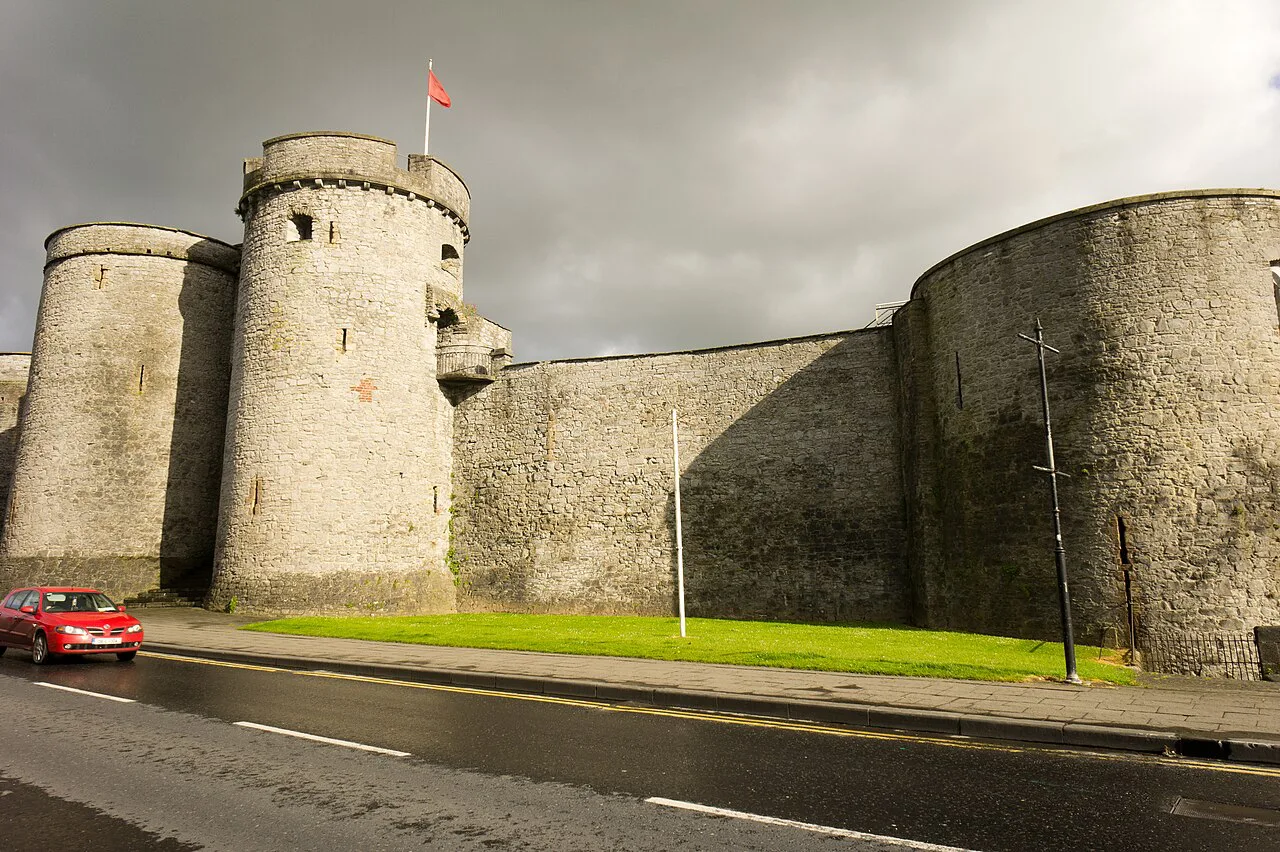

Nicholas Street and the Walled Town
Nicholas Street was the old main street of the medieval town, and it remains the spine of the quarter. Walk it slowly and look at ground level: the street line, the surviving building frontages and the fragments of the 14th-century city wall just off Old Clare Street are the physical evidence of the walled town, not interpretive panels.
Off the same street, the Widow's Alms Houses were built in 1691 to house widows of soldiers from the castle and survive as an intact terrace. They are a street-level survival to look at from outside, not a building open to visitors, so plan your stop as an exterior pause rather than an interior visit.
Beside the gable end of Bishop's Palace sits a granite horse trough from the mid-1800s, carved from a single piece of stone and described by the city as the only one of its kind in Limerick. It belongs to the era when horses powered road transport, and it rewards the kind of slow walking that notices street furniture as heritage.
King John's Castle
King John's Castle stands at the southern tip of King's Island, and the city's walking route describes it as a 13th-century castle open daily all year round. Inside, the sequence runs from a multimedia history of Limerick through exposed archaeology in the undercroft to a tour of the courtyard and fortifications, with upstairs exhibitions on the castle's archaeology and on the development of Georgian Limerick.
That pairing of medieval fabric and Georgian city history in one building is useful for understanding the quarter's arc: the castle outlived the walls that once protected it and now interprets the town that grew after they fell. Allow more time here than at the street-level survivals, and check current opening arrangements before you travel, since published hours are generic listings rather than dated notices.
Directly opposite the castle is a street-art tribute to the Cranberries' Dolores O'Riordan, one of several pieces on the city's self-guided street art trail. It is a reminder that the quarter is a living streetscape where contemporary work sits beside medieval walls.

St Mary's Cathedral
St Mary's Cathedral on Bridge Street is the oldest building in Limerick still used for its original purpose, according to the city's walking guide, which dates its foundation to 1168 on land donated by Donal Mór O'Brien, King of Munster. Attribute that chronology to the publisher rather than treating it as independently confirmed. If you are comparing cathedrals, St Mary's Cathedral, Kilkenny: A Visitor's Guide covers another Irish cathedral worth seeing on foot.
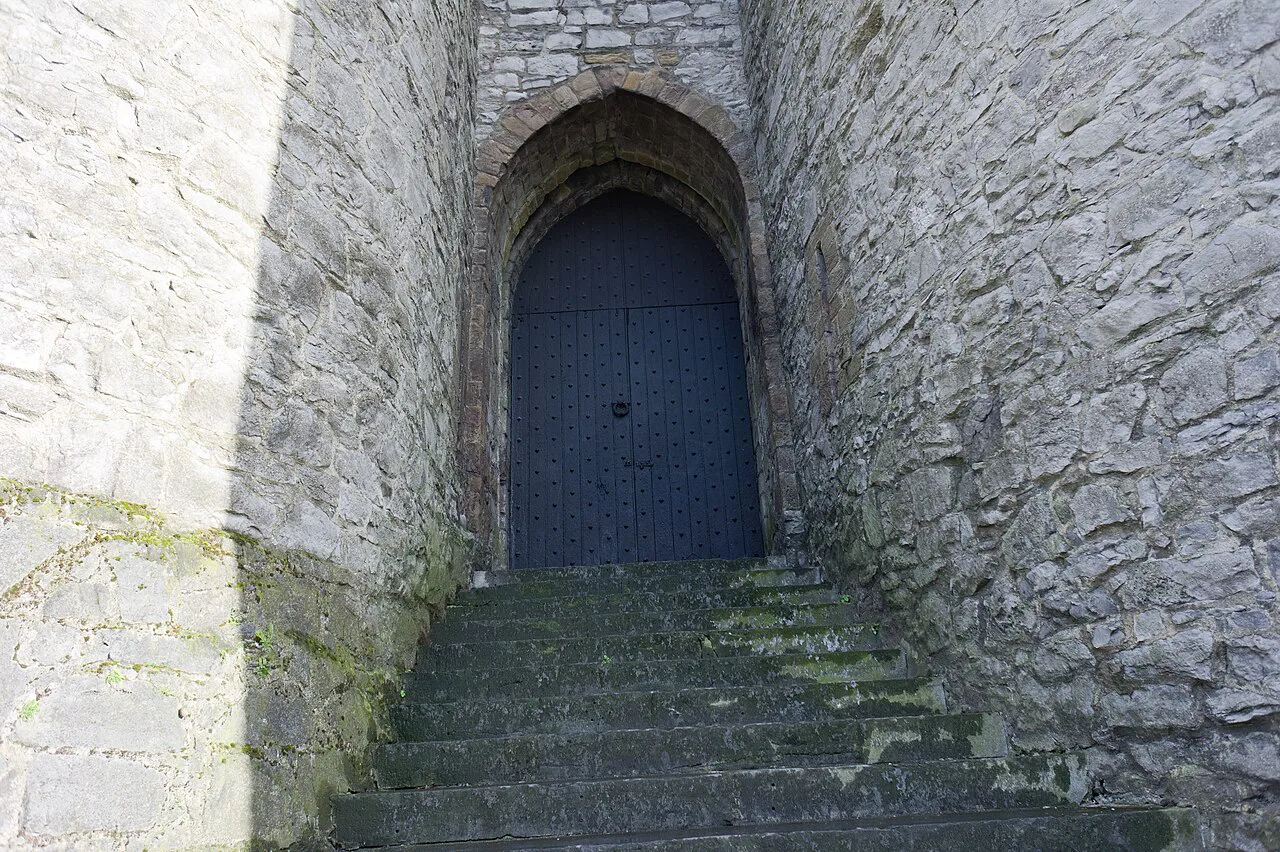
The two features the city highlights are the East Window of 1860, whose artwork depicts biblical scenes of healing, and the West Door, the oldest part of the building whose exact date is uncertain. For a visitor, that means the cathedral compresses many centuries of change into a single interior, from an undated oldest doorway to Victorian glass.
Bishop's Palace and Institutional Heritage
Bishop's Palace on Castle Street, an 18th-century building once home to the city's Protestant bishops, now houses the offices of Limerick Civic Trust, the conservation body behind much of the quarter's care. The trust runs scheduled walking tours of the city's heritage sites, which the city lists at 11am and 2pm on weekdays — published guidance that should be confirmed before you rely on it.
Inside, the Carrol Collection displays military memorabilia and family heirlooms gathered by five generations of the Carrol family, opening a window on political and social history between the 1700s and 1920s. It is open to the public Monday to Friday according to the city's listing, and pairs well with the palace building itself.
On Church Street, St Munchin's Church and graveyard is a Gothic-style building of 1827 that the city describes as deconsecrated. It is architectural context rather than an active visitor attraction, so treat it as part of the streetscape on your way between the larger sites.
The River Edge and Thomond Bridge
Thomond Bridge and its toll house are described by the city as the oldest bridge in Limerick, first erected around 1185 and rebuilt several times, with today's structure completed in 1840 to designs by the Pain Brothers. That long rebuild history is the point: the crossing has been maintained and replaced repeatedly rather than preserved intact.
The Pain Brothers also designed the County Courthouse and the Custom House, so the bridge is a good place to notice how one architectural practice shaped the 19th-century city around the medieval core. Stand at the river edge and the quarter's island geography becomes obvious: the Shannon wraps the ground you have been walking.
How the Quarter Works Today
Treaty City Brewery operates as a working brewery in a building the city's tours listing describes as around 250 years old, continuing the area's long association with brewing; it is a commercial stop within the heritage quarter rather than a museum. Check its own published arrangements if a visit matters to you.
Formal options exist alongside the self-guided route. The city lists a Limerick Medieval Trail and daily guided walks covering the bridges, the castle, the cathedral and the Treaty Stone, alongside a virtual trail celebrating women associated with the city. These are listed offers, not endorsements, and they suit visitors who want narration rather than their own reading of the streets.
If you want to extend beyond the medieval core, the wider county and city sites are gathered in Limerick Attractions, and the cathedral-and-castle combination here pairs naturally with the museums elsewhere in the city. Keep your day realistic: the quarter is small, but the layered sites reward unhurried time rather than a checklist.
Walking the Quarter: Mode and Rhythm
Self-guided walking is the sensible default. Limerick's tourism office notes the city is compact and easy to cover on foot or with the city's TFI Bikes rental scheme, and it structures its historic route around a sequence of named stops. Two check-current-details reminders are enough: verify castle and palace tour arrangements, then walk.
Beyond the walls, the Georgian city across the river is a different walk with different architecture, and the 1760s demolition of the walls is the hinge between them. Crossing into Newtown Pery after the medieval lanes makes the contrast legible in a way that visiting either alone does not.
Across the Shannon, Thomondgate is a separate district on the far bank, not part of the King's Island core, though the bridge crossing connects the two. Plan it as its own short outing if you want to see the city from the opposite shore.
Plan Your Visit
Walk the Medieval Quarter as a loop through the walled town: start with the castle and cathedral, follow Nicholas Street for the street-level survivals, then cross Thomond Bridge to read the river edge. Confirm opening and tour details before travelling, since published listings are general rather than dated, and no admission information is given here for any site.
The quarter's value lies in that combination of monument and ordinary street: an intact alms terrace, a granite trough, a deconsecrated church and a working brewery share the ground with a 13th-century castle and a cathedral still in use. Give it a half-day at least, and let the Georgian city be your next chapter rather than part of the same stop. For related heritage guides, read about Georgian Quarter Limerick and Irishtown Limerick.
Explore more Limerick guides
Frequently Asked Questions
What is Limerick's Medieval Quarter and where is it?
It is the historic core on King's Island, the ground formed by the River Shannon and enclosed by the old town walls. It holds King John's Castle, St Mary's Cathedral and Nicholas Street, the old main street, and it is separate from the Georgian grid of Newtown Pery to the south.
What can you see in the Medieval Quarter on foot?
The castle, the cathedral, the line of Nicholas Street, fragments of the 14th-century city wall off Old Clare Street, the Widow's Alms Houses and the granite horse trough beside Bishop's Palace, plus Thomond Bridge at the river edge. The area is compact enough to cover on foot.
How old is King John's Castle?
Limerick's official walking guide describes it as a 13th-century castle. More precise construction dates vary between sources, so it is safer to work with the 13th-century description than to quote a single founding year.
Is St Mary's Cathedral the oldest building in Limerick?
The city describes it as the oldest building in Limerick still in use for its original purpose, founded in 1168 according to the same source. The East Window dates to 1860 and the West Door is the oldest part of the building, though its exact date is uncertain.
Can you visit the Widow's Alms Houses?
They survive as an intact terrace built in 1691 to house widows of soldiers from the castle. They are a street-level survival to view from outside rather than a building open to visitors, so plan them as an exterior pause.
How does the Medieval Quarter differ from Georgian Limerick?
The medieval city grew within the walls on King's Island, while Georgian Newtown Pery developed south of the river after the walls came down from the 1760s. Walking from one into the other shows the shift from narrow medieval lanes to wide grid-plan terraces.
Are there guided tours of the quarter?
Limerick Civic Trust runs scheduled walking tours from Bishop's Palace, which the city lists at 11am and 2pm on weekdays, and the city also lists a Limerick Medieval Trail and daily guided walks. Treat all published times as guidance to confirm before you travel.