
Georgian Quarter, Limerick: A Guide to Newtown Pery on Foot

Limerick's Georgian Quarter is Newtown Pery, one district rather than two. Limerick.ie describes a quarter laid out in the late 18th and early 19th centuries on a grid of equal rectangular blocks, an architectural unity that still defines the city centre. Because the set pieces cluster together and can be read at street level, the quarter rewards walking rather than a single address.
The natural start is Pery Square, where a short run of terraces, a town park and two cultural buildings sit within minutes of each other. From there the grid opens north and west, so you can read doorways and ironwork at pavement level. Allow a half day if you want to look closely rather than pass through.
What and Where the Georgian Quarter Is
Limerick.ie places Newtown Pery in Limerick city centre and credits its distinctive architectural unity with shaping the centre to this day. It was built in the late 18th and early 19th centuries on equal rectangular blocks, which is why the streets read as regular rather than organic.
Georgian Quarter and Newtown Pery are the same area, and the council also markets it as 'the Georgian Neighbourhood'. The walking-route page notes that the city walls were taken down from the 1760s so Limerick could expand south of the medieval town, which led to Newtown Pery and its grid. That sequence explains why the medieval and Georgian streets feel like adjoining towns.
For orientation before you set out, Limerick Neighborhoods: 4 Area Guides covers the wider city. The Georgian streets form the planned, low-rise centre, while the older riverside quarters lie beyond the bridges over the River Shannon.
How the Grid Came About
The Irish Times names Edmund Pery, First Viscount Pery, as the landowner who established Newtown Pery in the late 18th century on land he owned, and describes the Italian engineer Davis Ducart as the planner of Limerick. Read alongside the council's late-18th and early-19th-century dating, that points to a district shaped by a named landowner and a planned grid rather than piecemeal growth.
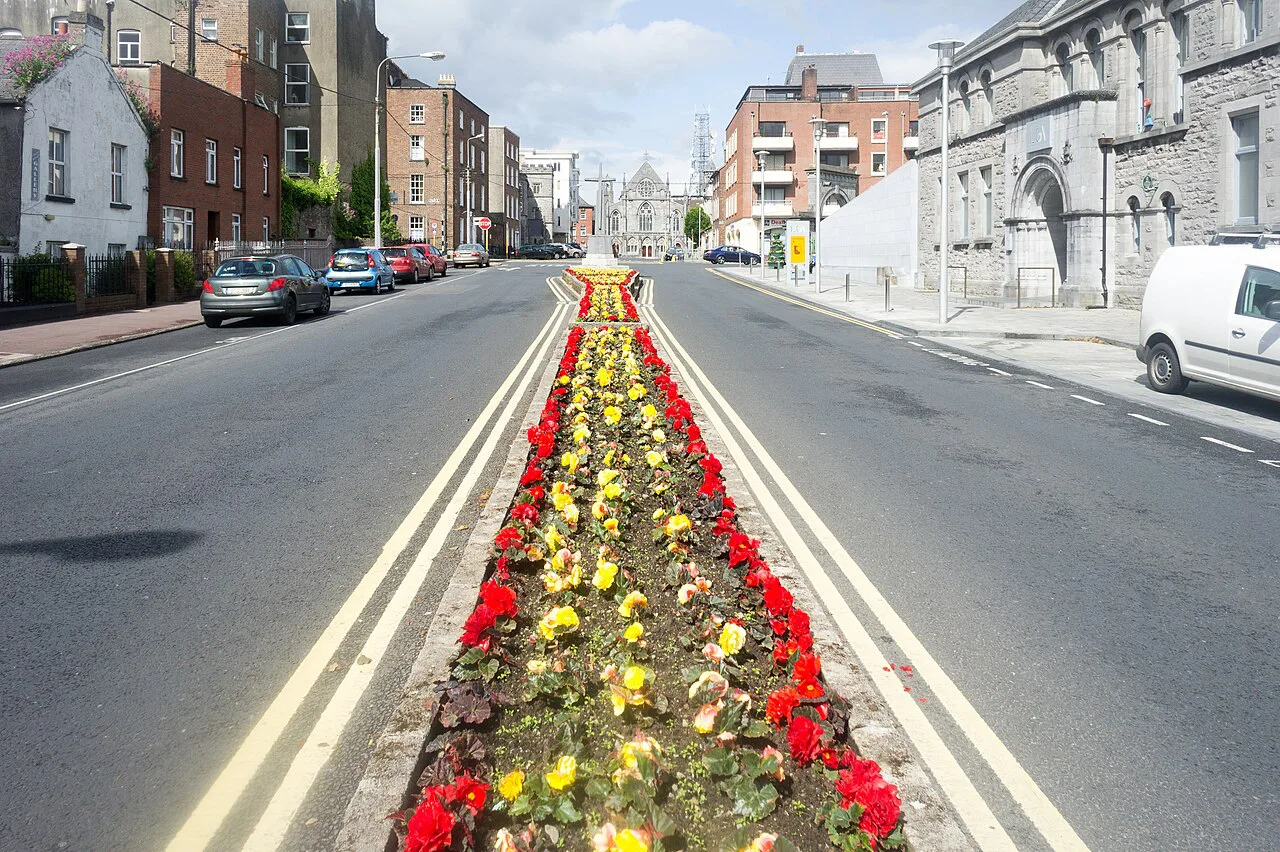
The regularity is the point. Equal blocks produced long, wide streets and steady terrace lines, and the council's route notes that much original street furniture and many external features of Georgian houses still survive across Newtown Pery. When walking, notice the repetition first and the exceptions second.
If the architecture draws you, the Georgian grid contrasts with the medieval lanes elsewhere in the city. Limerick's Medieval Quarter is a separate area with its own fabric and landmarks, and comparing the two makes the planned character of Newtown Pery clearer.
Reading the Streetscape
The council's route lists details worth stopping for: ornamental balconies, decorative ironwork, door knockers, boot scrapers and carved capitals in various neoclassical styles on door surrounds. Fanlights above doors are semicircular or elliptical, a variation the page links to the social standing of the houses. Doorways thus work as a readable index of a terrace rather than mere ornament.
The Irish Times reports that the architectural historian Dan Cruickshank was struck by ironwork surviving in Limerick that has vanished elsewhere. The feature also observes that Limerick's terraces have more uniform facades than Dublin's, with simpler brick detailing above windows than in England and, by contrast, more elaborate Irish interiors.
Because these are homes and workplaces, the visit stays on the public street. Walk the pavement, look up at first-floor window surrounds and down at railings and boot scrapers, and keep gates, steps and doorways clear for residents. A slow pace matters more than equipment.
Pery Square and the Tontine Terrace
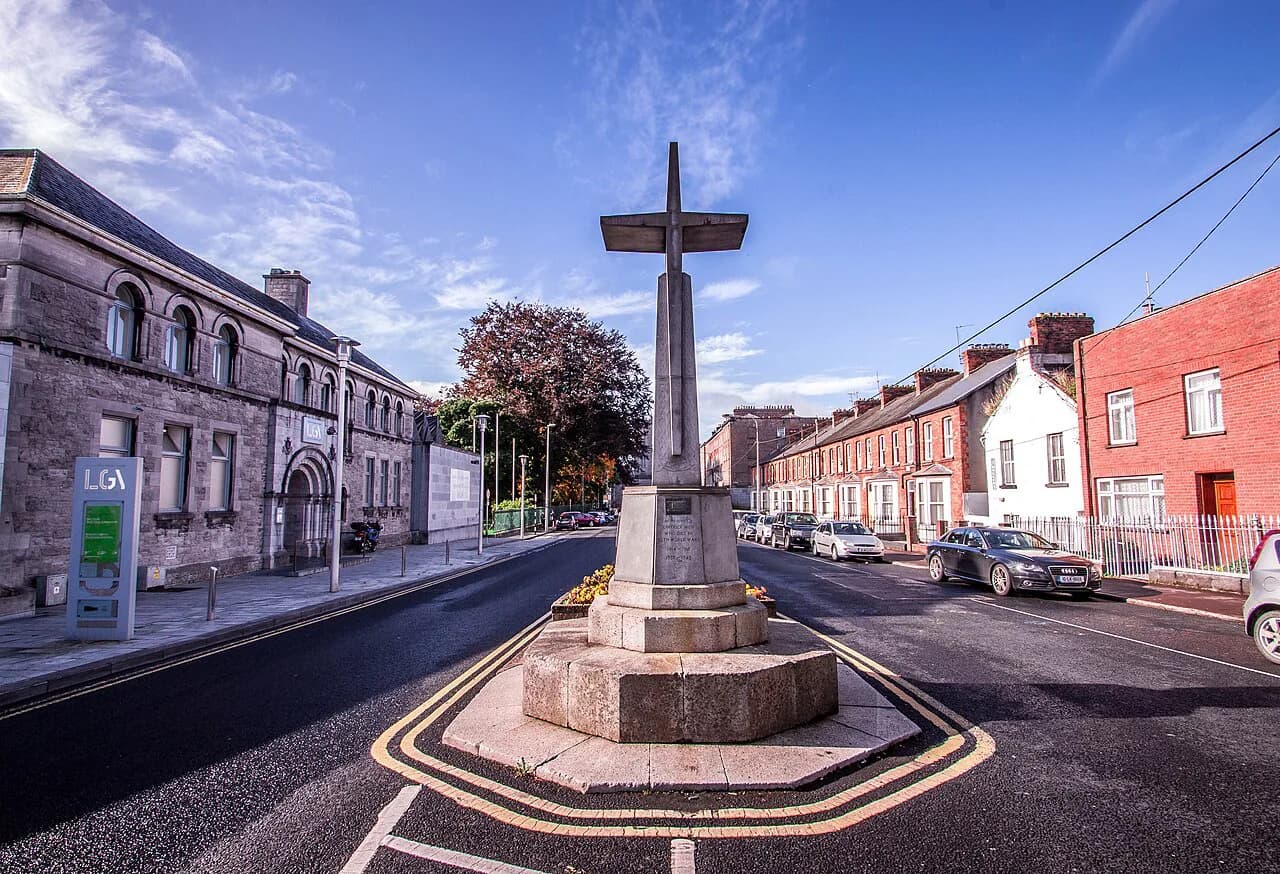
The council's self-guided route starts at Pery Square, where the Tait Clock, a Gothic Revival tower built around 1867 in honour of a former mayor, Sir Peter Tait, anchors the square. Also here is the Limerick Military Memorial, a freestanding cut-limestone monument designed in 1960 to commemorate the dead of both World Wars.
At No. 2 Pery Square stands the People's Museum of Limerick, in a Georgian house restored by Limerick Civic Trust. The council describes it as one of a terrace of six houses built around 1830 by the Pery Square Tontine Company and calls that terrace the best example of late Georgian architecture in Limerick and probably in Ireland. That verdict is Limerick.ie's, not an independent assessment. If you want to weigh it against the city's other collections, this guide to the museums in Limerick sets out the core ones.
The same page states that Pery Square holds the largest collection of Georgian townhouses in Ireland outside Dublin — again the council's own assessment. Whatever weight you give it, the practical result is a dense sample of the quarter's housing in a short stretch of square. The council's route does not publish opening arrangements for the People's Museum, so check with Limerick Civic Trust rather than assuming it is open when you pass.
Across the River Shannon, Thomondgate is a separate district with its own history and fabric, useful if you want to extend the day beyond the Georgian grid.

People's Park and Its Layers
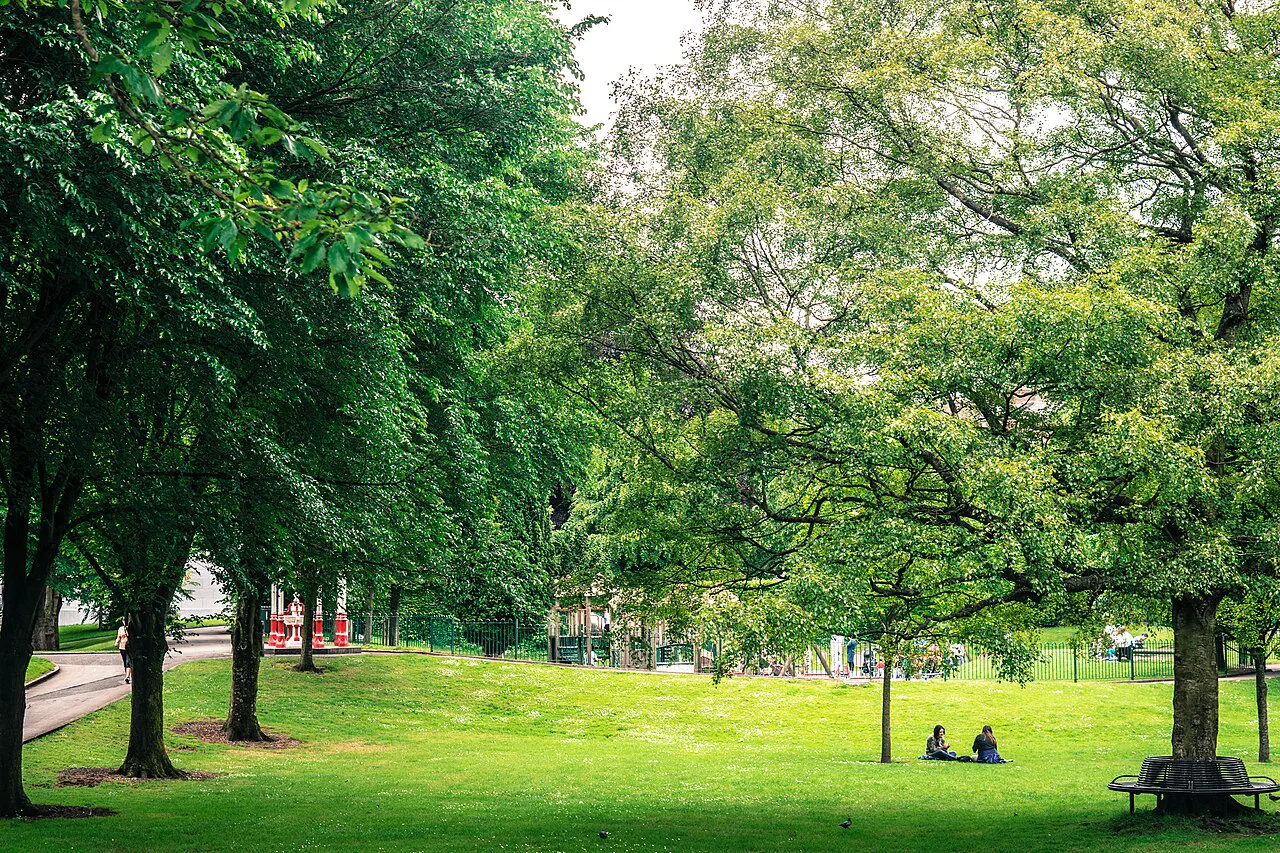
People's Park began as a key-holders-only park for residents of the nearby Georgian houses, developed by the Pery Square Tontine Company and dedicated to the businessman Richard Russell. According to the council, it became the public park known as People's Park on 20 August 1877.
Inside, the council points to a limestone column erected in 1829 and topped with a statue of Thomas Spring Rice, then MP for the city. It also names a restored ornate drinking fountain, a park kiosk from around 1917, a bandstand erected in 1895, two gazebos and the Little Angels children's remembrance memorial, unveiled in 2002. These are the identified features to seek out, not an exhaustive inventory.
The park works well as a midpoint: paths and benches let you pause between stretches of pavement, and its monuments give the walk a rhythm. The council calls it compact, a town park rather than a landscaped demesne, so treat it as a short stop rather than a half-day in itself.
The Carnegie Building and City Gallery of Art
Adjoining People's Park is the Carnegie building of 1903, now home to Limerick City Gallery of Art. The council describes a permanent collection of paintings from the last 300 years, including works by Sean Keating and Jack B Yeats, making the gallery an indoor counterpart to the streetscape outside.
A civic gallery is not automatically open whenever you pass, and these sources do not establish current opening arrangements. Confirm hours and admission on the gallery's own listing before planning a visit around it.
Limerick holds several collections worth a detour, so decide which fit your interests. A broader survey of museums in Limerick helps you choose instead of trying to cover everything in one day.

Beyond the Grid: John's Square and the Castle
The council notes that the earliest Georgian houses in Limerick stand in John's Square, in the Irishtown district of the medieval town, near St John's Cathedral of 1856. That makes a case for extending any Georgian walk north-east beyond the Newtown Pery grid.
The same route notes that King John's Castle, a 13th-century fortress on King's Island, has upstairs exhibitions on the castle's archaeology and on the development of Georgian Limerick. Together they assemble the city's chronology, from medieval core to planned Georgian town, though the sources here do not confirm current opening, hours or admission, so check with the castle before planning to go inside.
The older settlement around the cathedral and John's Square rewards a separate wander. Irishtown, taken with Newtown Pery, shows how the city grew by addition: medieval lanes first, then a planned Georgian extension.
Decline and the Council's Renewal Framing
Limerick.ie is candid that 19th-century economic decline, weak investment and the pull of suburban living damaged the Georgian heritage and the character of the neighbourhood. It now frames the area as undergoing a renaissance, with many Georgian-era buildings vacant and the Living City Initiative and its Urban Innovation Department supporting a return of city living.
Read that as policy context rather than a promise about what you will see. It helps explain why some terraces look cared for and others less so, and why restoration reads as an ongoing process rather than a finished state.
The Irish Times feature adds an architectural-conservation angle, reporting that the architecture professor Elizabeth Hatz described the grid as undervalued and that the council had bought some Georgian buildings to put them to use. Treat those as the article's own period reporting, not a live assessment of conditions today.
Walking the Quarter
The council publishes a self-guided itinerary linking Pery Square, O'Connell Street, Henry Street and Sarsfield Bridge, then crossing the River Shannon toward King John's Castle. It is a suggested route on paper, not a guided or ticketed tour, so you can follow it in order, reverse it or break off where interest takes you.
The council describes Limerick as compact and easy to cover on foot. For this district, walking remains the better choice because the details worth seeing sit at doorway and railing height, close to the pavement.
A wider Limerick walking tour itinerary can help if you want to link the Georgian grid with the medieval streets in one day. Check current access for any interior you hope to see, including the gallery and the People's Museum, because the sources here do not establish present opening arrangements.
Plan Your Visit
Give the Georgian Quarter a half day and walk it slowly. Start at Pery Square, take in the Tait Clock and the tontine terrace, cross into People's Park, then follow the grid streets to read fanlights, door surrounds and ironwork at pavement level.
Treat interiors as optional extras to confirm on the day and keep the streets themselves as the main event. The quarter is a lived-in district of homes and workplaces, so look closely from the public pavement and leave gates, steps and doorways clear.
Explore more Limerick guides
Frequently Asked Questions
Is Limerick's Georgian Quarter the same as Newtown Pery?
Yes. The names refer to one district: the late 18th and early 19th-century grid of terraces and squares that the council says still defines Limerick's city centre. Limerick.ie also markets it as 'the Georgian Neighbourhood'.
When was Newtown Pery built, and who was behind it?
Limerick.ie dates the build-out to the late 18th and early 19th centuries. The Irish Times names Edmund Pery, First Viscount Pery, as the landowner who established it and Davis Ducart as the engineer who planned Limerick's Georgian layout.
What can you see in the Georgian Quarter on foot?
The streetscape is the main draw: terrace facades, fanlights, carved door surrounds, ornamental balconies, decorative ironwork, boot scrapers and surviving street furniture. Pery Square, People's Park, the Tait Clock and the Carnegie building give the walk fixed landmarks.
What are the main landmarks around Pery Square?
Pery Square holds the Tait Clock, built around 1867, and the Limerick Military Memorial, designed in 1960. At No. 2 Pery Square is the People's Museum of Limerick, in a terrace of six tontine houses built around 1830. People's Park and the Carnegie building adjoin the square.
Can you go inside the Georgian townhouses?
Most are homes or workplaces, so view facades and street furniture from the public street and keep gateways clear. Interior access to the People's Museum is not established by these sources, so check directly with Limerick Civic Trust rather than assuming a house is open.
Why is People's Park significant?
It began as a key-holders-only park for residents of nearby Georgian houses and became a public park on 20 August 1877. Named features include a limestone column erected in 1829, a bandstand of 1895, a drinking fountain, a kiosk from around 1917 and the Little Angels memorial unveiled in 2002.