Limerick Walking Tour: Georgian Streets to Medieval Quarter
A practical self-guided Limerick walking tour linking Georgian Pery Square to the medieval quarter, with museum stops, the Treaty Stone and guided alternatives.
On this page
A Limerick walking tour works because the historic centre is compact and the River Shannon does most of the orienting for you. The city's own tourism office sets out a numbered self-guided route through the historic city, and a separate independent guide describes a circular ordering of many of the same stops. Neither is canonical, so treat both as menus rather than marching orders.
The simplest structure is Georgian first, medieval second. Begin among the terraces and parkland of Newtown Pery on the south bank, then cross the Shannon to finish among the castle, cathedral and bridges of King's Island. That shape keeps the day roughly linear and puts the interiors you most want to enter, such as the People's Museum, early enough to reach before closing.
Why Limerick Suits a Walking Day
Limerick sits at the head of the Shannon Estuary, and one independent guide divides the centre into three historic areas: English Town, Irish Town and the newer Newtown Pery. That frame is useful on foot because each area has a different street pattern and building scale. You feel the shift from broad Georgian streets to tight medieval lanes without needing a map at every corner.
The city tourism office notes that Limerick's walls came down only in the 1760s, allowing the city to expand south and Newtown Pery's grid to take shape during Georgian prosperity. Walking that grid toward the river becomes a lesson in how a medieval port remade itself. The trade-off is that the two halves sit on opposite banks, so any loop needs at least one bridge crossing.
Start in Georgian Newtown Pery
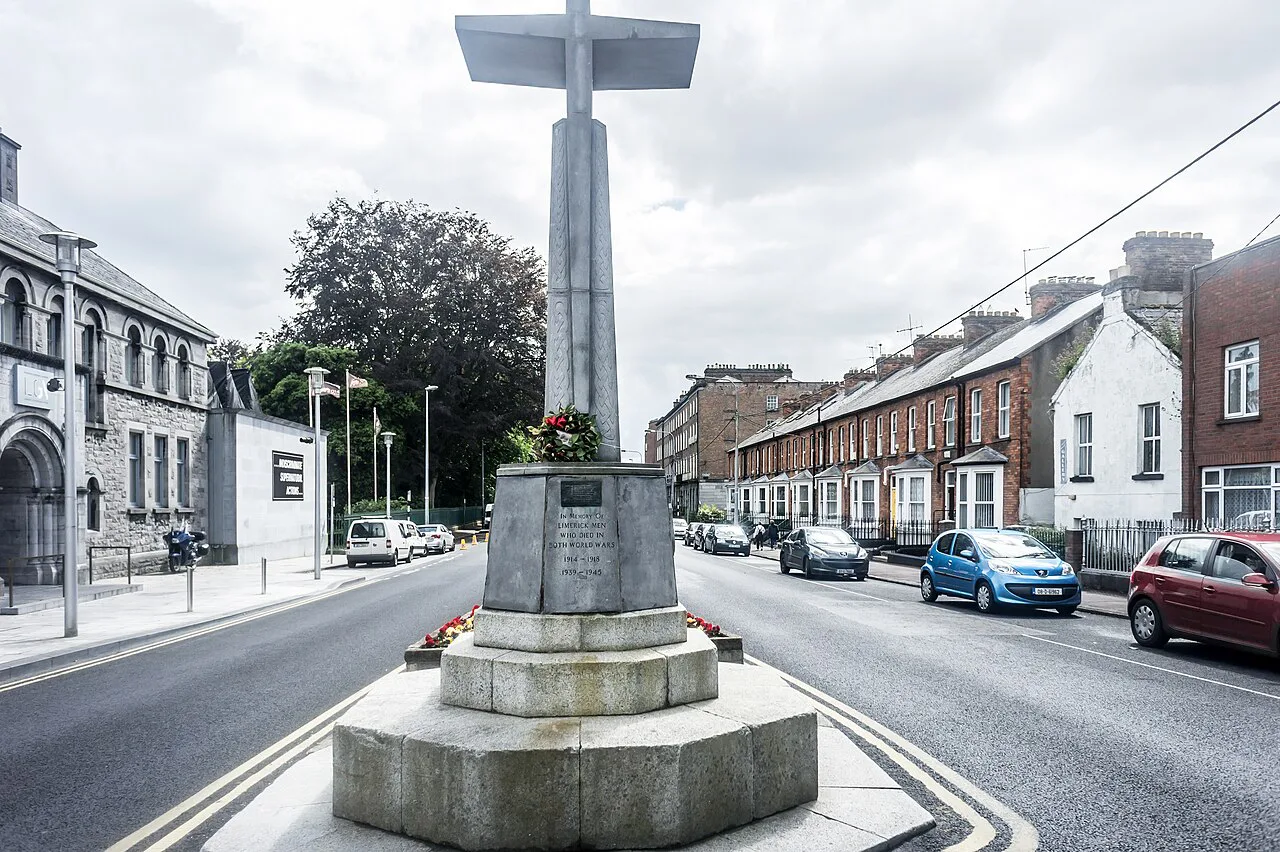
Pery Square makes a clean starting point. The city route opens here at the Tait Clock, a Gothic Revival tower built around 1867 in honour of a former mayor, and the square also holds a cut-limestone war memorial designed in 1960. Look at the door surrounds and fanlights on the surrounding terraces: the city route points out that much Georgian street furniture survives, including ironwork, knockers and boot scrapers.
At No. 2 Pery Square stands a terrace of six houses built around 1830 by the Pery Square Tontine Company, which the city route calls among the best surviving examples of late Georgian architecture in Ireland. Test that claim with your eyes: compare the proportions, window rhythm and doorcase detail of this terrace with the streets around it.
People's Park and Its Public History
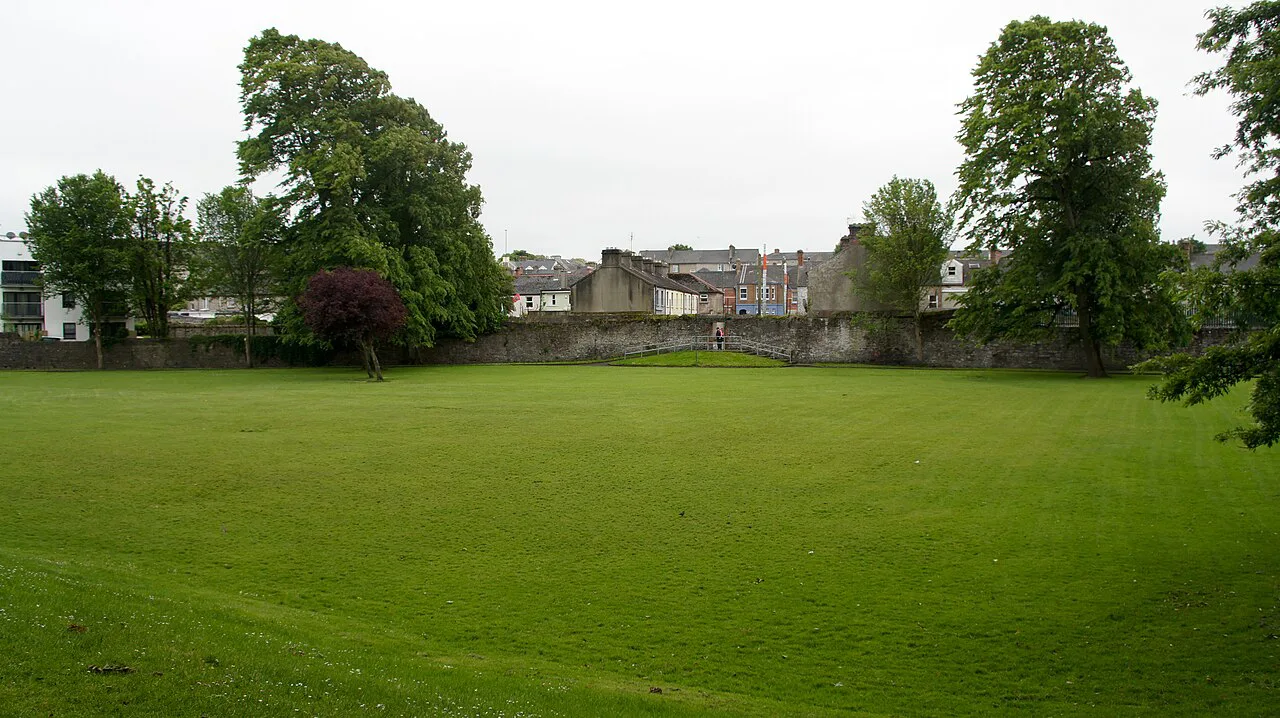
Adjoining Pery Square is People's Park, and its history is richer than its lawns suggest. The city route explains that the grounds were originally a key-holders-only park for residents of the nearby Georgian houses and became a public park only on 20 August 1877. Keeping that in mind changes how you read the railings and gate lodges as you walk in.
Inside, a free-standing limestone column erected in 1829 carries a statue of Thomas Spring Rice, MP for the city from 1820 to 1832. The bandstand dates from 1895 and the park kiosk from around 1917. An independent guide places the park across from Limerick Colbert station and describes a Victorian park with flower beds and mature trees, making it a sensible first pause if you arrive by train.
The People's Museum of Limerick
Opposite the gallery at No. 2 Pery Square, the People's Museum of Limerick occupies a Georgian house that Limerick Civic Trust restored between 1996 and 1999 and that President Mary McAleese opened in 1999. It became Culture House during Limerick's 2014 City of Culture tenure before returning to the Trust's care. This is the one stop here with explicit operator-published hours and charges, so build your day around it.
The museum opens Tuesday to Saturday 10am to 4pm and Sunday 12pm to 4pm, and is closed on Mondays. General entry is five euro, with a house tour for one euro extra and concession rates offered; tours run between 45 minutes and an hour. The collection spans children's dolls, military material and Limerick lace, so allow more time than the tour alone.
The Trust behind the museum is a self-funding charity founded in 1982 whose work covers conservation, civic environment and education, including walking tours and publications. The house therefore reads as a working example of that conservation programme rather than an unrelated attraction. Groups of up to fifty can arrange private tours by email if you are travelling with others.
Gallery, Statue and Henry Street
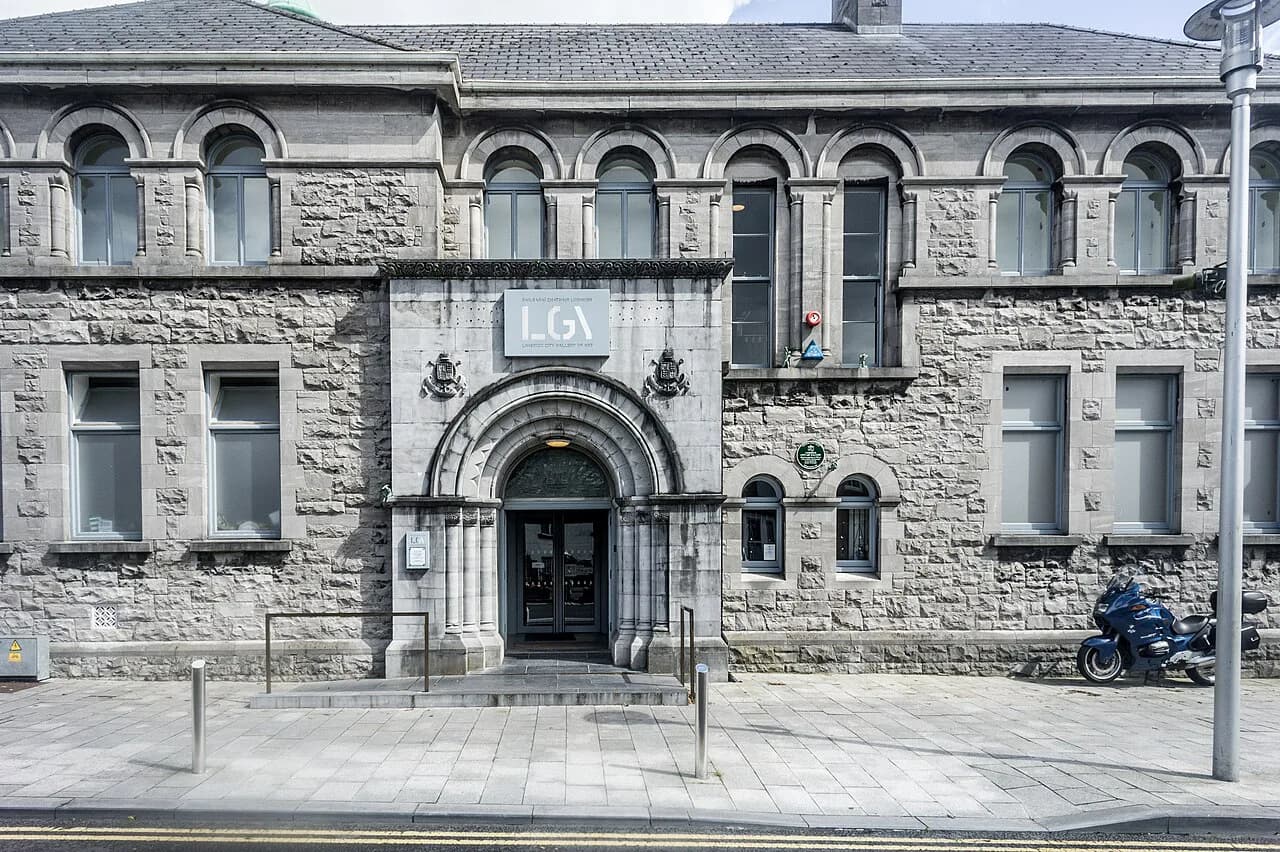
The adjoining Carnegie building of 1903 houses Limerick City Gallery of Art, which the city route describes as free to visit and open daily, with a permanent collection including works by Sean Keating and Jack B. Yeats. That statement comes from the city route rather than a gallery check, so confirm before fixing it in your plan. Public collections of this kind anchor a wider look at museums in Limerick.
Heading along O'Connell Street and then Bedford Row brings you to a bronze statue of the Limerick actor Richard Harris, unveiled in 2007 and depicting him as King Arthur in Camelot. It stands outdoors, costs nothing and needs no opening hours. Continue toward Henry Street for Limerick Museum.
Limerick Museum holds nearly 60,000 objects telling the city and county story, from Stone Age axes and medieval coins to the civic sword of Queen Elizabeth I and medals associated with veterans of the 1916 Rising. The city route states it opens weekdays from 10am to 5pm, a published description rather than a live check, so verify before travelling. If you have time for one indoor stop, choose between this and the People's Museum by interest.
Crossing the Shannon to the Treaty Stone
From Henry Street it is a short walk along to Sarsfield Bridge, passing the Limerick Boat Club of 1870. Cross the Shannon to Clancy Strand and continue for roughly five to ten minutes to reach the Treaty Stone. The city route associates the rock with the signing of the Treaty of Limerick in 1691 and dates its present setting to 1865; it stands outdoors and is visible without a ticket.
Treat the Treaty Stone story as tradition. An independent guide states that the treaty signed in 1691 ended a string of sieges and concluded the war between James II and William of Orange, and that the stone gave Limerick its nickname, the Treaty City. The sources do not settle how much of that signing narrative attaches to this specific rock, so read the interpretation rather than assuming certainty.
The Medieval Quarter: Thomond Bridge, Castle and Cathedral
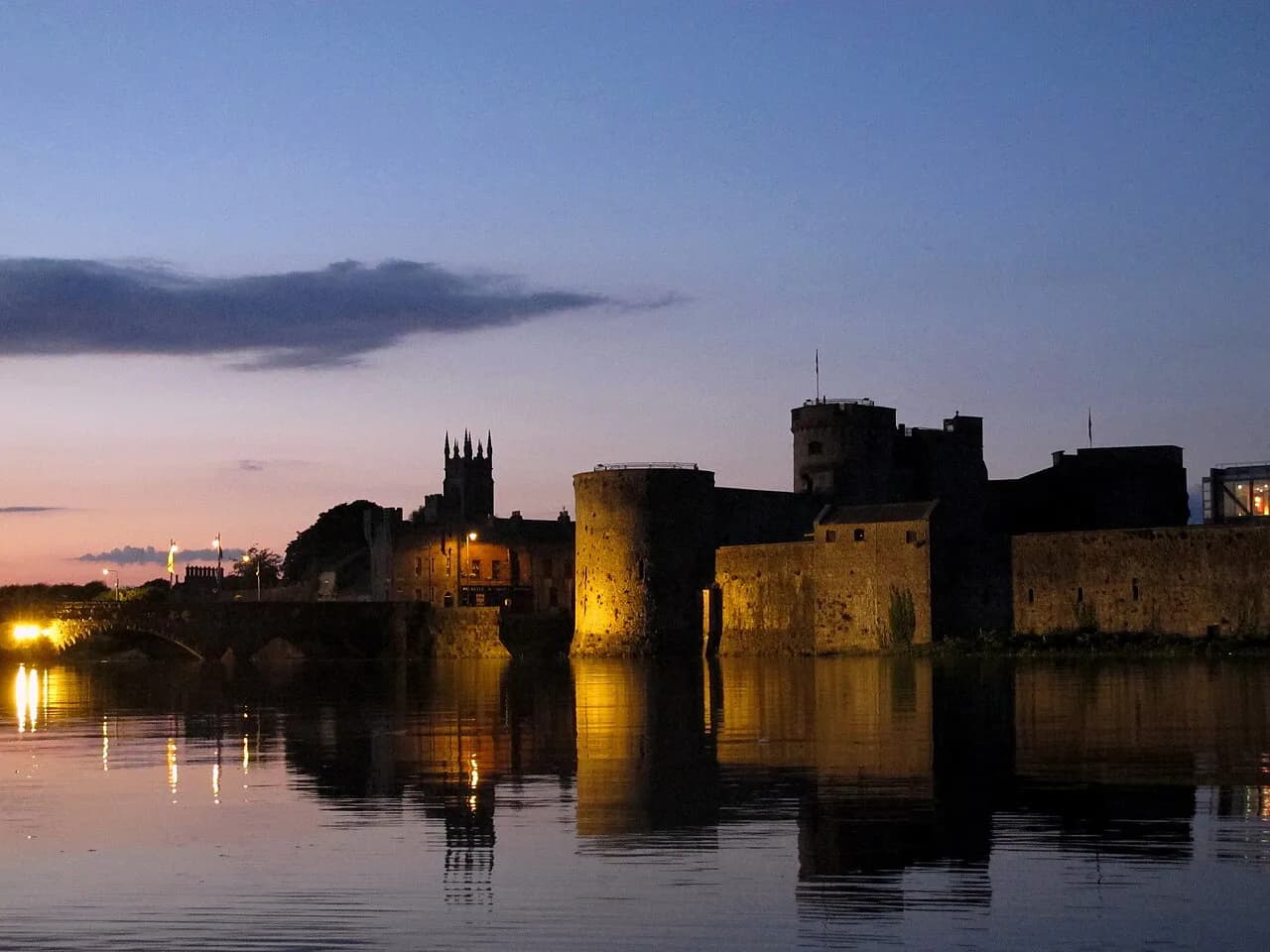
Cross Thomond Bridge to King's Island, the medieval core. The city route notes that a bridge has stood here since about 1185, though the present structure was completed in 1840 to designs by the Pain Brothers. The castle beside it is the Limerick fortress most visitors plan around—see Limerick Castles for the wider picture—and its admission and hours should be checked with the operator before you build the day around it.
The sources describe the castle's origins differently: the city route calls it a thirteenth-century castle, while the independent guide dates its construction to 1210 on the orders of King John of England. Both agree it sits on the Shannon and that exposed archaeology and exhibitions inside reward a visit. Since the precise founding date differs, treat the on-site displays as the authority.
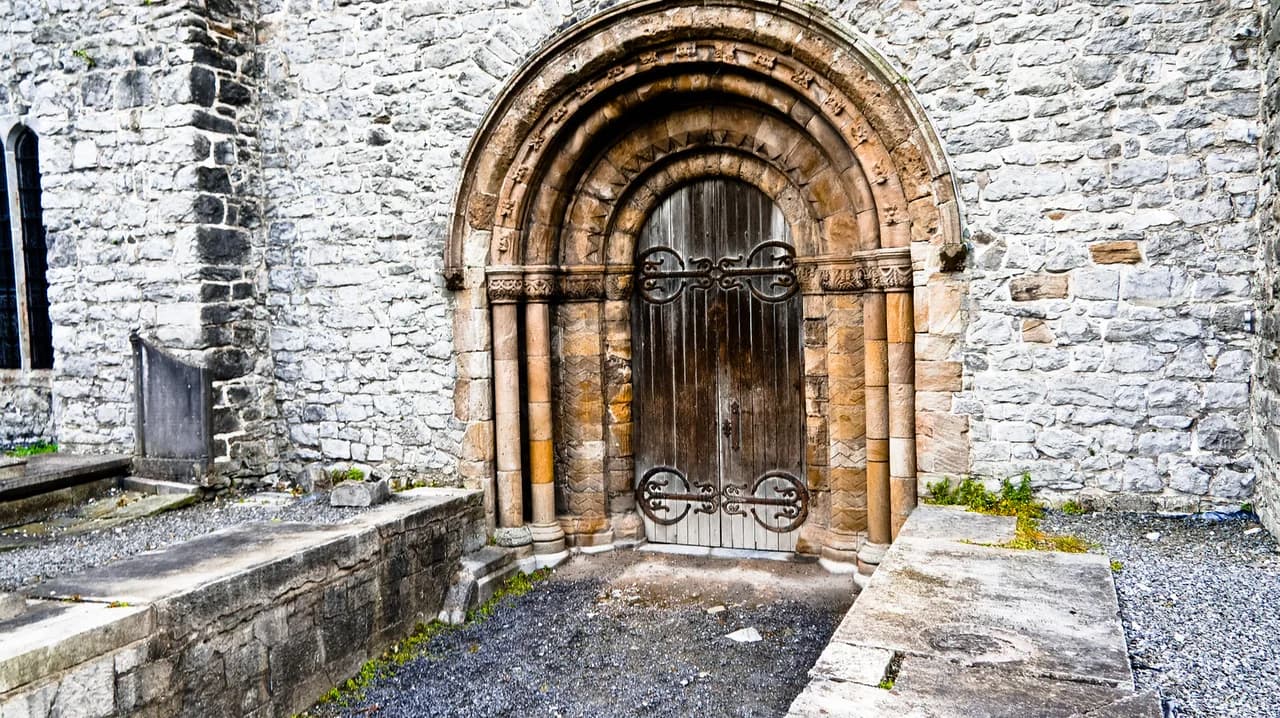
St Mary's Cathedral on Bridge Street is described by the city route as founded in 1168 on land donated by Donal Mór O'Brien, King of Munster, and as the oldest building in Limerick still used for its original purpose. Its East Window dates from 1860, and the West Door is the oldest part, though its exact date is uncertain. The independent guide singles out the fourteenth-century tower and suggests viewing the front from directly opposite.
For more on the city's ecclesiastical buildings, a separate guide to Limerick churches sets the cathedral alongside its neighbours and is worth reading before you decide how long to spend inside.
Hunt Museum and the Milk Market
Near the end of the circuit, the Hunt Museum occupies the former Custom House on Rutland Street and holds the collection assembled by John and Gertrude Hunt, bequeathed to Limerick University in 1978. The city route mentions a Renoir study, a Gauguin painting and works by Picasso and Jack B. Yeats among the highlights, and notes free volunteer-led tours of about an hour. No current opening hours or admission prices are stated in these sources, so check with the museum before you go.
The Milk Market is described by the city route as an all-weather, year-round space with main markets on Fridays, Saturdays and Sundays and occasional markets at other times. The independent guide says trading has happened here since 1852 and describes a single-column canopy sheltering food stalls, crafts and antiques. Arrive on a main market day for atmosphere, and check the market's own listings for events.
Bishop's Palace and the Carrol Collection
On Castle Street, the eighteenth-century Bishop's Palace now houses the offices of Limerick Civic Trust and the Carrol Collection, an exhibition of military memorabilia and family heirlooms assembled over five generations. The city route states that scheduled walking tours of the heritage sites and palace apartments run at 11am and 2pm on weekdays, and that the collection is open to the public Monday to Friday. Those times come from that route text, so reconfirm before relying on them.
Guided and Themed Alternatives
If you would rather be led, Limerick.ie lists a daily Explore Limerick city tour covering the bridges, castle, cathedral, Treaty Stone and river. It also names themed options: a self-guided Limerick Street Art Trail with a tribute to Dolores O'Riordan opposite the castle, Treaty City Brewery Tours in the medieval quarter, a Historic Whiskey Tour from Mother Macs, and the Women of Limerick App, a virtual trail covering figures such as Molly Clancy and Kate O'Callaghan. The city route separately describes the brewery as open six days a week with 45-minute tours, while Limerick's Best Walking Tours page describes the brewery tour as including a complimentary beer flight.
Each alternative trades coverage for focus. A themed trail gives depth on one subject but skips the broader geography; a led tour covers more ground but at someone else's pace. If you have already walked the route above, a single themed trail on a second day is often the better use of time. A Dublin walking tour is not a substitute for Limerick's own geography.
Sequencing the Day Around Opening Times
Practical planning comes down to two fixed points: the People's Museum's Tuesday-to-Sunday opening and Monday closure, and Limerick Museum's weekday timetable as described by the city route. Put those interiors into the day first, then slot the outdoor stops around them. Because Monday removes the People's Museum entirely, shift your walking day if that house is a priority.
Separate outdoor from indoor stops when budgeting time. People's Park, the Treaty Stone, Thomond Bridge and the Richard Harris statue need no schedule; the castle, cathedral, gallery, both museums and the Milk Market operate on days and hours the sources only partly state. For broader context on the city's past, the Limerick history guide is a useful companion.
Plan Your Visit
A good Limerick walking tour is less about covering every stop than about choosing a direction and letting the city's two halves do the work. Start in Newtown Pery, build the day around one or two interiors, and finish across the Shannon among the castle, cathedral and bridges.
The only details here confirmed by an operator are the People's Museum's hours and entry; everything else is published description rather than live information. Check opening hours and admission directly with each venue in the week before you travel, and leave room for the outdoor stops that never close.
Explore more Limerick guides
Frequently Asked Questions
How long does a Limerick walking tour take?
The sources give no official duration. One independent guide describes its circular route as comfortably done in half a day, while the city's numbered route covers sixteen stops. Budget longer if you plan to enter the castle, cathedral or either museum, and check each venue's opening hours before fixing a timetable.
Where does a self-guided Limerick walk start?
There is no single official start. Limerick.ie begins at Pery Square in Georgian Newtown Pery, while an independent guide starts at People's Park. Both lead toward the river and King's Island, so pick the one that suits where you are staying and what you want to see first.
Which stops need paid entry?
Only the People's Museum has operator-published pricing: general entry is five euro with a house tour for one euro extra, and concessions are offered. The city route describes Limerick City Gallery of Art as free to visit. Admission for the castle, cathedral, Hunt Museum and Limerick Museum should be confirmed directly with each venue.
Is the People's Museum of Limerick open on Mondays?
No. The operator states it opens Tuesday to Saturday from 10am to 4pm and Sunday from 12pm to 4pm, and is closed on Mondays. House tours last between 45 minutes and an hour, and groups of up to fifty can book privately by email.
Can you visit King John's Castle and St Mary's Cathedral on the same walk?
Yes, both sit on King's Island in the medieval quarter and are close together. The sources do not publish current opening hours for either, so check each venue before relying on entering both on the same day. Their exteriors and surroundings can be seen regardless.
What guided walking tours does Limerick offer?
Limerick.ie lists a daily Explore Limerick city tour plus themed options: the self-guided Limerick Street Art Trail, Treaty City Brewery Tours, a Historic Whiskey Tour and the Women of Limerick App. The city route also notes Bishop's Palace walking tours at 11am and 2pm on weekdays. Confirm current schedules with each operator.
Sources
- Self-Guided Walking Tour of Historic Limerick City | Limerick.ie
- Self-guided City Tour of Limerick, Ireland | Travel Guide
- Limerick’s Best Walking Tours | Limerick.ie
- Limerick Civic Trust - The People's Museum of Limerick
- Explore History of Limerick - The People's Museum
- Tailored House Tours - The People's Museum of Limerick
- Group Tours - The People's Museum of Limerick
You might also like
Continue reading
More guides you'll find useful