
Loughcrew Megalithic Cemetery: Visitor Guide to the Hills of the Witch
Loughcrew Megalithic Cemetery in County Meath holds Neolithic passage tombs, but Cairn T's interior is closed for conservation works. Here is what to expect.
On this page
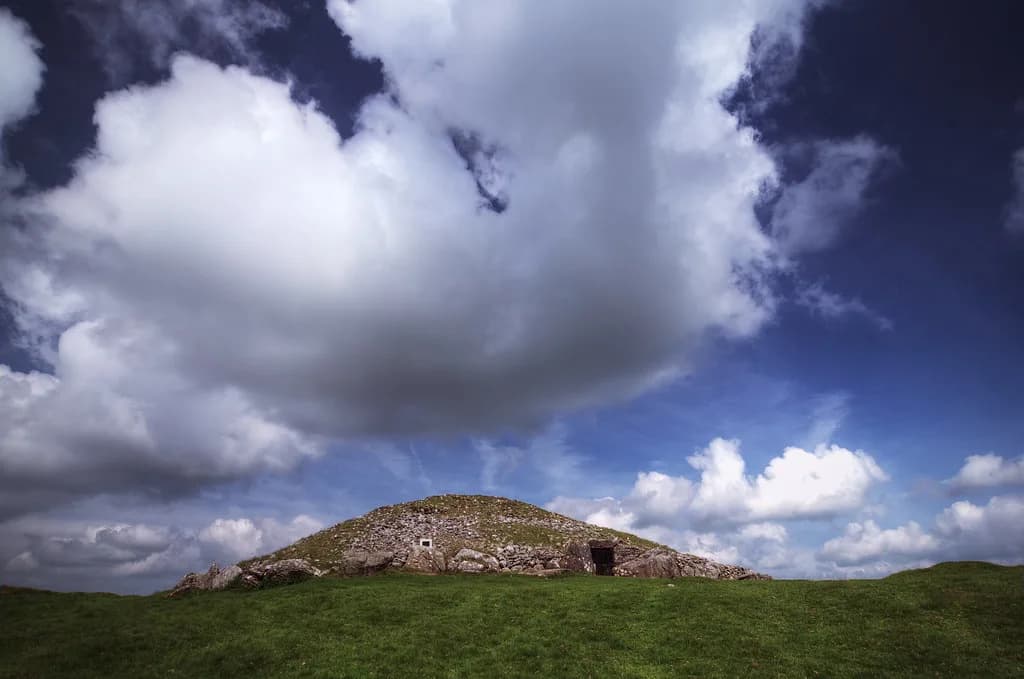
Loughcrew Megalithic Cemetery is a group of Neolithic passage tombs on the hills near Oldcastle in County Meath, and it is best known for Cairn T on Carnbane East. The complex is a National Monument managed by the Office of Public Works, and the hills are known in Irish as Sliabh na Caillí, the Hills of the Witch. As of 23 October 2026, the interior of Cairn T cannot be entered because of ongoing conservation works, while the other monuments on the hill are not affected.
This guide separates the three layers a visitor meets at Loughcrew: the surviving prehistoric architecture, the debated question of what the equinox alignment meant, and the folklore that grew up around the stones. It also sets out the terrain honestly, since the final approach is a steep climb on foot. For the wider set of comparable sites around the country, see this guide to passage tombs ireland.
What Loughcrew Is and Where It Sits
The tombs sit in County Meath, about 3km east of Oldcastle, and the national tourism body names three hilltops across the complex: Carnbane East, Carnbane West and Patrickstown. The monuments are passage tombs, chambers built of large stones and covered in most cases by a mound. They are protected as a National Monument under the National Monuments Acts 1930 to 2014 and are in the ownership of the Minister for Housing, Local Government and Heritage, managed by the Office of Public Works.
Published dates for the tombs vary. The operator's page describes the complex as dating to 3000 BC, while the national tourism body says the site is thought to date from about 3300 BC. These are published estimates rather than a single settled figure, so treat any precise year as an approximation for a complex built and reused over time.
Current Access: Cairn T's Interior Is Closed
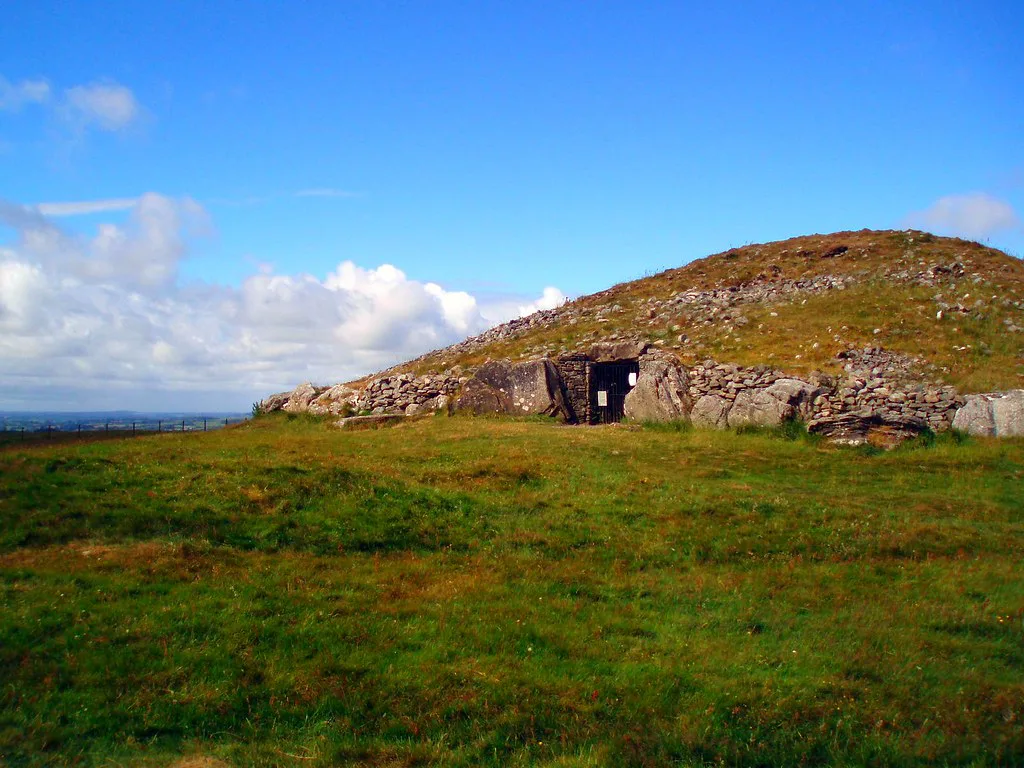
The most important practical fact is set out plainly by the operator: because of ongoing conservation works, access to the interior of Cairn T is not possible at present, and no reopening date is given. The rest of the monuments on the hill are not affected by that work, and the site is an outdoor one where those hill monuments can still be seen. Anyone planning a trip around the hope of standing inside the chamber should check the operator page before travelling rather than assume the position has changed.
The operator's guidance on tours is not fully consistent within its own pages. Part of the Heritage Ireland listing refers to guided tours exploring the history and mythology of the monuments, while the position supplied for this guide is that guide presence has ended for the 2026 season. Visitors should not count on on-site interpretation being available and should confirm the current position on the official listing before travelling.
Cairn T and the Architecture of the Complex
Cairn T on Carnbane East is the best known and most visited monument at Loughcrew. Inside it lies a cruciform chamber with a corbelled roof, and the stones carry some of the finest Neolithic art in Ireland, with carvings visible in the passage as well as the chamber. The tomb is aligned to the rising sun at the spring and autumn equinoxes, a feature that has drawn dawn gatherings over the years.
The structural stones and orthostats are mostly local green gritstone, a rock soft enough to carve but also easily damaged, which helps explain the care the operator asks of visitors. The petroglyphs include lozenge shapes, leaf forms and circles surrounded by radiating lines, a style associated with this group of monuments.
The Equinox Alignment: What Is Known and What Is Interpretation
That the Cairn T chamber admits light at the equinoxes is supported by official descriptions, and people have traditionally gathered at dawn at those times to watch the sunlight enter and illuminate carvings at the back of the chamber. What the alignment was for is a separate question. Some popular accounts suggest the carvings worked as calendars or star charts, but that is one interpretation rather than a demonstrated function, and it should be presented as such.
Practical expectation matters here too. Equinox light effects depend on weather and timing, and at present the chamber interior is closed for conservation, so no source promises that a given visitor will see the interior illuminated. If the alignment is your reason for going, treat the published descriptions as evidence of a real phenomenon and the experience of witnessing it as something that cannot be booked or guaranteed.
The Witch Legends and Other Traditions
The folklore attached to Loughcrew is vivid and should be enjoyed as legend, not history. The best-known version tells of a hag or witch who formed the cairns by leaping from one hill to the next and dropping stones from her apron; in the attempt to reach the last hill she fell and died, and tradition says she is buried on the slopes of Patrickstown. The Irish name Sliabh na Caillí, meaning mountain of the witch, keeps that story in the landscape.
Other versions add their own characters. One local telling names the witch Garavogue and gives the tomb the nickname the Witch's Cave and its largest kerbstone the name the Hag's Chair, while a separate folk tale turns the story into a wager between the witch and St Patrick. A further tradition holds that Cairn T is the resting place of Ollamh Fodhla, a legendary King of Ireland. All of these are traditions about the monuments rather than records of their construction.
The Climb and the Terrain
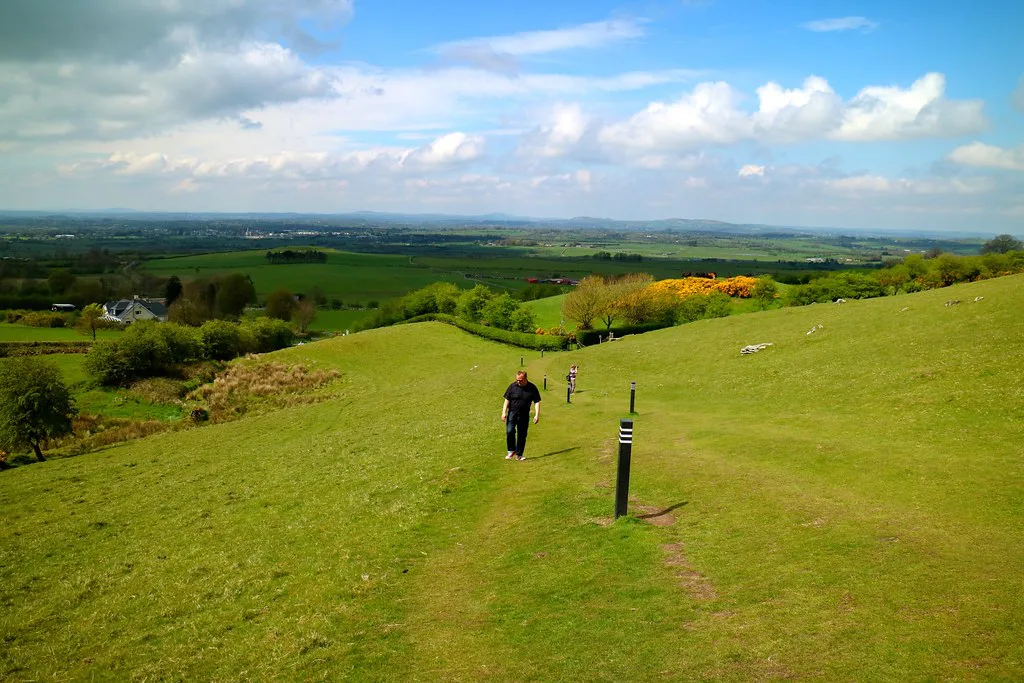
The walk up Carnbane East is short but demanding. The operator describes the climb to Cairn T as very steep and advises suitable footwear, and its highlights page puts the ascent at about fifteen minutes even with pauses to admire the view. The route is open hill ground exposed to the weather, so bring appropriate clothing, and be honest about the climb if anyone in your group has limited mobility.
The approach road is very narrow, and the operator asks drivers to take extreme caution on it. The operator's listing points to limited on-site provision rather than a staffed heritage centre, listing a car park and a brochure. The operator also publishes a social guide as a downloadable document to help first-time visitors, families and people with developmental and learning disabilities prepare.
Protecting the Monuments
The carvings are more than five thousand years old and some are only faintly visible, which is why the operator forbids scraping, marking or writing on the stones and warns that anyone found to have defaced the monuments will be prosecuted. These are conditions attached to a protected National Monument, not loose suggestions, and they apply to the stones whether or not the chamber interior is currently closed.
The legal protection runs through the National Monuments Acts, and the monuments are in the ownership of the Minister for Housing, Local Government and Heritage. In practice this means treating every carved surface as fragile, avoiding any contact with the stones, and resisting the urge to touch art that survives only because generations before did the same. It also means accepting that conservation work such as the current Cairn T project is part of how the site endures.
Loughcrew in the Boyne Valley Context
The national tourism body describes Loughcrew as one of the jewels in the crown of the Boyne Valley, and its tomb architecture places it in the same broad tradition as the better-known mounds downstream. The cruciform chamber and corbelled roof at Cairn T belong to the same family of passage-tomb design, and the decorated stones reward close looking even from outside the chamber. Reading about newgrange and the Brú na Bóinne monuments first makes the differences at Loughcrew easier to see, and the Brú na Bóinne Visitor Centre is the practical starting point for planning that comparison.
Ireland's passage tombs are scattered far beyond Meath, and comparing them is one of the pleasures of the subject. Knowth, the great passage-tomb mound in the Boyne Valley, carries a dense concentration of megalithic art, while Carrowmore Megalithic Cemetery in County Sligo offers a western counterpart in a very different landscape. Each repays a separate visit rather than a rushed circuit, and the same is true of the ancient sites ireland covers beyond the passage tombs.
For travellers assembling a longer itinerary of prehistoric and early Christian places, the broader collection of ancient sites ireland is a useful way to group what belongs together geographically. Loughcrew works best as a deliberate stop rather than a quick detour, because the hill walk and the looking take time. Pairing it with other sites in the same region turns a single hill into a coherent day of landscapes, and the castles in county galway are a natural counterpart when a trip pushes west.
Planning a Loughcrew Visit
Allow more time than the fifteen-minute climb suggests, because the reward at the top is looking, not arriving. Wear footwear suited to a steep, uneven hill path, take extreme care on the narrow approach road, and go with the expectation of an outdoor monument rather than an indoor attraction. If steep ground or the accessible routes are a concern for someone in your group, plan accordingly before setting out and check what the operator advises.
Before you travel, check the official Loughcrew listing for the status of the Cairn T conservation works and for any change to guide presence, since neither the closure nor the staffing position can be assumed to have stayed the same. The archaeology and the legends are both worth the climb, but the hilltop, not the chamber, is what a visit currently offers. Read up on the folklore and the tomb architecture in advance so the stones can speak for themselves once you are there.
For another heritage guide in the same stretch of the Boyne Valley, read about passage tombs ireland and the wider set of ancient sites ireland.
Explore more Ireland guides
Frequently Asked Questions
Can I go inside Cairn T at Loughcrew?
Not at present. The operator states that access to the interior of Cairn T is not possible because of ongoing conservation works, and no reopening date has been published. The other monuments on the hill are not affected, so the outdoor hilltop monuments can still be seen. Check the official listing before travelling in case the position has changed.
Is there a charge to visit Loughcrew Megalithic Cemetery?
The operator's page does not set out an admission price for the cemetery in the material available here, so do not assume either a charge or free entry. Check the official Heritage Ireland listing for current admission information before you go, and treat any older blog claims about ticketing with caution.
How hard is the climb to Cairn T?
The operator describes the climb to Cairn T as very steep and advises suitable footwear, while its highlights page suggests the ascent takes about fifteen minutes even with stops. The approach road is very narrow, so drivers should take extreme caution. Budget extra time for looking around at the top and check the operator's advice if accessibility matters to your group.
Are guided tours running at Loughcrew?
The position is mixed. One part of the operator's listing mentions guided tours, but other material indicates that guide presence has ended for the 2026 season. Do not count on on-site interpretation being available and confirm the current situation on the official listing before you rely on a guide.
What is the story of the witch at Loughcrew?
It is legend, not history. Tradition says a hag or witch formed the cairns by dropping stones from her apron as she jumped between hills, and that she died and was buried on the slopes of Patrickstown. Other versions name her Garavogue or turn the tale into a wager with St Patrick. The Irish name Sliabh na Caillí, mountain of the witch, preserves the story.
When is the equinox light visible in Cairn T?
Official descriptions say the rising sun at the spring and autumn equinoxes reaches into the Cairn T chamber, and people have traditionally gathered at dawn to watch it. Whether any given visitor sees the effect depends on weather and on access, which is currently limited by the conservation closure. The purpose of the alignment remains a matter of interpretation rather than proof.
What facilities are at the site?
The operator's listing points to limited on-site provision, including a car park and a downloadable social guide to help visitors prepare. It does not list toilets, a café or a visitor centre at the cemetery, so plan provisions elsewhere and treat the visit as an outdoor hill walk rather than a staffed attraction.
How does Loughcrew compare with Newgrange and Knowth?
Loughcrew belongs to the same broad passage-tomb tradition, with cruciform chambers and decorated stones, but it is a hilltop complex spread across several peaks rather than a single managed mound. Each site rewards separate attention, and reading about the Brú na Bóinne monuments first makes the differences at Loughcrew clearer.
Sources
You might also like



Continue reading
More guides you'll find useful


