
Knowth: A Visitor's Guide to the Great Passage-Tomb Mound
Knowth is reached only by guided tour from the Brú na Bóinne Visitor Centre, and pre-booking is essential. What to plan for and what you will see.
On this page
Knowth is one of the three great passage-tomb sites within Brú na Bóinne, the World Heritage Property set in a bend of the River Boyne in County Meath, alongside Newgrange and Dowth. It is a mound you cannot simply drive up to: access runs through the Office of Public Works visitor centre and a guided tour, so the visit begins with planning rather than arrival. For the wider tradition it belongs to, see Passage Tombs in Ireland, and for comparable sites elsewhere in the country the guide to ancient sites ireland sets out what each one demands of a visitor.
That structure is the first thing to understand. The operator describes the tombs as built around 3200BC and treats the visitor centre as the starting point for all visits, which means a spontaneous stop at the mound will not get you in.
Why Knowth Rewards Planning
Knowth sits within what the operator calls Ireland's richest archaeological landscape, a concentration of prehistoric monuments rather than a single isolated tomb. Because entry is tied to a booked tour rather than a ticket desk at the gate, the practical work happens before you travel: choosing your slot, confirming it through official channels and building the rest of the day around it. Treat the booking as the fixed point of the visit and everything else as flexible.
Getting In: The Visitor Centre Is the Only Starting Point
All access to Newgrange and Knowth runs through the Brú na Bóinne Visitor Centre in County Meath, where visitors board a shuttle bus to the monuments. The operator is explicit that going directly to the monuments means you will not gain entry, so the centre is a necessary first stop rather than an optional exhibition. The same advance-planning logic applies to Ireland's castles, and the guide to castles in county galway shows how opening arrangements shape a day out.
Access to both monuments is by guided tour only, and pre-booking is essential for every visitor, children and infants included. Unaccompanied minors under eighteen are not admitted, so a family visit needs an adult on the booking.
The visitor centre itself holds an interactive exhibition on Neolithic culture and the monuments, and pre-booking for the visitor centre alone is not required. That makes it a sensible way to use spare time before or after a tour slot, particularly if your journey has involved a wait.
Booking Reality: Official Channels Only
Tickets are released online at midnight Irish time, and cancellations are returned to the online system at short notice, so availability can change quickly. The operator states that availability is very limited, which makes checking the official site your first move rather than a last resort.
No third-party organisation is authorised to sell tickets to Brú na Bóinne, and tickets bought from resale platforms or lookalike websites will be refused at entry. This is the single costliest mistake available to a visitor here, so book only through the official Heritage Ireland page and ignore anything that resembles a reseller.
Groups of fifteen to thirty must pre-book a group time slot by emailing the visitor centre, and visitors needing special assistance should also make contact in advance of booking. For anyone with mobility concerns, that email is the practical step that determines whether the tour will work.
The Mound Itself: Scale and Structure
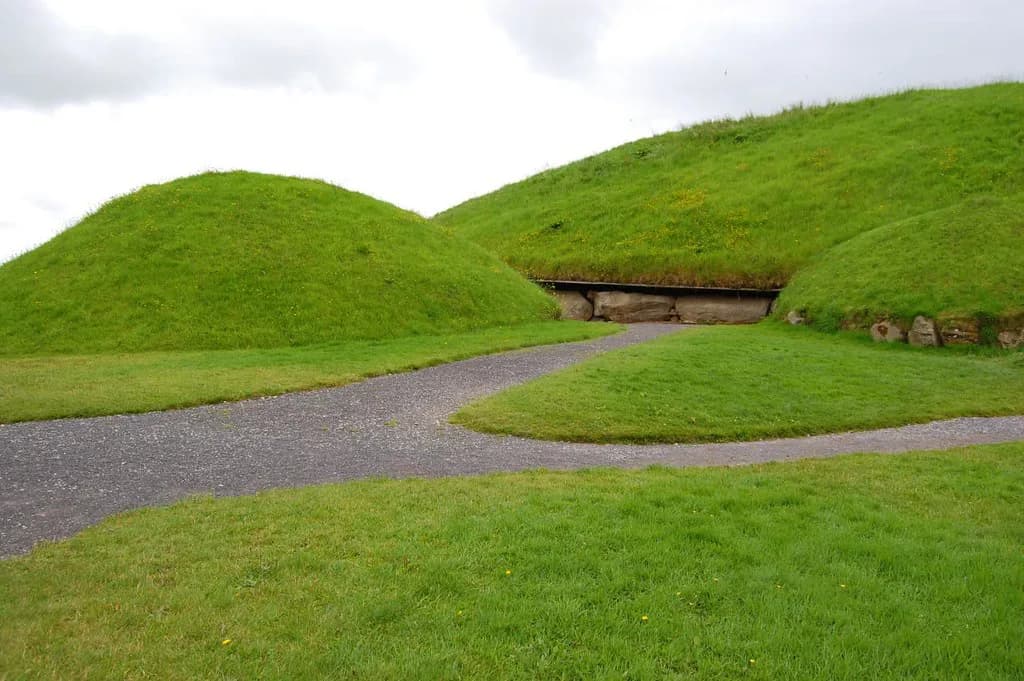
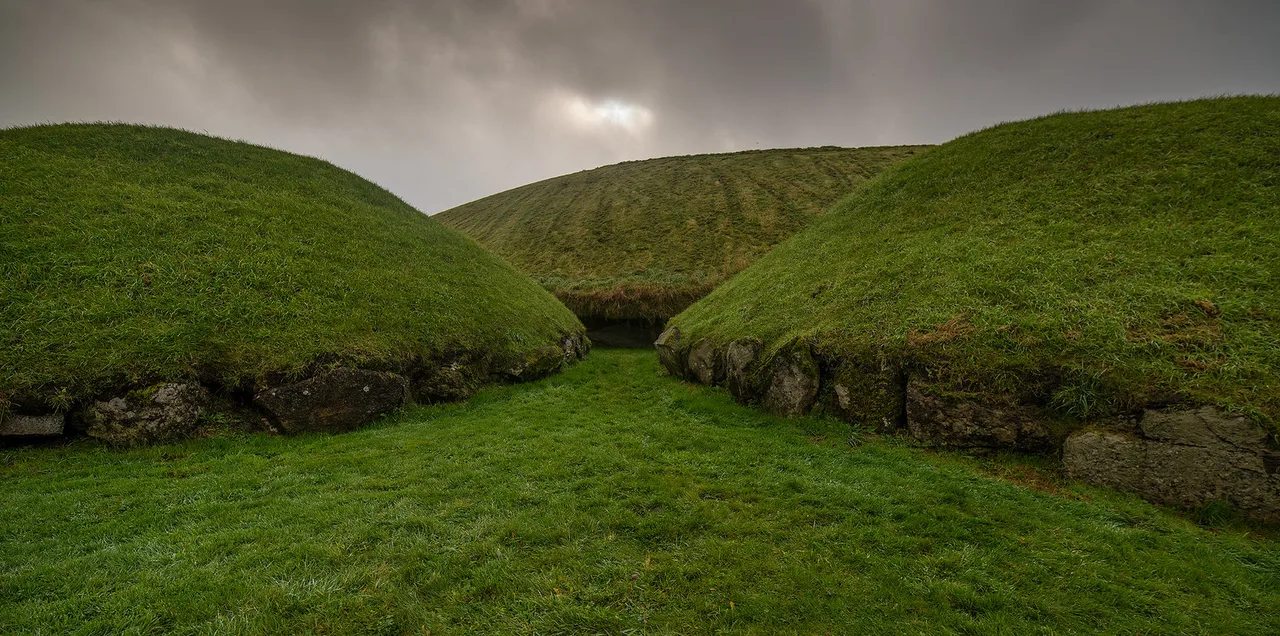
George Eogan's excavation account gives the central mound's external measurements as eighty metres east to west by ninety-five metres north to south, covering about 6,080 square metres and standing 9.9 metres high. Those are archaeological figures from the excavation record rather than visitor-information measurements, and they explain why the mound reads as a landmark in the landscape rather than a single grave.
The same account describes the mound as containing two large tombs, found in successive excavation seasons: Eogan records the western tomb opening into a chamber in 1967, and a second, more elaborate eastern complex with a cruciform chamber and a corbelled roof the following season. Both carried decorated orthostats, ornamented capstones and a decorated stone basin, and Eogan frames Knowth as holding more than a quarter of the engraved art from the whole of Neolithic Europe.
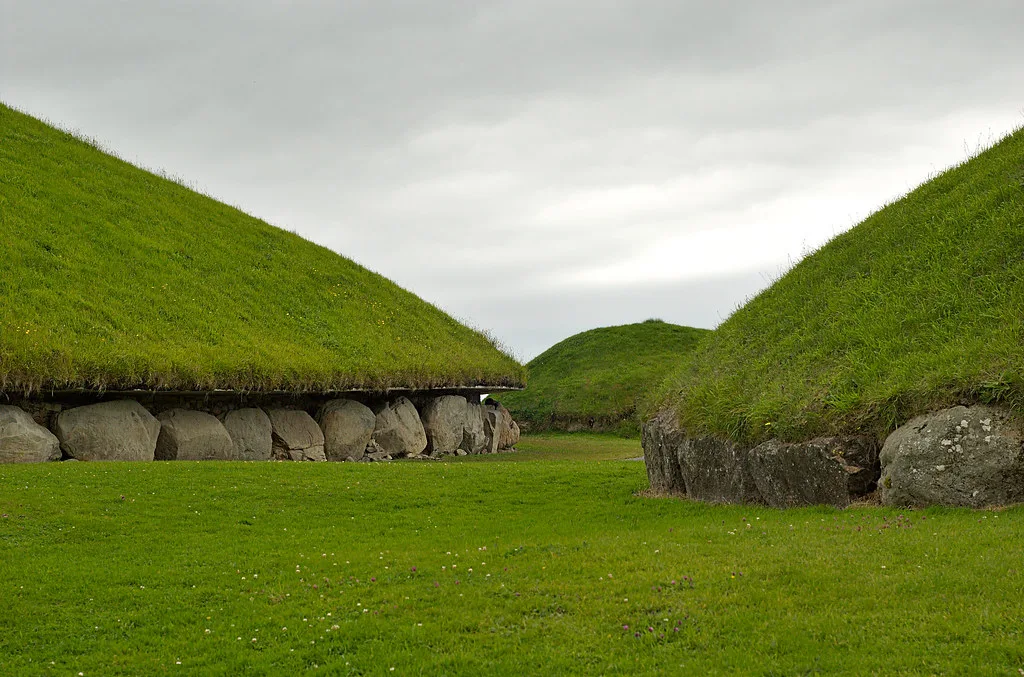
Smaller satellite tombs cluster around the great mound, and an independent account notes settings of quartz, granite and banded stones near the entrances. Treat that as context for what surrounds you on the tour, not as a promise of which structures the guide will take you into.
Reading the Art
The operator describes Brú na Bóinne as containing the largest collection of megalithic art in Western Europe, a statement about the wider landscape rather than Knowth alone. Keep it separate from Eogan's book framing of Knowth's share of Neolithic engraved art: one is a claim about the whole property, the other about this mound.
Motifs recorded at Knowth include spirals and lozenge shapes, with ogham inscriptions added on the stones roughly two thousand years later. The gap between the carvings is the interesting part: it shows the mound was returned to and marked long after its builders, and it is why the monument is read as a place of repeated use rather than a single event.
Questions of astronomical purpose at Knowth are postulated rather than settled in the secondary literature, so treat any alignment explanation you hear as interpretation. The archaeology of the art itself, by contrast, is well documented across both the excavation record and the operator's description of the property.
After the Neolithic: Later Use and Legend
After a gap in activity, the site saw Iron Age cist graves and later building foundations, evidence that the mound retained significance across millennia. This layered use is what makes Knowth more than a prehistoric relic: it accumulated meanings rather than being sealed and forgotten.
Irish legend gives the Brú na Bóinne landscape to Oengus, son of the Dagda, and tells of his love for Caer Ibormeith, a woman transformed into a swan. This is folklore from the mythological tradition, not a historical record of the site, and it belongs in a different category from the excavation evidence described above.
Practical Notes for the Day
The monuments are outdoor sites with no shelter, so rain and wind are part of the visit and clothing should reflect that. Opening can also be weather dependent and access may change at short notice, which is another reason not to treat your booked slot as transferable to any other moment of the day.
Universal access is limited at the monuments, and the operator asks visitors with mobility issues to make contact in advance. Photography is not permitted in the passage or chamber at Newgrange, and a permit is required for commercial filming or photography, so check the rules for the specific monument you are touring before assuming a camera is welcome everywhere.
Notices list early opening on winter-solstice mornings from 19 to 23 December with regular tour options suspended, and closure from 24 to 27 December inclusive and on 1 January. Those are specific published notices rather than a general seasonal pattern, so confirm the current position on the official page before fixing late-December travel.
Honest Bounds: What This Visit Does Not Include
Nearby Heritage Ireland properties such as Mellifont, the Hill of Tara and the Battle of the Boyne site are separate attractions with their own arrangements, not stops on a Knowth ticket. If you want to combine them, research each one independently rather than assuming one booking covers the day.
This guide also does not state whether visitors enter the Knowth chambers, because that detail is not set out in the available sources. Nor does it give ticket prices or opening hours for the mound itself; those belong to whatever the operator publishes on the day, and the official page is where to check them.
If Knowth is one stop in a wider interest in Neolithic monuments, it helps to see it as part of a broader tradition of Irish passage tombs rather than a standalone curiosity; Passage Tombs in Ireland covers other cemeteries that reward the same kind of advance planning.
Plan Your Visit
Knowth is best approached as a booked engagement rather than a roadside stop: the visitor centre gates access, the shuttle bus and guide carry you to the mound, and every member of your party needs a pre-booked ticket. Get that right and the archaeology, the art and the layers of later use are what the day is actually about.
Before travelling, check the official Heritage Ireland page for current availability, any weather-related changes and December notices. Book only through that page, dress for open ground and confirm access arrangements in advance if anyone in your group has mobility needs.
Explore more Ireland guides
Frequently Asked Questions
Do you need to book Knowth in advance?
Yes. Pre-booking is essential for all visitors, including children and infants, and access is by guided tour only. Tickets are released online at midnight Irish time, with cancellations returned to the system at short notice, so check the official Heritage Ireland page for availability and current arrangements.
Can you drive directly to Knowth?
No. All visits to Newgrange and Knowth begin at the Brú na Bóinne Visitor Centre, and visitors are brought to the monuments by shuttle bus. The operator states that going directly to the monuments means you will not gain entry, so the visitor centre is the first stop regardless of how you travel.
What is there to see at Knowth?
The central mound contains two large passage tombs, with decorated stones and a decorated stone basin recorded during excavation, and smaller satellite tombs cluster around it. The wider Brú na Bóinne landscape holds an exceptional concentration of megalithic art. The visitor centre also has an interactive exhibition on the Neolithic culture and monuments.
Is the Oengus story at Knowth history?
No. The material about Oengus, Caer Ibormeith and the Tuatha Dé Danann belongs to Irish legend and folklore, not to the archaeological record. The excavation evidence instead covers the construction and later re-use of the tombs, including Iron Age graves and ogham inscriptions added long after the carvings.
Are the monuments at Knowth sheltered?
No. The operator describes them as outdoor sites with no shelter, so dress for the weather. Opening can be weather dependent and access may change at short notice, which is worth checking on the official page before you set out.
Is Knowth accessible for visitors with mobility issues?
Universal access is limited at the monuments. Visitors who need special assistance or have mobility concerns are asked to email the visitor centre in advance of booking so arrangements can be discussed before tickets are confirmed.
Is Knowth open in late December?
Published notices list closure from 24 to 27 December inclusive and on 1 January, with earlier opening on winter-solstice mornings from 19 to 23 December and regular tour options suspended on those mornings. These are specific notices, so confirm the current position on the official page before booking.
Sources
You might also like



Continue reading
More guides you'll find useful


