
Carrowmore Megalithic Cemetery: A Visitor Guide to Sligo's Tombs
Carrowmore in County Sligo is Ireland's largest and oldest collection of Neolithic tombs. See what to look for at Listoghil and how to plan a visit.
On this page
Carrowmore Megalithic Cemetery lies in County Sligo, about 5 km from Sligo town off the N4 at its junction with the R292. Heritage Ireland, which presents the site for the Office of Public Works, calls it the largest and oldest collection of Neolithic tombs in Ireland, with over 30 surviving monuments dating back almost 6,000 years. That combination of scale and age is why the place rewards an unhurried walk rather than a quick photograph.
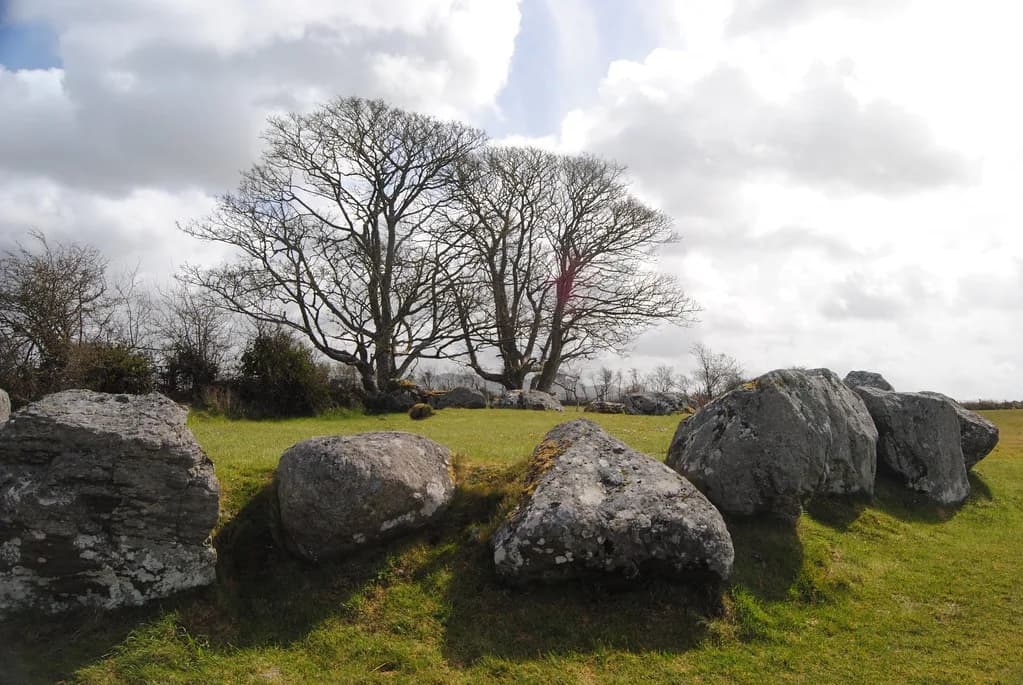
The visit is best treated as a walk through a prehistoric cemetery rather than a viewing of one monument. Tombs survive in very different states, from small dolmens and low structures to the large central cairn known as Listoghil, so the reward comes from noticing how each survivor sits in the field around it.
What Carrowmore Is and Why It Matters
The operator's own description sets the terms: Carrowmore is the largest and oldest collection of Neolithic tombs in Ireland, with over 30 surviving monuments dated to almost 6,000 years ago. It sits along the Wild Atlantic Way and forms part of the Passage Tomb Landscape of Sligo, a grouping placed on Ireland's Tentative List for UNESCO World Heritage status. That is a nomination stage, not a designation, so you are visiting a candidate landscape rather than an inscribed World Heritage Site.
The North West Ireland tourism body notes that Carrowmore lies about 5 km from Sligo town and holds one of the largest collections of megalithic monuments in Northern Europe, mostly dolmens and small passage tombs. Read that as orientation rather than archaeology: you are not looking at one impressive mound but at a cemetery with many graves, most of them modest in footprint.
Getting There and Reading the Setting
The practical approach is from the N4: leave the road at the N4–R292 junction and Carrowmore is roughly 5 km from Sligo town. The operator page gives no other travel detail, so follow signage on the approach rather than relying on a remembered route description.
Before walking among the stones, notice what surrounds the field. Heritage Ireland ties the site's legend material to the cairn-crowned summit of Knocknarea, visible in the surrounding landscape, where tradition places the tomb of Queen Maeve. That hill is a neighbour to the cemetery, not part of the Carrowmore monument itself, so it helps to hold the two apart while you look around.
If you are building a wider itinerary of Irish passage-grave sites, Carrowmore belongs in a different group of visits from the great Boyne Valley mounds. Our overview of Passage Tombs in Ireland puts the wider tradition in context across the island.
The Monuments in the Field
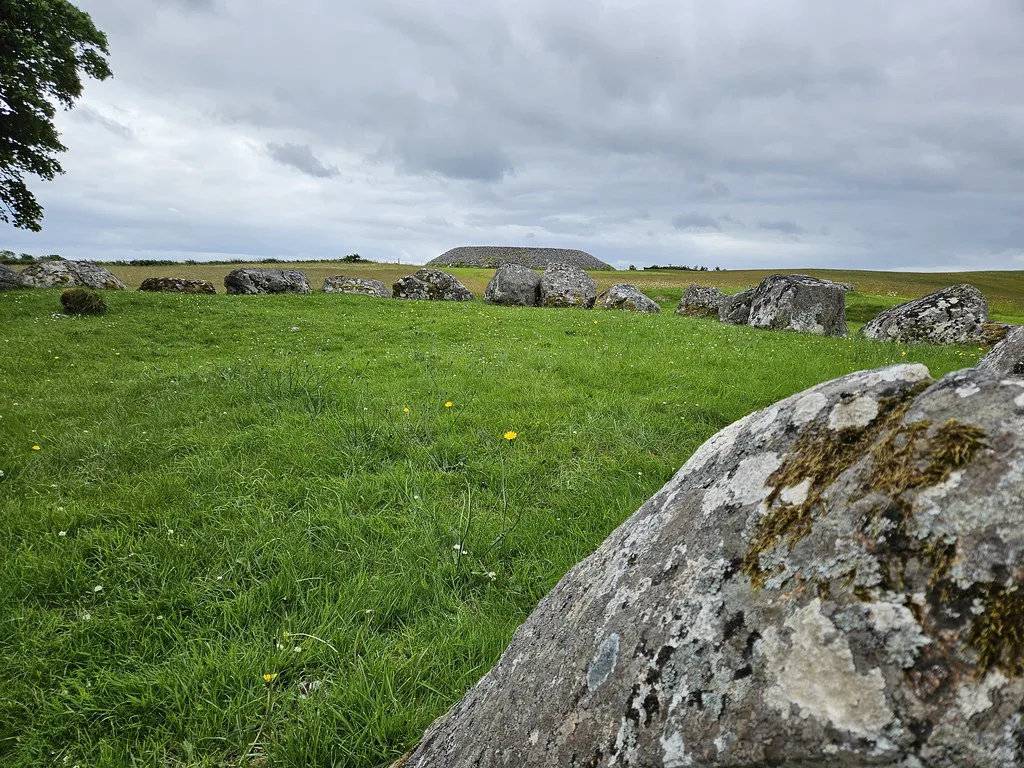
What you encounter is uneven. Heritage Ireland invites visitors to see the largest cemetery of megalithic tombs in Ireland and to marvel at monuments that have stood for over five millennia. The cemetery records a long-lived sacred place rather than a single designed structure, and the gaps between tombs matter as much as the remains.
Walking the monuments in sequence, rather than darting between them, gives the best sense of how the cemetery was laid across the landscape. Heritage Ireland frames the site as one of the most sacred places in Neolithic Europe, and that framing is easier to grasp when you move steadily through the field instead of treating each tomb as a separate stop.
Listoghil, the Central Monument
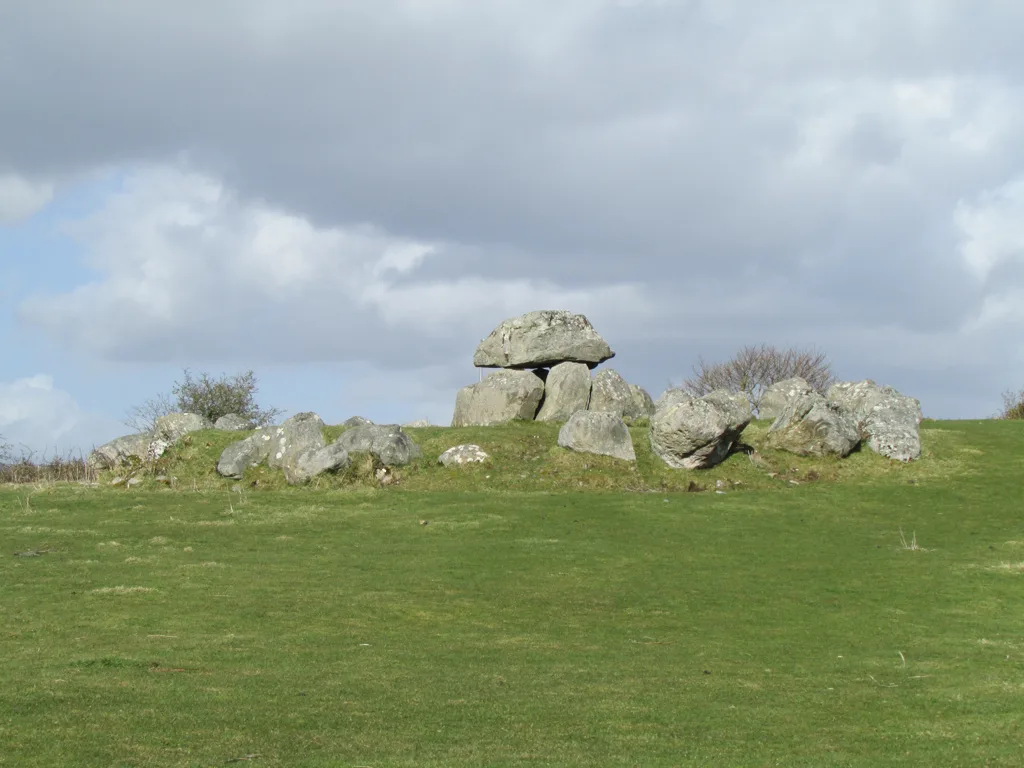
Listoghil is the centrepiece of Carrowmore. At what would have been the centre of the cairn, six upright stones support a massive roof-slab. Approach it as the pivot of the visit: the other tombs are best understood in relation to this one, and standing back first helps you see the cairn shape before you look into the structure.
Heritage Ireland treats Listoghil as the central monument of the cemetery, the tomb around which the site's interpretation is built. If you have visited the great mounds of the Boyne Valley, the contrast is instructive: at Newgrange the best-known monument is presented as a major engineered passage-tomb complex, whereas Listoghil asks you to read a smaller, more weathered structure in an open field. The same question of how much monument you actually get to see shapes a trip to the castles in county galway, where access varies sharply from site to site.
Reading the Capstone Carvings
The capstone of Listoghil carries what the operator describes as elusive prehistoric carvings, which you might make out only in the right light. Do not arrive expecting a dramatic panel of rock art: this is a quiet detail, and on some days you may not pick it out at all. Circle the stone slowly, give your eyes time, and treat a sighting as a bonus rather than the purpose of the visit.
If marked carvings are central to your interest, other Irish sites help calibrate what you are looking for. The decorated stones at Knowth in the Boyne Valley are far more conspicuous; our Knowth guide explains how those surfaces are seen today, and the wider Passage Tombs in Ireland overview places both cemeteries in the same tradition. Before fixing a route, our guide to ancient sites in Ireland gathers the country's major tombs, forts and trackways in one place.
Sky, Season and the Samhain Sunrise
Carrowmore has an astronomical dimension tied to place and date. Heritage Ireland explains that at Samhain the rising sun appears above a distinctive natural saddle in the Ballygawley Mountains directly in line with the chamber of Listoghil. At the moment of sunrise the underside of the tilted roof is lit with deep orange light, and a pointed stone at the front of the chamber casts a shadow that travels across the slab.
Read that as a described phenomenon, not a promise. Ordinary daylight visits will not reproduce the Samhain effect, and the operator page includes a separate sunrise gathering on 31 October. If witnessing the alignment matters to you, check the current notice before planning around it rather than assuming an event on any given date.
Myth and Legend, Clearly Labelled
Carrowmore's folklore is part of its appeal, provided you keep categories straight. Tradition holds that the summit cairn on Knocknarea is the grave of Queen Maeve, and legend credits the Cailleach Bhéara, described by Heritage Ireland as a giant, aged and fearsome figure, with shaping the landscape around the tombs. Both are stories attached to places you can see, not historical records of who built the cemetery.
Heritage Ireland presents this material as myth and legend rather than as the site's archaeology, which is the right frame for it. These tales belong to Ireland's storytelling tradition and to later written accounts, and they say nothing verifiable about the Neolithic people who raised the stones. Enjoy them as interpretation of a landscape that has long invited stories.
The Upgraded Visitor Centre
The upgraded visitor centre at Carrowmore was officially opened on 1 April 2026. The improvements listed by the operator are improved interpretation of the site's archaeology, enhanced accessibility, upgraded toilet facilities, an all-weather shelter, and revised internal and external layouts to improve visitor flow. In practice, the centre now gives you a proper orientation before you walk out among the tombs and a sheltered place if Sligo weather turns. It is worth checking hours and access ground rules in advance, just as you would before visiting the castles in county galway, where access varies sharply from site to site.
The centre does not replace the field. The archaeology is outside, so arrive with enough time for both: a short spell with the interpretation to fix the sequence of the cemetery, then the walk itself. Anything beyond the listed amenities should be checked on the day in case the centre is temporarily closed, rather than assumed.
Practical Visit: Hours and Access
The operator lists opening hours of 10:00 to 18:00 with last admission at 17:00, and posts a notice of limited access for wheelchair users. Take that notice at face value: parts of the site present difficulties for some visitors, so if you have mobility requirements, contact the operator before travelling rather than assuming full accessibility.
Those hours and the access notice are the operator's current published position, so check the Heritage Ireland page again shortly before you set out; it is the page that governs access. Beyond the location given above, the page supplies no further travel detail, so plan the approach around the N4–R292 junction and signage rather than memory.
Wider Sligo Context Without Overreach
Carrowmore is one component of the Passage Tomb Landscape of Sligo, a grouping placed on Ireland's Tentative List for UNESCO World Heritage status. That matters because it frames the cemetery as part of a much broader prehistoric landscape rather than an isolated curiosity. It does not mean the site is inscribed, and the hills visible from the field are neighbours, not extensions of the monument.
For comparison, other Irish cemeteries reward the same slow reading, and our guide to Loughcrew in County Meath is a useful reference point for anyone pursuing the theme further. It does not substitute for time spent at Carrowmore, but it shows how varied the Irish passage-tomb tradition is. If your itinerary is widening beyond Sligo, our guide to ancient sites in Ireland gathers the country's major tombs, forts and trackways in one place.
Making the Most of a Carrowmore Visit
Carrowmore rewards a walk with a purpose: see the field and its varied tombs first, then read Listoghil as the centre, then look for the carvings if the light cooperates. The legend material adds depth once you know the archaeology, and the upgraded visitor centre gives the context that makes the plain stones legible.
Before travelling, confirm the current hours and access arrangements on the operator page, since those are what govern your visit. If the Sligo landscape leaves you wanting more prehistoric context, our guide to ancient sites in Ireland puts Carrowmore alongside the country's other major monuments.
For another heritage guide, read about Dowth.
Frequently Asked Questions
What is Carrowmore Megalithic Cemetery?
It is a prehistoric cemetery in County Sligo, presented by Heritage Ireland for the Office of Public Works as Ireland's largest and oldest collection of Neolithic tombs. Over 30 monuments survive across the fields, and the site is part of the Passage Tomb Landscape of Sligo on Ireland's Tentative List for UNESCO World Heritage status.
How many tombs are at Carrowmore?
Heritage Ireland describes over 30 surviving monuments at Carrowmore, dating back almost 6,000 years. The cemetery's importance lies in the surviving field of monuments as a whole rather than in any single number.
What is Listoghil and what can I see there?
Listoghil is the central monument at Carrowmore, where six upright stones at what would have been the centre of the cairn support a massive roof-slab, as Heritage Ireland describes it. It is the tomb around which the site's interpretation is built and the best starting point for understanding how the other tombs relate to it.
Can you see carvings at Carrowmore?
The capstone at Listoghil carries prehistoric carvings that Heritage Ireland describes as elusive and visible only in the right light. They are not guaranteed to be obvious on any particular visit, so treat them as a careful observation rather than a headline attraction.
What happens at Carrowmore at Samhain?
According to Heritage Ireland, the rising sun at Samhain appears above a saddle in the Ballygawley Mountains in line with Listoghil's chamber, lighting the underside of the tilted roof. The operator page also advertises a sunrise gathering on 31 October, so check its current notice for arrangements before planning to attend.
Is Carrowmore a UNESCO World Heritage Site?
No. The Passage Tomb Landscape of Sligo, which includes Carrowmore, has been placed on Ireland's Tentative List for UNESCO World Heritage status. That is a nomination stage, and the site has not been inscribed as a World Heritage Site.
How far is Carrowmore from Sligo town?
Carrowmore is about 5 km from Sligo town, reached off the N4 at the N4–R292 junction. The operator page gives no further travel detail, so follow signage on the approach rather than relying on a remembered route.
Is Carrowmore wheelchair accessible?
Heritage Ireland posts a notice of limited access for wheelchair users, and the 2026 upgrade included enhanced accessibility. Because access is qualified rather than universal, contact the operator before travelling if you have specific mobility requirements.
Sources
You might also like



Continue reading
More guides you'll find useful


