
Dowth: A Visitor Guide to the Brú na Bóinne Passage Tomb
Dowth is one of the three great passage-tomb mounds at Brú na Bóinne. Learn what survives, how the carvings and alignments are read, and how visits are arranged.
On this page
Dowth is one of the three great prehistoric passage-tomb mounds of Brú na Bóinne, the World Heritage landscape that fills a bend of the River Boyne in County Meath. Official Heritage Ireland material lists Newgrange, Knowth and Dowth together as monuments built around 3200 BC, and describes the complex as holding the largest collection of megalithic art in Western Europe. It is a single archaeological site within a wider landscape, not a separate ticketed attraction with its own visitor centre.
That distinction shapes everything practical about seeing it. The official starting point for the ticketed monument tours is the Brú na Bóinne Visitor Centre, and its exhibition is the place to build context on Neolithic culture, the river landscape and the tombs before or after time outdoors. This guide separates what the operator publishes from what independent specialists interpret, so you can plan around confirmed arrangements rather than assumptions.
Where Dowth Stands in the Bend of the Boyne
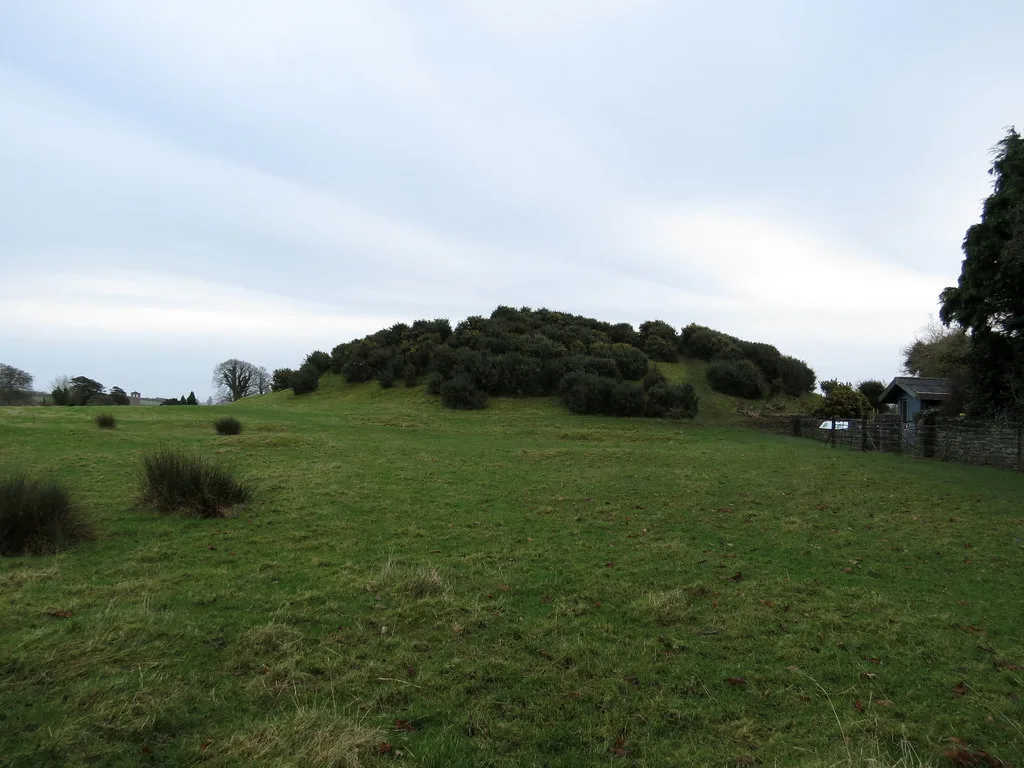
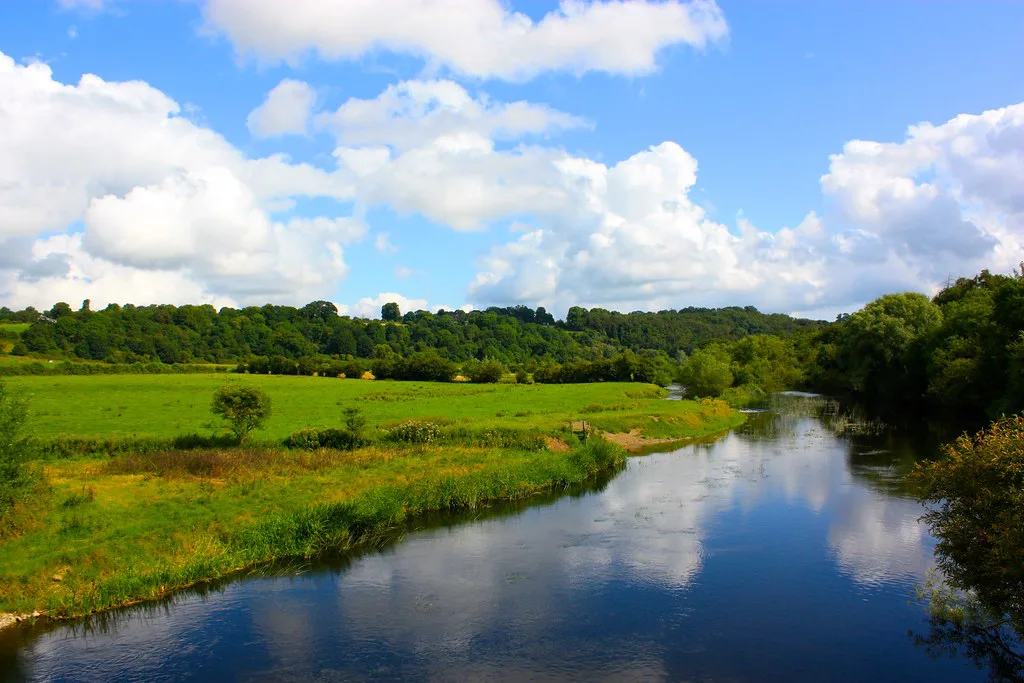
The Boyne loops through low Meath farmland to form a natural amphitheatre, and the three great mounds sit within it rather than on dramatic high ground. Dowth lies at the eastern edge of this cluster, its grass-covered cairn rising like a gentle hill above the valley, according to the dedicated Dowth site. Approaching from the visitor centre, you are moving through a ritual landscape rather than travelling between separate attractions.
Independent writer Anthony Murphy, writing for Mythical Ireland, describes Dowth as possibly the oldest of the three mounds and the least explored in modern archaeology, a hedge worth keeping in mind. The same landscape also holds dozens of smaller satellite tombs and ceremonial spaces, and the dedicated Dowth site stresses that later generations kept interacting with these places, adding burials and offerings. Treat the visit as one stop in a dense archaeological neighbourhood, and pair it with the broader context in a guide to Ireland's passage tombs if you want the regional picture, or with ancient sites in Ireland for the full range of tombs, forts and trackways.
A Kerbed Cairn of the Neolithic
At its simplest, Dowth is a large circular mound of stone and earth revetted by a ring of kerb stones. Heritage Ireland groups it with Newgrange and Knowth as ceremonial structures of approximately 3200 BC, among the most important Neolithic sites in the world. The dedicated Dowth site describes Neolithic farming communities building it over five thousand years ago using massive stones, some weighing several tonnes.
Around 115 kerb stones are thought to ring the cairn, though many remain buried, so what you see above ground is a fraction of the original setting. That partly concealed kerb is one reason Dowth feels quieter and more unresolved than its neighbours. If you want to compare a mound whose kerb and art are presented through a managed tour, Knowth offers the obvious contrast within the same landscape.
The Stone of the Seven Suns and the Carvings
Dowth's best-known carving is kerb stone 51, the Stone of the Seven Suns, on the eastern side of the kerb. It shows seven rayed discs, six of them enclosed in circles, and interpretations vary from seasonal suns to comets or a solar eclipse, as summarised by Mythical Ireland. Those are readings of an undeciphered image, not a translation.
Carving continues inside. The same account describes chamber stone C7 with concentric circles, a small spiral and linear marks, and a heavily decorated stone C19 bearing spirals and serpentine shapes on both its face and side. Because these stones are described rather than displayed in a museum, understanding them depends partly on published drawings and photographs. If carved stones are your main interest, a wider survey of decorated tombs such as Loughcrew adds useful comparison.
Two Passages, One Chamber: Dowth North
Dowth has two known passages on its south-western side, one of which is aligned so that winter solstice sunset light can reach the chamber. The northern passage leads to a cruciform chamber that Mythical Ireland suggests may be the oldest of its kind in the complex, though that remains an argument rather than a settled finding. The chamber is small, roughly eleven feet high and nine feet across by that account.
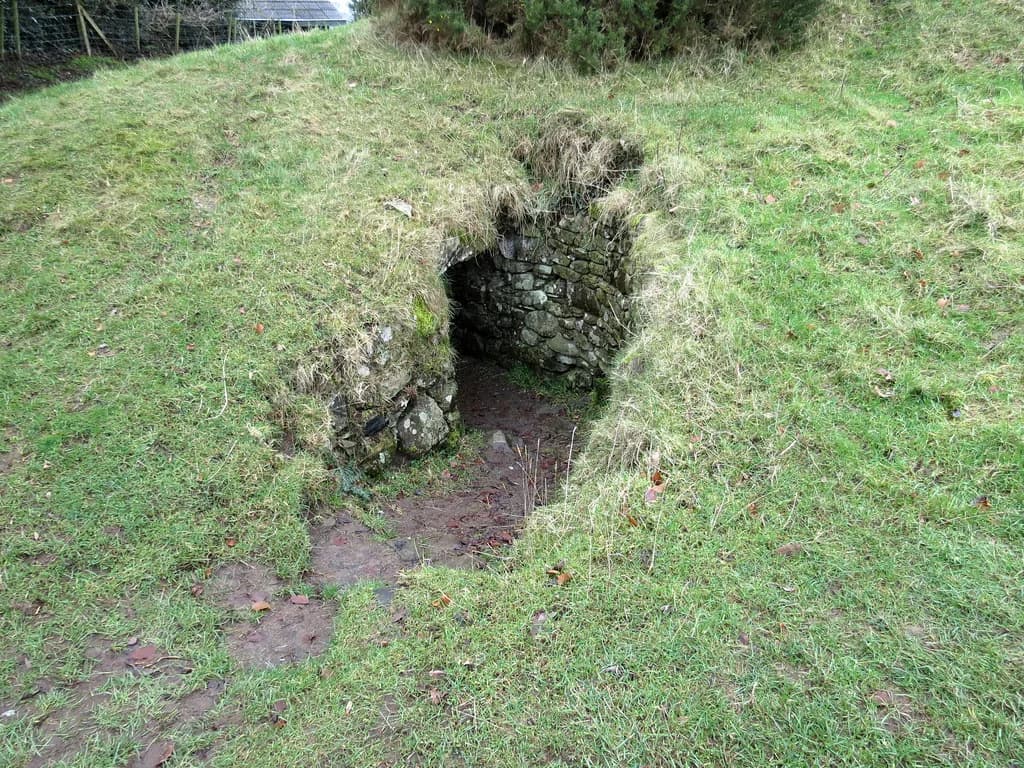
Access into that chamber is through a long souterrain, and the passage orthostats lean inward, so movement through it is cramped. This is the source's description of the interior, not a statement of public access; nothing published by the operator confirms that visitors can enter Dowth. Plan on the likelihood that you will be studying the mound and its exposed stones from outside.
The Souterrain: Later Building in an Older Monument
The souterrain cut into Dowth North is built of much smaller stones than the Neolithic passage, and Mythical Ireland dates it to roughly the later first century AD. That makes it a later insertion into a monument already thousands of years old, with its entrance set some distance from where it terminates near the earlier passage. The result is a structure where two building episodes, separated by millennia, sit almost on top of one another.
For a visitor, this is the clearest physical argument that the mound was never simply abandoned. Later communities reworked it, which complicates any tidy story of construction followed by silence. Similar evidence of reuse recurs across Irish megalithic sites, and the wider survey of ancient sites in Ireland helps place such episodes in context, much as the guide to castles in county galway traces how later builders reworked earlier strongholds.
Reading the Sky: Alignments as Interpretation
The claim that Dowth is oriented to the setting winter solstice sun appears in the dedicated Dowth site and in Mythical Ireland's account of the southern passage. The northern passage is more contested: Clare O'Kelly's 1969 survey recorded a magnetic bearing that, corrected for magnetic north, points close to the setting position of the moon at minor standstill around 3300 BC. That is a reasoned argument from survey data, not a proven function.
Mythical Ireland notes that other writers have offered a Taurus and Pleiades reading, linking the seven suns to the bull-and-seven-cows story in place-name lore. Such ideas are worth hearing and worth holding loosely; archaeologists disagree about how precisely Neolithic builders intended any of it. Heritage Ireland's pages make no astronomical claims at all, which is itself a useful signal about the limits of the evidence.
The 1840s Excavation and Why Dowth Is Least Understood
Dowth was partly excavated in the 1840s by R. H. Firth of the Royal Irish Academy, an intervention Mythical Ireland describes as disastrous for the monument. Considerable damage was done, and no excavation report survives beyond whatever notes Firth kept. That absence is the core reason Dowth lags behind Newgrange and Knowth in published interpretation.
The practical consequence for visitors is that confident explanations are harder to find here, and the honest guides say so. When you read about Dowth's passages, chambers or art, check whether the writer is describing standing remains, nineteenth-century disturbance, or inference. That habit is more valuable at Dowth than at almost any other Irish site.
Dubhadh, Darkness and the Dindshenchas Story
The name Dowth derives from Dubhadh, generally glossed as darkness or darkening. Medieval place-name lore, the Dindshenchas, tells of Bresal Bó-Dibad and a story about building the mound over a single day, with the sun standing still and a bull and seven cows attached to the tale. It should be read as tradition, not as a record of what happened.
Mythical Ireland notes that later Irish storytelling folded the Boyne mounds into tales of the Tuatha Dé Danann and the Dagda, which is how such places entered the literary imagination. These narratives are valuable for understanding how monuments were remembered, and they are not evidence for Neolithic belief. Treat them as legends, and separate them clearly from archaeology.
Access in Practice: Visitor Centre, Tickets and Tours
The Brú na Bóinne Visitor Centre is the designated start for Newgrange and Knowth visits, and Heritage Ireland is explicit that going directly to those monuments results in refused entry. Access to both is by guided tour only, with pre-booking essential for every visitor including children and infants, and tickets released online at midnight Irish time with cancellations re-released. Visitor-centre-only visits do not require booking, which makes the exhibition a flexible part of the day.
Only tickets bought through Heritage Ireland or the Office of Public Works are valid, and anyone arriving with third-party or resale tickets will be turned away; fraudulent lookalike websites exist. That page covers Newgrange and Knowth tours and does not publish Dowth-specific access arrangements, so check with the operator directly if Dowth is your priority rather than assuming a parallel system. The exhibition itself is a fully interactive introduction to the Neolithic culture, landscape and monuments of Brú na Bóinne, and it is the sensible place to understand what the wider complex contains.
Who the Monuments Suit, and Who They Do Not
Universal access is limited at the monuments, and Heritage Ireland asks visitors with mobility issues or those needing special assistance to email brunaboinne@opw.ie in advance of booking. The Newgrange passage and chamber are low and narrow and may not suit people with claustrophobia. Photography is not allowed inside the Newgrange passage or chamber, and commercial filming or photography needs a permit.
The monuments are outdoor sites with no shelter, so rain gear and sturdy shoes matter more than any ticketing tip. Access can change at short notice for weather and safety reasons, and the operator advises checking the site's open or closed status if in doubt. These conditions are published for the Newgrange and Knowth tours; nothing on that page sets out Dowth's own visiting conditions.
Closures, Solstice Mornings and One Check Before Travelling
Heritage Ireland publishes operational notices for the complex: closure on 24 to 27 December inclusive and on 1 January, and earlier opening on winter solstice mornings from 19 to 23 December, when regular tour options are suspended. Group bookings of 15 to 30 people go through a separate email request rather than the standard online release. Plan winter trips around these notices rather than around the solstice date alone.
Check the current open or closed status before travelling, since weather and safety decisions can override any plan made weeks earlier. If you are building a broader Boyne Valley itinerary, the wider survey of passage tombs in Ireland sets Brú na Bóinne against other megalithic landscapes, and makes a useful counterpoint for planning.
Plan Your Visit
Dowth rewards preparation and a willingness to leave questions open. Read the kerb stone art and the passage alignments as claims from the sources that make them, and treat the mound as one element of the Brú na Bóinne landscape rather than a self-contained sight with its own desk and turnstile. The visitor centre exhibition is the best place to assemble that context.
Book any Newgrange or Knowth tour well ahead through official channels only, and confirm current arrangements if Dowth itself is your reason for coming. Check opening status in the days before you travel, especially in winter, and dress for open, unsheltered ground. A well-chosen guide to Ireland's passage tombs makes a sensible companion to a day in the Boyne Valley.
Explore more Ireland guides
Frequently Asked Questions
Is Dowth open to visitors?
The operator's published material describes Brú na Bóinne as a whole and sets out how visits to Newgrange and Knowth work; it does not publish Dowth-specific visitor arrangements. Contact the Brú na Bóinne Visitor Centre before relying on access to the mound itself, and check the site's current open or closed status.
Can you go inside Dowth?
Nothing published by the operator confirms public entry to Dowth's passages or chambers. Descriptions of the narrow northern chamber and the souterrain come from independent writers who have entered, and should not be read as a guarantee that visitors can. Plan to see the mound and exposed stones from outside.
How does Dowth differ from Newgrange and Knowth?
Dowth is a large kerbed cairn with two known passages, partly excavated in the 1840s and far less published than its neighbours. Newgrange and Knowth are reached by guided tour from the Brú na Bóinne Visitor Centre with pre-booking required, while Dowth is not presented by the operator as a separately ticketed tour.
What is the Stone of the Seven Suns?
It is kerb stone 51, on the eastern side of Dowth's kerb, carved with seven rayed discs. Suggested meanings include seasonal suns, comets or an eclipse, but these are interpretations of an undeciphered image rather than agreed readings.
Why is Dowth called the place of darkness?
The name comes from Dubhadh, generally glossed as darkness or darkening, and medieval place-name lore attached a building story involving Bresal Bó-Dibad to the mound. That is traditional storytelling, not historical record, and it should be kept separate from archaeological evidence.
Do you need to book to see Dowth?
Pre-booking is essential for the guided tours of Newgrange and Knowth, and booking the visitor centre alone is not required. The operator does not publish Dowth-specific booking rules, so ask the visitor centre directly if that site is central to your trip.
Is Dowth aligned to the winter solstice?
One of Dowth's passages is described in independent accounts as aligned so winter solstice sunset light can reach the chamber, and the northern passage is argued to face the setting moon at minor standstill. These are interpretations from survey and observation, not settled consensus.
Why is so little known about Dowth?
A partial excavation in the 1840s by R. H. Firth caused damage, and no full report survives beyond whatever notes were kept. Modern research has concentrated on Newgrange and Knowth, which is why Dowth's passages and art remain less confidently explained.
Sources
You might also like



Continue reading
More guides you'll find useful


