
Passage Tombs in Ireland: Newgrange, Carrowmore and Loughcrew
Compare Ireland's passage tomb landscapes at Brú na Bóinne, Carrowmore and Loughcrew, with access rules, alignments and megalithic art explained for visitors.
On this page
A passage tomb is a Neolithic mound built over a stone-lined passage that leads to one or more burial chambers. Ireland holds a notable concentration of them, and three managed landscapes show the form in contrasting conditions: the Brú na Bóinne complex in County Meath, Carrowmore in County Sligo and Loughcrew near Oldcastle in County Meath.
What separates these visits is effort and regulation rather than grandeur. Brú na Bóinne runs on pre-booked guided tours and shuttle buses, Carrowmore is a tomb field with a recently upgraded visitor centre, and Loughcrew demands a steep climb to a hilltop cemetery where one chamber is closed. Choose according to how much climbing, queuing and planning you want in your day.
What a Passage Tomb Actually Is
The essential structure is a mound covering a passage of upright stones that opens into a chamber, often built to hold burials and to serve ceremonial purposes. At Brú na Bóinne, the monuments are described as having had social, economic, religious and funerary functions, which is a useful reminder that these were not simply graves but places of repeated ritual.
Dates matter here because they are long. The three main tombs of the Boyne bend were built around 3200 BC, the Loughcrew tombs are dated to 3000 BC, and Carrowmore's surviving monuments are described as almost 6,000 years old. These figures come from the managing authorities and should be repeated as broad periods rather than precise dates.
Brú na Bóinne: The Boyne Bend Complex
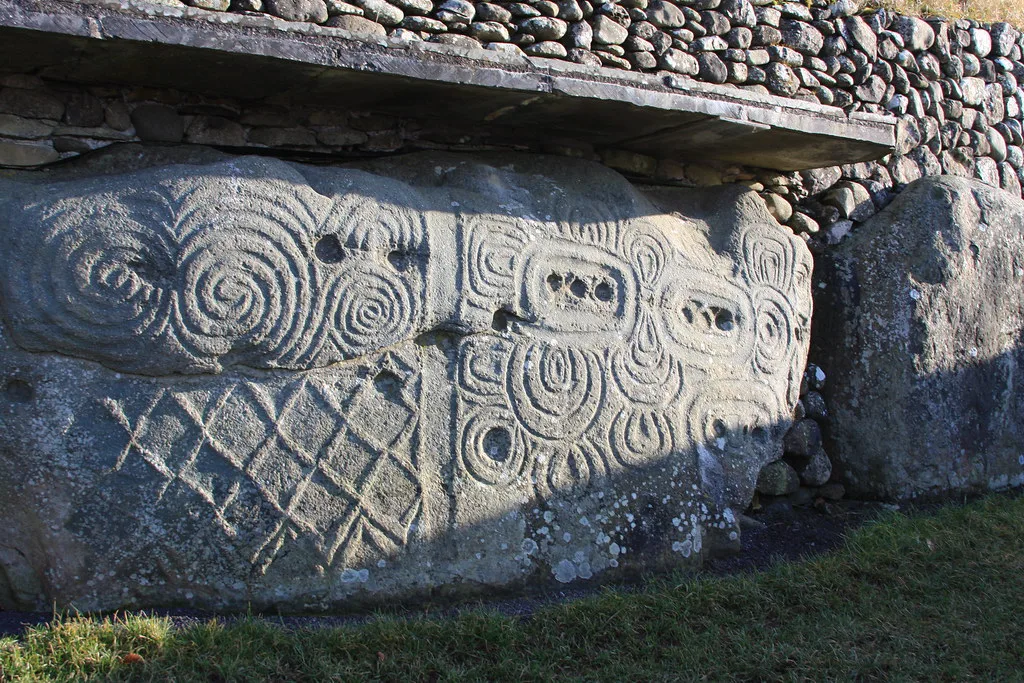
Newgrange, Knowth and Dowth stand on the north bank of the River Boyne about 50 kilometres north of Dublin, and together form the core of the Brú na Bóinne World Heritage Property. The wider landscape holds the largest concentration of prehistoric megalithic art in Europe, which is the strongest reason to see more than one mound.
UNESCO inscribed Brú na Bóinne in 1993 on cultural criteria, recognising the ensemble rather than a single monument. Most of the 780-hectare property remains in private ownership, with a smaller State-owned area around Knowth and Newgrange managed by the Office of Public Works, so the visitable ground is a fraction of the designated landscape.
Conservation history shapes what you see. At Newgrange the kerbstones were re-erected and the passage roof dismantled to reset leaning orthostats, and at Knowth modern supports in some chambers are deliberately distinguishable from original stonework. Reading the differences between old fabric and later intervention makes the guided tours more rewarding.
Why Brú na Bóinne Is the Most Regulated Visit
Every visit to Newgrange and Knowth begins at the Brú na Bóinne Visitor Centre, and visitors are taken onward by shuttle bus. Arriving at the monuments directly will not get you in, and access to both sites is by guided tour only, with daily numbers capped to protect the archaeology.
Pre-booking is essential, including for children and infants, and tickets are released online at midnight Irish time, with cancellations reappearing unpredictably. The operator states plainly that no third-party organisations are authorised to sell Brú na Bóinne tickets and that tickets from resale platforms will be refused, so buy only through the official channel.
The visitor centre exhibition is the part of Brú na Bóinne you can see without a tour booking, since pre-booking for the centre alone is not required. If tours are sold out, that exhibition still explains the Neolithic culture and landscape of the bend, and the centre itself opened in June 1997 to manage the flow of people toward the tombs.
Practical Constraints at Brú na Bóinne
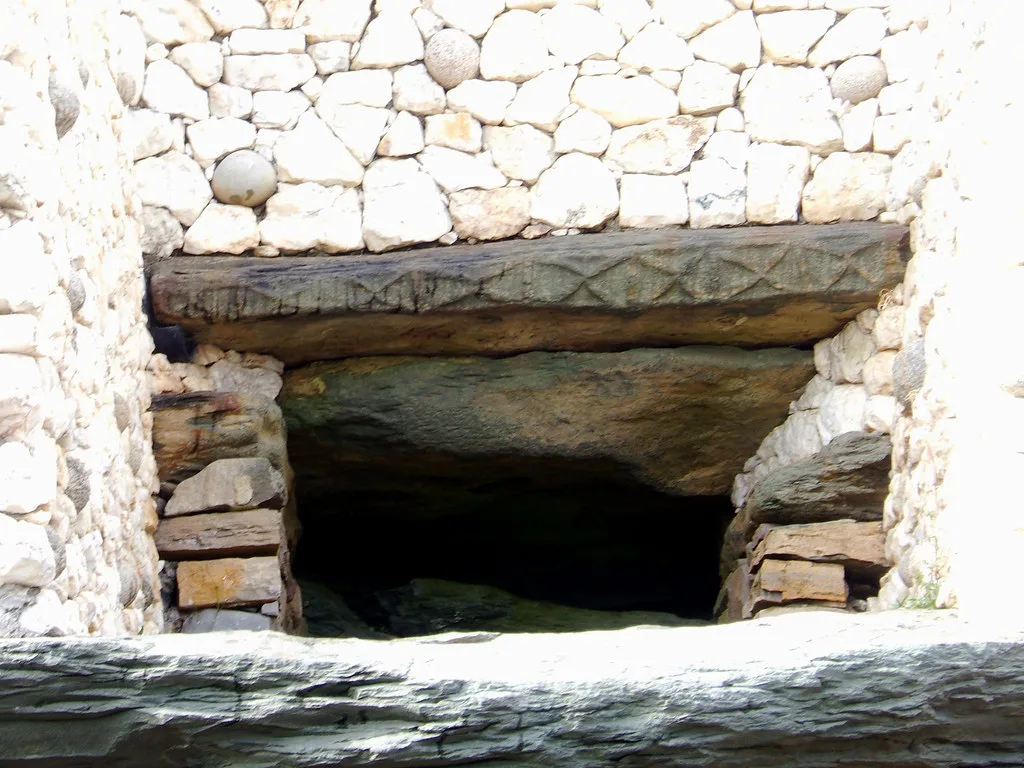
The passage and chamber at Newgrange are low and narrow, and the operator warns they may not suit visitors with claustrophobia or mobility difficulties. Universal access is limited at the monuments themselves, so anyone needing assistance should email the site in advance before booking rather than assume arrangements on arrival.
Newgrange, Knowth and Dowth are outdoor sites with no shelter, and opening can change at short notice in poor weather. Bring clothing for exposed ground and treat the tour as a walk across a field rather than a museum circuit.
Photography is not permitted inside the passage or chamber at Newgrange, and commercial filming requires a permit. Dowth forms part of the complex, but published visitor information concentrates on Newgrange and Knowth, so check the operator page before planning any stop there and do not assume the chamber can be entered.
Dated Notices at Brú na Bóinne
Some arrangements apply only to fixed dates. The site opens earlier on winter-solstice mornings from 19 to 23 December, with regular tour options suspended, and it closes from 24 to 27 December inclusive and on 1 January; these are dated notices, not year-round policy.
Groups of 15 to 30 must reserve one of the group time slots by emailing the site, and wheelchair users or visitors requiring special assistance are asked to make contact before booking. Because availability is very limited, build your Boyne day around a confirmed ticket rather than around an intended arrival time.
Carrowmore: Ireland's Largest Megalithic Cemetery
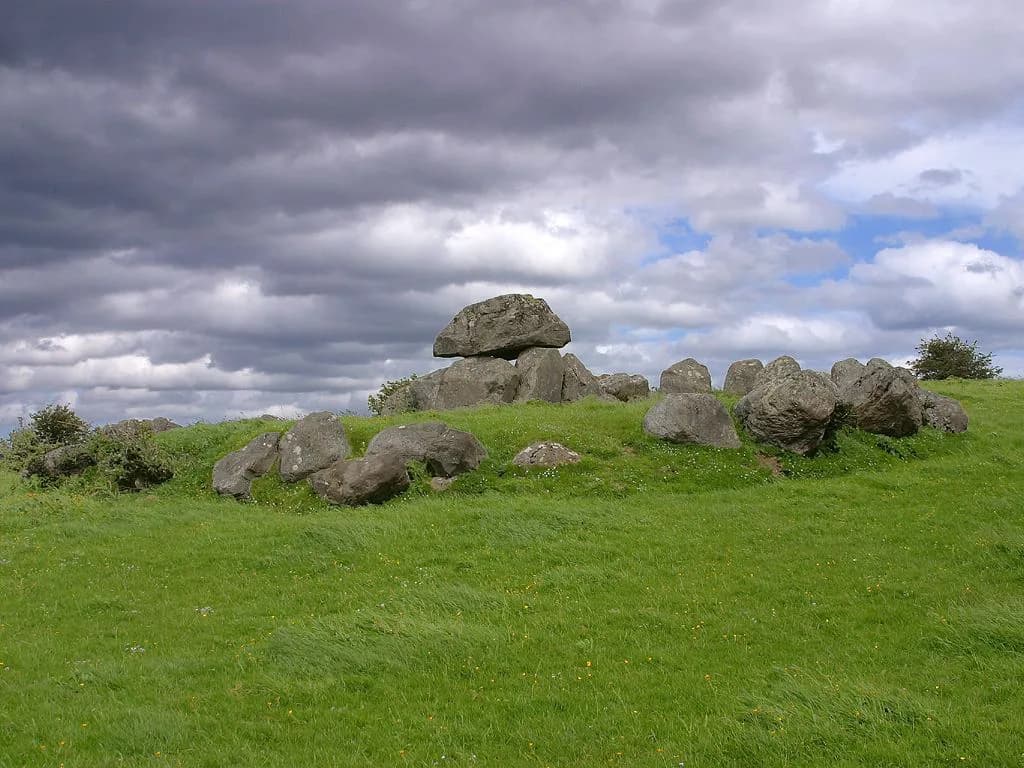
Carrowmore lies in County Sligo off the N4 at the R292 junction, and it holds the largest and oldest collection of Neolithic tombs in Ireland, with more than 30 surviving monuments. The density is the point: you read a whole cemetery of small monuments rather than a single engineered showpiece.
The central monument is Listoghil, a passage tomb where six upright stones at the centre of the cairn support a massive roof-slab. In the right light, faint prehistoric carvings can be made out on the capstone, which rewards slow looking over a quick circuit of the field.
An upgraded visitor centre officially opened on 1 April 2026, adding improved interpretation, enhanced accessibility, upgraded toilets and an all-weather shelter. Treat those as the stated changes rather than assuming cafe service or other facilities, and confirm the listed 10:00 to 18:00 hours with last admission at 17:00 before travelling, since notices can change. Wheelchair access at the site is described as limited, so check ahead if you need step-free routes.
Carrowmore's Alignments and Legends
At Samhain, the rising sun appears above a natural saddle in the Ballygawley Mountains, in line with the chamber of Listoghil, and the underside of the tilted roof-slab catches deep orange light. The operator invites visitors to a sunrise gathering on 31 October to mark the event; confirm the current arrangement before travelling, as this is a dated notice rather than a year-round fixture.
The surrounding stories belong to legend, not excavation. Queen Maeve's tomb is pointed out on Knocknarea, and the landscape is said to have been shaped by the Cailleach Bhéara; the site presents these as myths and legends associated with the area, and visitors should keep that distinction clear when retelling them.
Carrowmore is one of the sites within the Passage Tomb Landscape of Sligo, which sits on Ireland's Tentative List for World Heritage status. That is not the same as inscription: among the sites described here, only Brú na Bóinne is a World Heritage Property, and the Sligo landscape has no listed status yet.
Loughcrew: The Hills of the Witch
Loughcrew, also called the Hills of the Witch, is a group of Neolithic passage tombs near Oldcastle in County Meath, spread over four undulating peaks and dated to 3000 BC. The cemetery is a National Monument managed by the Office of Public Works, so the hill is protected ground rather than open parkland.
Cairn T is the largest tomb in the complex, with a cruciform chamber, a corbelled roof and some of the finest Neolithic art in Ireland. The cairn is aligned to sunrise at the spring and autumn equinoxes, when people gather to greet the first light, and guided tours cover the history and mythology of the monuments.
If you are comparing hill cemeteries, check each site's own access notices before choosing; Loughcrew is managed as a National Monument by the Office of Public Works, and access arrangements on other hills can differ.
Loughcrew Access Realities
The climb to Cairn T is very steep and visitors are asked to wear suitable footwear, while the approach road is very narrow and needs extreme caution when driving. These are the two practical facts that decide whether Loughcrew suits your group, more than any description of the art.
Access to the interior of Cairn T is not possible at present because of conservation works, though the rest of the monuments on the hill are unaffected; no reopening date is published. Plan to see the cairn from outside and do not expect to enter the chamber.
The carvings are more than 5,000 years old and some are only faintly visible, so scraping or marking the stones damages them, carries legal protection under the National Monuments Acts and can lead to prosecution. Keep hands off the art and use whatever the on-site guidance allows for viewing instead.
Comparing the Three Landscapes
Brú na Bóinne asks for planning: a booked slot, a shuttle and a guide, with a chamber you may enter if you can manage the low, narrow passage. Carrowmore asks for attention, offering a field of more than 30 monuments and a central tomb you read from the outside, with a visitor centre for context.
Loughcrew asks for legs and weather tolerance, exchanging the queue for a steep hill and a chamber closed for conservation. If you want the fullest managed interpretation and a chamber you may enter, secure a Brú na Bóinne ticket first; if you prefer an unprescribed walk across a tomb field without a fixed tour slot, Carrowmore and Loughcrew are the contrasting alternatives, though you should still confirm current hours and notices for each.
Museum Context in Dublin
The National Museum of Ireland on Kildare Street in Dublin holds a permanent Prehistoric Ireland exhibition, and admission is free. It sets out settlement from the stone tools of the first hunter-gatherers around 7000 BC to Late Bronze Age weapons around 500 BC, which is the sequence the passage tombs belong to.
A reconstructed passage tomb forms the backdrop to Neolithic farming tools, pottery and personal objects, and the exhibition also covers the introduction of metalworking around 2500 BC. Among the named objects is a decorated flint mace head from Knowth, one of the three passage tombs of the Boyne bend alongside Newgrange and Dowth.
Pairing the museum with an outdoor site is the most efficient way to understand what you have seen in a field. Do the exhibition first if you can, then read the mounds as the settings for the objects rather than as abstract shapes.
Responsible Visiting
These are outdoor sites without shelter, and access can be suspended or altered at short notice for weather and safety. Before travelling, check the current notice on each site's operator page, particularly for Loughcrew's conservation closure and for any change to Brú na Bóinne tour release.
Buy Brú na Bóinne tickets only from the official operator, respect the photography rules and stone protections, and accept that a sold-out day is a reason to switch sites rather than to try a workaround.
Plan Your Visit
Start by deciding what kind of day you want: a booked guided tour and chamber at Brú na Bóinne, a compact tomb field at Carrowmore or a steep hill walk at Loughcrew. Each delivers a different understanding of the same Neolithic form, and none requires seeing the other two on the same trip.
Confirm the current notice on the relevant operator page before you go, especially tour release times, Carrowmore's seasonal hours and the status of Cairn T's interior. That single check is more useful than any fixed itinerary assembled months in advance. For another heritage guide, read about Ancient Sites Ireland, and for city context on Dublin History: A Chronological Guide to the City's Key Sites.
Explore more Ireland guides
Frequently Asked Questions
What is the difference between Newgrange, Knowth and Dowth?
They are the three named passage tombs of the Brú na Bóinne complex on the north bank of the Boyne, built around 3200 BC. Newgrange and Knowth are reached by guided tour and shuttle from the visitor centre, while published visitor information concentrates on those two rather than on Dowth.
Can you visit Newgrange without a tour?
No. Access to Newgrange and Knowth is by guided tour only and all visits begin at the Brú na Bóinne Visitor Centre, where a shuttle takes you to the monuments. Pre-booking is essential for every visitor including children, and only the visitor centre exhibition can be entered without a ticket.
Is Carrowmore a UNESCO World Heritage Site?
Not at present. Carrowmore belongs to the Passage Tomb Landscape of Sligo, which is on Ireland's Tentative List, a step short of inscription. Brú na Bóinne is the World Heritage Property among the sites covered here, inscribed in 1993.
Can you go inside Cairn T at Loughcrew?
Not at the time of writing. The interior is closed for conservation works, though the other monuments on the hill remain accessible, and no reopening date is published. The climb to the cairn is steep and the approach road is narrow, so wear suitable footwear and drive with care.
Which passage tomb site is easiest to visit?
Carrowmore is the most straightforward for an open walk across a tomb field, with a visitor centre upgraded as of 1 April 2026; confirm its listed hours (10:00 to 18:00, last admission 17:00) and its limited wheelchair access before you go. Brú na Bóinne is easiest only if you secure a ticket in advance, while Loughcrew demands a steep climb.
Where can you see passage tomb objects in a museum?
The National Museum of Ireland's Prehistoric Ireland exhibition on Kildare Street in Dublin is free and includes a decorated flint mace head from Knowth, displayed against a reconstructed passage tomb. It places the tombs within a sequence running from hunter-gatherers around 7000 BC to the Late Bronze Age around 500 BC.
Sources
You might also like



Continue reading
More guides you'll find useful



