
Irish Architecture: Monuments That Explain Ireland
Irish architecture explained through dateable monuments, from a Viking-founded tower to a Gaelic tower-house, with honest access notes and clear trade-offs.
On this page
Irish architecture is best understood as overlapping building traditions rather than one continuous story: Viking foundations, Anglo-Norman stonework, Gaelic tower-houses, Georgian and Gothic houses and Victorian rebuilding survive in different regions and conditions. A cruise-line overview of the island's buildings makes a similar broad point, tracing Celtic, Viking, Norman, Georgian and Victorian layers across castles, cathedrals and country houses. That framing is useful context only; dates and access below come from heritage and tourism records.
The practical method is to pick monuments with a known date and a documented building tradition, then separate original fabric from later fires, replacements and additions. That matters because the standing building may be the third or fourth structure on a site, as at Reginald's Tower and at Blarney, where a Georgian house burned and was replaced. Access varies sharply too: some interiors are toured, others are bare ruins, and one private residence publishes no tour times at all. The same rule of reading fabric against later rebuilding applies to Museums in Cork: City and County Collections, where urban collections document centuries of change.
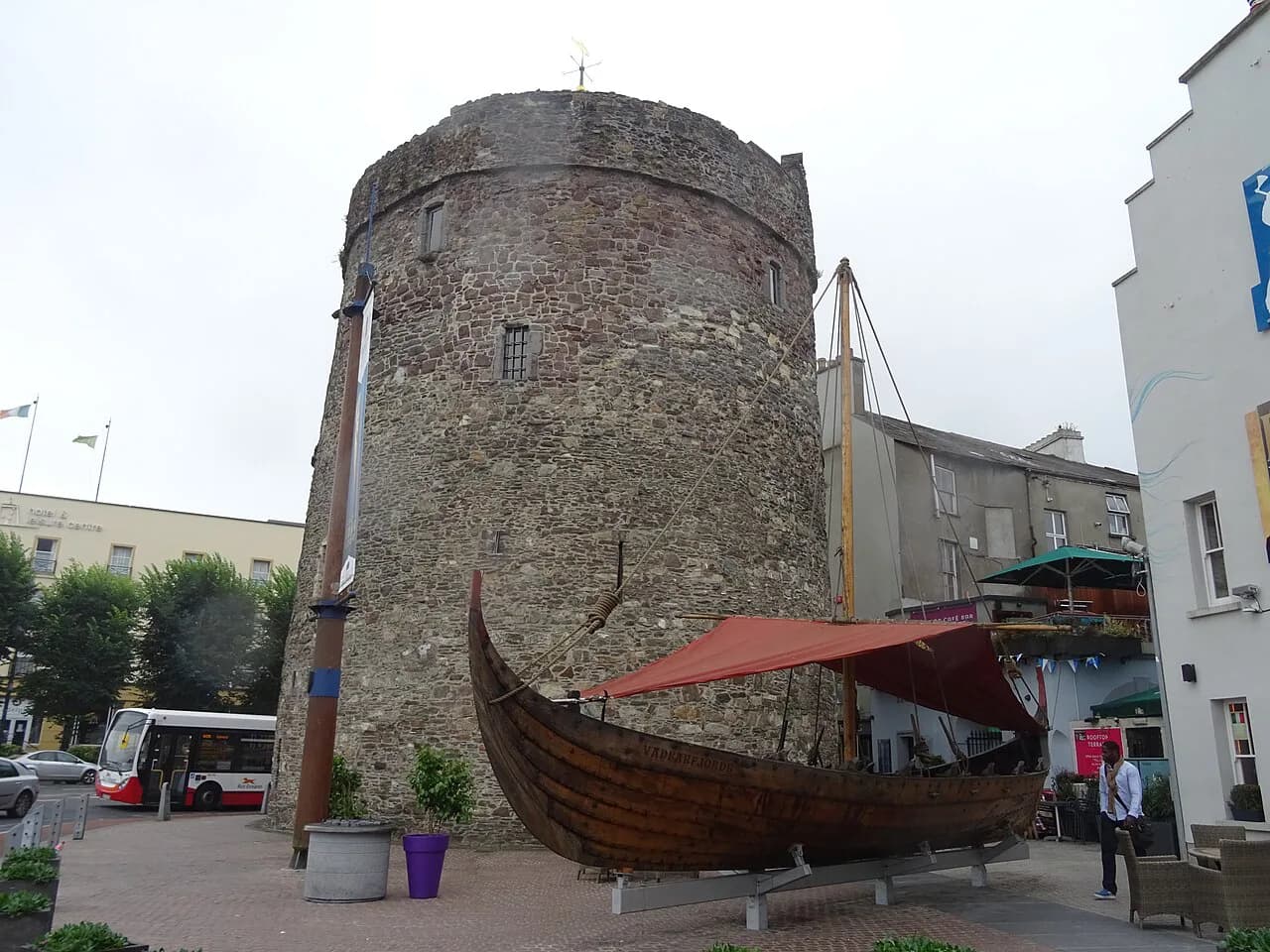
Reginald's Tower, Waterford: From Viking Fort to Stone Tower
Heritage Ireland describes Reginald's Tower as standing on the site of a wooden Viking fort, with the stone tower visible today built by the Anglo-Normans as the strongest point of the medieval town walls. The same record says it has never fallen into ruin and has been in continuous use for over 800 years, making it a rare case of a long sequence surviving in one building.
Later uses explain the layered interior: Heritage Ireland records a mint under King John, storage of weapons, gunpowder and cannons under various English monarchs, and the remains of a 19th-century prison cell on the spiral stairs. Two floors hold a branch of the Waterford Museum of Treasures focused on the city's Viking heritage, alongside Viking-period artefacts and the sword of the Chief Constable whose family were the tower's last residents.
Plan around a Wednesday-to-Sunday pattern, 09:30 to 17:00 with last admission at 16:15, and note that Heritage Ireland applies seasonal times from December to March. Anyone treating this as a daily stop risks arriving on a closed day, so confirm the current schedule on the operator's page before travelling.
Rock of Dunamase, County Laois: Reading a Ruin and Its Landscape
Discover Ireland records an early Christian settlement at Dunamase that was pillaged by Vikings in 842, later becoming one of the most important Anglo-Norman strongholds in County Laois. It describes the site passing with Aoife MacMurrough, daughter of Diarmuid Mac Murrough, as part of her marriage to Strongbow in 1170, and later through the Marshal marriage gift.
The O'Moore family held the castle from 1325 until 1609, after which it passed to the Earl of Thomond and was finally destroyed during the Cromwellian invasion in 1650. That sequence makes Dunamase a lesson in reading ruins: the masonry records a long occupation rather than a single medieval build, and the wider story of the rock is set out in the rock of dunamase guide.
The visitor experience is the landscape itself. Discover Ireland describes visitors sensing former grandiosity despite the ruined state and taking in wide views of the County Laois countryside, with sunrise and sunset suggested for photographs. Treat it as an open ruin rather than a staffed attraction: the source describes no ticketed facilities, tours or indoor access.
Blarney Castle and Blarney House, County Cork
The Historic Houses of Ireland record describes Blarney Castle as an unusually large and well-preserved tower-house of 1446, with the Blarney Stone set into the masonry high beneath the battlements. The same record explains that visitors were once lowered over the parapet to kiss the stone and that the process is now easier and safer.
The estate belonged to the MacCarthy family, who held the title Earls of Clancarty, until Donagh, the 4th Earl, supported King James II and lost the estates after the Williamite wars. In 1704 the mayor of Cork, Sir James St John Jefferyes, bought the property and built a new house attached to the castle, later enlarged into a Georgian Gothic building with lancet windows and pinnacled battlements.
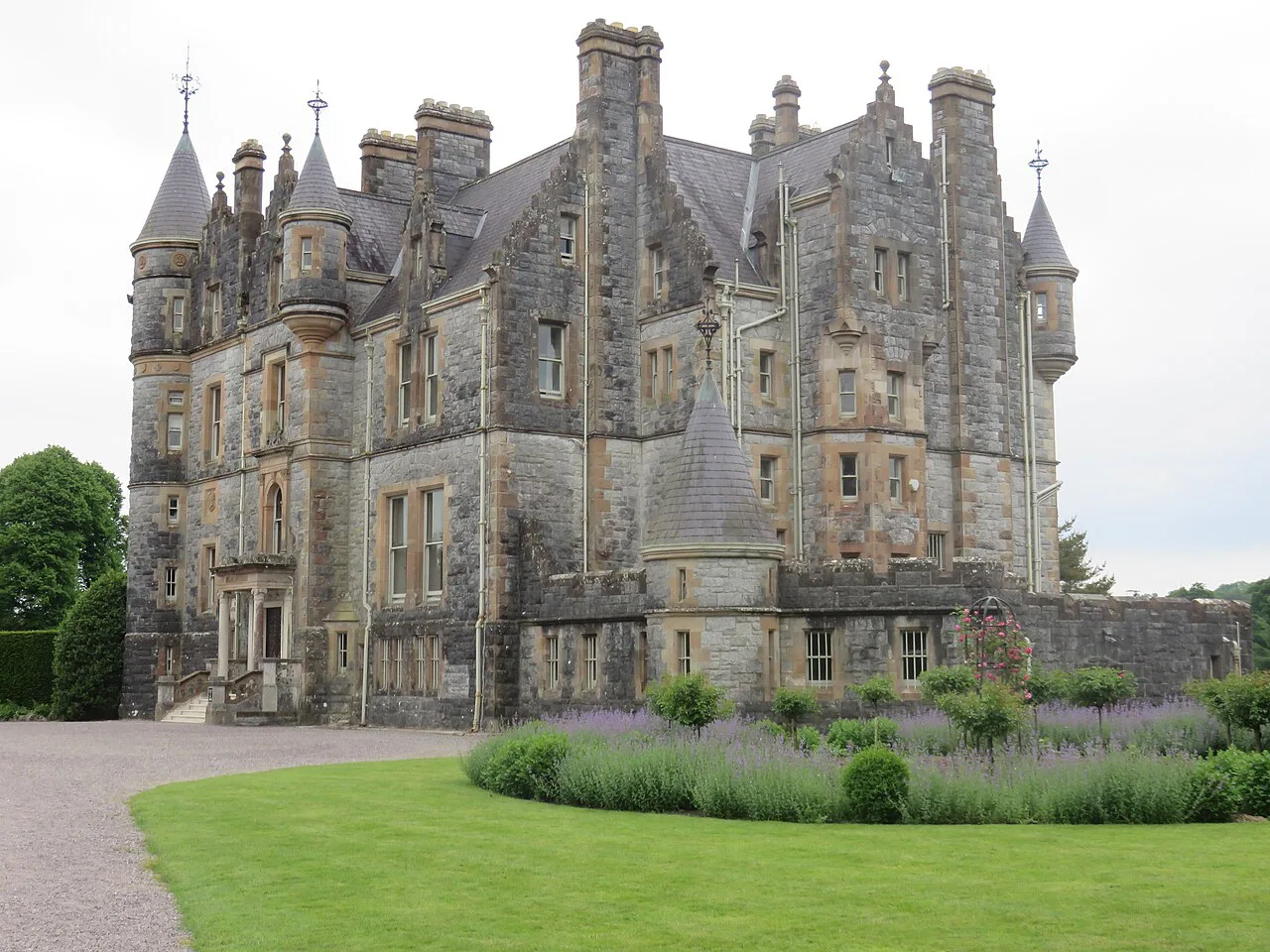
That Georgian house burned in 1820 and was not rebuilt, though part of its remains can still be seen. The present Blarney House was built in the Scots Baronial style by Sir Thomas Lanyon of Belfast, who incorporated classical details salvaged from the demolished Ardrum, and its interior includes a double-height hall, interconnecting drawing rooms and a massive oak staircase.
The record notes that Blarney House remains the home of Sir Charles Colthurst and gives an address but no public tour times or interior opening details. Do not assume the house can be entered on the strength of a castle visit, and confirm any house access directly before making it the reason for a trip.
Clonalis House, County Roscommon: The O'Conor Dynasty at Home
Clonalis, outside Castlereagh in County Roscommon, is recorded by Historic Houses of Ireland as the ancestral home of the O'Conor family, descendants of Ireland's last High Kings and traditional Kings of Connacht, with the estate in the family's continuous possession for over 1500 years. The present house was built in 1878 by Charles Owen O'Conor Don to replace a ruined late 17th-century house.
The English architect Frederick Pepys Cockerell designed it in a transitional style, part Italianate and part Queen Anne, with a square central tower on the entrance front, a symmetrical garden front and a profusion of gables, balconies and tall chimneys. Inside, the record describes a large entrance hall with pink marble columns and reception rooms with marble chimneypieces flanked by niches for turf and timber.
The Clonalis collection gives the house its cultural weight. The O'Conor Archive holds over 100,000 manuscripts, many in Irish and some dating to the sixteenth century, alongside family portraits, the harp of O'Carolan, a library of more than 7,000 books and the Book of O'Conor Don, written by Irish monks at Ostend in 1632.
Public tours run from 21 June to 31 August and are closed on Sundays, while overnight guests are accommodated from 1 April to 30 September and self-catering cottages operate all year. Outside that summer window, the house is a private home rather than a museum, so build a visit around the tour season instead of assuming year-round access.
Dunmore Cave: A Boundary Case in Irish Heritage
Heritage Ireland describes Dunmore Cave in County Kilkenny as naturally formed limestone chambers created over millions of years, containing some of the most impressive calcite formations in any Irish underground structure. It belongs in a heritage itinerary but not an architectural one: it is a geological show cave, not a built monument.
Its Viking associations are textual and archaeological rather than architectural. The cave is first mentioned in the ninth-century Triads of Ireland, and the Annals of the Four Masters records a massacre by the Viking leader Guthfrith of Ivar in AD 928; Heritage Ireland notes that archaeology has not reliably confirmed such a massacre, though finds including human remains do indicate Viking activity.
Access is by guided tour only, with limited tours per day and a maximum of 50 people per tour, while walk-ins are allocated first come, first served. The tour involves 700 steps, the interior is cold and wet with uneven terrain, and Heritage Ireland advises a maximum of three children to each adult for safety reasons. The operator lists an adult admission of €5.
Heritage Ireland lists opening seven days a week, 09:30 to 17:00 with last admission at 16:00. Treat those details as a dated snapshot rather than a permanent promise, because the operator also publishes notice-based and seasonal variation, and guided-tour places can fill on busy days.
Practical Access: Matching Ambition to Opening Patterns
This group of sites shows how differently heritage is opened up. Reginald's Tower and Dunmore Cave are staffed Heritage Ireland sites with stated hours and last admissions, and Dunmore lists an adult admission charge, while the tower follows a Wednesday-to-Sunday week that shifts seasonally from December to March. Neither should be planned from memory alone.
Clonalis operates on the opposite principle, opening for guided tours only in a narrow summer window and remaining a family home otherwise. Blarney House is documented as a residence with contact details but no published tour times, while Dunamase is a bare hilltop ruin where the visit is the view rather than an interior. Choosing by access certainty is more reliable than choosing by era alone.
Before travelling, confirm hours and seasons on the operator's own page, because Heritage Ireland flags notice-based and seasonal variation and the association records for private houses are descriptive rather than live schedules. Pick contrasting traditions rather than assuming a single national style, and check each site's own published access before building an itinerary around it.
Choosing Which Buildings to See
Pick two or three monuments from different traditions rather than trying to complete a survey. Reginald's Tower gives Viking origins and Norman stonework with a museum inside; Dunamase gives an open ruin and a defended landscape; Clonalis gives a 19th-century country house with a documented archive.
Then weigh access honestly. Staffed interiors, a summer-only private house and a bare hilltop ruin demand different planning, and several of these places carry published opening information you can check in advance. Build the day around what is confirmed to open and let the architecture you read follow from that. For a separate building tradition, read our guide to irish thatched cottages.
Explore more Ireland guides
Frequently Asked Questions
What is the best way for a visitor to understand Irish architecture?
Choose monuments with a documented date and building tradition, then look at what has been replaced or added since. Reginald's Tower in Waterford covers Viking origins and Anglo-Norman stonework, the Rock of Dunamase shows a ruin read through its landscape, and Clonalis House shows a 19th-century country house with a family archive. Comparing two or three such sites teaches more than tracing one continuous national timeline.
When can I visit Reginald's Tower in Waterford?
Heritage Ireland publishes a Wednesday-to-Sunday pattern, 09:30 to 17:00 with last admission at 16:15, and notes that seasonal times apply from December to March. Because the schedule is not presented as year-round daily opening, check the Heritage Ireland page before you travel rather than relying on a guidebook.
Can I go inside Blarney House?
The Historic Houses of Ireland record gives Blarney House an address and telephone contact but no public tour times or interior opening details. It is described as the home of Sir Charles Colthurst, so do not assume entry on the strength of a castle visit. Confirm any house access directly before making it the reason for a trip.
When are Clonalis House tours available?
The association record for Clonalis lists guided tours from 21 June to 31 August, closed on Sundays, with overnight guests from 1 April to 30 September and self-catering cottages open all year. Outside the summer tour window the house is a private home rather than a museum, so plan around those dates and verify them before booking.
Is the Rock of Dunamase a castle you can enter?
Dunamase is a ruined hilltop site, and Discover Ireland describes the visit in terms of former grandiosity visible in the ruins and wide views of the Laois countryside. Treat it as an open monument rather than a staffed attraction with interior rooms, and wear footwear for uneven ground.
Is Dunmore Cave an example of Irish architecture?
Heritage Ireland describes Dunmore as naturally formed limestone chambers created over millions of years, so it belongs in a heritage itinerary rather than an architectural one. Its Viking-era interest is textual, with the ninth-century Triads and the Annals of the Four Masters record of an event in AD 928 that archaeology has not reliably confirmed, even though human remains indicate Viking activity.
Should I plan around one monument or several traditions?
Plan around access certainty first, then pick contrasting traditions. Staffed Heritage Ireland sites, a summer-only private house and a bare hilltop ruin each require different planning, and only some carry published opening information you can verify in advance. Two or three buildings chosen for contrast will show more of Ireland's built heritage than a rushed list.
Sources
You might also like



Continue reading
More guides you'll find useful




