
Irish Artists: Where to See Their Work in Dublin
See modern Irish artists through works held in Dublin's national collections, from Jack B. Yeats to Harry Clarke, with notes on free access and loans.
On this page
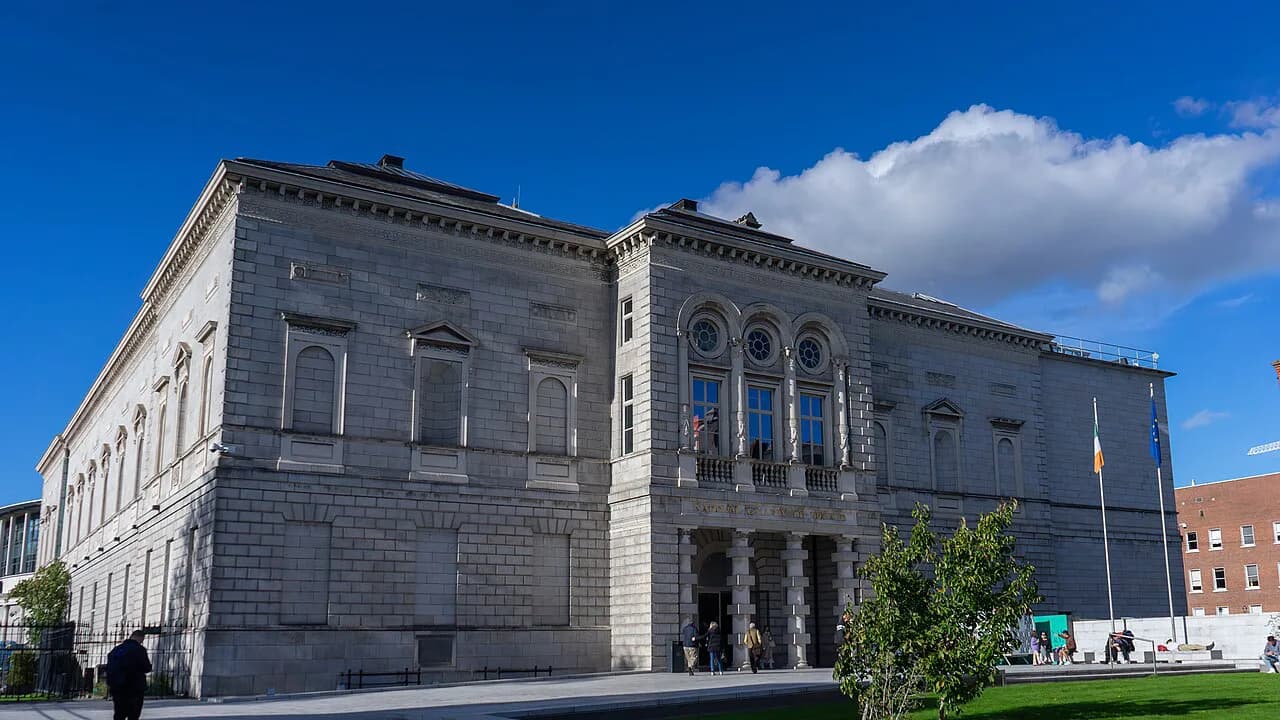
Modern Irish art is best approached through named works held in Dublin's national collections rather than a ranked list of names. The National Gallery of Ireland, the Irish Museum of Modern Art and the National Museum of Ireland each hold distinct figures and objects, and knowing which institution holds what turns a vague gallery wander into a focused visit.
This guide treats display as a practical question. Some works sit in permanent collections, some have dated loans, and some artists are represented by holdings whose current placement the institutions do not publish. Where a display window is stated, it is given; where it is not, the sensible step is to check the institution's own listing before travelling.
How to Use This Guide
Three institutions do different jobs. The National Gallery of Ireland holds a broad national collection and states that admission to the permanent collection is free, while some temporary exhibitions carry a charge. The Irish Museum of Modern Art holds modern and contemporary work, including the Louis le Brocquy tapestry discussed below. The National Museum of Ireland at Collins Barracks is currently showing Harry Clarke's stained glass.
Distinguish three levels of certainty. A permanent-collection holding tells you the institution owns the work; a dated display, such as the le Brocquy loan window, tells you where it is meant to be; a press release with room numbers records where a work hung at a particular moment, not a permanent placement. Plan around the first two and treat room numbers as hints.
Jack B. Yeats at the National Gallery of Ireland
Jack B. Yeats was born in London in 1871, the youngest child of the painter John Butler Yeats, and spent years of his childhood in Sligo with his maternal grandparents before returning to London for art training. He worked in the 1890s as a black-and-white journalistic illustrator, then turned to watercolour after settling in Devon in 1897 with his wife, Mary Cottenham White.
After the couple moved to Ireland in 1910, Yeats began working in oil, and his early paintings kept the realist approach of his graphic work. In the later 1920s his style changed radically: he experimented more with colour, used larger canvases, and moved toward more obscure, though still figurative, subjects. That late shift is the reason to look at his oils rather than only his illustrations.
The National Gallery holds Yeats's personal archive, including sketchbooks that document over fifty years of his career, alongside material on Mary Cottenham Yeats's contribution to Cuala Industries. These are archival holdings described by the gallery rather than a documented public display, so if you want to consult them, ask the institution about research access separately from a normal visit.
Paul Henry and Grace Henry: Two Distinct Careers
Paul Henry and Grace Henry are often mentioned together because both painted western Irish subjects, but they are separate artists with separate training. Paul first visited Achill, County Mayo, in 1910 and returned regularly over the following seven years; the National Gallery's catalogue notes that Launching the Currach was likely painted from memory, recording that some local people were reluctant on superstitious grounds to be painted or sketched.
That catalogue entry is also useful for reading the image: it explains that a currach is a light, strong rowing boat traditionally used along the western seaboard, built of cowhide and wickerwork and suited to both shallow water and rough seas. Henry later moved away from populated views toward pure landscape with bold mountains and expansive cloudy skies.
Grace Henry's Still Life with Marble Torso shows a different temperament entirely. The gallery's entry describes a composition with no single perspective, the torso seen from below and a suspended framed picture from another angle, and a vibrant, almost Fauvist palette applied to a conventional academic subject. Her study and travel in Belgium, France and Italy shaped that experimental streak.
Portraiture and Identity: Lavery and Orpen
John Lavery spent his early years in his native Belfast before being orphaned young and raised largely in Scotland. He trained in Glasgow and later Paris, and his painting The Bathing Hour, the Lido, Venice (1912) was made after he arrived in Venice in September 1912 and used the awning of a fishing hut at the Excelsior Hotel to shade his work. The National Gallery acquired the canvas and its announcement placed it in Room 16 at that time.
William Orpen was born in 1878, studied in Dublin and then at the Slade in London, and became a sought-after portraitist. His Young Ireland (1907) shows Grace Evelyn Gifford, a cartoonist and political activist whom he taught and considered among his most talented pupils; the gallery reads the portrait as personifying early twentieth-century confidence in Irish cultural identity.
Orpen's teaching at the Metropolitan School of Art influenced a generation, including Margaret Clarke, Seán Keating and Gifford herself. The Room 16 placement comes from the acquisition announcement and should not be treated as fixed; check the gallery's current display information if seeing these two works is the purpose of your trip.
Sarah Purser: Paris Training and Portraiture
Born in 1848, Sarah Purser began formal training at the Metropolitan School of Art and then studied at the Académie Julian in Paris from 1878, travelling there every year until 1889. That period shaped her style, and the gallery notes the influence of Degas, Whistler and Bastien-Lepage across her work. She was also the first woman elected to the Royal Hibernian Academy, in 1924.
The gallery's 2023 exhibition Sarah Purser: Private Worlds brought together fourteen of her paintings plus a portrait of her by Louise Breslau, and emphasised her introspective portraits of female sitters. That exhibition has closed, so treat it as context for her practice rather than a current display; her portraits remain the place to start when her name appears in a collection.
Mary Swanzy: A Modernist Career
Mary Swanzy (1882–1978) mastered an academic style by her early twenties, then witnessed the birth of modern art in Paris before the First World War. Her work moved through Cubism and Futurism, interpreted in a highly personal way, and from 1914 she exhibited regularly at the Paris Salon des Indépendants and the Beaux Arts. In 1920, against the violence of the War of Independence, she left Ireland and travelled through Eastern Europe and the Balkans before sailing to Hawaii and Samoa in 1923–24.
Her later obscurity, as IMMA's artist page notes, owed something to her gender; she was outspoken about it. IMMA's 2018–19 retrospective Voyages was an attempt to reinstate her as a modern Irish master, and it is historical context rather than a current show. For visitors, the practical point is to look for her work in modern collections and to accept that a specific canvas may not be on view.
Louis le Brocquy's Táin Tapestry
Louis le Brocquy (1916–2012) was born in Dublin and became a founding member of the Irish Exhibition of Living Art in 1943; he represented Ireland at the Venice Biennale in 1956 and was elected Saoi by Aosdána in 1992. His Táin. Pillow talk is a 1969 work realised as an Aubusson tapestry, woven at Atelier René Duché in 1999, in an edition of nine.
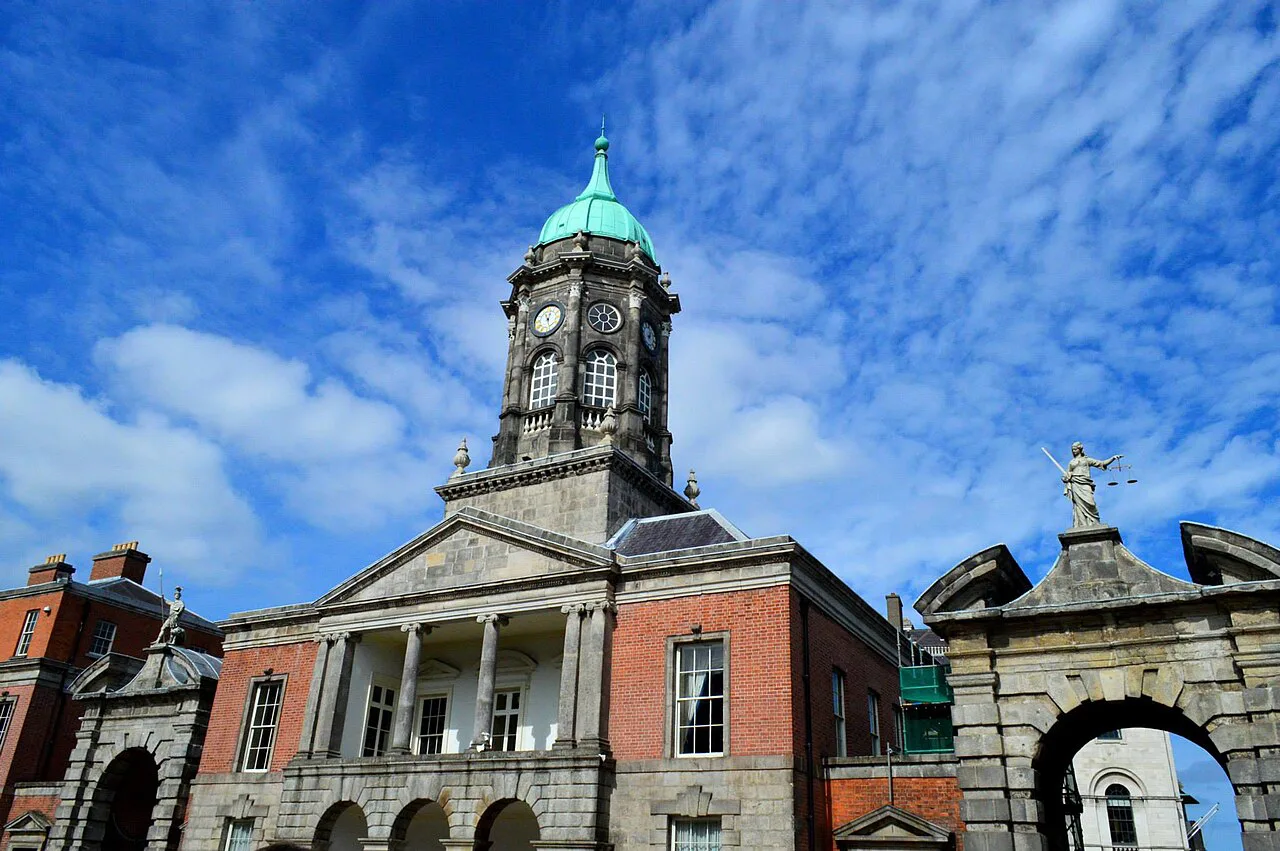
IMMA lists the tapestry as out on loan to IMMA at Dublin Castle, George's Hall, for the window 1 May 2026 to 31 January 2027. This is a dated loan, not a permanent hang, so if the tapestry is your reason for going, confirm its display before setting out. The same entry records its credit line as a Heritage Gift by Brian Timmons in 2001.
Harry Clarke's Stained Glass at Collins Barracks
Harry Clarke (1889–1931) is one of Ireland's most renowned stained-glass artists and illustrators, and his work is present in churches across sixteen counties. The National Museum of Ireland at Collins Barracks, Benburb Street, Dublin 7, is showing Harry Clarke's Stained Glass, a collaboration with the Crawford Art Gallery in Cork, which is closed for redevelopment. Admission is free and no booking is required.
The exhibition opened on 5 December 2024 and was announced to run for at least two years, bringing together panels not previously shown in the same place. It began with six Clarke panels and added a seventh, Harlequin (c. 1914), in April 2026 on a two-year loan; that work had not been publicly displayed since 1979. Early works in the room include The Consecration of St. Mel, Bishop of Longford, by St. Patrick (1910) and The Meeting of St. Brendan with the Unhappy Judas (1911), alongside Richard Mulcahy (c. 1925).
Practical Close
The National Gallery of Ireland's stated hours are Monday 11am to 5.30pm, Tuesday and Wednesday 9.15am to 5.30pm, Thursday 9.15am to 8.30pm, Friday and Saturday 9.15am to 5.30pm, and Sunday 11am to 5.30pm. Entry to the galleries stops fifteen minutes before closing, and the building begins to close from 4.50pm daily, 7.50pm on Thursdays, starting with the upper floors, so leave the paintings until last.
Short-notice closures are possible; the gallery's own page recorded a closure for industrial action on 14 October 2026 and warned that further closures may be necessary at short notice. Before travelling for a specific work, check the institution's current channels, remember that room numbers from announcements are not permanent, and treat the le Brocquy loan and the Clarke panels as the two displays with the clearest stated access. For another angle on this period, see Jack B. Yeats in Ireland.
Explore more Ireland guides
- Art Museums in Ireland
- Harry Clarke Stained Glass
- Irish Landscape Paintings
- Irish Stained Glass
- Jack B. Yeats in Ireland
- John Lavery
- Paul Henry
- William Orpen in Ireland
- Grace Henry
- Highlanes Gallery
- Ireland Art Galleries
- Irish Art History
- Irish Impressionist Painters
- Irish Murals
- Irish Sculpture
- Louis le Brocquy
- Luan Gallery
- Mary Swanzy
- Sarah Purser
- Walter Osborne and Dublin Street Life
Frequently Asked Questions
Which Irish artists can I see in Dublin's national collections?
The National Gallery of Ireland holds work by Jack B. Yeats, Paul Henry, Grace Henry, John Lavery, William Orpen and Sarah Purser, among others. IMMA holds modern and contemporary work including Mary Swanzy and Louis le Brocquy. The National Museum of Ireland at Collins Barracks is showing stained glass by Harry Clarke. Holdings and displays are different things, so confirm what is hanging before you go.
Where is Jack B. Yeats' work held?
The National Gallery of Ireland holds his personal archive, including sketchbooks covering over fifty years, and its artist page documents his painting career. The archive is a research holding rather than a documented exhibition, so ask the institution about research access separately from a normal visit.
What is on display at the National Gallery of Ireland for free?
Admission to the permanent collection is free, while some temporary exhibitions carry a charge. Free entry does not guarantee that a particular painting is hanging, so check the gallery's current display information if you are travelling for one work.
Where can I see Harry Clarke's stained glass in Dublin?
The National Museum of Ireland at Collins Barracks, Benburb Street, Dublin 7, is showing Clarke panels in Harry Clarke's Stained Glass. The room opened with six panels in December 2024 and added a seventh, Harlequin (c. 1914), in April 2026 on loan. Admission is free and no booking is required. The panels are shown in collaboration with the Crawford Art Gallery, Cork, which is closed for redevelopment.
Is Louis le Brocquy's Táin tapestry on display at IMMA?
IMMA lists the tapestry as out on loan to IMMA at Dublin Castle, George's Hall, for the window 1 May 2026 to 31 January 2027. That is a dated loan rather than a permanent hang, so confirm its display before travelling.
How long should I allow for the National Gallery?
Plan around the stated hours and the fact that entry stops fifteen minutes before closing, with upper floors closing first. Thursday offers the latest finish at 8.30pm, which suits a focused visit. Which specific rooms are open on a given evening is not fixed, so check the gallery's listing if you are travelling for one work.
Sources
- Jack B. Yeats (1871–1957) | National Gallery of Ireland
- Press Release: Two new artworks acquired | National Gallery of Ireland
- Launching the Currach – Explore the National Gallery of Ireland's collection: – National Gallery of Ireland
- Still Life with Marble Torso – Explore the National Gallery of Ireland's collection: – National Gallery of Ireland
- Mary Swanzy - IMMA
- Free exhibition of works by Irish artist and activist Sarah Purser at the National Gallery of Ireland | National Gallery of Ireland
- The Táin. Pillow talk - Louis le Brocquy - IMMA
- Harry Clarke’s-Stained Glass | Decorative Arts & History | National Museum of Ireland
- Opening hours | National Gallery of Ireland
You might also like



Continue reading
More guides you'll find useful





