
Mary Swanzy: Irish Modernist, Her Travels and Her Art
Mary Swanzy (1882–1978) trained in Dublin, Paris and Germany and travelled widely. Her travels, styles and the Irish art settings to explore today.
On this page
Mary Swanzy (1882–1978) was a Dublin-born artist whose career took her from formal training in Ireland to Paris studios and galleries, then to long periods of travel that changed the subjects and colour of her work. Her importance lies less in a single style than in her insistence on interpreting each modern idiom in her own way.
That she was overlooked for decades is central to her story. IMMA's profile notes that its exhibition was the first retrospective of her work in 50 years, and describes her achievement, world travel and original thinking as unmatched in Irish art.
Who Was Mary Swanzy?
Swanzy was born in Dublin in 1882 and died in 1978. The National Gallery of Ireland notes her Dublin birth and the institutions where she trained, which anchors her early life in the city rather than in a country house or a European capital.
She came of age at the end of the Victorian period and absorbed academic painting quickly, mastering the expected style by her early twenties. IMMA's profile places her at the birth of modern art in Paris before the First World War and describes her work as evolving through the different styles of the day, each interpreted and transformed in a highly personal way.
Her significance in Irish art is tied to timing: she embraced modernism when it was not widely welcomed in Ireland, and the National Gallery's own interpretive material names her among the artists who made modernism part of Irish art history. Readers who want a broader frame for that generation can start with our guide to Irish artists and follow it through individual figures.
Dublin Beginnings and Formal Training
Her formal education began at the Metropolitan School of Art in Dublin, and she also studied in the studio of May Manning. The National Gallery describes both in its self-guided Irish art tour, which links her training to the city's teaching institutions rather than treating her as self-taught.
Continental study came next: she worked in Versailles in France and in Freiburg in Germany, both named in the same national collection source. Those spells broaden her training beyond Dublin before she settled in Paris in 1905.
For a visitor, this training history has a practical consequence: her later experiments read as deliberate choices rather than naivety. Comparing her to contemporaries such as those covered in our Jack B. Yeats in Ireland guide shows how differently Irish painters of that generation handled the pull between local subject matter and Parisian example.
Paris Before the First World War
In 1905 Swanzy moved to Paris, where she exhibited alongside artists including Picasso and Braque, as the National Gallery's tour text records. That placed her in the same exhibiting circles as the leaders of Cubism, though the sources present this as shared exhibiting rather than as instant adoption of any one style.
She showed regularly at the Paris Salon des Indépendants and the Beaux Arts after 1914, according to IMMA's profile, in company with artists who later became widely known. The Salon was not a single aesthetic but a broad exhibiting platform, which helps explain the range of idioms she moved through.
Her later exhibition record kept her in that international orbit: IMMA records that by 1946 her work appeared in exhibitions with Chagall, William Scott and Henry Moore, while the National Gallery notes showings in Dublin, Paris and London across her career.
Leaving Ireland in 1920 and the Pacific Voyages
In 1920, against the backdrop of the Irish War of Independence, Swanzy left Ireland in what IMMA describes as a form of self-imposed exile. She travelled first through Eastern Europe and the Balkans, then sailed to Hawaii and Samoa in 1923 and 1924.
The Pacific period produced a body of work that IMMA treats as unique in an Irish context, carrying both proto-feminist ideas and a critique of colonial systems. That framing matters for visitors who might otherwise read such images as decorative travel pictures; the institution's account places them in a critical tradition, not a souvenir one.
No private home, studio or specific landscape site from these travels is documented as open to the public, so her biography should not be turned into an itinerary. The appropriate way to encounter this period is through exhibition catalogues and any future displays announced by the institutions that hold or borrow the work.
Cubism, Futurism and a Fauvist–Vorticist Landscape
Swanzy is often associated with Cubist and Futurist painting, and IMMA's profile identifies those as the styles for which she is best known. That description is a starting point rather than a full inventory: her work evolved through several contemporary movements, each reshaped in a highly personal manner.
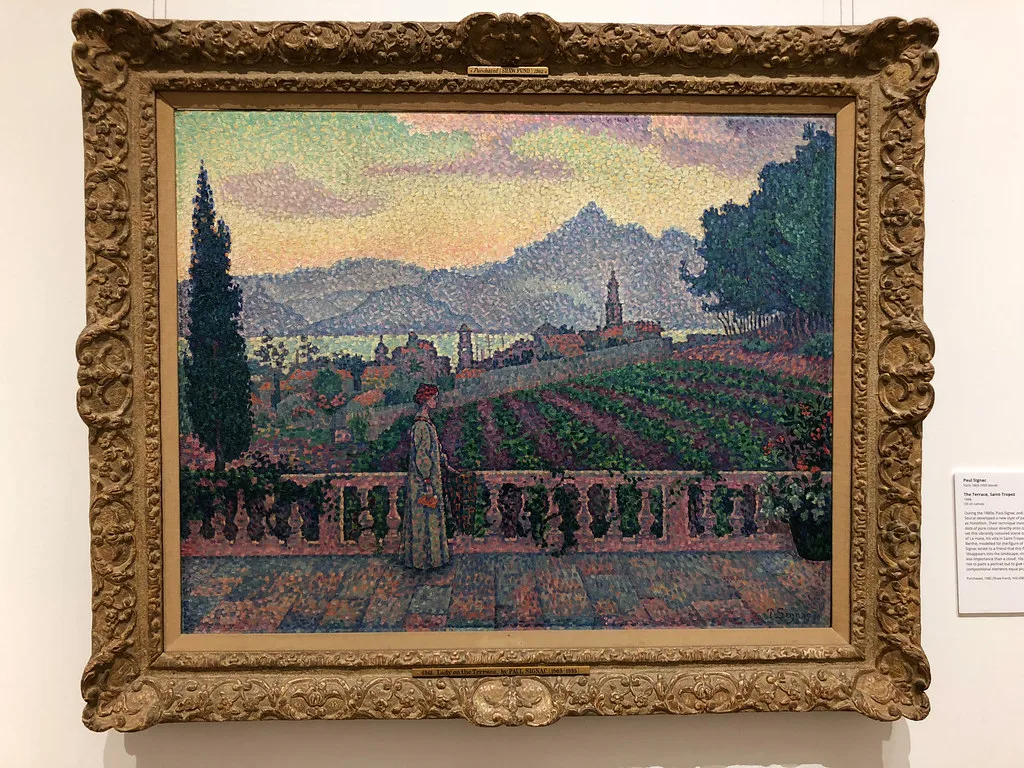
The National Gallery's tour illustrates the method with a landscape on its route: strong colour on a house's roofs pulls toward Fauvism, while swirling lines in the paths and building draw the eye inward in a manner associated with Vorticism. The tour presents this as an example of how to read a painting on the route rather than as a movement label for the artist.
For a viewer, the useful method is to ask which device is doing the work: colour that departs from realism, or line that organises the picture. Looking for those two signals separately is more productive than trying to assign a whole canvas to one movement.
Recognition, Obscurity and the Voyages Retrospective
Despite exhibiting with major European figures, Swanzy's reputation faded after the mid-1940s. IMMA's profile attributes this partly to her being a woman and records her own reflection on how her career might have differed had she been born Henry rather than Mary, a remark worth reading in the institution's full account rather than in isolation.
The landmark response was Voyages, held at IMMA's Main Galleries in the East Wing from 26 October 2018 to 17 February 2019 and curated by Seán Kissane. That exhibition is past history now and does not mean Swanzy work is on show at IMMA today; a fully illustrated monograph accompanied it.
This distinction is the single most practical point for anyone planning a trip around her name: a retrospective catalogue and its dates record what happened, not what hangs now. Check each institution's current exhibition listings before travelling.
Where to Engage With Her Work Today
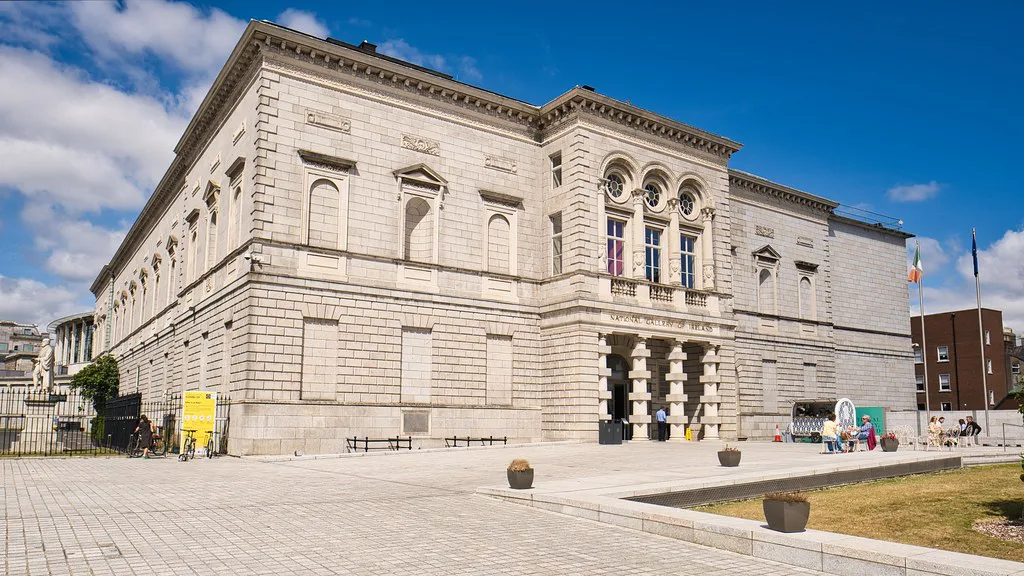
The National Gallery of Ireland is the natural starting point for her context, since its self-guided Through a Lens tour text places her within a wider account of modernism in Irish art. The tour is a route through the collection's interpretive material, so confirm what is actually on display that day through the Gallery's own listings before you set out. If you are planning that stop, our National Gallery of Ireland: A Visitor's Guide to the Dublin Collection covers the practicalities of the collection.
Admission to the permanent collection is free, while some temporary exhibitions carry a charge, and entry to the galleries stops fifteen minutes before closing, according to the Gallery's published visitor information. Hours differ by day, with later Thursday opening, and the Gallery advises checking its channels before a visit because closures can happen at short notice.
Our wider Art Museums in Ireland guide is useful for anyone building a longer art-focused itinerary around the capital and beyond.
IMMA at Royal Hospital Kilmainham
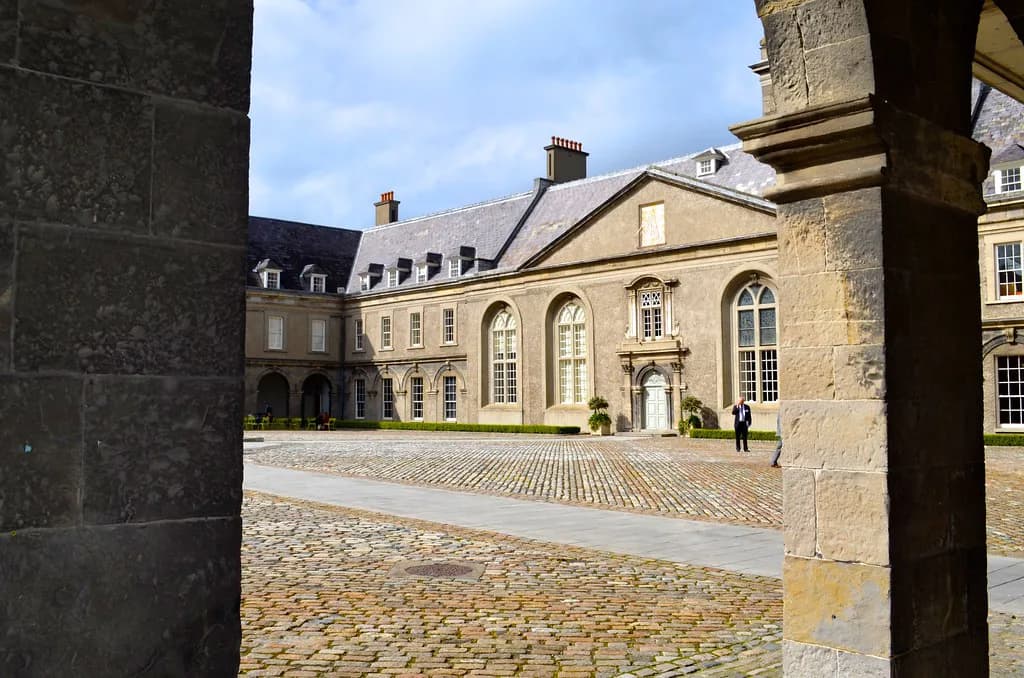
The site behind the Voyages retrospective is itself worth a visit. IMMA occupies the Royal Hospital Kilmainham in Dublin 8, set in 48 acres that include formal gardens and meadows alongside the galleries.
General admission is free and most exhibitions are also free, but the museum closes on Mondays except Bank Holidays, and last admission to individual exhibition galleries is 5.15pm, per IMMA's visitor page. Those arrangements can change, so treat the published page as the authority on the day you go.
IMMA's modern-masters programme hosted the Swanzy show, and its wider Irish programming provides context for painters of her generation; our guide to William Orpen in Ireland covers another figure from roughly the same era.
Planning Around Mary Swanzy
Treat Swanzy as a painter to research and follow rather than a fixed stop on an itinerary. Read the IMMA profile for the arc of her career and the National Gallery's tour text for a concrete example of how to read her handling of colour and line.
Then check both institutions' current exhibition pages before booking travel: the 2018–19 Voyages show is documented history, and neither gallery's pages reviewed here guarantee a Swanzy work on view. That single check is the difference between a rewarding art visit and a disappointing one.
Explore more Ireland guides
Frequently Asked Questions
Who was Mary Swanzy?
She was a Dublin-born painter (1882–1978) who trained at the Metropolitan School of Art and in May Manning's studio, then studied in Versailles and Freiburg before moving to Paris in 1905. She exhibited in Paris, Dublin and London and is identified by the National Gallery of Ireland as a champion of modernism in Irish art.
Why did Mary Swanzy leave Ireland in 1920?
IMMA's profile describes her departure in 1920, during the Irish War of Independence, as a form of self-imposed exile. She travelled through Eastern Europe and the Balkans and then sailed to Hawaii and Samoa in 1923 and 1924.
What styles did Mary Swanzy paint in?
She is best known for Cubist and Futurist work, but her practice moved through several modernist idioms, each interpreted personally. The National Gallery's tour text reads one landscape as combining Fauvist colour with Vorticist line.
Can I see Mary Swanzy's work in Dublin today?
No current display can be assumed from the sources here. The 2018–19 IMMA retrospective Voyages is a past exhibition, so check the National Gallery of Ireland and IMMA exhibition listings directly before travelling.
What was the IMMA Voyages exhibition?
It was a retrospective of Swanzy's work curated by Seán Kissane, held at IMMA's Main Galleries in the East Wing from 26 October 2018 to 17 February 2019, with an accompanying illustrated monograph. It does not indicate a present-day Swanzy display at IMMA.
Is admission to the National Gallery of Ireland free?
Admission to the permanent collection is free, while some temporary exhibitions carry a charge, according to the Gallery's visitor information. Entry to the galleries ceases fifteen minutes before closing, and hours are subject to change.
What are IMMA's opening arrangements?
IMMA publishes a general pattern of opening six days a week and closing on Mondays except Bank Holidays, with last admission to individual exhibition galleries at 5.15pm. General admission is free, and the arrangements can change, so confirm on the day.
Sources
You might also like



Continue reading
More guides you'll find useful


