
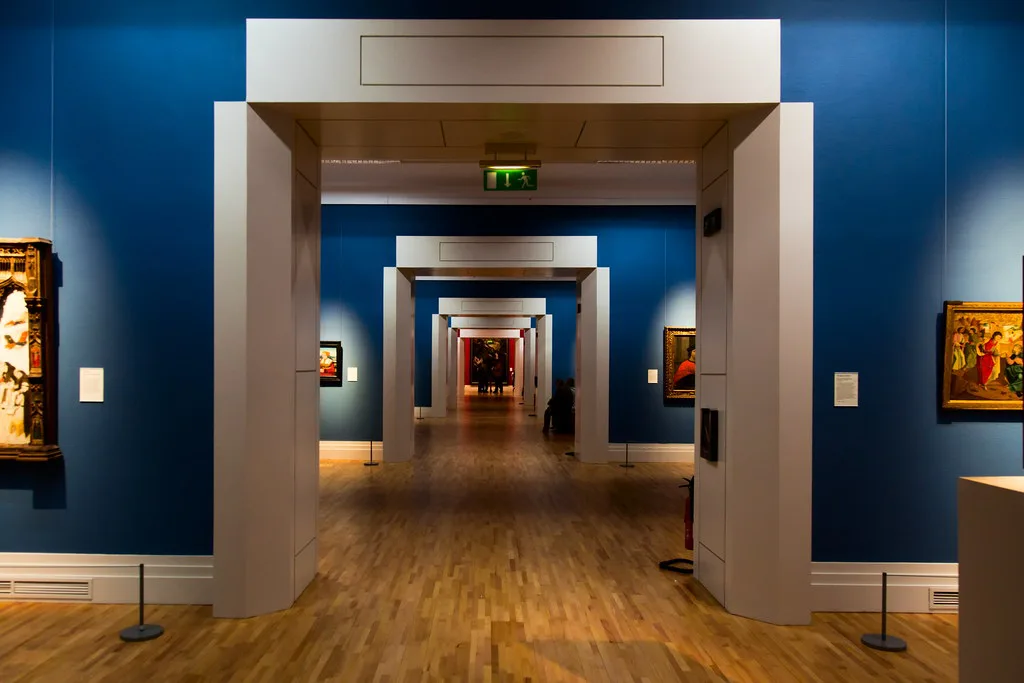
National Gallery of Ireland: What to See in Dublin's National Art Collection
The National Gallery of Ireland is Dublin's national art museum, set in the Georgian Quarter close to Merrion Square in the city centre. It is the kind of collection you can dip into for a single highlight or wander for an afternoon, because it spans European art from about 1300 to the present alongside a deep holding of Irish work. This guide sticks to what the gallery and the national tourism board actually publish, and tells you where to confirm the details that change.
The gallery was founded in 1854 and now cares for more than 16,300 artworks, so it rewards a plan rather than a scramble. Its collection covers paintings, sculpture, prints, drawings, photography, archival and library material, plus objets d'art, silverware and furniture. Two or three focused stops will serve a short visit better than trying to cross every room.
What the National Gallery of Ireland Is and Where to Find It
The gallery sits in Dublin's Georgian Quarter, an area of terraces and squares that makes the approach on foot part of the visit. Merrion Square Park, with its statue of Oscar Wilde, is a natural walk on the doorstep. If the Georgian streetscape is what draws you, our Limerick heritage guide covers another Irish city's Georgian Quarter on foot. Treat the gallery's own visitor information as the authority on which entrance to use and how to reach it, since entrances and transport arrangements can change.
If you are building a day of central Dublin sights, the gallery is a calm indoor counterpoint to street-level stops nearby. St Stephen's Green is a short walk west of the gallery and works well before or after a session. Check the gallery's published location and accessibility notes before setting out if you have specific needs.
Founding and Scale: A National Collection
The gallery's own account dates its founding to 1854, while Ireland.com notes that it opened in 1864. The museum now holds more than 16,300 works according to the gallery, while Ireland.com puts the figure at over 16,000. Either way, the collection is far too large to absorb in one sitting.
The chronological reach runs from around 1300 to the present day, which means medieval and Renaissance panels sit within the same institution as contemporary Irish work. That breadth is why a room-by-room plan matters: pick a period or a national strand and follow it, rather than drifting. The gallery's collection search lets you check in advance whether a particular artist or work is held.
What the Collection Holds
This is not a paintings-only museum. The national collection includes sculpture, prints, drawings and photography, plus archival and bibliographical material, silverware, furniture and objets d'art. For a visitor, that mix means the displays shift between intimate works on paper and larger set-piece rooms.
The European strand runs from Mantegna and Titian to Monet and Picasso, while the Irish strand covers figures from the nineteenth and twentieth centuries. Former director Thomas Bodkin, who held the post from 1927 to 1935, described it as one of the great collections of Europe; that is a historical opinion, not a current ranking. Use the gallery's own listings to see what is on display when you visit.

Orient Yourself First: The Taking of Christ
For many visitors the anchor is The Taking of Christ, attributed to Caravaggio and dated 1602. Ireland.com recounts that the painting was long thought lost or destroyed before being recognised in 1990, hanging in the Dublin drawing room of the Jesuit Fathers, who believed it was by Gerrit van Honthorst. It is now on indefinite loan to the Irish people, according to the same account.
Use this as a starting point rather than the whole visit. Once you have seen it, work outward into the surrounding European rooms, then cross to the Irish galleries. If you want to be sure the painting is on view during your trip, check the gallery's own displays and any loan notices before you go.
How to Use the Through a Lens Irish Art Tour
The gallery publishes an online self-guided Through a Lens tour of Irish art, which is a route through the building rather than a catalogue. It is organised by room, covering Rooms 1, 4, 5, 14 to 17, 20 and 21, plus the Millennium Wing. The gallery frames it as a non-exhaustive starting point intended to spark further interest.
Load the tour on your phone before you arrive and follow the rooms in order if you want a structured walk. Because it hops between floors and wings, expect to double back; a paper note of room numbers helps when the galleries are busy. Pair it with one European highlight so the visit does not become narrowly national.
Irish Artists to Look For
On the tour you meet Jack B. Yeats, whose expressionist brushwork and literary influences run through his oils, and Mainie Jellett, who worked in a form of cubism built from a single viewpoint rather than multiple angles. Her early Dublin reception was hostile: the writer George Russell dismissed two 1923 works as artistic malaria. Evie Hone, who studied alongside Jellett, worked in painting and stained glass and produced over 150 stained glass pieces.
Paul Henry's western landscapes became so widely reproduced in the 1920s that they shaped how Ireland was pictured abroad, and his wife Grace Mitchell's work hangs in the same room. Roderic O'Conor, often called Ireland's first modernist painter, shows the French influence clearly, while Mary Swanzy carried modernism into Irish art through bright colour and swirling line. Brian O'Doherty's later work fuses the ancient ogham script with a Mondrian-like rhythm, and Louis le Brocquy's Táin tapestry hangs in the Millennium Wing.
The National Portrait Collection
The National Portrait Collection, established in 1875 according to Ireland.com, gathers drawings, paintings, photographs and sculpture of figures from the island of Ireland, from James Joyce to the fashion designer John Rocha. It offers a different pace from grand history paintings: faces, likenesses and a sense of who the country chose to remember. Allow time for it even on a short visit.
How Much Time to Allow
For a short visit, pick two anchors such as the Caravaggio and a handful of Irish rooms, and budget around an hour to ninety minutes; that keeps the experience focused rather than exhausting. For a half-day, follow the Irish tour across its rooms, break for a rest, then take in the portrait collection. The gallery is large and room numbers matter, so keep the online tour open as a map.
If your interests lean toward design and manuscript culture rather than painting, you can browse our guide to Dublin's art galleries to compare other collections for a separate outing, so each collection gets proper attention.
Admission and Planning
Ireland.com reports that admission to the permanent collection and many temporary exhibitions is free, while some exhibitions may require payment or advance booking. That is not a blanket free-entry promise for everything on show, so check the specific exhibition before you travel. The gallery's own site is the place to confirm current opening hours, exhibition tickets and any booking requirements.
Ireland.com also mentions guided tours and themed talks among the gallery's offerings; treat schedules as changeable rather than fixed, and verify times on the operator's listings when you arrive in Dublin. Bag and luggage rules are best checked against current visitor guidance rather than assumed. Plan around confirmed times rather than hoping to join a tour on the day.
What's Nearby
Merrion Square Park is the obvious post-gallery stretch, with its Oscar Wilde statue and leafy walks. Note that Ireland.com carries a notice that the National Museum of Ireland on nearby Merrion Street has closed to the public for a full refurbishment, so do not build a day around it without checking its own site.
Dublinia, at Christ Church, covers the medieval and Viking side of Dublin's past and is a rewarding stop on a separate outing rather than a quick add-on to a gallery session. Confirm its current opening arrangements directly before visiting.

Plan Your Visit
The National Gallery of Ireland rewards a plan built around one European anchor, a run through the Irish rooms using the gallery's own tour, and a pause in the portrait collection. Confirm opening hours, exhibition charges and any booking rules on the gallery's site before you go, because those details shift with the exhibition calendar.
Allow more time than you think for the Irish galleries, and leave a margin for Merrion Square afterwards. If you want the wider context of the city around the collection, Dublin Attractions: 5 Visitor Guides is a sensible next read.
Explore more Dublin guides
Frequently Asked Questions
Is the National Gallery of Ireland free to visit?
Admission to the permanent collection and many temporary exhibitions is free, according to Ireland.com, but some exhibitions may charge or require advance booking. Check the specific show on the gallery's own site before you travel, as terms vary by exhibition.
What is a well-known painting at the National Gallery of Ireland?
The Taking of Christ, attributed to Caravaggio and dated 1602, is among the gallery's best-known works. Ireland.com recounts its rediscovery in a Dublin drawing room in 1990 and its indefinite loan to the Irish people. Confirm it is on display before you visit.
How long does it take to see the National Gallery of Ireland?
A focused visit of about an hour to ninety minutes covers two anchors, such as the Caravaggio and part of the Irish rooms. A half-day lets you follow the gallery's Irish art tour and still spend time in the National Portrait Collection. The collection is far too large to see in full on one trip.
Where is the National Gallery of Ireland located?
It is in Dublin's Georgian Quarter, close to Merrion Square in the city centre. Use the gallery's own visitor information for the current entrance and how to reach it, as access arrangements can change.
What Irish artists are in the National Gallery of Ireland?
The gallery's Irish art tour features Jack B. Yeats, Mainie Jellett, Evie Hone, Paul Henry, Walter Frederick Osborne, Mary Swanzy, Roderic O'Conor, Brian O'Doherty and Louis le Brocquy, among others. The tour is an online starting point organised by room, not a complete catalogue.
What else is near the National Gallery of Ireland?
Merrion Square Park and its Oscar Wilde statue are an easy walk, and the gallery sits within reach of central Dublin sights. Note that the National Museum of Ireland on Merrion Street is closed for refurbishment according to Ireland.com, so check its own site before planning around it.