
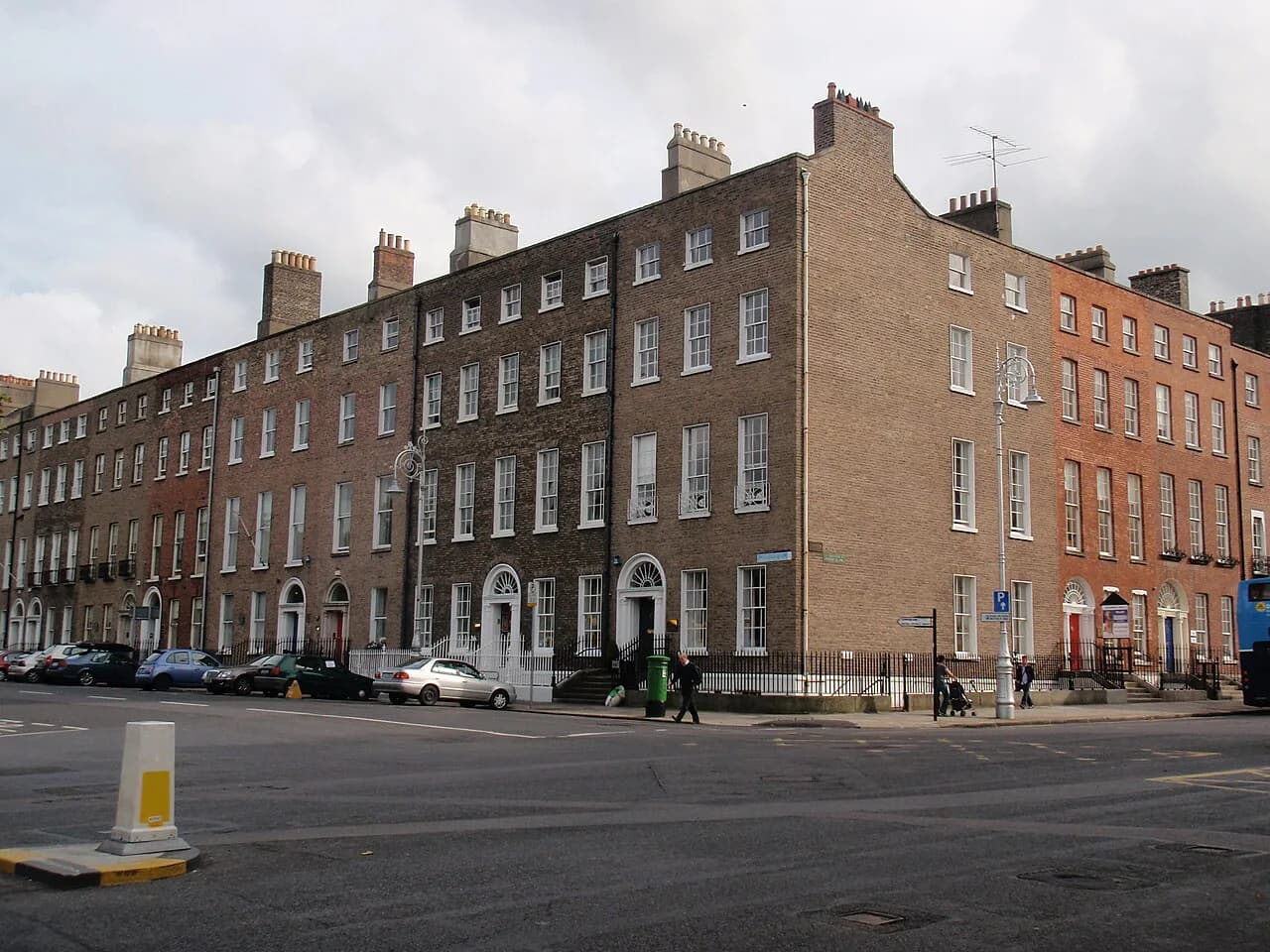
Merrion Square, Dublin: A Guide to the Georgian Square and Its Park

Merrion Square is a Georgian residential square in central Dublin, with a public park at its centre at 1 Merrion Square E. It is not a single ticketed attraction: the surrounding streets and the park are open public space, while the National Gallery, Natural History Museum and Oireachtas buildings sit along the square's west side. Plan it as a walk through a historic streetscape with a garden stop in the middle, not as a house tour.
Where Merrion Square Sits in Central Dublin
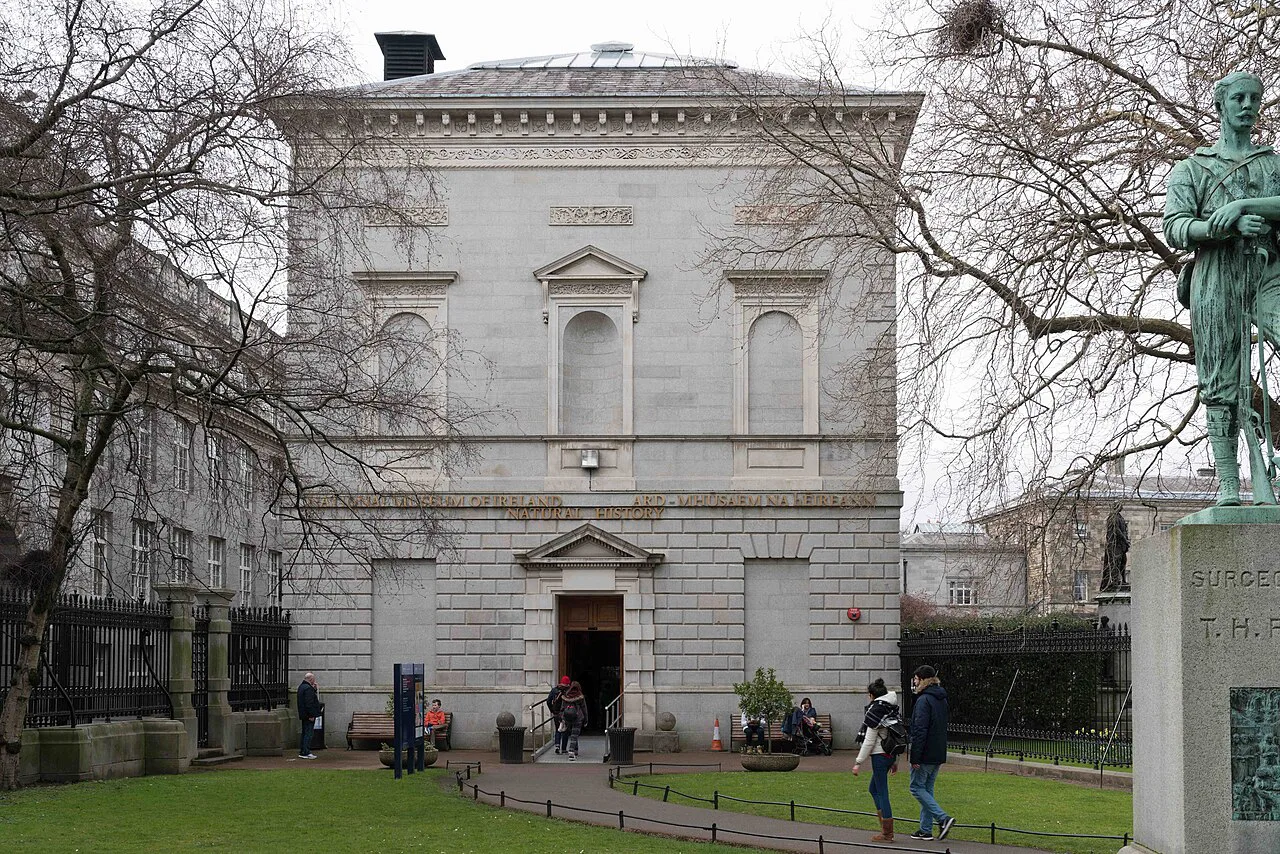
The park occupies the centre of the square, ringed by Georgian brick terraces, and Dublin City Council gives the address as 1 Merrion Square E. The council also places the Houses of the Oireachtas, the Natural History Museum and the National Gallery of Ireland along the west of the square, so that edge is the one to aim for if you want museums before or after your stroll.
Because the square is public streets rather than a walled compound, you can walk its perimeter and read the facades, coloured doors and brick fronts that define the Georgian style here. The park gates are the part that follows a schedule. Treat the streets and the garden as two different things: the first is always passable, the second has set hours.
How the Square Came to Be
Dublin City Council records that construction of the Georgian houses at Merrion Square began in 1762 and continued for about 30 years. The square quickly became a fashionable address for the aristocracy and professional classes. A travel reference describes it as created in 1762 and completed in the early 19th century, which fits a decades-long build rather than a single construction date.
That history explains the look of the place: uniform terraces built to a long-term plan, with the garden as the shared centrepiece. The council describes the park as one of the finest and most intact examples of Georgian urban design in the city. Walk the perimeter first to see the terrace rhythm, then enter the garden to see how the layout sets the park apart from the traffic.
Residents, Writers and Politicians
The council notes that Oscar Wilde, W.B. Yeats, George Russell and Daniel O'Connell all called the square home at one point. A travel reference adds that the square drew prominent Irish figures and names specific house numbers, but those are best treated as context rather than something to navigate by. The reliable takeaway is the company the square kept: writers and political figures in the same Georgian streetscape.
That literary and political association is why the park's sculpture trail leans toward memorials rather than purely decorative pieces. It also links the square to the wider story of the city's cultural life.

The Park's Unusual 20th-Century Turn
Merrion Square Park was not always public. The council records that the park was purchased from the Pembroke Estate by the Roman Catholic Church in 1930 as a site for a cathedral, but the project never materialised. In 1974 the then Archbishop, Dermot Ryan, transferred the land to Dublin Corporation for use as a public park. That is the pivot that turned private ground into a city amenity.
RTÉ Archives adds that before the transfer most Dubliners had never been inside the park's railings, which had been closed to all but residents of the square. The archive records that the park has been open to the public since 5 April 1974. When you walk through the gates today, you are entering ground that was once effectively a private garden.
RTÉ Archives also describes Merrion Square Park as the second-largest square in the city after St Stephen's Green, a comparative point from that archive rather than a current measurement. If you are choosing between green spaces, St Stephen's Green, Dublin is the near neighbour to compare it with; the two squares reward different kinds of visits.
The Oscar Wilde Memorial and the Sculpture Trail
The council lists the Oscar Wilde Memorial (1997) by Danny Osborne among the park's artworks, alongside pieces such as the Henry Grattan statue, the Michael Collins sculpture and the Joker's Chair, a memorial to Dermot Morgan installed in 2002. Because the council dates each work, you can identify what you are looking at from the list rather than guessing. A travel reference also ties the Wilde statue and commemorative plaques to the square's literary residents.
The council describes the park as having a sculpture trail and an art trail, and says you can explore the art using the Dublin City Heritage Park app. Several works are spread across the garden, with dates ranging from the 1970s to the 2000s, so the trail reads as a timeline of Irish public sculpture as much as a set of individual memorials. Allow time to circle the garden fully rather than stopping at the first statue.
Do not expect guidance on site: the council's page does not list scheduled guided tours, so plan a self-directed walk using the trail and the app. The sculpture list is the most reliable way to match works to artists and dates.
Gardens, Playground and Park Layout
Beyond the sculpture trail, the council describes the park as restored to its historical layout, with a playground and historic interest as facilities. It is wheelchair accessible. The garden itself, rather than any single exhibit, is the attraction. This is a garden for a slow loop, not a checklist of sights.
The council's facilities list mentions a food market, but the park page does not publish trading days or times. If a market matters to your visit, check the council page or contact the parks office rather than assuming one will be operating on the day you go.
Opening Hours and Access
Dublin City Council publishes seasonal opening hours by month, with the garden open daily but closing earlier in winter and later in summer. The council's published October times shift from 10:00 to 19:30 before the clocks go back to 10:00 to 18:30 after they go back. The council also warns that parks with many gates may begin closing some of them up to half an hour before the stated hour so all gates are shut on time. Because these times change through the year, check the day's hours before you set out.
The council presents Merrion Square Park as a public garden, and its park page does not indicate an admission charge for the garden itself. The institutions along the west side of the square are separate operations with their own entry arrangements, so treat them separately and confirm any charges on arrival. One trip can be open-air time in the garden followed by a museum visit, if you choose.
How Long to Allow
A simple loop of the park and a circuit of the surrounding terraces fits comfortably into a short break, but the sculpture trail adds time if you want to match each work to the council's list. If you plan to combine the square with a museum, reserve the bulk of your time for the museum and treat the square as the framing walk before or after it.
A longer half-day makes sense if you are pairing the park with the National Gallery of Ireland, whose collections reward a slower visit. The council's layout makes the west side the natural hinge between the two.
What's Nearby on Foot
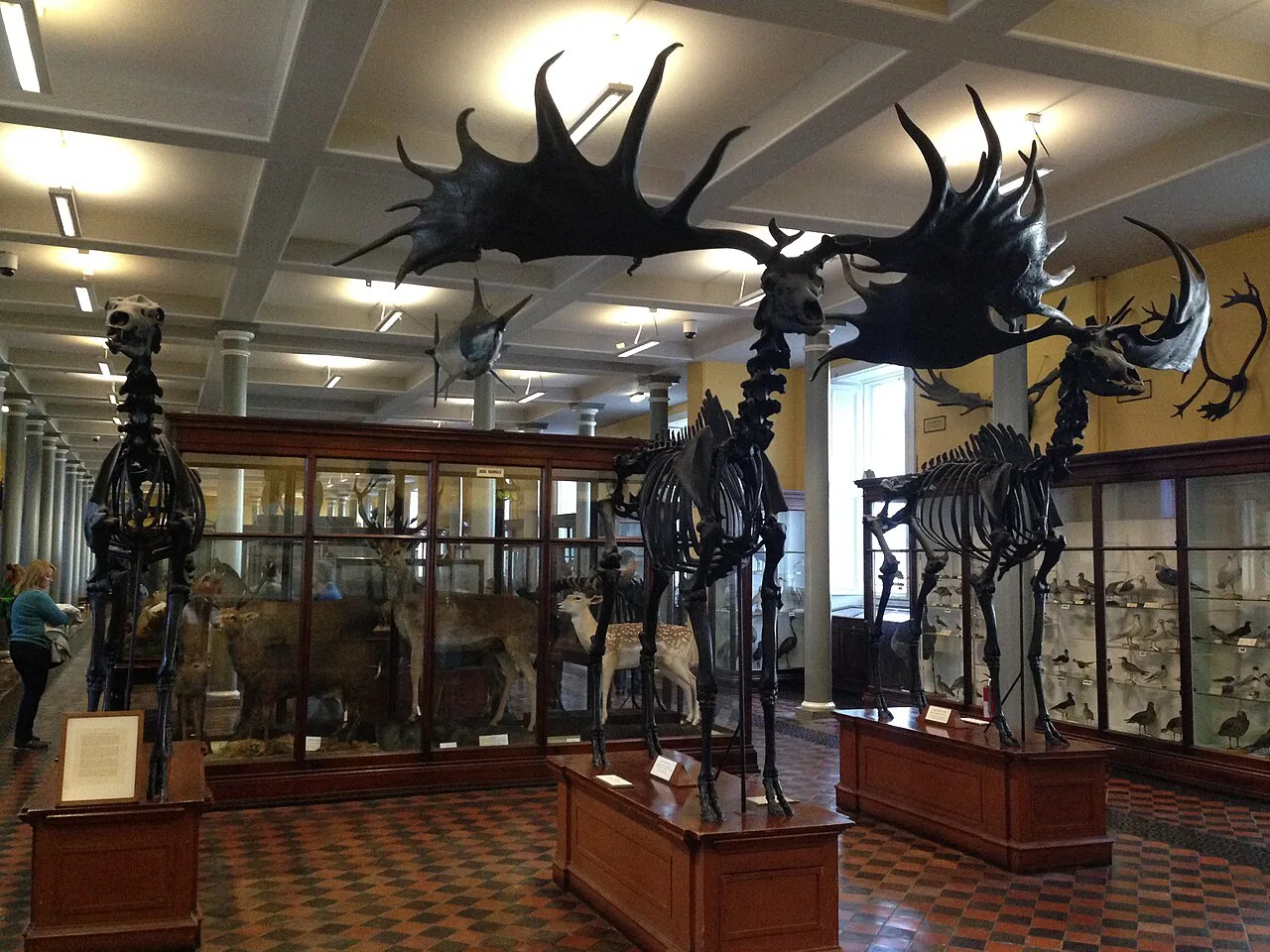
The council places the Houses of the Oireachtas, the Natural History Museum and the National Gallery of Ireland along the west side of the square, making that edge the obvious route if you want to move from garden to galleries. The National Gallery of Ireland is the natural companion for an art-focused visit.
The square also sits within a wider Georgian Quarter of streets and terraces, so a walk beyond its edges gives a fuller sense of the city's layout from that period. If comparing Georgian streetscapes, the Georgian Quarter Limerick: Walking Newtown Pery guide shows the same planned-terrace approach in another city. If your interests run to older layers still, Dublinia covers Viking and Medieval Dublin and offers an indoor counterpart to an outdoor day.
For a different kind of collection day, Chester Beatty, Dublin holds a manuscript and book collection in the city centre, giving another anchor for a museum-focused itinerary. Pairing it with a wander through Merrion Square keeps the day varied between outdoors and interior exhibits.
If you want more background on how the city developed before you walk, a dedicated Dublin history collection gathers context on the periods that shaped streets like these.

Plan Your Visit
Merrion Square rewards a simple approach: walk the Georgian perimeter, then enter the garden and follow the sculpture trail, checking the seasonal hours before you set out. The square's streets and garden are public space, and the museum edge to its west is a natural extension of the same walk.
Plan for the weather and the season, because the park's closing time changes through the year, and confirm museum arrangements separately. With those checks done, the square works as both a quick garden stop and the start of a longer day around the city's galleries.
Frequently Asked Questions
Is Merrion Square free to visit?
The square's streets are public space, and Dublin City Council's park page does not indicate an admission charge for Merrion Square Park itself. The museums and institutions along the west side of the square are separate and have their own entry arrangements, so plan for and confirm those independently. Check the council's park page for current arrangements.
Is the Oscar Wilde statue inside Merrion Square Park?
Yes. The Oscar Wilde Memorial, dated 1997 and attributed to Danny Osborne, is listed by Dublin City Council among the artworks in Merrion Square Park, and it forms part of the park's sculpture trail. You enter the park through its gates during the council's opening hours to see it.
Why was Merrion Square Park closed to the public until 1974?
The park was private ground. It was bought by the Roman Catholic Church in 1930 as a site for a cathedral, but the project was never built, and RTÉ Archives records that the park had been closed to all but residents of the square. In 1974 Archbishop Dermot Ryan transferred the land to Dublin Corporation, and the park has been open to the public since 5 April 1974.
How long should I spend at Merrion Square?
A short loop of the park plus a walk around the surrounding terraces fits into a modest stop, while following the full sculpture trail takes longer. If you pair the square with the National Gallery or another museum, set aside the bulk of your time for the collection and treat the square as the walk before or after it.
What is there to see inside Merrion Square Park?
The park has a restored historical layout, a sculpture trail and an art trail, plus a playground, and Dublin City Council lists the Oscar Wilde Memorial and other works with their artists and dates. The council says you can explore the art with the Dublin City Heritage Park app. The park is wheelchair accessible.
What museums are next to Merrion Square?
Dublin City Council places the National Gallery of Ireland, the Natural History Museum and the Houses of the Oireachtas along the west side of the square. Those are separate institutions with their own visiting arrangements, so confirm details with each before you go.