
Art Museums in Ireland: How the National Collections Differ
Ireland's art museums split into three national collections in Dublin: fine and European art, modern and contemporary work, and decorative arts with history.
On this page
If you are planning a trip around art museums in Ireland, the useful starting point is that the principal collections sit in three separate national institutions in Dublin, and each one holds something different. The National Gallery of Ireland covers European and Irish fine art, IMMA holds the national modern and contemporary collection, and the National Museum of Ireland at Collins Barracks pairs decorative and applied arts with social and military history.
That division matters because a single afternoon cannot do justice to all three, and expecting one to substitute for another leads to disappointment. Decide first whether you want old masters and portraits, contemporary work in a historic setting, or objects and design history, then build the day around that choice.
What Each National Collection Holds
The National Gallery of Ireland, in Dublin's Georgian Quarter, contains more than 16,000 works spanning western European art from 1300 to the present, according to Tourism Ireland's visitor guide to the gallery. That description places it as the country's broad fine-art collection, mixing European masters with a substantial Irish strand. For the full picture of what hangs inside, see our National Gallery of Ireland: A Visitor's Guide to the Dublin Collection.
IMMA, the Irish Museum of Modern Art, describes itself as Ireland's museum for modern and contemporary art and as home to the National Collection of modern and contemporary art, with over 3,500 works by Irish and international artists. Its remit is the art of our own era rather than the historical canon, and the collection can be searched online before you travel.
Collins Barracks is the third and least obvious member of the group. The National Museum of Ireland's Art and Industrial Division curates decorative and applied arts alongside political, economic, military and social history, which is why furniture, metalwork, costume and designed objects belong here rather than in a painting gallery.
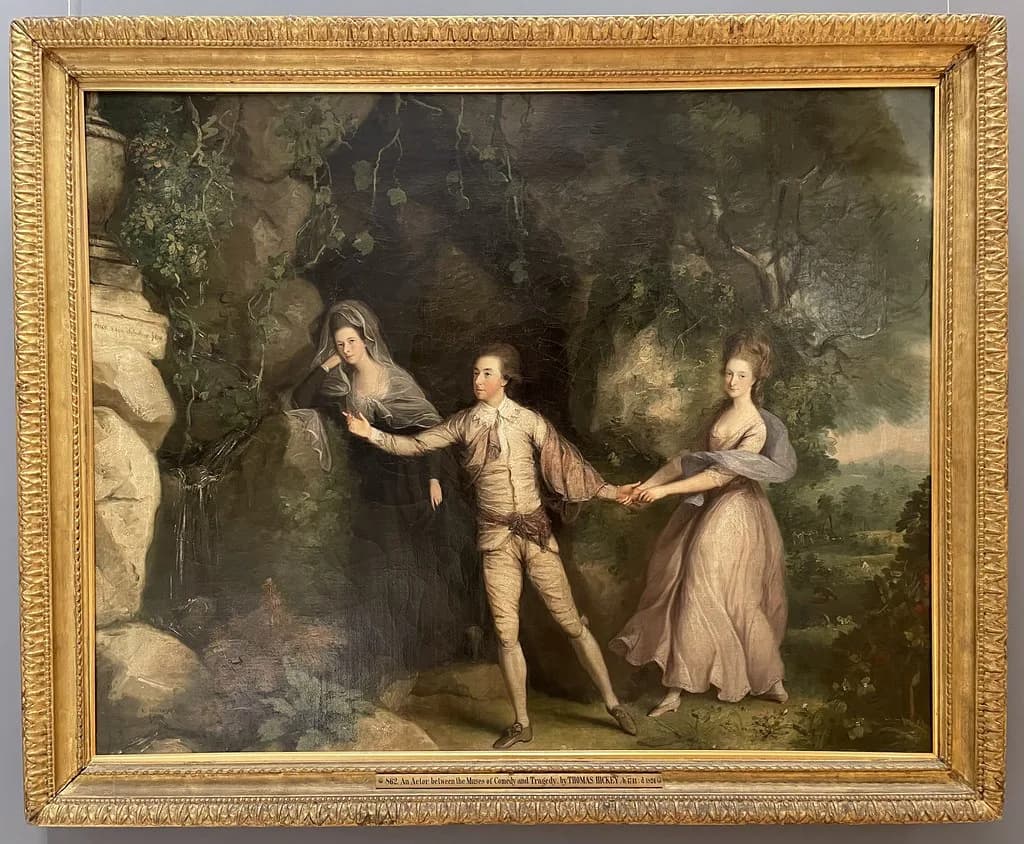
National Gallery of Ireland
Tourism Ireland's guide notes that the gallery opened in 1864 and has served as a study and refuge for Irish creative figures ever since. It describes hushed galleries holding Rembrandt, Monet, Picasso, Vermeer and Titian alongside Irish artists including John Lavery, Mainie Jellett and Louis le Brocquy, useful names to watch for if you are following individual careers.
The headline for many visitors is Caravaggio's The Taking of Christ, painted in 1602 and now on indefinite loan to the Irish people. The same guide recounts that the painting was long thought lost or destroyed before being recognised in 1990, hanging in a Dublin drawing room belonging to the Jesuit Fathers, where it had been attributed to the Dutch artist Gerrit van Honthorst.
A second, distinctly Irish thread is the National Portrait Collection, created in 1875 and covering drawings, paintings, photographs and sculptures of figures from the island of Ireland. It rewards a slower pass than the old masters, especially if you already know something of the writers and artists depicted.
According to Tourism Ireland, admission to the permanent collection is free, though some temporary exhibitions may require paid tickets booked in advance. The guide also says the café and shop sit on Level 0 of the Millennium Wing, suitcases are not permitted, and you may be asked to carry your backpack by your side, so travel light if the gallery is your first stop after arriving.
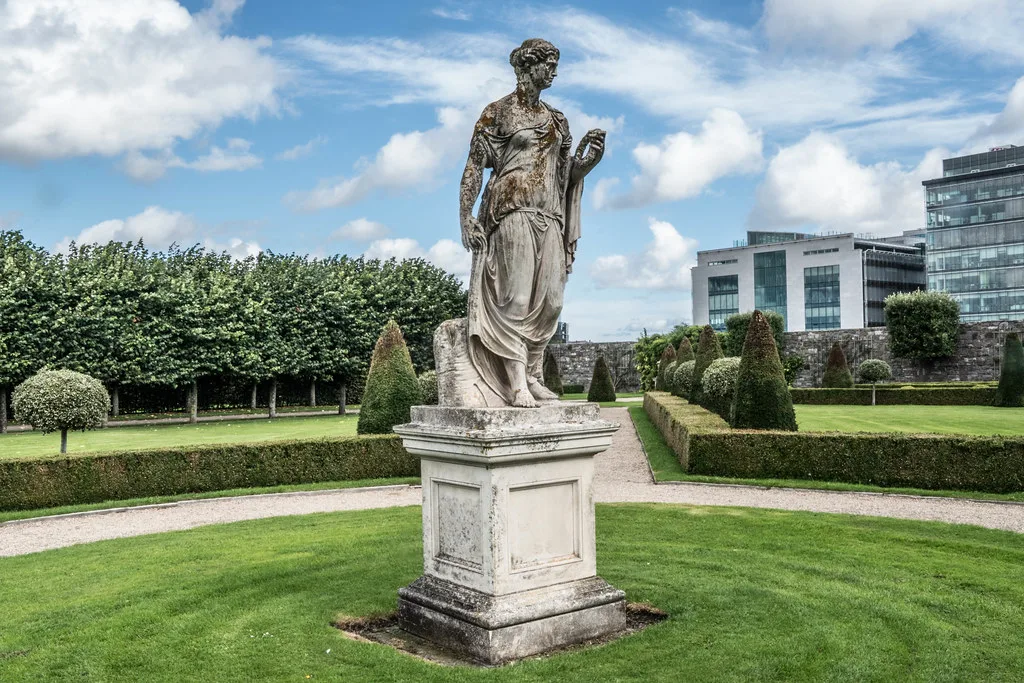
IMMA at the Royal Hospital Kilmainham
IMMA presents a changing programme of exhibitions alongside its national collection, and its published listings cover talks, guided tours, family workshops and residents' projects rather than a fixed hang. Because the displays rotate, the specific works on view during your trip are best checked on the museum's own calendar shortly before you go.
The museum's site describes an extensive programme of tours, including tours delivered in Irish and dementia-inclusive sessions, plus family art workshops. If a structured introduction suits you better than a self-guided walk, choose a scheduled tour from the museum's listings and confirm its details there before you travel.
IMMA is based at the Royal Hospital Kilmainham, and the grounds are part of how the site is used, with the museum noting that its members include those who enjoy walking them with a dog. For an art-focused visit, allow separate time for the galleries themselves, and check the museum's own listings for what is showing during your trip.
If contemporary work is your priority, IMMA is the collection to build a half-day around, and reading on individual artists beforehand makes the visit more rewarding. Figures such as Jack B. Yeats are useful names to carry with you when reading around Irish painting, and our guide to Jack B. Yeats in Ireland gives the biographical context.
National Museum of Ireland at Collins Barracks
Collins Barracks sits at Benburb Street, Dublin 7, and admission is free, with the museum's own visitor information page covering opening hours, accessibility, a café, a gift shop and group bookings. Rather than restating hours that can change, check that page directly before setting out, particularly for evening or weekend visits.
The permanent Changing Ireland Galleries interpret Irish political, cultural and social history from 1900 to 2020 inside a barracks building the museum describes as more than 300 years old. Admission is free and no booking is required, which makes it an easy addition to a day that already includes other collections.
The object list is unusually concrete for a history display: Hannah Sheehy Skeffington's suffrage banner, James Connolly's hat from the Easter Rising, Rory Gallagher's 1961 Fender Stratocaster and Mary Robinson's inauguration suit designed by Louise Kennedy all feature. A free audio tour covers the people and themes in the galleries, a sensible option if you prefer context without a fixed tour time.
The other permanent anchor is Soldiers and Chiefs, which traces Irish military history from 1550 into the 21st century across roughly 1,700 square metres using over 1,000 objects. The museum is explicit that it may close at short notice for operational reasons and recommends calling ahead on the day for a special visit, so treat it as a firm plan only once confirmed.
Within that exhibition, the Barracks Life Room reconstructs soldiers' quarters as they would have looked in 1879 and 1943, with costumes to try and objects to handle. Gallery 4, covering the Irish in British Regiments, is listed as temporarily closed, so anyone going specifically for that section should check its status before travelling.
Temporary and Rotating Displays at Collins Barracks
The Weight of Words is a temporary free exhibition made with the National College of Art and Design, exploring cast weights produced by the Akan peoples of Ghana and Côte d'Ivoire for measuring gold dust. Second-year jewellery and objects students made facsimile copies from the museum's ethnographic collection and designed their own pieces in sterling silver, informed by proverbs from their own cultural contexts.
Also free is Eva Lynch's Anthropoware, built around Anthropoware V, a kinetic sculpture visitors are invited to spin. The work uses bezel-set chalcopyrite to show copper's origin and deer antler as a nod to the tools behind anticlastic metal forms in the Iron Age, and the museum lists it as on display until 31 January 2027.
These two displays show why Collins Barracks rewards an art-minded visitor: the craft conversation between historical objects and contemporary makers is the point, not an add-on. If your interests lean toward design, metalwork or Irish landscape paintings as a contrast, plan the decorative arts floors first and leave the military galleries for a second pass.
Choosing Between the Three Collections
For European old masters, the Caravaggio and Irish portraiture, the National Gallery is the clear first call, and its central location makes it easy to combine with a walk through Merrion Square. Tourism Ireland's guide suggests continuing to Trinity College for the Book of Kells or to the National Museum's archaeology collections, though that museum's Merrion Street site is currently closed for refurbishment.
For art made from the twentieth century onward, IMMA is the natural choice, with its national collection and rotating exhibition programme. Readers following individual careers may find it useful to read around painters such as William Orpen or Walter Osborne before visiting, since background reading gives the works you see a wider context.
For design, craft and social history, Collins Barracks offers the widest range in a single building, and its free admission means you can drop in for a focused hour without feeling you must see everything. Allow at least half a day if you want Changing Ireland, Soldiers and Chiefs and a temporary display, and more if you read labels closely.
Trying to combine the National Gallery with either Kilmainham or Collins Barracks in one day is possible but rushed. A more satisfying pattern is one collection per half-day, with walking time between them treated as part of the visit rather than dead time.
Access Conditions to Check Before You Travel
Two access notes deserve attention. The National Museum of Ireland's Merrion Street building is closed to the public for a full refurbishment project, as its own site and Tourism Ireland's guide both state, and a Dead Zoo Lab has opened at Collins Barracks in the meantime. Do not plan a visit to Merrion Street on the assumption it has reopened.
At Collins Barracks, Gallery 4 of Soldiers and Chiefs is temporarily closed, and the exhibition as a whole may shut at short notice. The museum's visitor page gives the phone number for confirming on the day, so a quick call is the practical way to protect a long-planned trip.
Outside Dublin there are smaller public galleries with their own collections, but their holdings and opening arrangements sit beyond what the sources consulted here cover. If a regional gallery is to be the anchor of a day, confirm what is on display and when it opens directly with the venue before travelling.
Plan Your Visit
Build the trip around one collection per outing: the National Gallery for European and Irish fine art, IMMA for modern and contemporary work, Collins Barracks for decorative arts set against history. Free admission is published for the National Gallery's permanent collection and for the Collins Barracks exhibitions, but IMMA's charging arrangements, temporary exhibition tickets, closures and opening hours vary, so check each venue's own site before you go.
If your interest in Irish painting runs deeper, reading around individual artists before you arrive turns a general gallery walk into a targeted one. The same applies to stained glass and mural traditions, which reward a little preparation before you encounter them in person. For a closer look at an earlier artistic tradition, read our guide to Irish illuminated manuscripts.
To follow individual Irish painters beyond the national collections, our guide to Mary Swanzy covers one of Ireland's early modernists. For the craft tradition that runs through decorative arts displays, see our guide to Harry Clarke Stained Glass. And if landscape is what draws you, Paul Henry Artist is a natural next read after the National Gallery's Irish rooms.
Explore more Ireland guides
Frequently Asked Questions
What art museums should I visit in Ireland?
Start with the three national collections in Dublin. The National Gallery of Ireland holds European and Irish fine art, IMMA holds the national modern and contemporary collection, and the National Museum of Ireland at Collins Barracks covers decorative and applied arts alongside social and military history. Each suits a different interest, so pick according to what you want to see rather than trying to fit all three into one day.
Are Ireland's art museums free?
Free admission is published for the National Gallery's permanent collection and for the exhibitions at Collins Barracks, but some National Gallery temporary exhibitions may be ticketed and should be booked in advance. IMMA's site does not state charges for general admission in the pages consulted, so check its listings for any ticket costs on specific events. Do not assume every art venue is free; verify with the venue you plan to visit.
How is IMMA different from the National Gallery of Ireland?
The National Gallery covers western European art from 1300 to the present alongside a strong Irish strand, including the National Portrait Collection. IMMA holds the national collection of modern and contemporary art, with over 3,500 works by Irish and international artists, and its programme of temporary exhibitions, tours and workshops changes regularly.
Where is Caravaggio's The Taking of Christ?
It hangs at the National Gallery of Ireland, where Tourism Ireland's guide describes it as on indefinite loan to the Irish people. The same guide recounts that the 1602 painting was thought lost before being recognised in 1990 in a Dublin drawing room belonging to the Jesuit Fathers, where it had been attributed to another artist.
Why does the National Museum of Ireland at Collins Barracks count as an art museum?
Its Art and Industrial Division curates decorative and applied arts as well as political, economic, military and social history. That means furniture, metalwork, costume and designed objects are held and displayed there, alongside temporary projects such as The Weight of Words and Eva Lynch's Anthropoware, which connect historical craft to contemporary making.
Is the National Museum of Ireland at Merrion Street open?
No. The museum's site and Tourism Ireland's guide both state that the Merrion Street building is closed to the public for a full refurbishment. A Dead Zoo Lab has opened at Collins Barracks in the meantime, so direct that part of your interest there and check the museum's site for any change before travelling.
How long should I allow at Collins Barracks?
Allow at least half a day if you want to see Changing Ireland, Soldiers and Chiefs and one temporary display, and longer if you read labels carefully. The galleries cover a large floor area, and Soldiers and Chiefs alone spans roughly 1,700 square metres. Check the visitor information page for hours and any partial closures on the day.
Which of the three collections holds contemporary art?
IMMA is the dedicated choice, since it holds the national collection of modern and contemporary art and runs a changing programme of exhibitions, tours and workshops. Its site at the Royal Hospital Kilmainham gives you grounds to walk between gallery rooms. Check the museum's calendar before you go, because what is on display rotates.
Sources
- IMMA | Irish Museum of Modern Art
- Dublin's National Gallery of Ireland | Ireland.com
- Decorative Arts & History | National Museum of Ireland
- Visitor Information | Decorative Arts & History | National Museum of Ireland
- Changing Ireland Galleries | Decorative Arts & History | National Museum of Ireland
- The Weight of Words | Decorative Arts & History | National Museum of Ireland
- Soldiers and Chiefs - The Irish at War at Home and Abroad from 1550 to the present day | Decorative Arts & History | National Museum of Ireland
- Eva Lynch - Anthropoware | Decorative Arts & History | National Museum of Ireland
You might also like



Continue reading
More guides you'll find useful



