
Irish Murals: Waterford Walls and Dundalk's Mural Trail
Irish murals reward a walking visit in Waterford and Dundalk. This field guide covers named walls, the free self-guided EPSO trail and the bookable guided tour.
On this page
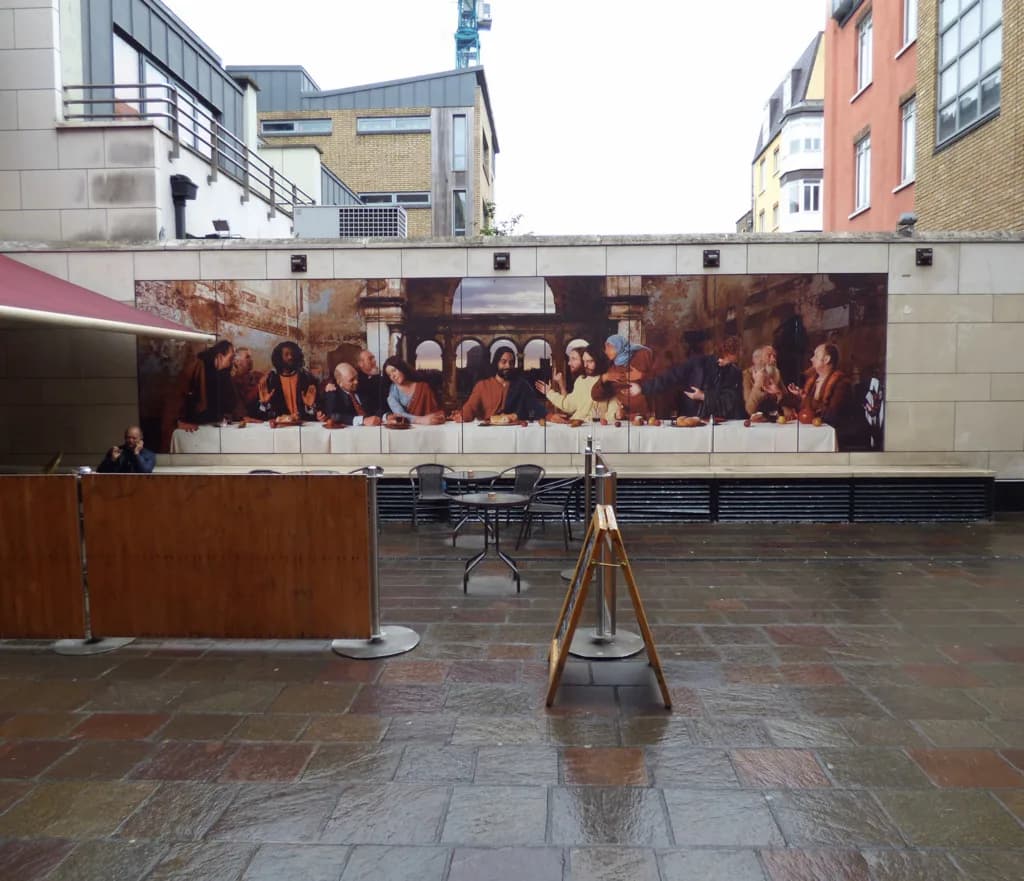
Irish murals are best approached on foot in two cities: Waterford, where a festival has layered large-scale works across the streetscape, and Dundalk, where a mapped trail of murals from successive festivals can be followed independently. Neither is a single gallery stop. Walking the streets is free, and Dundalk also offers a bookable guided tour. The sections below name specific walls, explain how the work gets commissioned, and set out what each city asks of a visitor.
How Murals Get Onto Irish Walls
Most large murals in these two cities are commissioned rather than spontaneous. The Walls Project, the organisation behind Waterford Walls, describes its work as commissioning site-specific street art, using placemaking and urban regeneration as goals and operating an artist fair pay policy informed by the Arts Council of Ireland. That matters to visitors because it explains why a wall carries a particular image: an artist was invited, paid, and given a specific site to respond to.
The Irish Museum of Modern Art frames public art as work made for and sited in public places, temporarily or permanently, and notes that the setting shapes how an audience meets it. An encounter with a mural beside a road or in a park is often fleeting and circumstantial, unlike the deliberate decision to enter a gallery. That distinction is the practical key to reading street murals: you are seeing art in the middle of ordinary city life.
For a wider view of the painters and institutions behind Ireland's visual culture, including the National Gallery of Ireland, the irish artists overview is a useful companion to a mural walk. The dedicated Jack B. Yeats in Ireland page offers a single-artist complement, setting the gallery tradition against which contemporary street work is often read.
Waterford Walls: A Citywide Festival Legacy
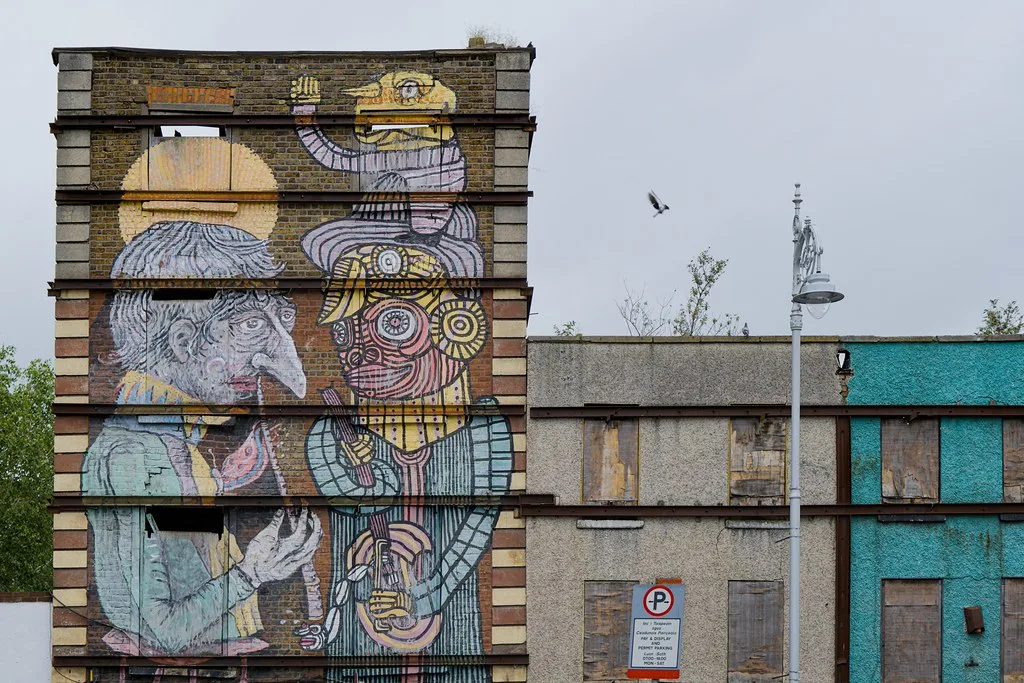
Waterford Walls is an annual festival that spreads across Waterford City rather than concentrating in one quarter. According to the festival operator, the 2025 edition involved more than 40 national and international artists creating 70 large-scale murals in and around the city, over ten days of live art, music, workshops, family events and guided tours. The operator lists the 12th edition as running from 7 to 16 August 2026; since that window has now passed, treat it as the most recent edition rather than something upcoming.
Because the festival model adds works year after year, Waterford's murals are best understood as an accumulating cityscape. The operator describes the programme as combining live painting with tours and family events, which means the walls you see were produced in front of audiences over successive editions. If you want to know whether new work is planned, check the festival operator's own site rather than relying on older lists.
A Named Waterford Wall: United Ireland on Jenkins Lane
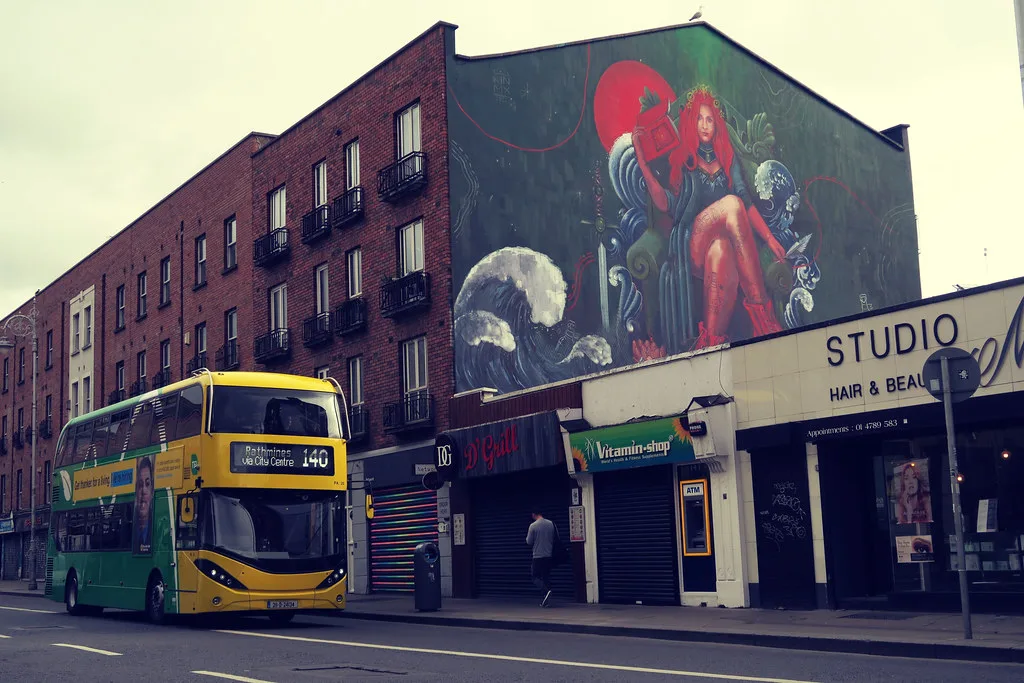
For a single anchor in Waterford, head for Jenkins Lane, where Waterford City and County Council invites the public to visit AndyMc's mural United Ireland. Unveiled as part of the 2025 Waterford Walls Festival, the work shows two small children, one Indian and one Irish, who have just completed an artwork together; the council describes it as a tribute to diversity, empowerment and possibility. The title is the artist's, and the subject is best described in the council's own terms rather than read as a statement on constitutional politics.
The council's notice also frames Waterford Walls as Ireland's largest street art festival, supported by the local authority, which is a useful reminder that these walls sit within a civic programme. Street murals involve no ticketing, no indoor facilities and no shelter, so plan a walk that suits the weather and the daylight you have.
Reading Waterford Honestly
Murals are subject to change: paint weathers, walls are repainted, and commissions are replaced. Treat any published list, including this one, as a starting point rather than a permanent inventory, and confirm current locations through the festival operator or the local authority before making a special trip for one image.
That impermanence is not a defect unique to Waterford. It is part of what public art is: the Irish Museum of Modern Art's overview stresses that public art may be permanent, temporary or transient, and that site and context are central to the work. Knowing this changes how you walk: you look at what is on the wall now, in the place it was made for.
Dundalk's Outdoor Gallery: The Free EPSO Trail
Dundalk offers a different model: a documented trail you can follow without booking. Visit Louth, the local tourism office, publishes a free self-guided walking tour of murals created as part of the town's festivals from 2019 to 2025, with each work listed by title, artist and street. The same page gives the tourist office phone number and directs readers to its website for the map and artist information.
Because the list covers several festival years, it mixes subjects: local religious and historical figures, mythological characters, maritime and railway heritage, and portraits. The inventory is documented as works from those festivals, not a guarantee that every listed wall remains intact or can be viewed at close range, so use the map as a route sketch and check the wall itself when you arrive.
Three Dundalk Walls to Anchor a Walk
Start with Friz's Brigid of Faughart on Bridge Street, listed as one of the documented works. Elsewhere in the centre, Mister Copy's Cúchulainn on Patrick Street and Setanta, The Boy Warrior on Church Street draw on the Ulster Cycle figure associated with the area around Dundalk. These entries are worth locating individually on the published trail map rather than treated as neighbours.
For a modern subject, Claire Prouvost's Dorothy Macardle on River Lane names a local figure, while Milu Correch's Maritime Heritage on Quay Street points to the town's port history. These give the walk a different register from the saints and heroes, and they sit within the same documented trail.
Visitors who want more of this seam of Irish visual culture, including stained glass, can branch out from the street walk into the art museums in Ireland guide, which maps the gallery side of the same tradition.
Guided Versus Self-Guided in Dundalk
Dundalk Tourist Office lists guided mural walks on the first Friday of each month, with tickets at €6 and booking essential, contactable on 042 9352111. Private group tours are listed as available all year for groups of five or more through the same office. Treat these as currently listed details rather than a guarantee and confirm by phone before travelling.
The trade-off is straightforward. A guided walk buys you artist context, technique and the stories behind specific pieces, which is hard to reconstruct from a wall alone. A self-guided walk buys flexibility and costs nothing beyond your own time, but you supply the interpretation. If you have one afternoon and want the history explained, book ahead; if you want to move at your own pace, take the map.
From SEEK to EPSO: Historical Context
The Dundalk mural programme grew out of SEEK Urban Arts Festival, established in 2019 to bring visual art onto the town's streets. Creative Ireland's record of the 2021 edition describes that year celebrating larger-than-life figures with local connections, including St Oliver Plunkett, Leopold McClintock (the Arctic Fox) and the mythological figure Lugh or Lú, alongside artist talks, walking tours and free workshops. Those details are historical and should not be read as a recurring programme.
Visit Louth presents the town's murals under the heading 'EPSO Mural Walking Tours', covering works created as part of the festivals from 2019 to 2025. That page, rather than older festival branding, is the practical source for current trail information, locations and the map.
Joe Caslin and the Temporary Mural
Not every significant Irish mural is still on a street. The National Gallery of Ireland documents the Roscommon-born street artist Joe Caslin, whose 2015 marriage-equality work directly referenced Frederic William Burton's painting The Meeting on the Turret Stairs. In 2017 the Gallery invited him to respond to Burton's work, and the resulting project, Finding Power, comprises seven photographic portraits, a graphite and ink drawing, a sketchbook and a large-scale temporary installation.
The Gallery acquired the portraits and original drawing in 2019, and Caslin donated his sketchbook and a limited-edition poster. The installation itself was temporary, and the gallery's account is dated 2018, so check the Gallery's current pages if you want to see what is on display now.
The lesson for mural-hunting is that ephemerality is a feature of the form, not a failure. A wall-mounted image may be gone while the drawings, portraits and documentation that surrounded it survive in a collection, which is one reason a gallery visit and a street walk complement each other. Caslin's work sits in the National Gallery of Ireland: A Visitor's Guide to the Dublin Collection, where that gallery tradition can be explored indoors.
What Open-Air Murals Do and Do Not Offer
Street murals are encountered in public, which means no queue, no ticket desk and no set viewing conditions. The Irish Museum of Modern Art notes that audiences meet public art in fleeting and circumstantial ways, and that practical questions of durability, security, safety, access and visibility shape what can be placed where. Read that as a prompt to look properly, from a safe spot, rather than as a facilities list.
Before setting out, corroborate the location of any single mural you care about with the commissioning body, the local authority or the tourism office, since a street address in a list is not a promise about what is currently visible. Building the walk around a cluster rather than one wall is the simplest way to protect against disappointment.
Choosing Between the Two Towns
Choose Waterford if you want the scale and variety of a festival city, where dozens of large works were produced in a single recent edition and the streetscape itself is the exhibition. Choose Dundalk if you want a mapped, walkable sequence with a bookable guide and a clear thematic spine of local saints, myth and modern figures. Both suit travellers who prefer to read a place through its walls.
Plan Your Mural Walk
A mural trip works best when you treat the city as the gallery and the map as a starting sketch. In Waterford, use the festival operator's pages to see how the programme works and head for Jenkins Lane to see United Ireland; in Dundalk, download the free trail from Visit Louth and decide in advance whether you want the guided version or your own pace.
Check current details once, close to your visit, for the Dundalk guided tour and for any specific wall you are travelling to see. Then give the rest of the day to the streets, which is where these works were always meant to be met. For another heritage guide, read about William Orpen.
Explore more Ireland guides
Frequently Asked Questions
Where can I see Irish murals without booking anything?
Waterford's street murals can be walked independently; the council's notice for AndyMc's United Ireland on Jenkins Lane invites the public to visit. In Dundalk, Visit Louth publishes a free self-guided trail with each mural listed by title, artist and street, so no advance booking is needed to follow the route on foot.
Is the Dundalk mural trail free?
The self-guided version is listed by Visit Louth as free and self-guided, with the map and artist information on the tourist office website. A bookable guided version exists separately and carries a charge, so if you want a guide, check the current ticket price with Dundalk Tourist Office before you travel.
How do I book a guided mural tour in Dundalk?
Visit Louth lists guided mural walks on the first Friday of each month, with booking essential through Dundalk Tourist Office on 042 9352111. Private group tours are also listed for groups of five or more. Confirm the current arrangements by phone rather than assuming a scheduled walk will run.
What is AndyMc's United Ireland mural about and where is it?
Waterford City and County Council invited the public to visit the mural on Jenkins Lane. It depicts two small children, one Indian and one Irish, who have just finished an artwork together, and the council presents it as a tribute to diversity, empowerment and possibility. The title and subject are the artist's, not a comment on constitutional politics.
Did Waterford Walls add murals in its most recent edition?
The operator reports that the 2025 edition alone produced more than 40 artists and 70 large-scale works across the city, and lists the 12th edition as running 7–16 August 2026, now past. Whether further walls will be added is a question for the festival operator, whose own site carries the current programme information.
Why do some Irish murals disappear?
Murals sit on buildings and in weather, so paint fades and walls get repainted or recommissioned. The National Gallery of Ireland's account of Joe Caslin's Finding Power makes the same point from the gallery side: the large installation was temporary, while portraits and drawings entered the national collection, so the documentation outlasts the wall.
Sources
- Finding Power, by Joe Caslin | National Gallery of Ireland
- About - The Walls Project
- Waterford Walls Festival - The Walls Project
- New Mural Celebrates Diversity in Waterford - Waterford City & County Council
- EPSO Mural Walking Tours | Visit Louth
- SEEK Urban Arts Festival - Creative Ireland Programme
- Public Art - IMMA
You might also like



Continue reading
More guides you'll find useful



