
Grace Henry: Scottish-Born Painter, Her Art and Where to See It
Grace Henry was a Scottish-born painter who trained in Brussels, Paris and Italy and built much of her career in Ireland. See her work and read her story.
On this page
Grace Henry was a Scottish-born painter, born in Aberdeen in 1868 and died in 1953, who trained in Brussels and Paris and spent much of her working life in Ireland. She is often introduced through her marriage to Paul Henry, but her own canvases show a separate training, a separate set of subjects and a distinctly experimental streak. This guide treats her as an artist in her own right and then explains, practically, where a visitor can see her work.
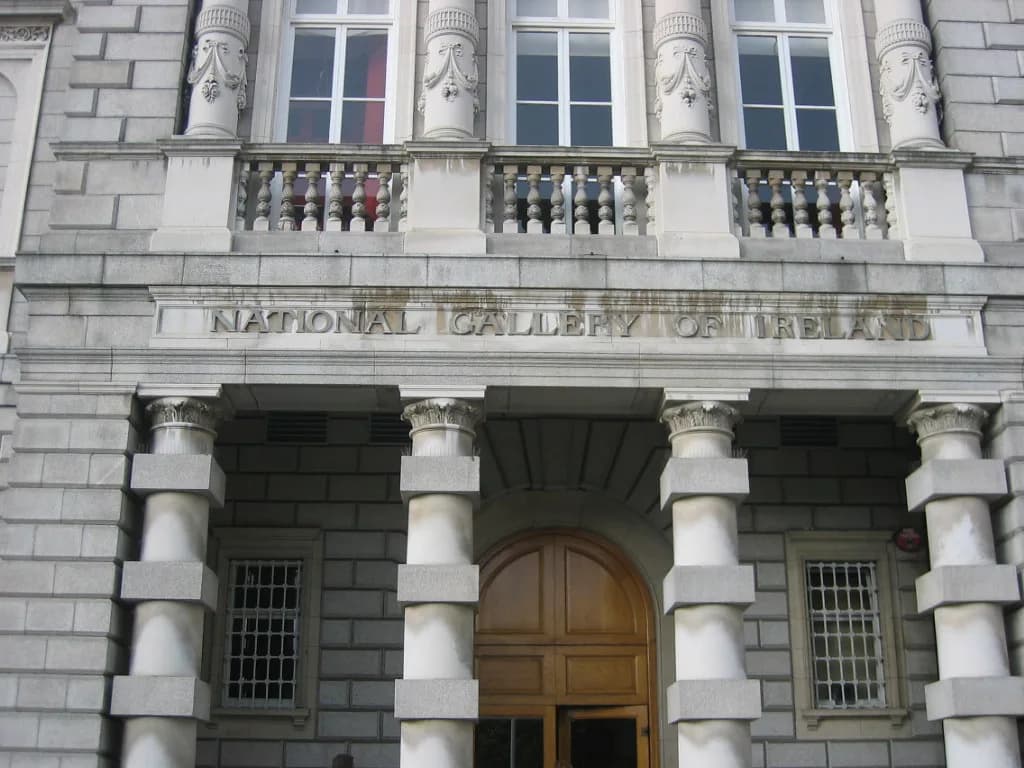
The quick answer for anyone planning a visit: her paintings hang in the National Gallery of Ireland in Dublin, where a self-guided Irish art tour places her work in the same room as her husband's. Admission to the permanent collection there is free, though some temporary exhibitions carry a charge. Everything else in this article is context for looking at what is on the walls.
Who Was Grace Henry?
The biographical outline is modest and firm. Grace Henry was born in Aberdeen, Scotland, studied in Brussels and Paris, painted landscape, portraits, still life and genre scenes, and exhibited in Dublin, Belfast and London. She was elected an HRHA in 1949, four years before her death. For a country-level overview of the period's painters, see this guide to Irish artists.
Two things are worth correcting at the outset. First, she was not Irish-born; her career was largely Irish, but her origins were Scottish. Second, she should not be filed only as a spouse. The National Gallery's own label text notes her interest in modern art and her willingness to experiment with different subjects and techniques, which is visible in the paintings themselves.
Training and Influences
Her art education took her across Europe. The Limerick record states that she did academic and modernist studies in Brussels and Paris, and the Gallery's commentary adds Italy to her travels and studies. That combination matters: a conventional academic grounding plus exposure to modernist colour and composition is exactly the mix you see when you look closely at her still lifes. No source names her teachers or the specific academies she attended, so be sceptical of any biography that does.
In 1900 she was in Paris, where she met Paul Henry; they married in 1903, and in the Gallery's account she is recorded as Grace Mitchell, a Scottish-born painter. The Gallery's catalogue entry on her work identifies Van Gogh, Whistler and Cézanne among the figures whose influence her paintings suggest. That is the Gallery's characterisation rather than a settled consensus, and it is best tested by looking at a canvas rather than taking it on trust.
Reading Still Life with Marble Torso
If you want to see her independence in a single picture, start with Still Life with Marble Torso, which the Gallery has catalogued with a detailed label commentary. The curator's notes describe a composition with no single perspective: the marble torso is seen from below while a framed picture suspended in mid-air is viewed at a different angle. The draperies fall haphazardly, deliberately preventing the scene from settling on a definite horizon.
The colour is the other half of the story. The Gallery describes her as applying a vibrant, almost Fauvist palette to a conventional academic subject, and flags her fascination with the reflective qualities of light. That pairing is the useful takeaway: she did not abandon traditional subjects, she destabilised them from inside. When you stand in front of a still life, look for where the eye is forced to move rather than rest.
Why does this matter to a viewer? Multiple viewpoints ask you to assemble the scene rather than receive it, which is a surprisingly active way of looking at a tabletop arrangement of objects. A still life is a good test case for an artist's independence precisely because the genre's rules are so familiar. If the familiar rules are being bent, the painter is making a choice, not following a template.
Achill and the West of Ireland
The west of Ireland years shaped both Henrys' public reputations. In summer 1910, Grace and Paul travelled to Achill Island off the west coast, and the Gallery notes that they later returned and lived there; its tour page gives the residence as 1912 to 1919. Her work from this period sits beside her husband's west-of-Ireland subjects, and she is often described in relation to them. Read more on Paul Henry separately if his landscapes are your starting point.
Be careful with the residency dates. One institutional record gives her Achill years as 1910 to 1920, while the Gallery's tour page separates a first 1910 visit from a residence of 1912 to 1919. The two ranges overlap but do not match, so treat the late 1910s as a broad overlap shared by both and do not build an itinerary around a precise year. What is consistent is the importance of the west to her subject matter.
After 1934: Independence and Recognition
The marriage separated in 1934, and according to the Limerick record she then travelled and worked extensively on the Continent. This is the period in which her mobility becomes most visible: Scotland, Belgium, France, Italy and Ireland all appear in her story, with extended work abroad late in life. Her election as HRHA in 1949 came after that continental phase, not before it.
The same record notes that a work of hers, Study for Flowers, an oil on paper, was recorded as a 1948 gift of the artists, which tells you something about how her work entered public collections. Scotland and France both shaped her, but the institutional footprint that made her visible to later visitors was Irish. That mobility, rather than any single rooted style, is what her career demonstrates.
Where to See Grace Henry's Work in Dublin
The most reliable option for a visitor is the National Gallery of Ireland, whose self-guided Irish art tour states that her work can be seen in the same room as Paul Henry's. That is the Gallery's own statement of the arrangement, so it is the phrase to rely on rather than a room number. Admission to the permanent collection is free, while temporary exhibitions may carry a charge.
What the Gallery's page does not do is promise that a named Grace Henry painting is hanging at any given moment. Works move; labels change; rooms are rehung. Before travelling, check the Gallery's own listing or ask at the information desk on arrival, and treat any older article that names a specific picture as a clue, not a guarantee. The online collection is a useful fallback when something is off display.
If you want to widen the picture of Irish painting from the same era, it is worth pairing a Gallery visit with other collections in the city. A self-guided walking approach to the city's galleries lets you set her experimentation against contemporaries such as Jack B. Yeats in Ireland and William Orpen, whose work belongs to the same broad period. For a fuller look at the Gallery itself, see this National Gallery of Ireland: A Visitor's Guide to the Dublin Collection.
Practical Visiting Notes
The Gallery publishes daily opening hours, with a later finish on Thursdays, and notes that it begins to close earlier than the stated time, with the upper floors closing first, and that entry to the galleries stops shortly before closing. The shop and café run to their own timetables. Plan your Henry viewing for the start of a session, not the last half hour.
Short-notice disruption is possible. The Gallery's opening-hours page has carried closure notices tied to industrial action and warns that further closures may be necessary at short notice. It also lists annual closures around 24 to 26 December and Good Friday. Check the Gallery's channels on the day rather than relying on a printed guide, and do not assume a summer timetable applies in December.
Budget honestly: permanent-collection admission is free, some temporary exhibitions carry a charge, and members enter those without paying. If the exhibition programme is the main draw, check what is on before you build a trip around it. If you are primarily interested in Grace Henry, the permanent collection is where the self-guided tour points you, and it costs nothing to look.
A Painter in Her Own Right
Grace Henry's career crossed Scotland, Belgium, France, Italy and Ireland, and her painting shows the imprint of that mobility: multiple viewpoints, bold colour and a willingness to rework conventional genres. The most practical way to encounter her is to stand in front of a canvas and look for those decisions, then read the Gallery's commentary alongside it.
For the visit itself, the plan is simple: go to the National Gallery of Ireland in Dublin, follow the Irish art self-guided tour, and look for her work in the room shared with Paul Henry's. Confirm opening times and what is hanging before you travel, and treat any named painting as something to check rather than expect. For another heritage guide, read about Irish Landscape Paintings.
Explore more Ireland guides
Frequently Asked Questions
Who was Grace Henry?
Grace Henry (1868–1953) was a Scottish-born painter, born in Aberdeen, who studied in Brussels and Paris, also travelled and studied in Italy, and built a substantial painting career in Ireland. She painted landscapes, portraits, still life and genre scenes, exhibited in Dublin, Belfast and London, and was elected an HRHA in 1949.
Was Grace Henry Irish?
No. She was born in Aberdeen, Scotland, in 1868. Her career, exhibition record and public collections were largely Irish, which is why she is often grouped with Irish artists, but she should not be described as Irish-born.
Where can I see Grace Henry's paintings in Dublin?
The National Gallery of Ireland's self-guided Irish art tour places her work in the same room as Paul Henry's, so that is the place to start. Admission to the permanent collection is free. Check with the Gallery before travelling about which works are currently on display.
What is Grace Henry best known for?
Her west-of-Ireland subjects are the best-known strand, partly because of her association with Achill and with Paul Henry's landscapes. Her still lifes, however, show a more experimental side, with unconventional viewpoints and vivid colour.
How did Grace Henry's style differ from Paul Henry's?
Paul Henry is closely associated with atmospheric west-of-Ireland landscapes. The National Gallery's commentary on Grace Henry's work notes experimental multiple viewpoints, unconventional colouring and a near-Fauvist palette applied to conventional academic subjects, marking a distinctly more experimental streak in her painting.
When did Grace Henry live on Achill Island?
The published accounts differ. The National Gallery's tour page gives a first visit in summer 1910 and a later residence from 1912 to 1919, while another institutional record gives her Achill years as 1910 to 1920. Treat the late 1910s as the safest general statement and check the Gallery's own material for detail.
Is it free to see Grace Henry's work at the National Gallery of Ireland?
Admission to the permanent collection is free, and the self-guided Irish art tour places her work in the same room as Paul Henry's. Some temporary exhibitions carry a charge, though members enter free. Check current information before you travel, since closures can happen at short notice.
Sources
- Still Life with Marble Torso – Explore the National Gallery of Ireland's collection: – National Gallery of Ireland
- https://oldgallery.limerick.ie/media/Warren_selections_PC%20Jan-March2014_INFO%20SHEET.pdf
- Through a Lens tour: Irish art | National Gallery of Ireland
- Opening hours | National Gallery of Ireland
You might also like



Continue reading
More guides you'll find useful




