
Highlanes Gallery, Drogheda: Visitor Guide to the Municipal Art Gallery
Plan a visit to Highlanes Gallery in Drogheda, from the former Franciscan church building to the Municipal Art Collection, with free admission and access notes.
On this page
Highlanes Gallery is Drogheda's municipal art gallery and visual arts exhibition centre, occupying a former Franciscan church and friary in the County Louth town. It opened on 4 October 2006, the result of years of planning for a dedicated visual arts space for the north-east region, according to the gallery. The visit combines three things worth separating in your mind: the converted church interior, a civic collection with roots in the 1940s, and a changing exhibition programme.
Entry is free, which makes the gallery an easy addition to a Drogheda walk rather than a committed outing. The main planning risk is not cost but timing: the gallery and a regional tourism body publish different opening hours, so confirm before you travel. This guide sets out what each published source says, what the collection contains, and how to shape a short visit around what is actually hanging.
What Highlanes Gallery Is
Highlanes describes itself as a public art gallery and visual arts exhibition centre in Drogheda, Ireland. Its opening on 4 October 2006 followed years of planning to deliver a dedicated visual arts space for the Irish north east, built to international standards of design, management and environmental control in the gallery's own account. For a visitor, that background explains why a town-centre gallery operates with proper climate-controlled exhibition rooms rather than as a small volunteer-run space.
The gallery serves two purposes at once: it mounts temporary exhibitions and it displays works from the Drogheda Municipal Art Collection. A regional tourism body, Discover Boyne Valley, describes the gallery as presenting national and international temporary exhibitions alongside shows drawn from that collection. Treat that description as the tourism body's characterisation, not a ranking, and plan around whichever of the two strands is actually on when you visit.
The Former Franciscan Church Building
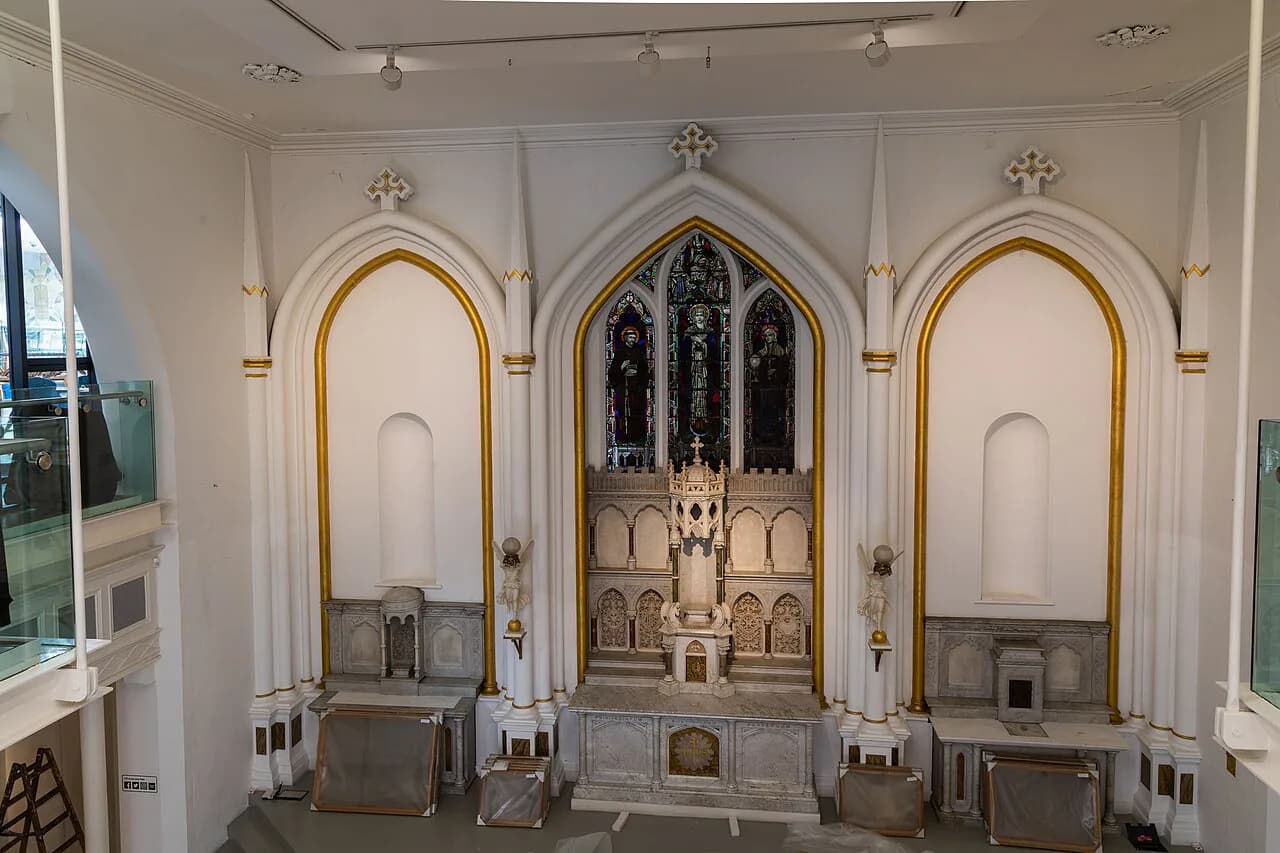
The gallery is sited in the former Drogheda Franciscan Church and Friary, known locally as High Lane Church. According to Discover Boyne Valley, the Franciscan Order gifted the building to the people of Drogheda in 2000, and the conversion preserved the character of the original structure. That means you are viewing art inside an adapted religious building, not a purpose-built white cube, and the architecture is part of what you come to see.
The church setting shapes the visit in practical ways. The gallery acknowledges that converting a building of this age was logistically challenging, and although it reports universal accessibility has been largely achieved, certain areas require careful navigation. Allow a little more time than you would in a modern gallery, and ask floor staff at reception if you need help finding a route through the spaces.
The Drogheda Municipal Art Collection
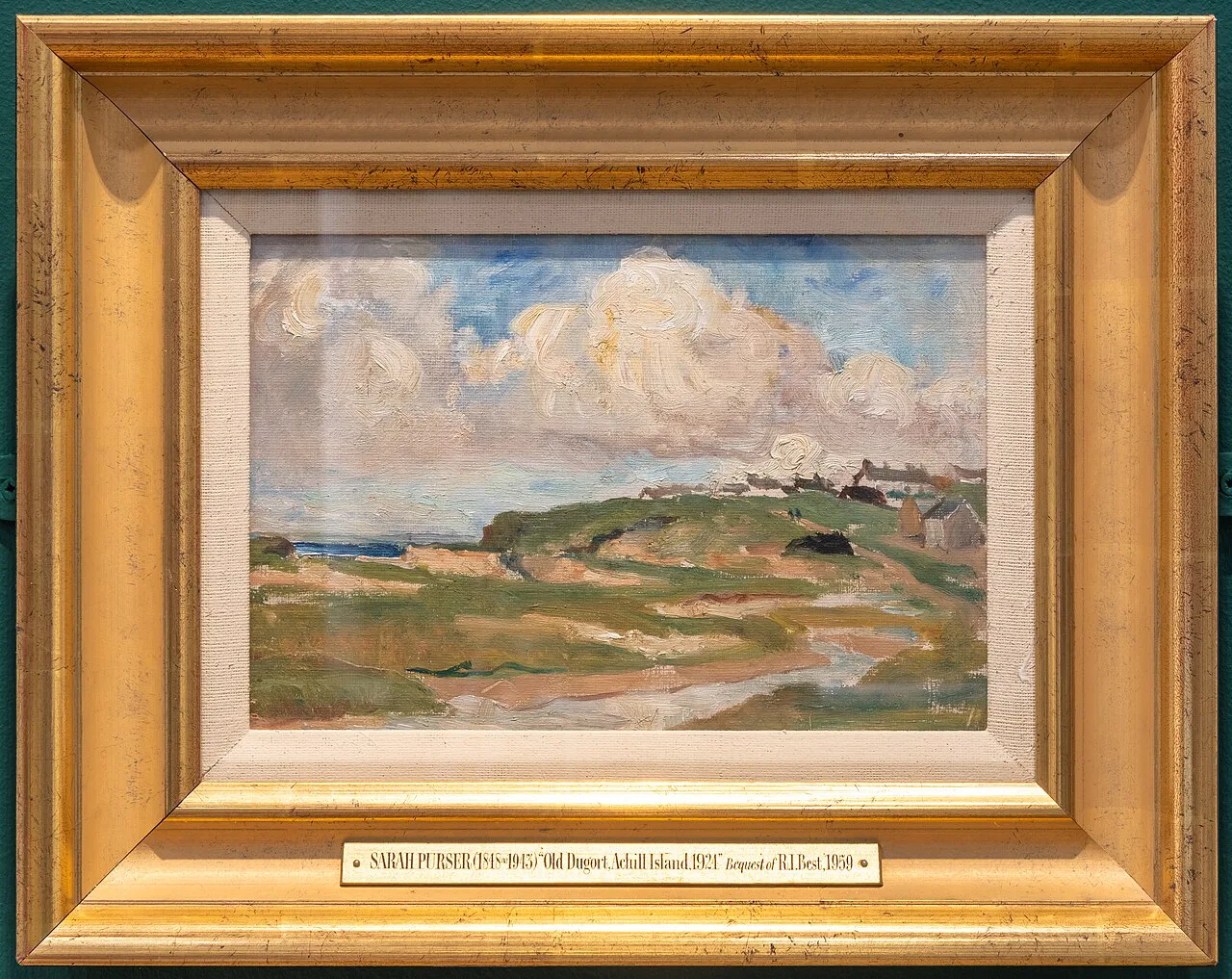
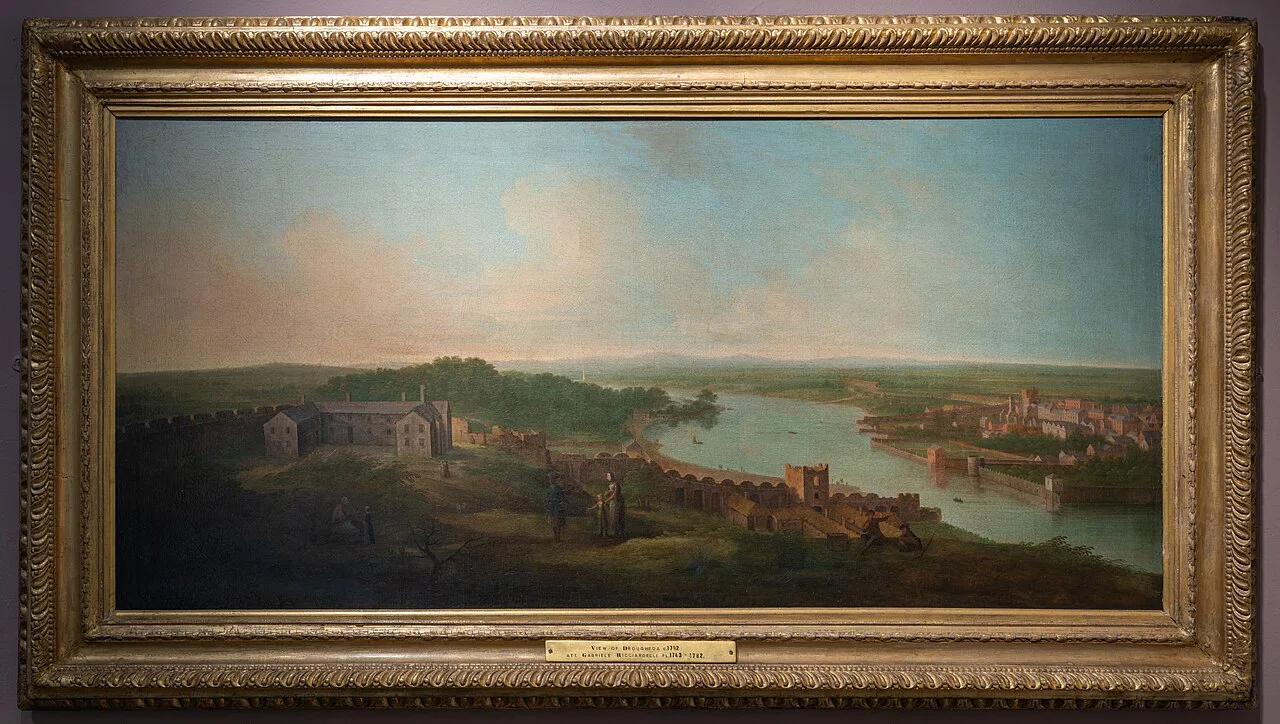
The Drogheda Municipal Art Collection has grown to more than 100 artworks, ranging from 18th-century paintings to modern sculpture, according to the gallery. It traces its development to the artist Bea Orpen, her husband Terry Trench and the 1947 Museum Committee, whose work laid the foundation for the collection. That lineage matters for reading the displays: this is a civic collection built over decades, not a single donor's bequest.
Because the collection spans centuries and media, it rewards a slower look at individual works rather than a rush through the rooms. If your interest is in Irish painting more broadly, the collection's 18th-century to modern range gives useful context alongside the wider story of irish artists. Check which collection works are on display when you arrive, since exhibitions drawn from the collection rotate.
Civic Heirlooms: The Sword and Mace
Discover Boyne Valley describes the gallery as housing the town's most treasured heirlooms: a ceremonial sword and mace presented to Drogheda Corporation by King William III after the Battle of the Boyne. The listing notes that only towns which had successfully withstood sieges received such swords, and describes Drogheda's silver mace as among the largest and most magnificent in Ireland. Frame these as the tourism body's account rather than the gallery's own collection narrative.
These objects sit apart from the art collection story. Discover Boyne Valley describes the gallery as housing them, and the gallery's own materials focus on the collection and exhibition programme rather than the heirlooms. If civic history is your priority, ask at reception where the sword and mace are displayed on the day of your visit, since the listing does not give their location within the building.
Exhibitions and the Participation Programme
The gallery runs a programme of temporary exhibitions alongside collection displays, and its website lists upcoming shows and events by title. Titles listed on a homepage are not proof that a given exhibition is hanging on the day you visit, so check the current exhibitions page or contact the gallery before building a trip around a specific show. That single check is more valuable than any list of past highlights.
Beyond exhibitions, the gallery runs participatory projects with young people. A past example is the Young Creatives Art Competition, developed with the gallery's IGNITE panel for ages 12 to 18 and AMPLIFY panel for ages 18 to 30, with prize-winning works shown in the Upper Gallery. Treat it as an illustration of the gallery's education strand rather than a fixture you can count on seeing.
Practical Visit Planning
Admission is free. The gallery's visit page states this plainly, and Discover Boyne Valley adds that visitors may choose to leave a token donation rather than being required to pay, with a suggested amount given on that listing. If you are bringing a group, book in advance directly with the gallery by email at info@highlanes.ie or by telephone on 041-9803311, as the visit page advises.
Opening hours are published inconsistently. The gallery's own visit page states Tuesday to Saturday, 10:30am to 5:00pm, with times subject to change, while Discover Boyne Valley lists Wednesday to Saturday, 10:30am to 4:30pm. The two versions do not agree on the opening day or the closing time, so confirm directly with the gallery before travelling rather than relying on either listing alone.
On accessibility, the gallery states that all public areas are fully accessible by wheelchair, while noting that the converted friary building has areas needing careful navigation. Courtesy manual wheelchairs are available on request at main reception, and floor staff can assist visitors with special needs. If you use a wheelchair, a quick call ahead to flag any specific requirement is a sensible step given the building's age.
The Adjoining Café, Five Good Things
A café called Five Good Things adjoins the gallery, reached via Highlanes and a main entrance on St Laurence Street, according to the gallery's visit page. Its hours are listed separately from the gallery's: Monday to Saturday 9:00am to 3:00pm and Sunday 10:00am to 4:00pm. Treat those as the café's own hours, not the gallery's, and check ahead if a coffee stop is part of your plan.
The café works best as a distinct stop rather than an assumed extension of your gallery visit. Because it is reached via Highlanes and a main entrance on St Laurence Street, you can plan a separate coffee stop alongside your gallery time. That flexibility suits a town-centre walk that also takes in other Drogheda sights.
Making the Most of a Short Visit
If time is limited, decide before you arrive whether the temporary exhibition or the Municipal Collection is your priority, since the two strands reward different kinds of attention. The church interior itself is worth a few minutes, particularly if you are interested in how historic buildings are adapted for art. A focused hour is enough for a first impression; a longer stay suits anyone reading the collection closely. If the region's older monuments interest you too, the nearby ancient sites in Ireland make a natural pairing with a Drogheda gallery stop, and the same day-out logic applies to the castles in county galway if you are touring further west.
For visitors tracing Irish art more widely, Highlanes is one stop among several. The collection's 18th-century to modern span is a useful local anchor, and the site's wider guides to Irish Artists and to Jack B. Yeats in Ireland can extend the story beyond Drogheda. Build the rest of your itinerary around what else in the region is open.
Plan Your Visit
Highlanes Gallery offers a free, compact look at Drogheda's civic art collection inside a converted Franciscan church. The building, the collection's 1940s roots and the changing exhibition programme each give a reason to visit, and together they make a sensible anchor for a day in town. The main thing to resolve before you go is the opening hours, which differ between the gallery and a regional tourism listing.
Confirm hours and current exhibitions directly with the gallery, book ahead if you are bringing a group, and treat the café as a separate stop with its own schedule. With those details settled, the visit itself is straightforward and free, leaving you free to focus on what is actually on the walls.
Explore more Ireland guides
Frequently Asked Questions
Is Highlanes Gallery free to visit?
Yes. The gallery states that admission is free. A regional tourism listing notes that visitors may choose to leave a token donation, but this is optional rather than required; the suggested amount appears on that listing. Group visits can be booked in advance by email or telephone.
What can I see at Highlanes Gallery?
The gallery displays works from the Drogheda Municipal Art Collection, which has grown to more than 100 artworks spanning 18th-century paintings to modern sculpture, alongside temporary exhibitions. A regional tourism listing also describes the gallery as housing a ceremonial sword and mace associated with King William III; that listing does not confirm they are on public display, so ask at reception. Check current exhibitions before travelling, since displays rotate.
Why is Highlanes Gallery in a former church?
The gallery occupies the former Drogheda Franciscan Church and Friary, known locally as High Lane Church. According to a regional tourism listing, the Franciscan Order gifted the building to the people of Drogheda in 2000, and the conversion preserved the character of the original structure. The gallery opened there in 2006.
What are the opening hours of Highlanes Gallery?
Published hours conflict. The gallery's visit page states Tuesday to Saturday, 10:30am to 5:00pm, with times subject to change, while a regional tourism listing states Wednesday to Saturday, 10:30am to 4:30pm. Confirm directly with the gallery before travelling rather than relying on either listing alone.
Do I need to book for a group visit?
The gallery asks groups to book in advance. You can arrange a group visit by email at info@highlanes.ie or by telephone on 041-9803311, as stated on the gallery's visit page. Individual visitors do not need to book for general admission.
Is Highlanes Gallery wheelchair accessible?
The gallery states that all public areas are fully accessible by wheelchair, though it notes that the converted friary building has certain areas requiring careful navigation. Courtesy manual wheelchairs are available on request at main reception, and floor staff can assist visitors with special needs. A call ahead is sensible if you have specific requirements.
Is there a café at Highlanes Gallery?
Yes, an adjoining café called Five Good Things is reached via Highlanes and a main entrance on St Laurence Street, according to the gallery. Its hours are listed separately from the gallery's, so treat those as the café's own hours and check ahead before relying on them.
Sources
You might also like



Continue reading
More guides you'll find useful





