
Battle of the Boyne: Visitor Guide to Oldbridge Estate
Plan a visit to the Battle of the Boyne site at Oldbridge Estate, County Meath, from the stable-yard exhibition to the battlefield walks.
On this page
The Battle of the Boyne is one of the pivotal events in Irish and European history, and the site where it was fought is open to visitors at Oldbridge Estate in County Meath, near Drogheda. Oldbridge House itself remains closed, and the interpretative experience currently runs through the adjoining stable yard, so this guide covers what you will actually see, how much time to allow and how to reach the site.
Because access arrangements and admission terms have changed at the site, the most reliable starting point is the operator's own page rather than older tourism listings. Heritage Ireland confirms that Oldbridge House remains closed and that visitors enter the exhibition through the adjoining stable yard.
What and Where the Battle of the Boyne Site Is
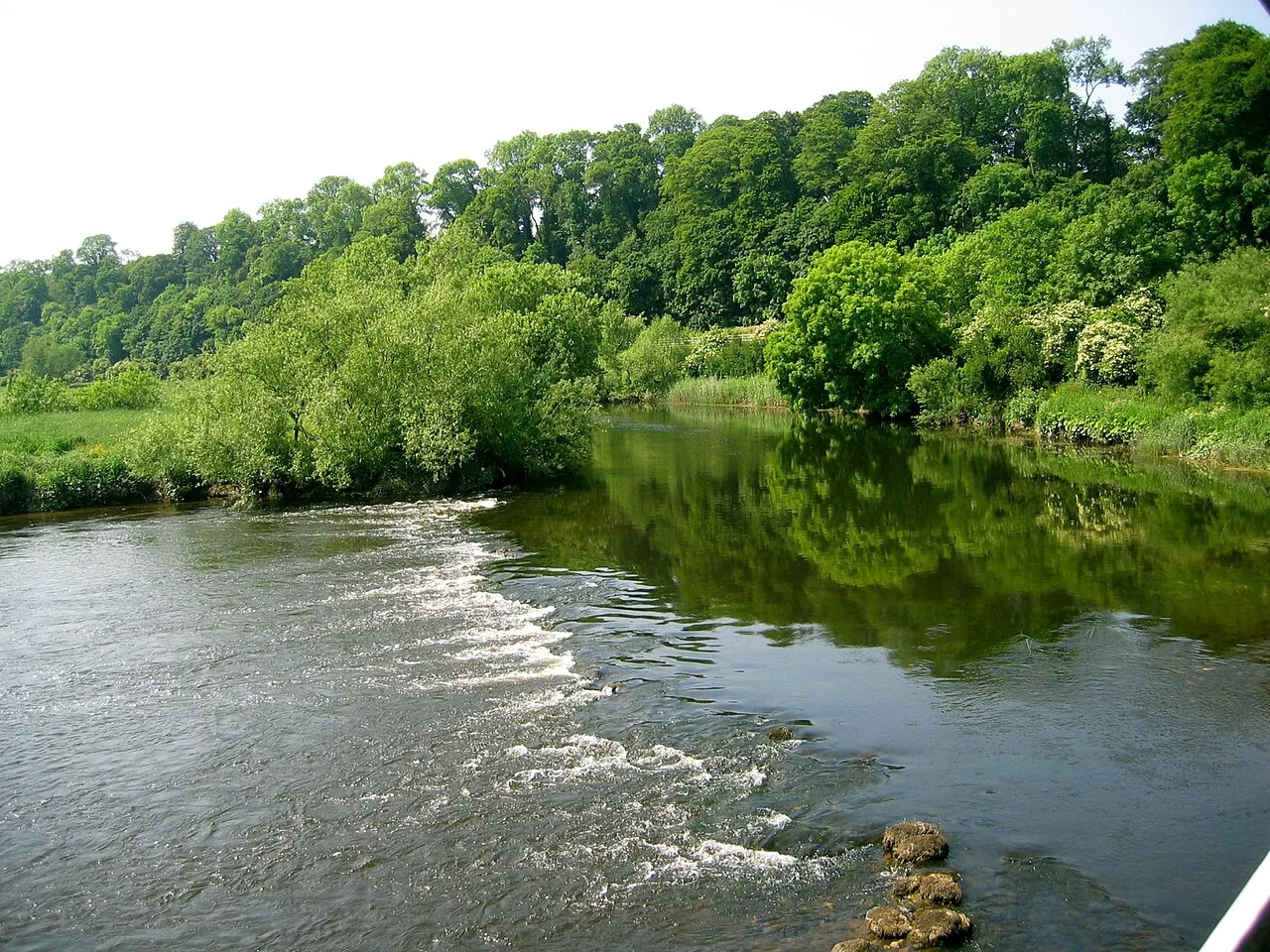
The battlefield lies on the banks of the River Boyne at Oldbridge, a short distance from Drogheda in County Meath, and the interpretative centre sits in a restored eighteenth-century house on the estate. The site sits within the wider Boyne Valley, a landscape dense with prehistoric and medieval monuments, which makes it easy to combine with other heritage stops on the same day.
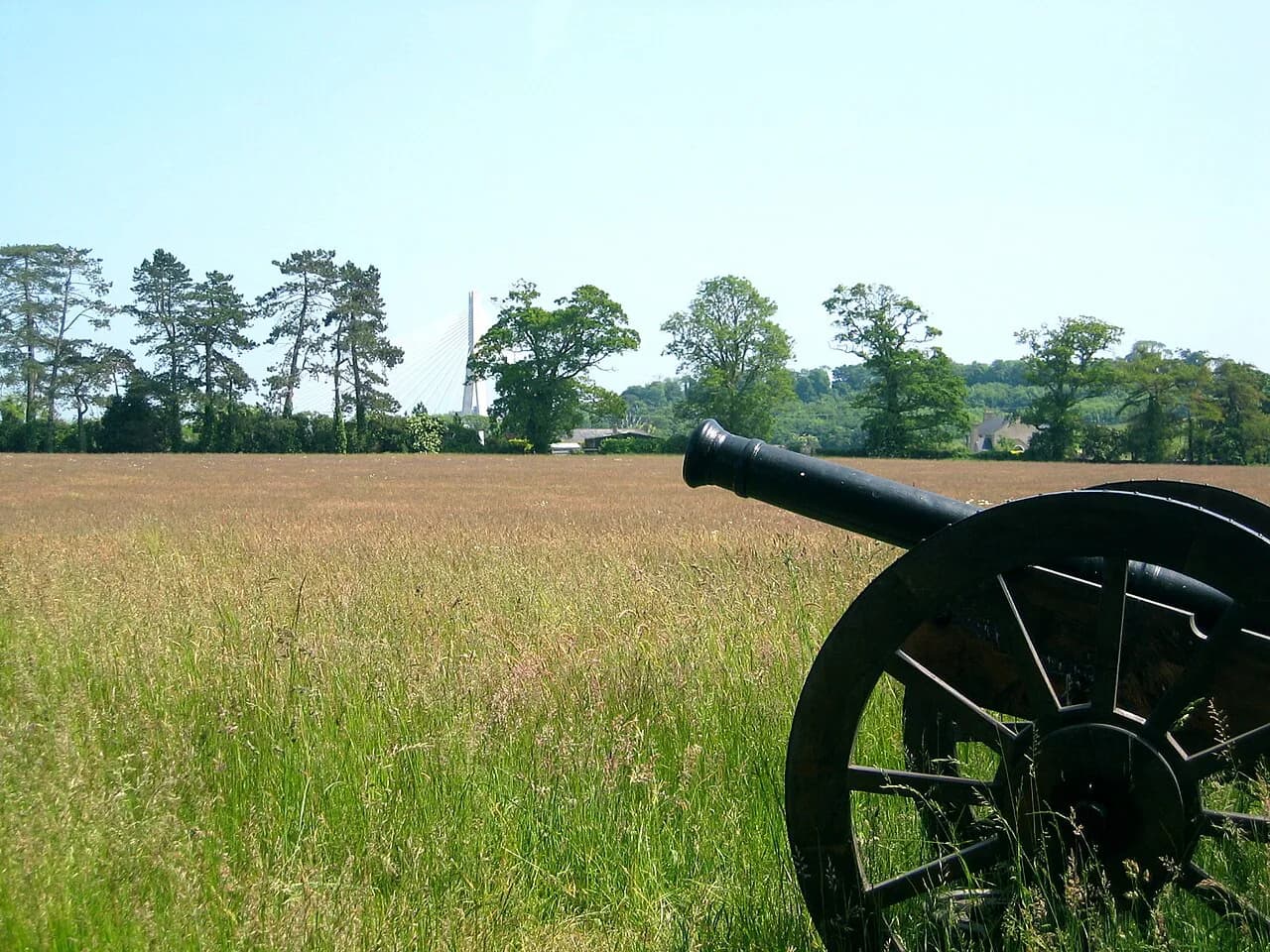
The estate comprises fields, walkways and a walled garden, so the visit is split between a housed exhibition and the outdoor battleground. The grounds and walled garden are free to visit, providing a gentler counterpoint to the historical content of the exhibition.
The Battle in Brief
The battle was fought on 1 July 1690 (Old Style), pitting King William III against his father-in-law King James II on the River Boyne at Oldbridge. Both monarchs commanded their armies in person, and the operator describes it as the largest number of troops ever deployed on an Irish battlefield, with 36,000 on the Williamite side and 25,000 on the Jacobite side.
The fighting is often described as a single decisive clash, but the historian Padraig Lenihan, speaking to HistoryExtra, characterises it instead as a series of shorter counter-skirmishes spread across a wide area of countryside. Casualty estimates cluster around 1,500 dead, and the two sources give noticeably different accounts of how long the fighting lasted, so it is worth treating duration figures as contested rather than settled.
William's forces proved victorious, and James withdrew first to Dublin and then to France. The outcome secured William's hold on the throne, but it did not end the Jacobite cause in Ireland, which continued through further campaigns.
Background and Aftermath
The road to the Boyne began with the Glorious Revolution of 1688, when James lost his thrones and William and Mary took power jointly. James landed at Kinsale in March 1689 to raise support among Irish Catholics, opening the series of campaigns known as the Williamite Wars; William himself landed at Carrickfergus in June 1690 with a large and experienced force.
The defeat at the Boyne was a serious setback rather than a final one, and the Jacobite cause met its decisive blow at Aughrim in 1691. Readers following the wider military story can trace it through the Williamite campaign and the terms that closed it in the material on the battle of aughrim and the treaty of limerick.
The 1689 landing at Kinsale belongs to a later, distinct conflict; for an earlier episode in which outside intervention shaped Irish politics, the battle of kinsale offers a separate entry point for anyone tracing how foreign forces influenced Ireland's wars.
Why the Battle Is Commemorated on 'the Twelfth'
The anniversary moved because of calendar reform: when Britain adopted the Gregorian calendar in 1752, the date shifted by eleven days, so the Boyne anniversary fell on 11 July rather than 1 July. The anniversary of Aughrim, the other decisive Williamite victory, falls on 12 July, and the two commemorations were conflated from the eighteenth century onwards.
The Orange Order, founded in 1795, continues to mark the victory, and marches take place on or around 12 July in communities in Northern Ireland and Scotland. These parades are historically contested, particularly where routes pass through Catholic neighbourhoods, and some commentators regard them as sectarian, so it helps to understand the commemoration as a living political tradition rather than simply a date on a battlefield timeline.
The Current Visitor Arrangement
Oldbridge House itself is not open, and the operator directs visitors to the interpretative experience in the adjoining stable yard. The operator states that entry to the exhibition via the stable yard is free to all visitors for a limited time, while standard admission prices are still published for adult, group or senior, child or student and family tickets. Check the operator page before travelling if the distinction between the free offer and the posted prices matters to your budget.
No reopening date for Oldbridge House has been published, so it is best to plan around the stable-yard experience rather than expecting rooms in the house to form part of a visit. The exhibition is not an outdoor substitute: it is a housed display in a building adjoining the house, and the operator describes the battleground as a separate self-guided element.
Inside the Exhibition
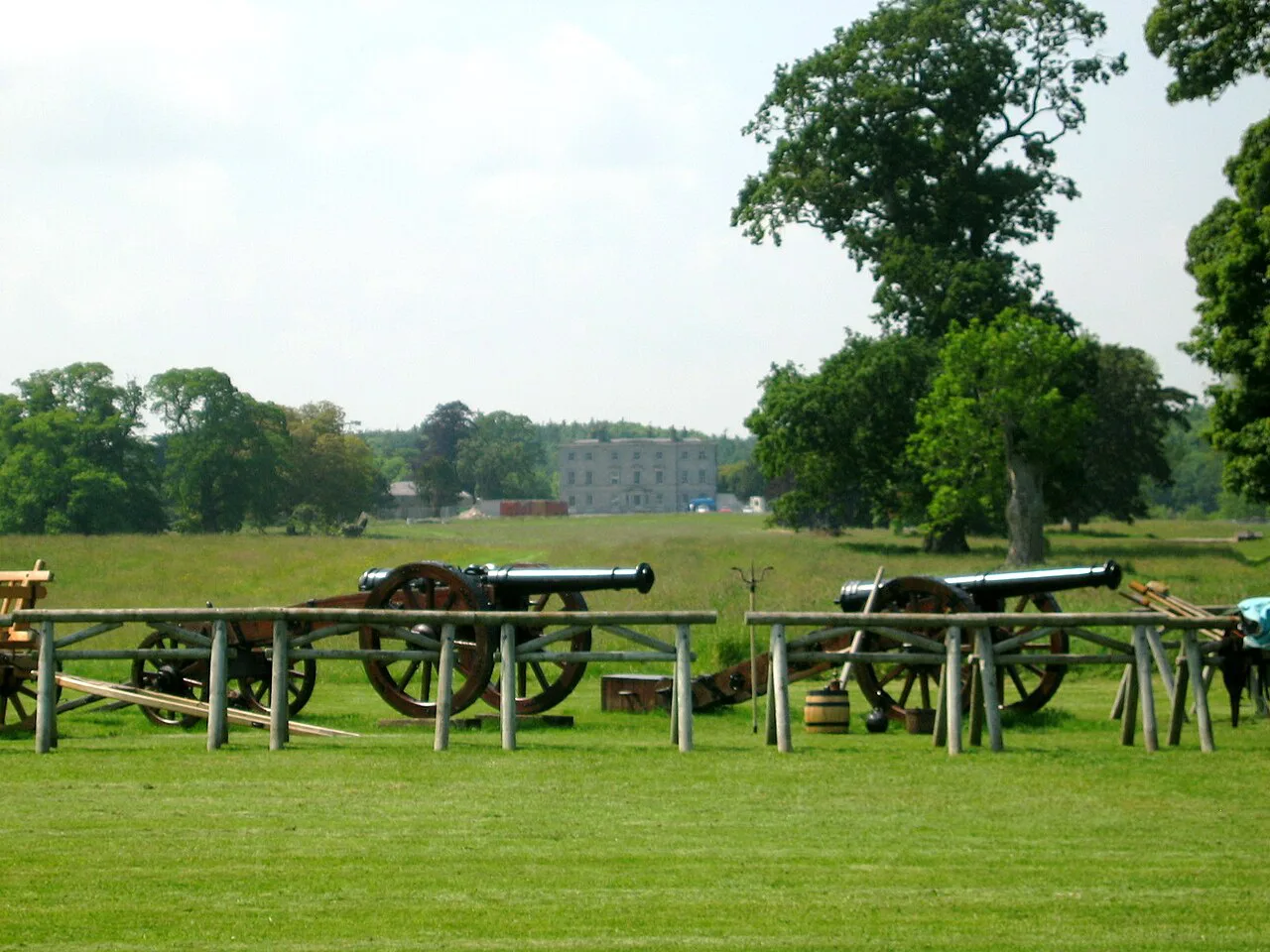
The display covers the political background as well as the fighting, with maps of Europe and of the battleground area, plus life-size models of the two kings, their generals and the soldiers who fought on foot and on horseback. Weapons on show include originals and replicas, among them muskets, bayonets, pistols, swords and artillery pieces in the stable yard.
A laser model of the battlefield traces the key events, and an audio-visual presentation gives a narrative account of the battle. The operator lists the audiovisual show and the exhibition among the centre's facilities, alongside pre-booked guided tours and self-guided access.
If you want broader context on how Irish history is presented at visitor sites around the country, the collection on Irish History You Can Visit provides a useful starting frame for comparing the Oldbridge approach with other interpretative centres.
Walks on the Battlefield
Outside the exhibition, self-guided walks cross the battlefield on the estate, with information panels at the start of each route. Named options include the Oldbridge village walk at 500 metres, the Crab Apple Walk at 850 metres and Greenhill's Walk at 2.6 kilometres, which feeds into a 1.7 kilometre path to Groggin's Field, as well as a longer Canal Towpath Walk of 3.6 kilometres.
The ground is uneven in places and there is deep water nearby owing to the canal and river, so supportive footwear is worth the extra effort. Visitors with mobility concerns are advised to telephone the centre in advance of their visit to discuss assistance.
If battlefield walking appeals, the wider guide to ancient sites in Ireland suggests how the Boyne landscape connects the prehistoric and the early modern, particularly at the nearby passage tomb complex, whose visitor centre can be paired with Oldbridge.
Visitors seeking a broader sample of Ireland's outdoor heritage presentations, as opposed to one specific battle site, may find the irish national heritage park a useful comparison for how archaeology and history are interpreted in a mixed indoor-and-outdoor setting.
Practical Planning for the Visit
The centre is open daily, with seasonal hours: January to April and October to December close at 16:00, while May to September opens 10:00 to 17:00, with the gardens closing at 17:30 and the park and car park at 19:00. Last admission is one hour before closing.
Allow roughly 45 minutes for the visitor centre exhibition and about an hour for the self-guided walks, which is useful for planning a half-day rather than a full one. In winter the centre may not open if weather is poor, so ringing ahead before setting out is a sensible precaution on a doubtful morning.
The facilities list includes a café, toilets, parking for cars and coaches, bicycle parking and a wheelchair-accessible toilet, and groups of ten or more need to book in advance. Dogs are welcome but must stay on leads, while cycling on the walkways, fires, camping and barbecues are not permitted.
Anyone looking for related museum collections elsewhere in Ireland, including maritime interpretation of a very different kind, can find orientation in the guide to museums in ireland, or in the dedicated page on the titanic experience cobh for the story of emigration from Cork harbour. For a city collection closer to the Williamite story, the guide to museums in Limerick covers its heritage holdings in comparable depth.
Getting There and Nearby Heritage
By road, the site is reached from Exit 9 on the M1 or via Donore Village, and a section of the Oldbridge Road is closed to vehicles for the Boyne Boardwalk Refurbishment Scheme, though the road remains open to pedestrians. Those relying on public transport are served by the TFI Local Link Route 163 between Athboy and Drogheda, which also links to other heritage stops in the area.
Nearby sites listed by the operator include the Cistercian foundation at Mellifont Abbey, the passage tomb complex at Brú na Bóinne and the Hill of Tara, each a short drive from the battlefield. The tourism board also notes the proximity of the Newgrange, Knowth and Dowth tombs as part of a UNESCO World Heritage Site, though the distances given should be treated as approximate listings rather than measured road distances.
Visitors combining a Boyne Valley day could include the Cobh heritage centre only with a very different itinerary, since it lies far to the south, but the page on cobh heritage centre is a useful reference for anyone tracing later episodes of Irish departure and arrival.
Those following the story of aviation heritage in the west, another strand of Ireland's interpretative landscape, may find the shannon aviation museum and foynes flying boat museum relevant to a separate trip rather than to a County Meath itinerary.
Plan Your Visit
The Oldbridge Estate visit combines a compact interpretative display with substantial outdoor ground, and the current arrangement through the stable yard means the exhibition experience should be confirmed on the operator page before setting out. Allow around half a day for the exhibition and a battlefield walk, wear suitable shoes for uneven terrain and ring ahead in winter if the weather looks doubtful.
Readers who want to place the 1690 battle within a longer sweep of Irish history can look at Waterford Treasures Medieval Museum for a different era of urban life, a separate stop for another trip.
Explore more Ireland guides
Frequently Asked Questions
Is Oldbridge House open to visitors?
No. The operator states that Oldbridge House remains closed and that the Battle of the Boyne experience is located in the adjoining stable yard. No reopening date has been published, so plan on the stable-yard exhibition rather than the house rooms. Check the Heritage Ireland page before travelling in case the arrangement has changed.
Is the exhibition free?
The operator describes entry into the exhibition for self-guided visits as free for a limited time only, while still publishing standard adult, group or senior, child or student and family prices on the same page. That means the free offer is not a permanent change to the admission structure. Confirm the position when you book or arrive rather than assuming either way.
How long should I allow for a visit?
The operator suggests about 45 minutes for the visitor centre and roughly an hour for the self-guided walks, though longer routes such as the 3.6 kilometre Canal Towpath Walk will take more time. Combined with a stop in the café or walled garden, that makes for a comfortable half-day rather than a brief pause.
Can I walk the actual battlefield?
Yes. Self-guided walks cross the estate with information panels at the start of each route, including named options ranging from a 500 metre village walk to longer loops into the fields. The ground is uneven and there is deep water near the canal and river, so wear suitable footwear and heed the operator's warnings.
Do I need to book?
Groups of ten or more need to book in advance. Individual visitors can use the self-guided exhibition and walks without booking, but pre-booked guided tours are listed among the facilities if you want a more structured visit. Anyone needing mobility assistance is advised to telephone the centre before travelling.
Why are the commemorations held on 12 July rather than 1 July?
The Gregorian calendar reform of 1752 shifted the anniversary by eleven days, so the Boyne anniversary moved to 11 July. The anniversary of the 1691 battle of Aughrim fell on 12 July, and the two commemorations were combined from the eighteenth century onwards. The Orange Order, founded in 1795, continues to mark the date with marches.
How do I reach the site without a car?
TFI Local Link Route 163 runs between Athboy and Drogheda and serves the area around the battlefield. A section of the Oldbridge Road is closed to vehicular traffic for the Boyne Boardwalk Refurbishment Scheme, but the road stays open for pedestrians, so walking access is unaffected. Check the current timetable before travelling.
Sources
You might also like



Continue reading
More guides you'll find useful





