
Battle of Kinsale: What Happened and Where to See It
Understand the 1601 Battle of Kinsale, from the Spanish landing to the rout, and visit the town sites and forts that put the campaign in context.
On this page
The Battle of Kinsale was an English victory over an Irish and Spanish army outside the County Cork port in 1601. A Spanish expedition had occupied the town, Hugh O'Neill and Red Hugh O'Donnell marched south to join them, and the combined force was defeated in a short fight that ended in a rout. The surviving sites around the harbour reward a visit, provided you know which defences belong to the battle era and which were built generations later.
This guide follows the campaign from the landing to the aftermath and then turns to the ground. It treats troop numbers and casualties as contested, explains the two calendar dates attached to the fighting, and separates Desmond Castle and the battlefield area from James Fort and Charles Fort. The forts in particular are often misunderstood: one was strengthened in 1601, the other postdates the battle by decades.
Why Kinsale: A Wine Port in a Poor Defensive Position
Kinsale's importance in 1601 came from its harbour and its long trading history, not from its walls. The town grew from early monastic settlement through a Viking trading post and Anglo-Norman walled town into a port whose continental trade made it a designated wine port, later confirmed by a charter from King Edward III in 1333. That commercial success explains why a Spanish fleet would value the harbour at all.
For a besieged army, however, the site was a liability. The town sat low, with weak defences, and a Spanish commander later argued that any Irish port could be taken but not held by an undersized expeditionary force. The harbour that made Kinsale rich also made it easy to seal off from the sea, which is exactly what the English did.
The Spanish Landing of 1601
A Spanish fleet of twenty-eight sail entered Kinsale in September 1601 carrying roughly 3,300 men under Don Juan del Águila, in poor condition and short of supplies. Kinsale had not been the intended destination: Killybegs, Galway and Limerick had all been considered, and O'Neill had advised that a smaller force should land in the north or west where Irish armies could support it. Storms decided the matter, driving the fleet into a port with only a token garrison.
The support the Spanish expected from Munster never materialised. Key local figures had already been arrested by Sir George Carew, whose army was quartered in Cork, and the wider Old English population proved reluctant to treat the landing as a religious war. Del Águila was left holding a town far from his Irish allies, in the worst season for a campaign.
Siege and Stalemate
Mountjoy responded quickly, reaching Cork in late September and moving to invest Kinsale while seizing the forts around the harbour and closing the haven. That decision weakened English forces elsewhere in Ireland, but it trapped the Spanish in the town and forced the Irish leaders to march to their relief. The siege that followed ran for about ten weeks through severe winter weather.
Conditions were grim on both sides. Mountjoy's original force of some 7,000 was reduced by cold, sickness and desertion, and his camps were eventually squeezed between the town and the arriving Irish army. Del Águila, short of men, horses, food and money, petitioned Spain for reinforcements that arrived only in part. Neither side was in a position to be confident.
The Marches South
O'Donnell moved first, setting out in late October and slipping past Carew's intercepting force by a forced march through a frozen mountain pass in Tipperary. He regrouped in County Limerick before joining O'Neill near Bandon in mid-December. O'Neill, cautious about leaving Ulster exposed, had set out a week after his ally and only after weighing the risk of a winter march through hostile country.
The Irish encampment lay west of Inishannon on the north bank of the Bandon River, a position that cut Mountjoy's land route to Cork and briefly forced him to lift his bombardment. The combined muster was large, with O'Neill, O'Donnell and Captain Richard Tyrrell each bringing substantial forces. Spanish reinforcements under Zubiaur had also reached Castlehaven in early December.
The Battle of Christmas Eve 1601
The fighting began at dawn on 24 December 1601 under the old Julian calendar, which corresponds to 3 January 1602 in the Gregorian reckoning used today. The two dates are conventions for the same event, not two separate battles. The plan called for Tyrrell's vanguard to signal del Águila to sally from the town while the main Irish force attacked Mountjoy's camp.
The coordination failed. Tyrrell was not in position when the signal was expected, the Spanish did not come out, and O'Neill's men were drawn onto open ground chosen by Mountjoy. English cavalry broke the Irish horse, which fell back through its own infantry, and the battle was over within about two hours. Del Águila, suspecting a ruse, refused appeals to lead his men out.
Casualty figures are disputed and should be read as claims rather than records. Contemporary accounts range from a single English death to thousands lost to sickness during the siege, and Irish losses are given variously. Historians also disagree over whether the defeat ended the Gaelic order outright or marked one stage in a longer collapse. Modern visitors should treat any single total with caution.
The Harbour War
Command of the water shaped the outcome as much as the land fighting. English naval forces under Sir Richard Leveson arrived in November 1601, and a detachment under Captain Fleming forced a channel at Castlehaven so the warship Warspite could engage Zubiaur's squadron. The Spanish lost several vessels, and English ships continued to guard Kinsale harbour.
Some strategists argue that without Leveson's fleet Kinsale might have gone the other way. The harbour was the town's lifeline, and once it was sealed the Spanish could not be reinforced at will. Del Águila surrendered the town to Mountjoy on 2 January 1603, after the battle and after further campaigning. For the visitor, the lesson is that Kinsale was a naval as well as a military contest.
Visiting the Battlefield Area
The battle site lies about four miles northwest of Kinsale, according to the town's own heritage pages, and is marked by a monument in the form of an empty chair symbolising the loss of life. It is an outdoor feature of the landscape rather than a staffed heritage centre, with no ticketing or guided tours published for it. Treat it as a place to read the ground, not a museum.
The landscape itself does much of the interpretive work. The Irish army had to descend toward the town across difficult ground while the English held the open fields and could use flanking fire from their camps. Standing on the ground, the problem of coordinating a two-pronged attack becomes easier to grasp than any map. Bring suitable footwear and expect no facilities.
Desmond Castle: The Spanish Arsenal
Desmond Castle, a tower house built by the Earl of Desmond around 1500, served as an arsenal during the Spanish occupation of Kinsale in 1600 and 1601. The town heritage page records that Don Juan del Águila used it as an arsenal during the occupation in the months before the battle. Over its long history it has also been a customs house, prison, ordnance store and workhouse.
The castle is a useful stop for understanding the town as an occupied place, not merely a battlefield. Its later uses, including the detention of American privateers during the American War of Independence, show how a single building can accumulate very different histories. Whether the interior is open should be checked with the operator before planning a visit, since the town page does not address access.
Harbour Defences in Context
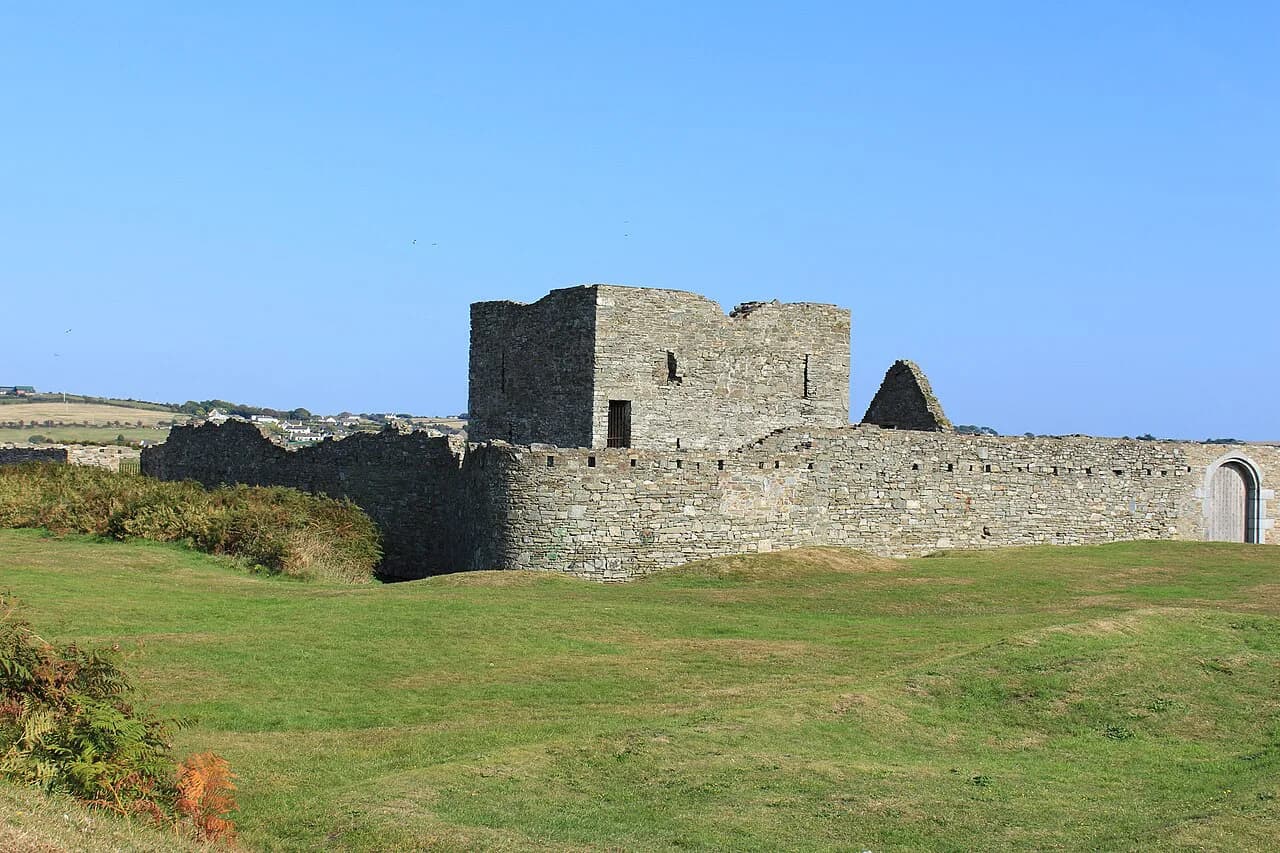
James Fort on the Castlepark peninsula is the closest surviving defence to the battle era. It replaced an earlier tower, was much strengthened by the Spanish in 1601, and was rebuilt as a pentagonal fort completed in 1604 and named for James I. Later repairs and captures followed, so its visible fabric is not all contemporaneous with the battle.
The fort is an unguided national monument, and the Office of Public Works warns visitors to take care and caution during any visit. It sits on a grassy headland beside the Dock Beach and was designed to defend the inner harbour, though the sea channel on its side was too shallow for its guns to bear on a seaward attack. The source lists no staffed facilities at the site, so plan accordingly.
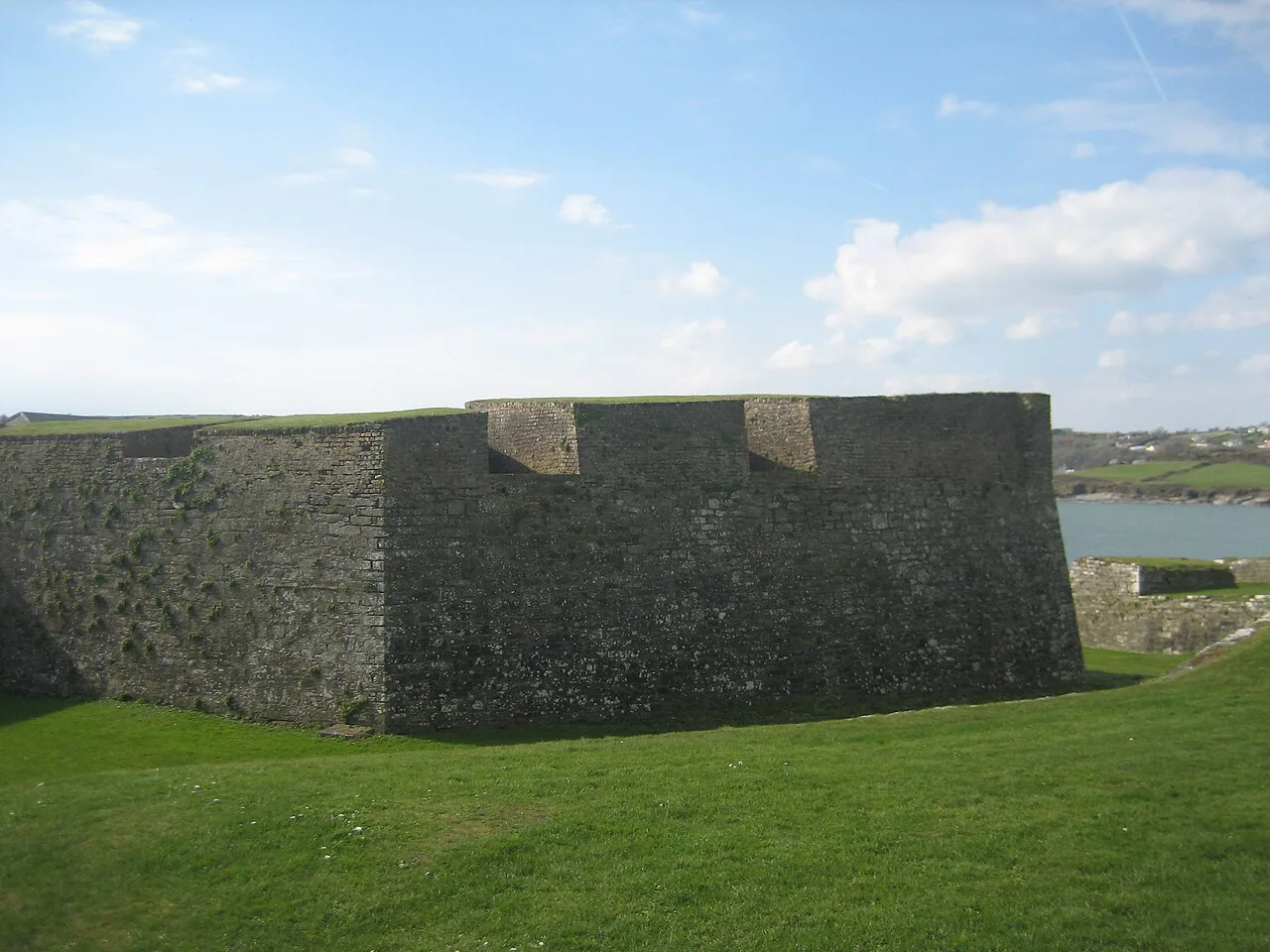
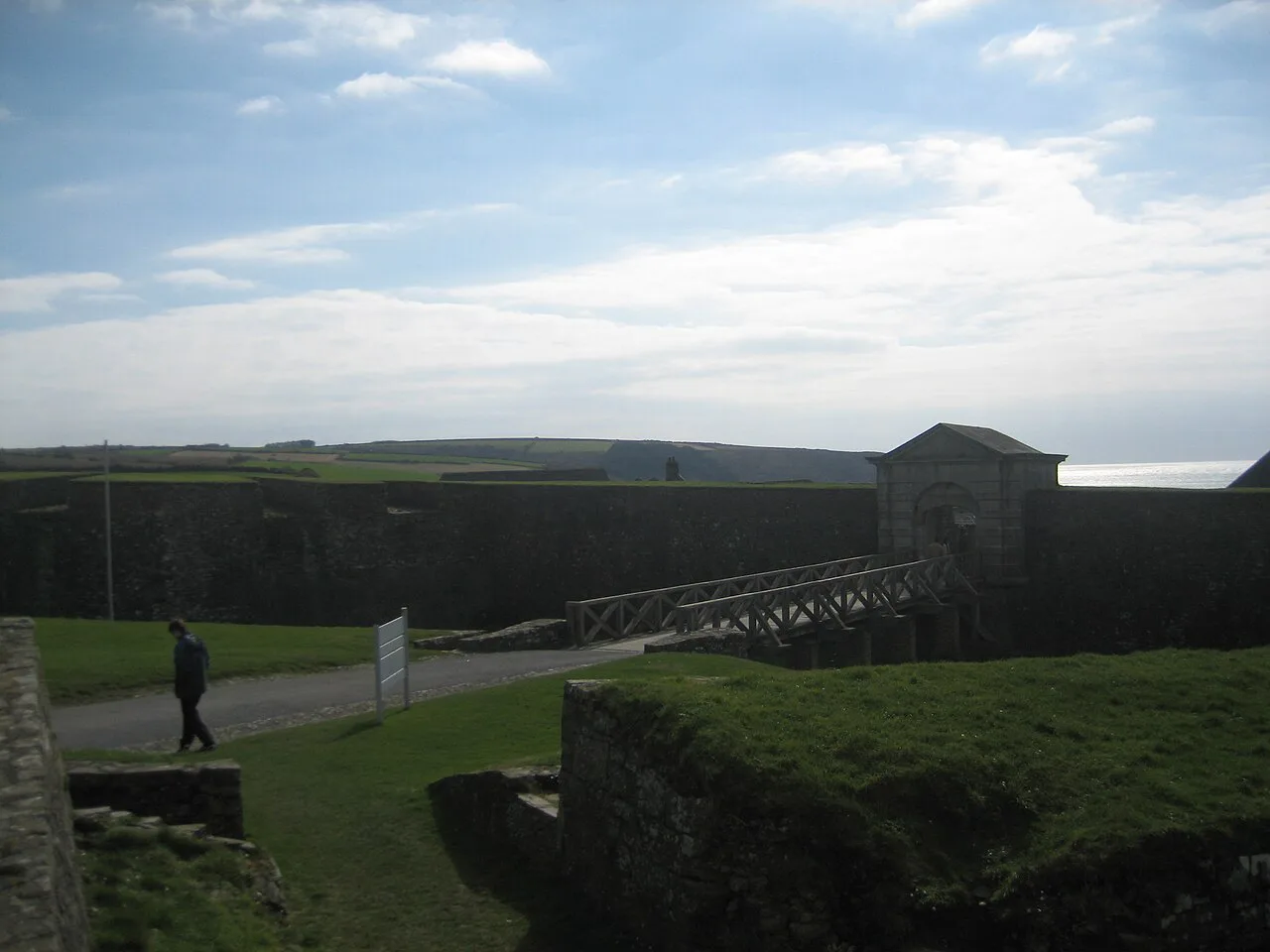
Charles Fort is a different proposition entirely. It is a late seventeenth-century star-shaped fort credited to William Robinson, with outer defences some sixteen metres high, and it did not exist during the 1601 battle. Its later history includes a siege in the Williamite Wars and burning by anti-Treaty forces in the early 1920s, neither of which has any connection to the Kinsale campaign.
The fort is operated by the Office of Public Works, with published daily opening times, a last admission before closing, and a shorter winter season from 1 November to 15 March. Visitors should check current times before travelling, as seasonal hours and access can change. The rampart views over Kinsale Harbour are the reward for the climb.
Aftermath and Memory
Kinsale did not end resistance in Ireland. O'Neill fought on in the north for more than a year after the battle, and O'Sullivan Beare held Dunboy into June 1602. Historians still debate whether the defeat destroyed the Gaelic order or merely accelerated changes already under way. The site itself carries no interpretive verdict, which is part of its honesty.
For a wider view of how Irish history is presented at visitor sites across the country, the Irish History You Can Visit collection is a useful starting point. It covers monuments and museums that explain different periods, from prehistoric tombs to twentieth-century sites. Pairing Kinsale with one of them gives a fuller sense of how Ireland interprets its past.
The Battle of the Boyne Visitor Centre at Oldbridge Estate offers a natural comparison for anyone following Irish military history. That battle came a century after Kinsale and was fought on very different ground, with opposing armies of a different character. Visiting both makes clear how much terrain and alliance shaped outcomes in Irish warfare.
Plan Your Visit
A visit to Kinsale works best as a sequence: start with Desmond Castle and the town's streets to understand the occupied port, then look outward to the harbour forts and finally to the battlefield area northwest of town. Keep the chronology clear, since only James Fort was tied to the Spanish occupation era, and even it was largely rebuilt after the battle. Allow time for walking between stops and check opening arrangements before setting out.
The history is more compelling for being unresolved. Troop numbers, casualty figures and the verdict on what Kinsale meant are all contested, and the landscape asks more of the visitor than a museum label would. Go prepared to read the ground and to verify access, and the campaign will make sense in a way a summary cannot deliver. To explore a separate chapter of Kinsale’s military heritage, read our Charles Fort guide. For another heritage guide, read about Cobh Heritage Centre.
Explore more Ireland guides
Frequently Asked Questions
Was the Battle of Kinsale fought on Christmas Eve 1601 or in January 1602?
Both dates refer to the same fighting. The battle began at dawn on 24 December 1601 under the old Julian calendar, which corresponds to 3 January 1602 in the Gregorian calendar used today. Sources that give either date are describing one event.
Did Charles Fort exist at the time of the Battle of Kinsale?
No. Charles Fort is a late seventeenth-century star-shaped fort credited to William Robinson, built decades after the 1601 battle. Its later siege and twentieth-century burning belong to other conflicts. Visitors should not read it as a battlefield fortification.
Was James Fort built for the Battle of Kinsale?
James Fort's site was much strengthened by the Spanish in 1601, but its surviving pentagonal form was completed in 1604 and named for James I. Later repairs and captures mean the visible fabric is not all from the battle period. It is an unguided national monument.
Can you visit the battlefield site near Kinsale?
The site lies about four miles northwest of Kinsale and is marked by a monument in the shape of an empty chair symbolising the loss of life. It is an outdoor landscape feature rather than a staffed visitor centre. No ticketing, opening hours or guided tours are published for it.
What role did Desmond Castle play in 1601?
Desmond Castle served as an arsenal during the Spanish occupation of Kinsale in 1600 and 1601. The tower house was built around 1500 by the Earl of Desmond and later served as a customs house, prison, ordnance store and workhouse. Check access with the operator before visiting.
How many soldiers died at Kinsale?
The figures are disputed and should be treated as claims rather than records. Contemporary accounts range from a single English death to thousands lost to sickness during the siege, and Irish losses are given differently. Historians do not agree on a single reliable total.
Why was Kinsale a poor landing place for the Spanish?
Kinsale sat low with weak walls and was easy to seal off from the sea, making it hard to hold against a siege. The Spanish had considered Killybegs, Galway and Limerick instead, and storms forced them into Kinsale. A Spanish commander later argued any Irish port could be taken but not held by a small force.
Is James Fort free and is it guided?
James Fort is an unguided national monument on the Castlepark peninsula, and the Office of Public Works warns visitors to take care. The town heritage page describes it as free of charge all year round. No staff, facilities or safety measures are promised, so expect an open, grassy headland rather than a managed visitor attraction.
Sources
You might also like



Continue reading
More guides you'll find useful





