
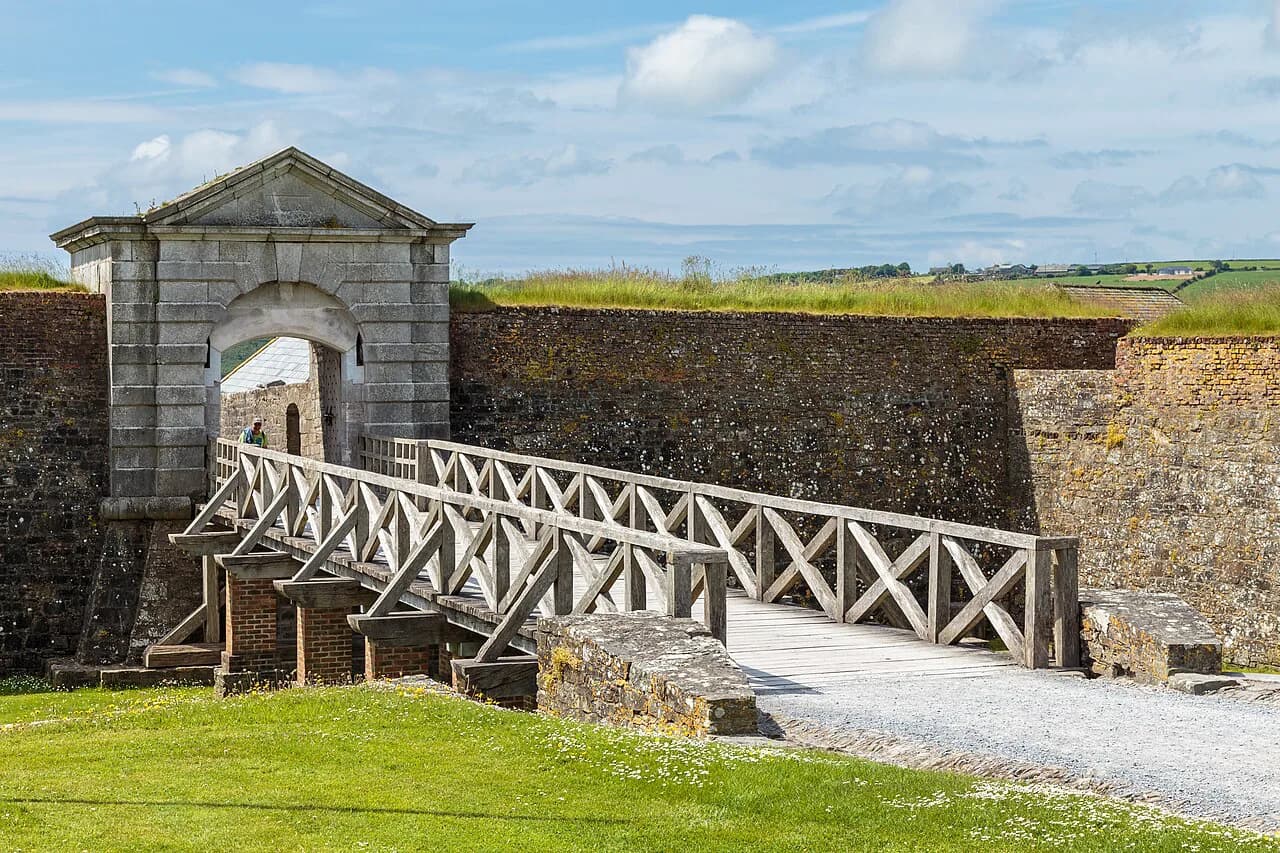
Charles Fort Kinsale: A Visitor Guide to the Harbour Fortress

Charles Fort is a late-17th-century star-shaped artillery fortress at Summercove on the edge of Kinsale, County Cork, built to guard the town and harbour. It is a place to walk rather than a museum: most interiors survive as shells within ramparts and bastions, with an exhibition on garrison history as the main indoor element. Visitors who want scale, sea views and military history in the open air will find it rewarding; those expecting furnished rooms or a large collection should adjust expectations.
Where Charles Fort Sits and How It Relates to Kinsale
The fort stands at Summercove, overlooking Kinsale Harbour rather than inside the town centre. Across the estuary lies James Fort, an earlier structure that guarded the same approach, and the pair together explain why Kinsale was a defended harbour. Because the site sits on high ground above the water, the walk between bastions is part of the experience, not just a route to the exhibits.
If you are building a day around Kinsale, treat Charles Fort as the harbour-side anchor and keep the town's own sights separate. A useful way to see how the fort fits among the area's other options is to browse the wider set of Kinsale Attractions before fixing an order. The fort rewards a slower, more physical visit than a town-centre stop, so placing it early or late in the day helps.

Design and Construction of the Star Fort
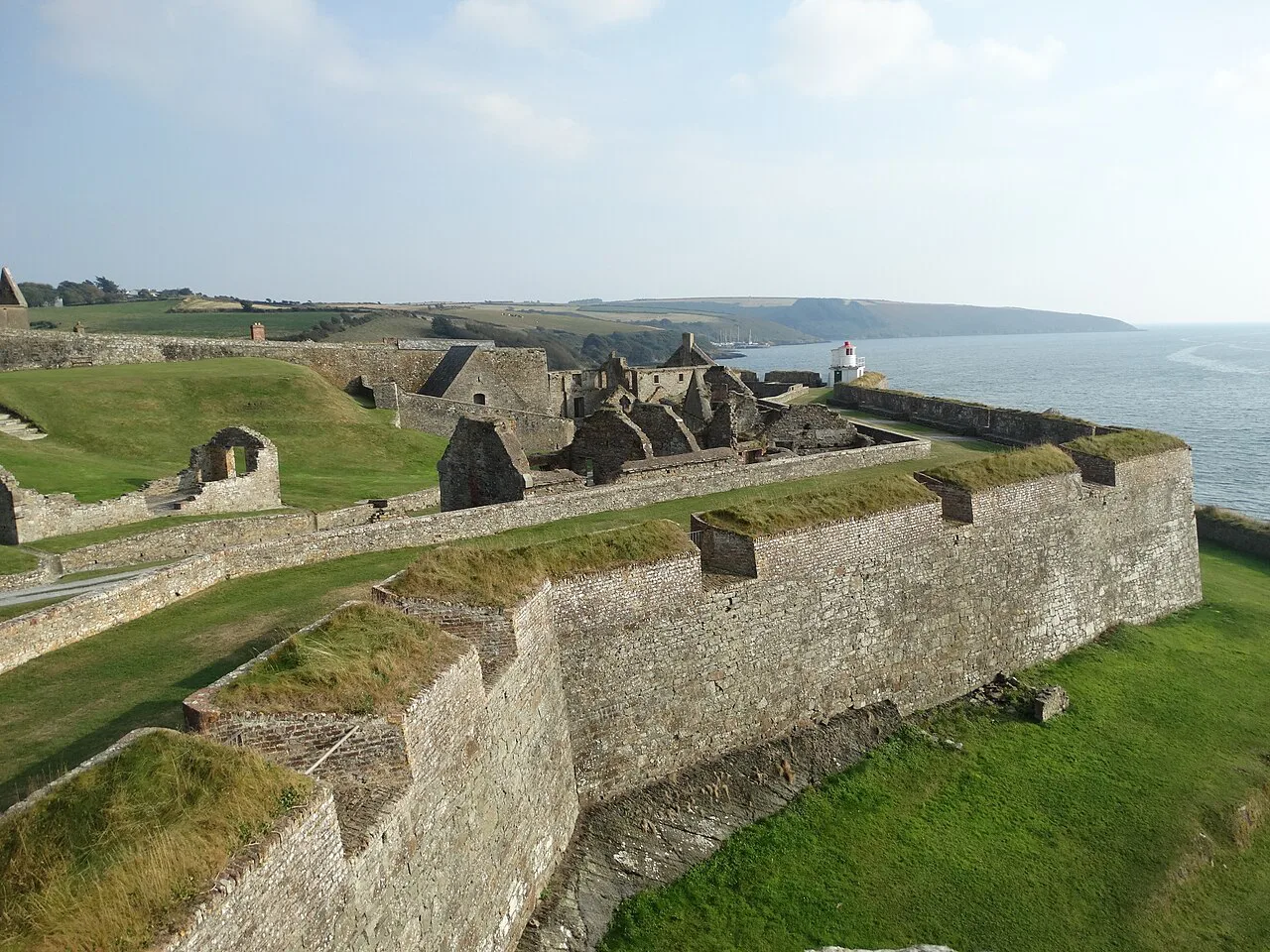
The fortress is a massive star-shaped structure of the late seventeenth century, and the Office of Public Works credits William Robinson, architect of the Royal Hospital in Kilmainham, Dublin, with designing it. Discover Ireland and History Ireland both date the construction to 1677–1682, during the reign of King Charles II. Its outer defences reach about 16 metres in height, a scale that becomes clear only when you stand below them.
The star plan was an artillery solution: angled bastions allowed defenders to sweep the ground in front of the walls with cannon fire. History Ireland's account describes walls around 12 metres wide that once carried 94 cannons, and names bastions including the Cockpit and Devil's Bastion. Reading those features as engineering choices, rather than incidental shapes, makes a circuit of the ramparts far more legible.

Inside the Walls: A Garrison Complex
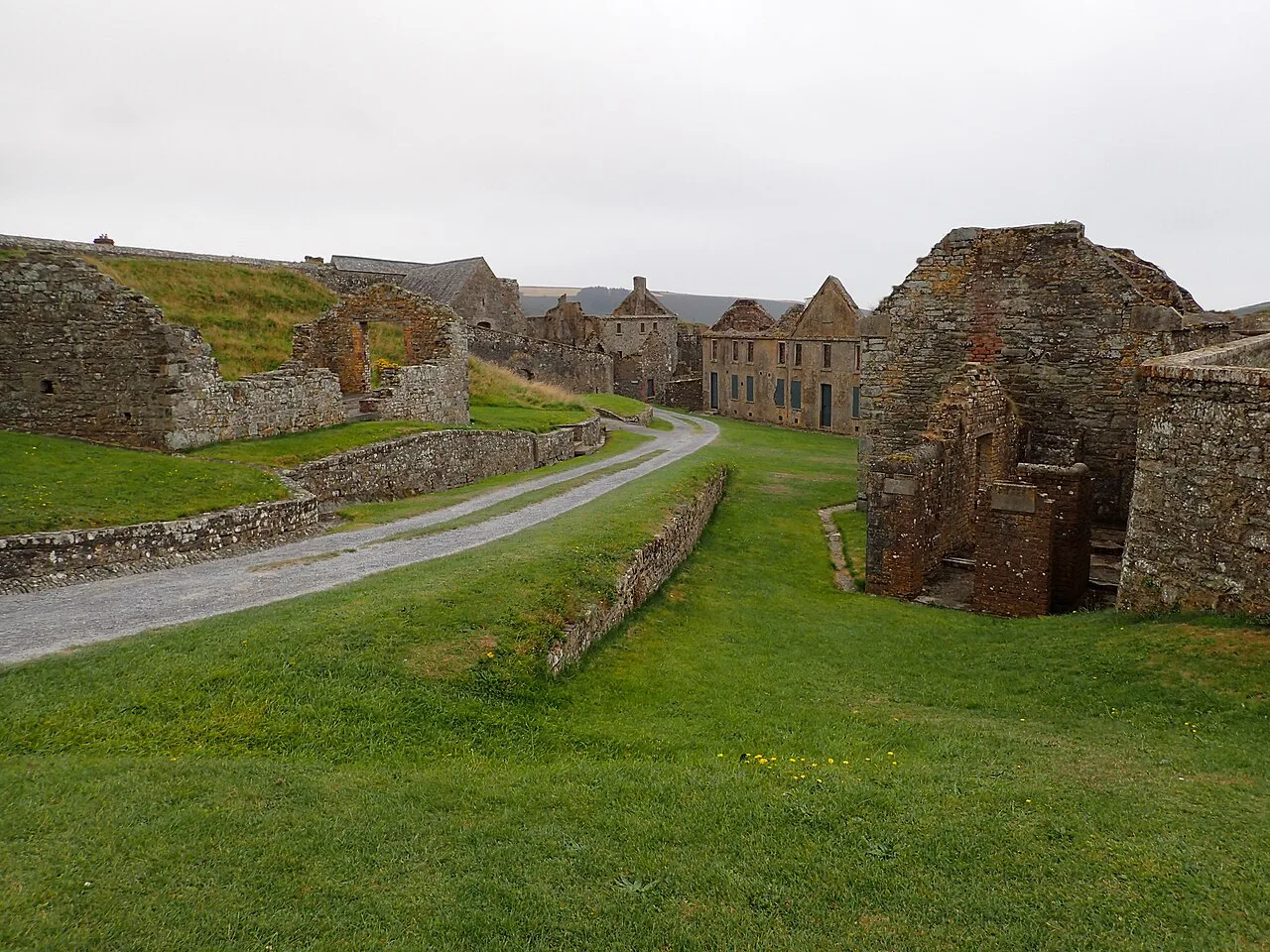
History Ireland describes the site as covering about 5 hectares and housing an average of 440 soldiers and their families at its height. Within the defences were infantry and artillery barracks, officers' quarters, ammunition and supply stores, messes and a hospital, along with the Governor's House squeezed between a barracks and a blast wall. Most buildings now stand as shells, so the interest lies in the layout and the surviving fabric rather than furnished rooms.
That same account notes Georgian-era buildings alongside nineteenth-century additions and an exhibition on garrison history, dominated by a hand-operated fire pump with panels on regiments including the Munster Fusiliers and the Connaught Rangers. The account dates from a visit made during Covid-era restrictions, so the interiors it describes should not be assumed to be open or unchanged. Whether the exhibition or any interior is accessible on your date should be checked with the operator before you travel.
Siege, Garrison and Civil War History
During the Williamite Wars the fort withstood a 13-day siege before it fell, and in the Civil War of the early 1920s anti-Treaty forces burned it out. Discover Ireland records that it remained garrisoned by the British army until 1922. These events explain why so much of the interior is ruinous despite the defences looking robust from outside.
History Ireland adds that the fort became a National Monument under the care of the Office of Public Works in 1973, and that its garrison period included the Essex Regiment during the War of Independence. That article, written from an earlier visit, also mentions a 1960s hippy colony on the site, an unusual episode worth knowing as context rather than spectacle. Details like these are best read as reported history, with the operator's own material as the check on current presentation.
What to See on a Circuit of the Fort
The ramparts are the highlight: the view from the defences over Kinsale Harbour is the image most visitors carry away. Along the way you pass named bastions, and History Ireland's account records cannons from different centuries placed around the site. If you want to compare this harbour defence with its older partner on the opposite shore, James Fort Kinsale is the natural companion, though the two are separate sites with separate access.
Interpretation is available in different forms: Heritage Ireland publishes a downloadable visual guide to help first-time visitors, families and people with developmental and learning disabilities prepare for a visit. Guidebooks in several languages, including English, Irish, French, German, Italian, Spanish, Polish and Dutch, are noted by Discover Ireland. Which of these is on offer on the day, and whether staff-led tours run, should be confirmed rather than promised.
Practical Visiting: Ground, Footwear and Families
The terrain is uneven, and Discover Ireland advises suitable footwear and says children must be accompanied at all times. Anyone with limited mobility should treat the fort as a historic site with difficult surfaces rather than a fully accessible attraction. Reading the official visual guide before travelling is the simplest way to judge whether the circuit will work for your group.
Allow more time than the map suggests: the site is large, the ground is slow, and the rewards are spread across the ramparts and the building shells. Half a day including the approach is a sensible planning assumption, with the caveat that the operator has not published a recommended duration. If the weather is poor, the exposed position will affect how long you linger.
Opening Times and Admission
The official page publishes seasonal opening ranges and last-admission times, but the figures shown are internally inconsistent and not explicitly dated. Rather than planning around a specific closing time, check the Heritage Ireland listing for Charles Fort before setting out. The operator does not publish an admission price in the same material, so confirm any charge at the gate or on the listing.
Heritage Ireland's page includes a notice for an on-site café advertising tea, coffee, toasties, pastries and desserts, with hours given as daily 10:00 to 17:00. The notice is undated, so treat the café as a possible stop rather than a guaranteed one and check its hours on arrival. Carrying water is wise given the walking and the exposed site.
Nearby in Kinsale
Kinsale town is the obvious complement to the fort, and its streets are best explored on foot once you have left the harbour edge. If you want an indoor option with a different story from the fortifications, you can read our separate Kinsale Museum guide for details, then check the museum's own opening arrangements before you go.
Within the town, Desmond Castle Kinsale is currently closed for conservation works and open to external view only, so it cannot serve as an indoor visit or an alternative to the fort. For a different kind of historic building that is accessible, St Multose Church Kinsale is a long-standing landmark in the town centre. Pair either with a wander through Kinsale rather than with a second fortress.
Is Charles Fort Worth Your Time?
Prioritise Charles Fort if you enjoy walking historic ground, reading defences as engineering, and want harbour views from high ramparts. The site suits families and independent travellers who accept uneven surfaces and mostly roofless interiors. If you need furnished rooms, guaranteed indoor displays or step-free movement, consider another Kinsale stop instead and treat the fort as a viewpoint rather than a museum.
Before you go, confirm the current opening times and admission arrangements on the operator's site, and download the visual guide if anyone in your group needs to plan around uneven terrain. That single check covers the details most likely to change. For a separate, earlier chapter in the town’s military history, read about the Battle of Kinsale.
Frequently Asked Questions
Is Charles Fort worth visiting in Kinsale?
It suits travellers interested in military history, fortifications and harbour scenery. The site is large, the interiors are mostly shells, and the ground is uneven, so it rewards those who enjoy walking and reading a landscape. If you want furnished rooms or a conventional museum collection, plan accordingly.
How long does it take to visit Charles Fort?
The operator does not publish a recommended duration. Because the site covers several hectares and the terrain slows movement, allow a generous half day including the approach, and check current opening arrangements before travelling.
Can you walk around Charles Fort with children or limited mobility?
Discover Ireland advises suitable footwear due to uneven terrain and says children must be accompanied at all times. For anyone with limited mobility, the official visual guide on the Heritage Ireland listing is the best way to judge the circuit before committing.
What happened at Charles Fort in 1690 and 1922?
During the Williamite Wars the fort withstood a 13-day siege before falling. In the Civil War of the early 1920s, anti-Treaty forces burned it out, and per Discover Ireland the British army garrison ended in 1922.
Do you need a guided tour at Charles Fort?
Not necessarily. The site can be explored on foot with guidebooks and on-site interpretation, and Heritage Ireland publishes a visual guide for preparation. Staff-led tours should not be assumed; check availability with the operator when you arrive or before you travel.