
Treaty of Limerick: What the 1691 Settlement Actually Said
The Treaty of Limerick of 1691 explained: what its civil and military articles provided, where the Treaty Stone stands, and the wider Williamite War context.
On this page
Limerick is called the Treaty City because the settlement that ended the 1691 siege was concluded there on 3 October 1691. The treaty was not a single sentence but a set of civil and military articles covering religion, property, pardon and the departure of troops and leaders. Understanding what the document actually said makes the city's treaty associations easier to read on the ground.
The document: date, parties and two sets of articles
The CELT edition at University College Cork presents the treaty as two connected instruments dated 3 October 1691. The civil articles were agreed between the lords justices of Ireland and Baron Godert de Ginkel, commander of the English army, on one side, and named representatives of the Irish inhabitants on the other. The military articles were agreed between Ginkel and the Irish army's commanders, and they deal with troops rather than civic terms.
The civil articles name the counties whose inhabitants were covered, including Limerick, Clare, Kerry, Cork, Sligo and Mayo. They begin from the surrender of Limerick and the submission of the Irish army, so the document is framed as a capitulation rather than a free-standing peace treaty. Reading the two sets of articles separately helps clarify which provisions applied to property-holders and which to soldiers.
What the civil articles addressed
The first civil article stated that Roman Catholics would enjoy privileges in the exercise of their religion consistent with the laws of Ireland, or as they had in the reign of Charles II, with further security to be sought from a future parliament. The wording is conditional and refers to what was to be attempted, not a permanent constitutional settlement. It is therefore inaccurate to describe the treaty as having settled religious questions once and for all.
Other civil articles dealt with estates, goods and professions. Those covered were to hold and enjoy their estates of freehold and inheritance as they had in Charles II's reign, and to practise their trades and callings as freely. The same article made the benefit conditional on taking an oath of allegiance when required. A further article offered a general pardon for offences committed since the beginning of James II's reign, and another protected those covered from private suits for acts during the war.
The civil articles also promised protection from arrest for debt for eight months and permitted inhabitants to remove goods from Limerick without search or duty. These are practical, time-limited provisions rather than statements of enduring rights. They show that the treaty was concerned with managing an immediate transition, including the property and mobility of those leaving or remaining.
What the military articles allowed
The military articles opened with permission for any persons willing to leave Ireland to go to any country beyond the seas, except England and Scotland, with their families, household goods, plate and jewels. This is the clause that underpins the departure associated with the Flight of the Wild Geese. It was a permission to leave, not a requirement, and it applied to a broad category of people rather than only soldiers.
The text sets out arrangements for transport: fifty ships of two hundred tons each were to be furnished for the troops, with twenty more if needed, and two men-of-war for principal officers. A commissary was to be sent to Cork to inspect transport ships, and the troops were to embark there if enough shipping was ready, with the remainder quartered until the additional ships arrived. These details show that the military articles were an operational plan for moving a large body of people, not a vague promise.
The military articles also provided for a cessation of arms, passports for ships and men, and the supply of provisions to those being transported. They specify that the ships would be provisioned and that payment would be made after disembarkation at Brest, Nantes or another French port. Such clauses indicate that the treaty was as much a logistical agreement as a political one.
The surrender mechanics: two towns and a staged departure
The treaty distinguishes the two towns of Limerick. The Irish town, except the magazines and hospital, was to be delivered on the day of signing, while the English town, the island and free passage of Thomond Bridge were to remain in Irish hands until transport could be arranged. This staged handover was designed to prevent disorder between the incoming garrison and the troops awaiting embarkation. If you want to see the crossing named in the articles, our guide to Thomond Bridge, Limerick: History and What to See Nearby covers what survives nearby.
The text also specifies that the garrison could march out with arms, baggage, drums beating, colours flying and a stated number of guns and mortars. Such terms were conventional honours of war, allowing a defeated garrison to leave with dignity rather than as prisoners. They help explain why the treaty reads as a negotiated military capitulation as well as a civic settlement.
Limerick before and after 1691: a city of sieges
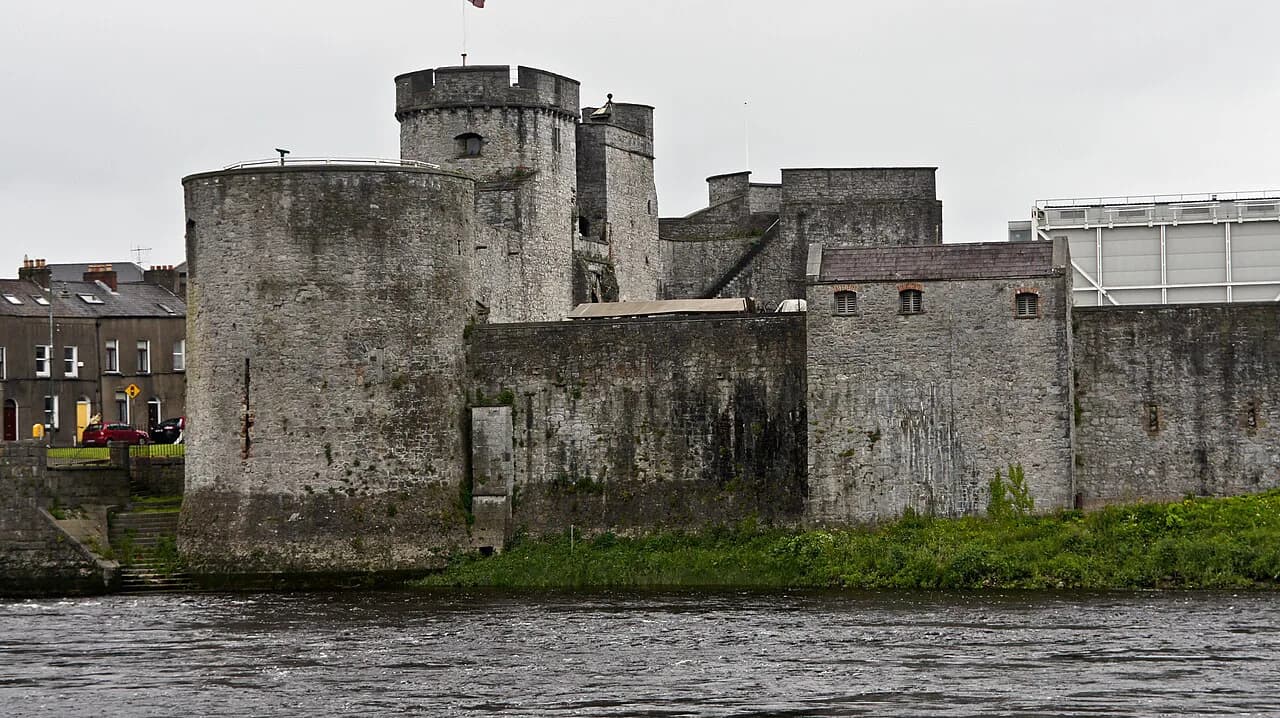
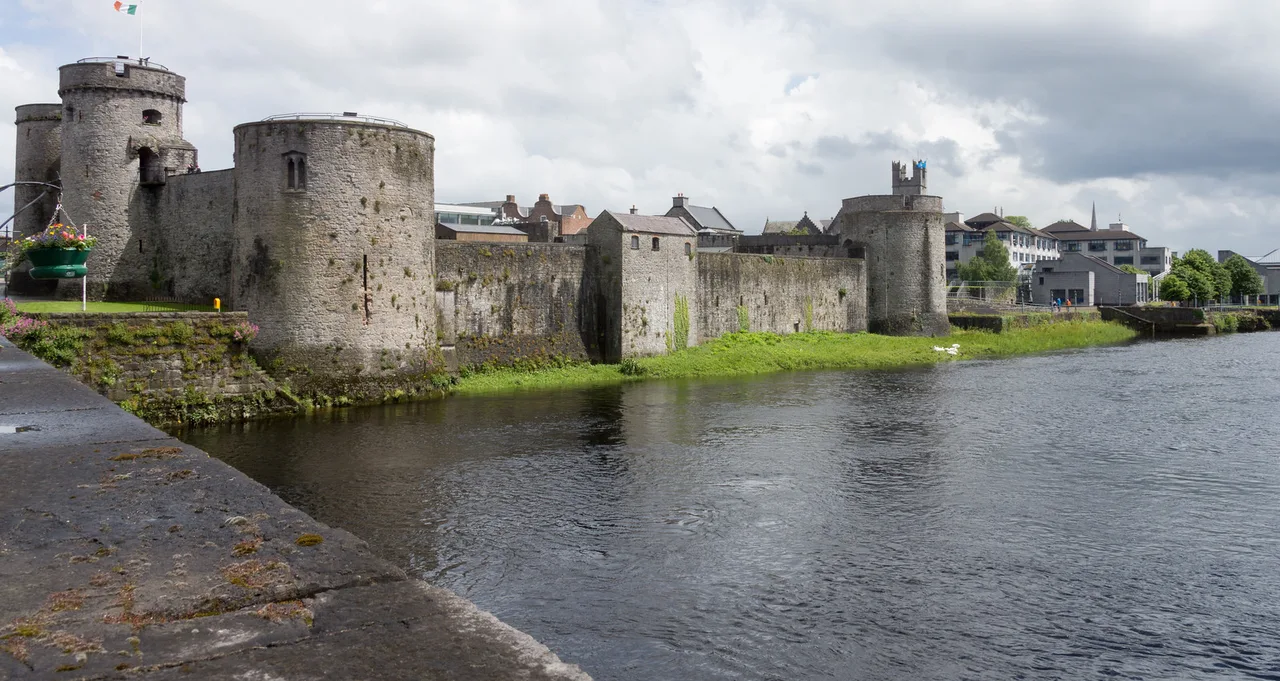
Limerick City and County Council's history page describes a city founded by Vikings around 922 AD, with St Mary's Cathedral founded in the twelfth century and still in use for its original purpose. The Normans captured Limerick in 1195, and King John's Castle and the city walls survive from that period. These layers matter because the 1691 treaty is one episode in a much longer urban story, not the city's only historical identity.
The same page records that the seventeenth century was Limerick's most violent, with four sieges in 1642, 1651, 1690 and 1691. The 1690 siege and the 1691 siege are distinct events; the treaty followed the fourth siege in 1691. After it, Patrick Sarsfield and other Catholic leaders left Limerick and Ireland, which the council frames as the beginning of the Flight of the Wild Geese.
The council's history also records the 1413 charter by which King Henry V made Limerick an independent city-state, and the later development of Newtown Pery south of the medieval town on Edmund Sexton Pery's land. Read together, these layers form a sequence: a walled Viking and Norman town, a Georgian grid south of it, and the modern city. The treaty belongs to the violent seventeenth-century phase that preceded the Georgian expansion.
The Treaty Stone today: tradition and the Thomond Bridge plinth
Limerick City and County Council's page on the Treaty Stone states that, according to tradition, the treaty was signed on a stone in sight of both armies at the Clare end of Thomond Bridge on 3 October 1691. The same page records that the stone has rested on a plinth since 1865, erected by Mayor John Richard Tinsley. The stone is an outdoor landmark beside the bridge rather than an indoor exhibit, and the council page gives no visitor details, so confirm access on the ground when you arrive.
The council's page carefully labels the signing on the stone as tradition, and the archival text does not describe a signing stone. Visitors should therefore treat the stone as a commemorative landmark associated with the treaty rather than as a verified signing site. That distinction does not diminish its value: it is a public marker of the city's identity as the Treaty City, and the plinth gives it a fixed place at the bridge.
The wider Williamite War: Aughrim and Limerick in one story
The Battle of Aughrim Visitor Centre, run by Galway County Council, interprets the 1691 battle as a turning point in the Williamite War in Ireland. Its displays connect Aughrim to other events including the Battle of the Boyne, the sieges of Athlone and Limerick, and the Flight of the Wild Geese. That framing is useful for visitors who want to see how Limerick's treaty fits a wider campaign rather than standing alone.
The centre is located in Aughrim village, just off Exit 15 of the M6 Dublin–Galway motorway, about 7 km from Ballinasloe and 22 km from Loughrea. It is a seasonal facility, opening from May to September rather than year-round. That seasonal pattern means an October visit to Limerick should not plan around Aughrim unless current arrangements are confirmed directly with the centre.
For readers following the wider campaign, the Williamite War story is told at named heritage sites on both sides of the Irish Sea divide, and Limerick's treaty chapter can be read as part of that broader conflict rather than in isolation. Each site interprets a different episode and they are not substitutes for one another, so it is worth checking each site's current access separately before planning a route between them.
Seasonal access at Aughrim and why October differs
The council's page lists the centre's seasonal hours as Tuesday to Saturday 10:30 to 16:30 with last admission at 16:00, and Sunday 14:00 to 17:00 with last admission at 16:30, closed Mondays. These hours apply during the May to September season. They do not apply in October, so a visit late in the year should not rely on them without checking the centre's current status.
Practical framing: reading document and monument together
A visit to Limerick's treaty associations works best as a short walk between the outdoor Treaty Stone at Thomond Bridge and the medieval core around St Mary's Cathedral and King John's Castle. The stone is a public monument rather than an indoor site, and the cathedral and castle are separate visitor sites whose access should be checked individually before you go. No admission details are given for the stone.
For broader context on Irish heritage sites, see this guide to Irish history you can visit, and the Battle of the Boyne Visitor Centre is a natural companion for the Williamite War. Keep the 1690 and 1691 sieges distinct in your reading, and treat the treaty articles as a 1691 settlement rather than as settled current law. That approach gives both the document and the stone their proper weight.
Plan Your Visit
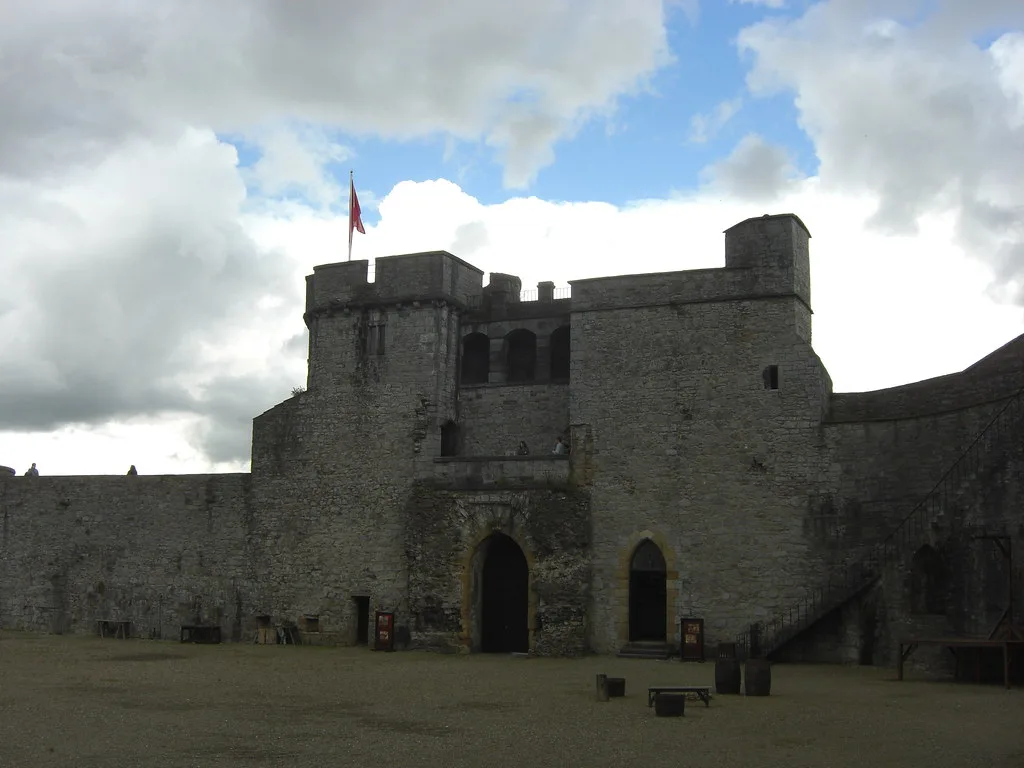
Start at the Treaty Stone at the Clare end of Thomond Bridge, then walk into the medieval core to see the city that endured the sieges. Read the CELT edition alongside the monument to understand what the articles actually provided. If you want the wider war, check whether the seasonal Battle of Aughrim Visitor Centre is open before planning a detour, and confirm current arrangements for St Mary's Cathedral and King John's Castle separately.
Explore more Ireland guides
Frequently Asked Questions
What did the Treaty of Limerick actually agree?
The 1691 treaty contained civil articles on religious privileges, estates, professions, pardon and protection from suits, and military articles on permission to leave Ireland, transport ships and the surrender of Limerick's two towns. The CELT edition at University College Cork provides the full text, and its provisions were conditional rather than a permanent settlement.
Was the Treaty of Limerick signed on the Treaty Stone?
Limerick City and County Council describes the signing on the stone as tradition, not established fact. The archival text does not mention a signing stone. Visitors should treat the stone as a commemorative landmark associated with the treaty.
Where is the Treaty Stone and can you visit it?
It stands at the Clare end of Thomond Bridge in Limerick, on a plinth since 1865. It is an outdoor landmark rather than an indoor attraction; the council page gives no visitor details, so confirm access on the ground when you arrive.
How does the 1691 siege differ from the 1690 siege of Limerick?
The 1690 siege was one of four sieges of Limerick in the seventeenth century. The 1691 siege was the fourth and was followed by the treaty. The two are distinct events, and the treaty belongs to 1691.
Where can you learn about the wider Williamite War near Limerick?
The Battle of Aughrim Visitor Centre in County Galway interprets the 1691 battle and connects it to the Boyne, Athlone, Limerick and the Flight of the Wild Geese. It is seasonal, open May to September, so check before making a special trip outside that period.
Sources
You might also like



Continue reading
More guides you'll find useful



