
Belvedere House, Gardens & Park: A Visitor Guide
Belvedere House near Mullingar is a Georgian villa in a 160-acre lakeside estate. The interior is closed, but gardens, follies and outdoor tours remain.
On this page
The first thing to settle before planning a trip to Belvedere House is that the villa interior is not currently open to the public, as Belvedere House states on its tours page. What remains is still substantial: a 160-acre lakeside estate near Mullingar in County Westmeath, with designed parkland, Romantic follies, a Victorian walled garden and a separate arboretum. A visit here is a walk through a landscape rather than a room-by-room house tour.
The estate is owned and operated by Westmeath County Council, and the operator describes it as primarily an outdoor venue. That shapes how you should plan: build the day around the gardens, follies and lake shore, dress for changeable Irish weather, and check the operator's published hours and event notices before travelling rather than assuming the site follows the same pattern all year.
A Lakeside Estate Outside Mullingar
Belvedere sits on the north-east shore of Lough Ennell, just outside Mullingar, and the operator frames it as a 160-acre lakeside estate. The grounds combine a restored Georgian villa, formal and informal planting, and 18th-century parkland with follies scattered through it. Because the components are spread across a large site, first-time visitors should think of it as several short walks joined together rather than a single building to inspect.
The operator dates the house to 1740 and describes it as originally built as a hunting lodge or bolt hole, later extended and embellished. That origin explains the house's scale: it reads as a country villa rather than a vast mansion, which is part of its architectural interest. The surrounding parkland and garden were developed across later generations, so the estate's layers come from different periods.
Why the House Matters Architecturally
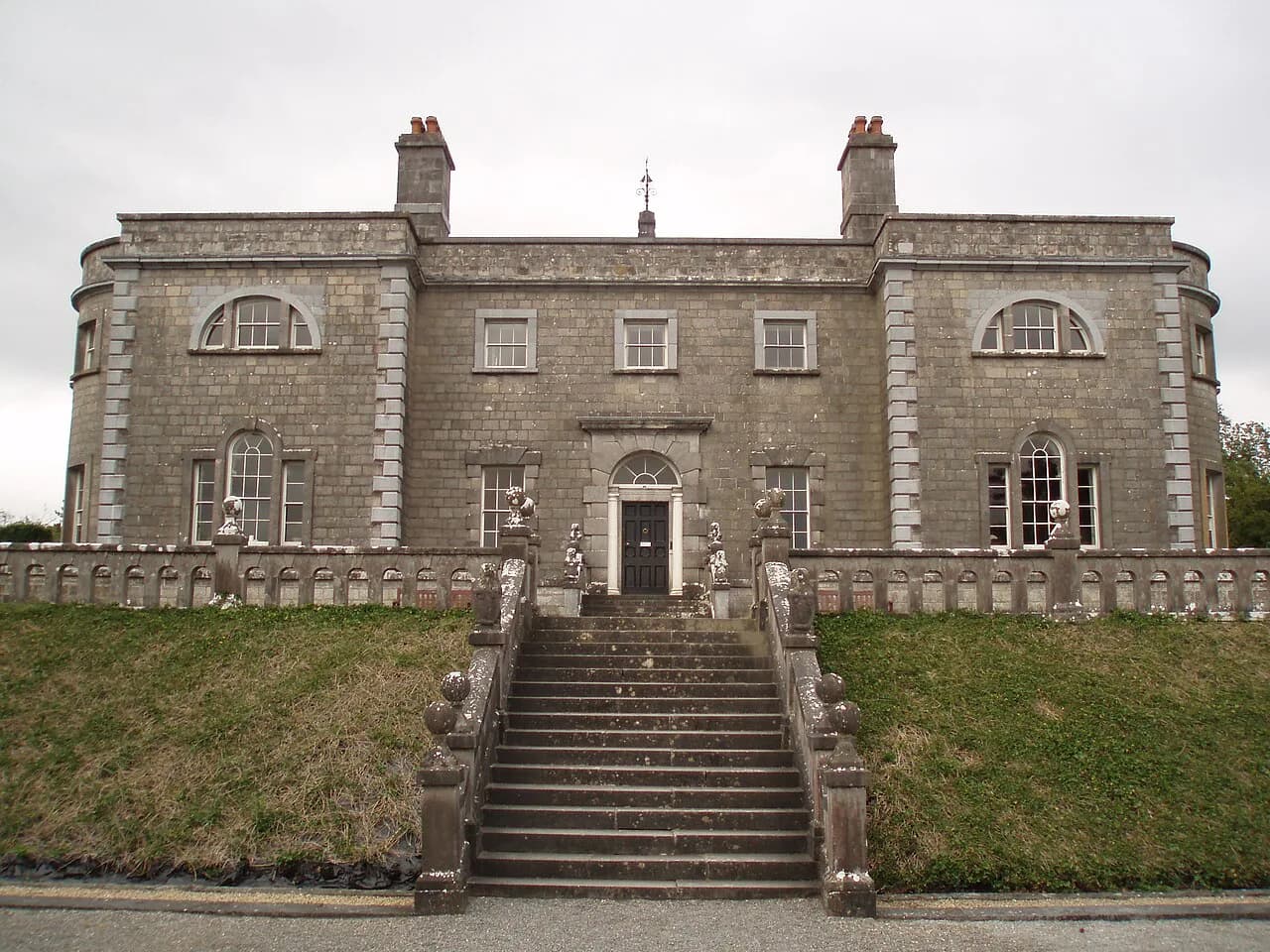
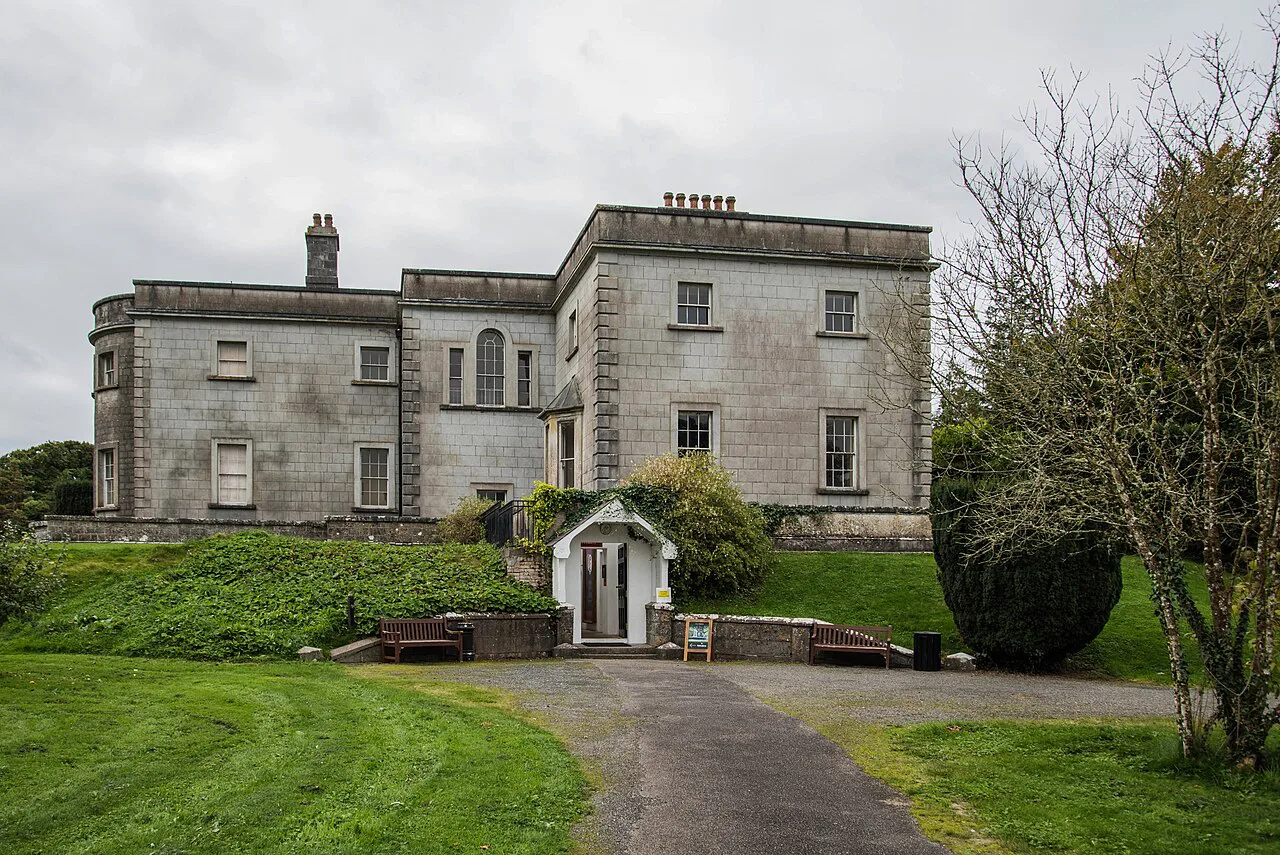
The villa is attributed to Richard Cassels, one of Ireland's leading Palladian architects, and the operator ranks it among his most accomplished works. It is built in tripartite style, with the front façade broken into three parts and semi-circular bow ends; the operator believes it to be the first bow-ended house built in Ireland. Diocletian windows, a device typical of Cassels, punctuate the elevation. Even from outside, these features give you something specific to look for on a walk past the façade.
Inside, the house holds what the operator describes as some of the finest surviving Rococo plasterwork in Ireland, credited to the French stucco artist Barthelemij Cramilion and dating from around 1760. That work is part of why the interior closure frustrates architectural visitors, and it is why the house is best understood through the operator's account and wider reading on the period for now. If plasterwork and Palladian interiors are your main interest, an open Georgian house elsewhere may suit a day out better on this occasion; Castletown House in County Kildare is one established option to research separately.
For wider context on the style, the villa's bow ends, Diocletian windows and symmetrical front are characteristic markers worth learning to recognise. A broader look at Irish Georgian architecture helps you read Belvedere's façade alongside other country houses of the period, and makes the exterior walk more rewarding when the rooms themselves are out of reach.
The Rochfort Story as House Interpretation
Belvedere was designed for Robert Rochfort, later Lord Belvedere, and the operator tells a dramatic family story around him, including his wife Mary Molesworth's long confinement at nearby Gaulstown House and his reputation as 'The Wicked Earl'. Treat this as the interpretation the site presents rather than settled biography, and do not repeat contested personal details as proven fact. The operator separately notes that the Rochforts were an old and influential family who came to Ireland in the 13th century.
Later owners left different marks. Charles Brinsley Marlay, a Victorian arts patron connected to the Fitzwilliam Museum in Cambridge, developed the garden at Belvedere, according to the operator's account, while Charles Kenneth Howard-Bury brought back plants from his travels and later led the 1921 Mount Everest Reconnaissance Expedition, a detail the operator records on its site. Knowing this succession helps you see the estate as an accumulation rather than a single design.
Westmeath County Council bought the house in 1982 and, with the Irish Tourist Board, carried out a restoration; the house, gardens and park opened to the public in 2000, per the operator. That recent public history explains why the site functions as a managed visitor estate with a café, play areas and ticketing rather than a private ancestral home.
What You Can Walk To: Follies and Parkland
The 18th-century parkland contains a set of Romantic follies, including the Jealous Wall, the Octagonal Gazebo and the Gothic Arch. The operator calls the Jealous Wall the largest folly in Ireland and links it to the Rochfort family's story of jealousy and vanity. Follies were built as scenery and surprise within a designed landscape, so the pleasure lies in coming upon them along the walks rather than treating each as a separate attraction.
Because the house interior is closed, the outdoor guided tour is the most structured way to see these features. The operator's scheduled tours cover the Jealous Wall, the Victorian Walled Garden, the exterior of the house and King Malachy's Throne, and visitors can then explore the grounds at their own pace afterwards. The operator separately notes that estate tours offered to groups do not include the interior of Belvedere House, which is closed to facilitate conservation work; that sequence suits anyone who wants interpretation first and independent wandering second.
The Victorian Walled Garden
Charles Brinsley Marlay created the walled garden in 1850, and the operator describes it as a pleasure garden rather than a working one, with an unusual narrow rectangular plan that opens onto a long internal view. The design was settled after considering French formal proposals from Ninian Niven; a romantic parterre by Frederick Pantaenius was chosen instead. Look for the parterre layout and the way the narrow shape concentrates the perspective as you walk its length.
Planting reflects the taste of later owners. Howard-Bury added old roses, hydrangeas and herbaceous perennials, and the garden holds two orchid houses and a Thomas Messenger-style Victorian glasshouse displaying exotic plants. The operator also notes that planting areas are being reworked to reflect the geographical themes linked to former owners, so what you see may be mid-change rather than fixed.
The operator cites recognition by the International Council on Monuments and Sites (ICOMOS) in 1988, which it says recognised the site as an outstanding garden and park in Ireland. That is the operator's own citation rather than an independent ranking verified elsewhere, but it signals the garden's status in Irish garden history and justifies giving it more than a passing glance.
The Arboretum and Seasonal Interest
Outside the wall lies a 12-acre arboretum holding trees connected to Howard-Bury's plant introductions. Named specimens the operator lists include a dawn redwood, a Western Red Cedar planted in the mid-19th century, beeches and a European champion Nothofagus, alongside ornamental sugar maples, Japanese cherries and magnolias. This is the part of the estate most dependent on season: a winter walk gives you structure and bark, while spring and early summer bring the flowering display.
The operator highlights the handkerchief tree and tulip tree, which develop their rare blooms at the beginning of May, and the Belvedere apple, a red-fleshed heritage variety it says was brought back from Central Asia and Kazakhstan during the 1920s expeditions. If trees are your reason for coming, aim for that early-May window and accept that the rest of the year offers a different, quieter experience.
Self-Guided Visit or Scheduled Tour
The main choice is between a self-guided estate visit, with an optional audio tour, and a fixed-time outdoor guided tour. The audio guides are available in English, German, French and Spanish at no extra cost, and the operator suggests allowing roughly 1.5 to 2 hours to complete the estate tour. Self-guided visitors control their pace but get no live interpretation; tour-goers get the stories but must fit a set departure time.
Scheduled tours run seasonally: the operator lists Mondays, Wednesdays and Saturdays at 1pm from April to September, and Saturdays at 1pm from October to March. Availability depends on booking, and the operator warns that tours may not run on days affected by conflicting events or staffing. The operator also states that the outdoor tour is not suitable for visitors with mobility issues, which is a significant caveat if anyone in your group has limited mobility.
Tour prices are separate from general admission: the operator lists €15 for the general public and €12 for season-ticket holders, and a full refund applies if a tour is cancelled for bad weather. Book through the operator's booking page and confirm the rate there, since prices and schedules can change. Pre-booked groups can arrange estate tours subject to availability, and a driver or guide is free for groups of 20 or more.
Admission, Hours and Site Logistics
General admission, as published by the operator, provides access to the café, estate and play areas, with an adult rate of €9, a student and senior rate of €6, and child admission free. These tickets do not cover the house interior, which is closed. Closing times for the gardens and park vary by season, from 4.30pm in winter to 8pm in midsummer, and last admission is one hour before the stated closing time.
The site also closes on Christmas Eve, Christmas Day and St Stephen's Day, and may shut for special events or festivals, so a same-day check of the website or a phone call is worthwhile before a long drive. Practical notes from the operator: car parking is free, coach drop-off and parking are available for pre-booked groups, and bicycle parking sits outside the Visitor Centre. Cycling is not permitted inside the estate, and Wi-Fi is limited to the courtyard area.
For navigation, the operator supplies satnav coordinates of 53.4756 latitude and -7.36733 longitude, which is more reliable than a postcode for a rural estate entrance. Because Belvedere is primarily an outdoor venue, bring rain protection and sturdy shoes; the lakeside position means exposed walking between the walled garden, arboretum and follies.
How Long to Allow and What to Expect
Allow at least a half day if you want the walled garden, arboretum and a circuit of the follies, and longer if you join the guided tour first. The operator's suggested 1.5 to 2 hours for an estate tour is a useful floor, not a ceiling, because the grounds reward slow walking. Arriving in the morning also protects you against the last-admission cut-off.
Expect a managed country estate rather than a museum visit: café, play areas and picnic space sit alongside the historic landscape, and events may occupy parts of the site. If you want a quieter, more architectural day, midweek visits outside school holidays are worth considering.
Plan Your Visit
Belvedere House rewards travellers who arrive knowing what they will and will not see. The villa's façade, the walled garden, the arboretum and the follies together make a substantial outdoor visit even while the interior stays closed, and the seasonal outdoor tour adds the interpretation that rooms cannot currently provide.
Before setting out, confirm the current hours, admission and tour availability with the operator, and check whether an event affects access that day. If your trip revolves around furnished Georgian interiors, save Belvedere for its grounds and pair it with an open house such as Westport House in County Mayo on another day. To compare this visit with other country houses, explore Georgian houses in Ireland, and if your travels take you westward, the castles in county galway offer another set of historic sites to weigh against a day here.
Explore more Ireland guides
Frequently Asked Questions
Is Belvedere House open to the public inside?
No. The operator states on its tours pages that the house interior is not currently open to the public and that the closure is to facilitate conservation work. No reopening date is published, so plan on seeing the exterior and grounds only and check the official site before you travel.
Do you have to book a guided tour at Belvedere House?
Tours run on a seasonal schedule and depend on booking availability, and the operator notes that some days are skipped because of events or staffing. Check the booking page for your intended date rather than assuming a tour will run, and remember that tour tickets are separate from general admission.
Are the guided tours indoors or outdoors?
They are outdoor only. The operator lists the Jealous Wall, the Victorian Walled Garden, the exterior of the house and King Malachy's Throne as the route, and the estate tour does not include the house interior. Visitors can explore the grounds afterwards, so dress for changeable weather.
What is there to see if the house is closed?
The walled garden with its glasshouse and orchid houses, the 12-acre arboretum, the designed 18th-century parkland, and follies including the Jealous Wall, the Octagonal Gazebo and the Gothic Arch. The café, picnic areas and play areas are part of the ticketed estate.
Are the grounds suitable for visitors with mobility issues?
The operator describes the outdoor guided tour as not suitable for visitors with mobility issues, and the site is primarily an outdoor venue with walking between widely spaced features. Visitors with limited mobility should contact the operator directly to discuss what is feasible before visiting.
How long should you allow for a visit?
Plan at least half a day to cover the walled garden, arboretum and follies at an unhurried pace. The operator suggests allowing roughly 1.5 to 2 hours for an estate tour, so add that on top if you join a scheduled walk. Arrive well before the last-admission cut-off, which is one hour before closing.
Sources
You might also like



Continue reading
More guides you'll find useful





